The landscape of professional football is often defined by a delicate tension between individual accolades and collective recognition. This week, that tension reached a boiling point as the International Federation of Professional Footballers (FIFPRO) unveiled its "World 11" for the 2026 season. The selection, determined by an open, democratic vote among thousands of professional players worldwide, has ignited a firestorm of controversy, primarily due to the exclusion of Harry Kane—the reigning Ballon d’Or winner—and the inclusion of Lionel Messi, who continues to defy the typical timeline of an elite athlete.
As the dust settles on the announcement, the footballing community is left to grapple with a fundamental question: What exactly defines the "best" player in a given year, and how can the most prestigious individual award in the sport result in a snub from the players’ own representative XI?
The Anatomy of a Selection: How the World 11 Is Built
To understand the current controversy, one must first look at the methodology behind the FIFPRO World 11. Unlike awards determined by panels of experts or journalists—such as the Ballon d’Or—the FIFPRO World 11 is a product of pure peer review.
The evaluation period for this year’s squad spanned from August 4, 2025, to July 19, 2026. This window included the climax of major domestic leagues and the intense pressure of the international summer calendar. Every professional footballer globally was invited to cast their vote on a digital platform, selecting their peers based on performance, impact, and influence within that specific timeframe.
The structural design of the team is inherently offensive, utilizing a formation that demands four spots in the forward line. This tactical requirement is where the numerical disparity became most apparent, turning the selection process into a high-stakes competition where a fraction of a percentage point determined the difference between global recognition and omission.
Chronology of a Controversial Campaign
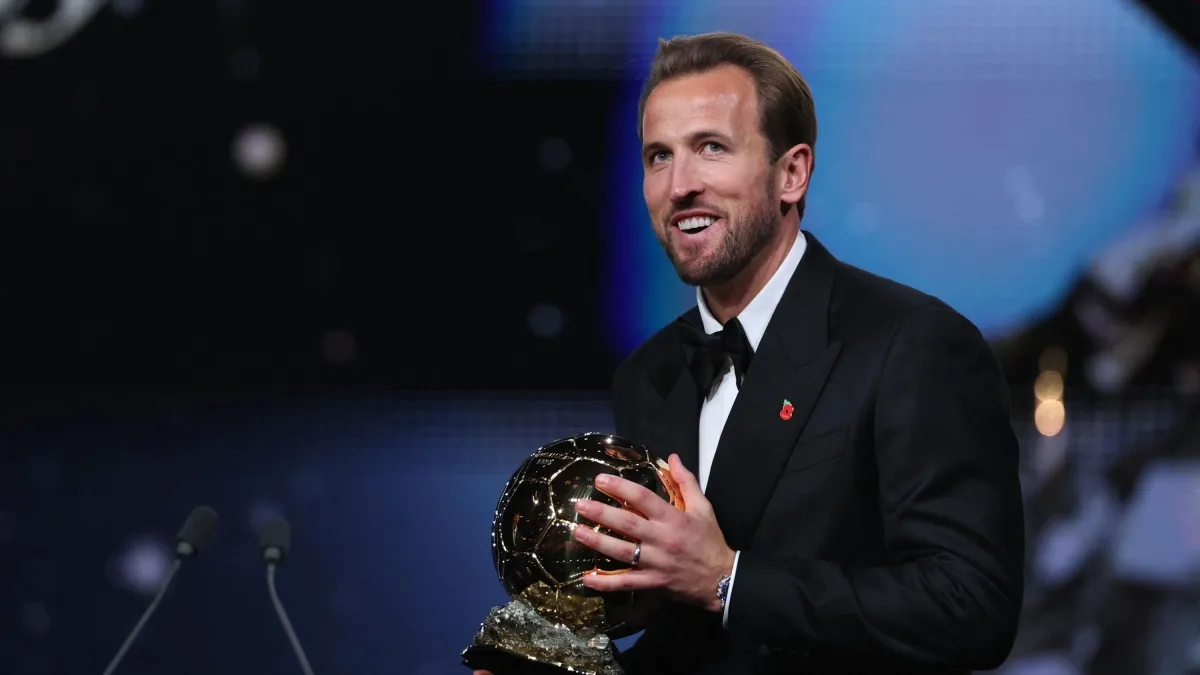
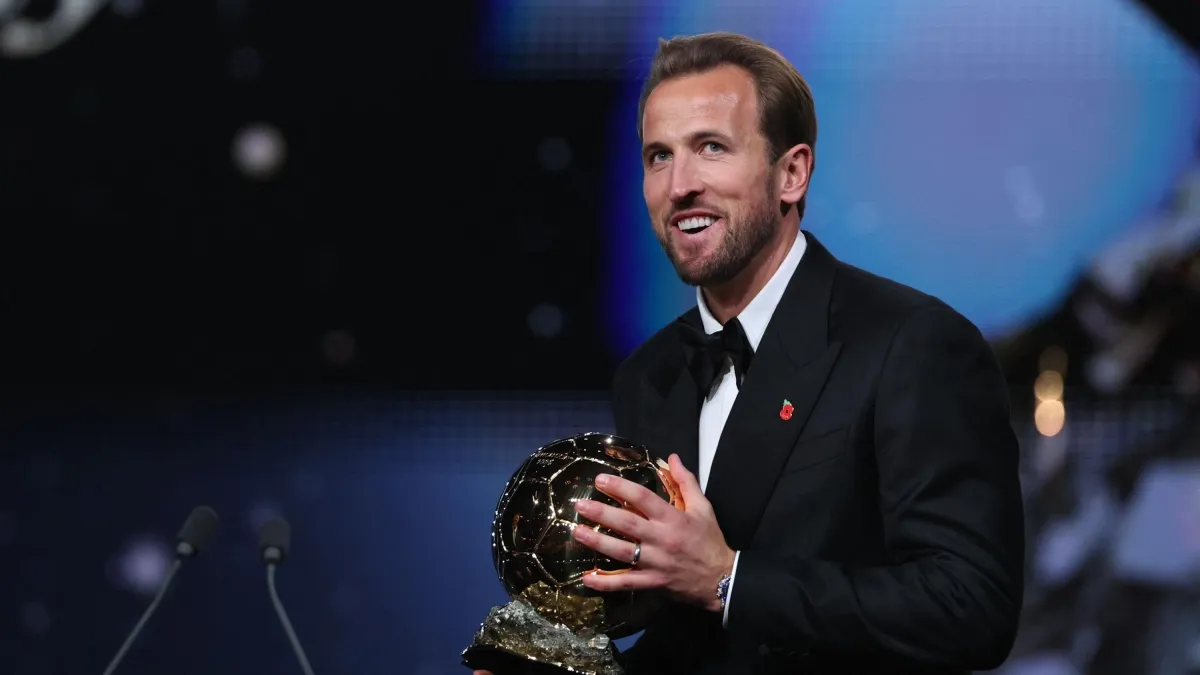
The 2025–2026 season was, by any metric, a career-defining year for Harry Kane. His dominance in front of goal and his instrumental role in his club’s success led him to lift the Ballon d’Or, a trophy widely considered the pinnacle of individual footballing achievement. Yet, when the ballots were tallied by FIFPRO, Kane found himself on the outside looking in.

The data reveals a margin so thin it is almost painful to quantify. Harry Kane secured 28% of the total vote from his fellow professionals. However, in the cutthroat environment of the World 11, that was only good enough for the fifth spot in the forward line. He was edged out by Erling Haaland, who secured 28.4% of the vote. That 0.4% difference serves as a stark reminder of the volatility inherent in peer-led voting systems, where sentiment and perception often carry as much weight as cold, hard statistics.
While Kane was left waiting at the altar, other names dominated the voting. Kylian Mbappé led the charge for the attackers, capturing a staggering 46% of the vote. He was joined by the rising superstar Lamine Yamal (37.4%) and the evergreen Lionel Messi (29.5%), who returned to the XI for the first time since 2023.
The Return of the Icon: Messi’s 18th Inclusion
Perhaps no inclusion has fueled the debate as much as that of Lionel Messi. Critics argue that the selection of the Argentine legend is a testament to the "star power" bias, suggesting that his name recognition occasionally supersedes his current-season output. Conversely, his supporters point to his 29.5% vote share as proof that his peers still view him as a transformative force on the pitch.
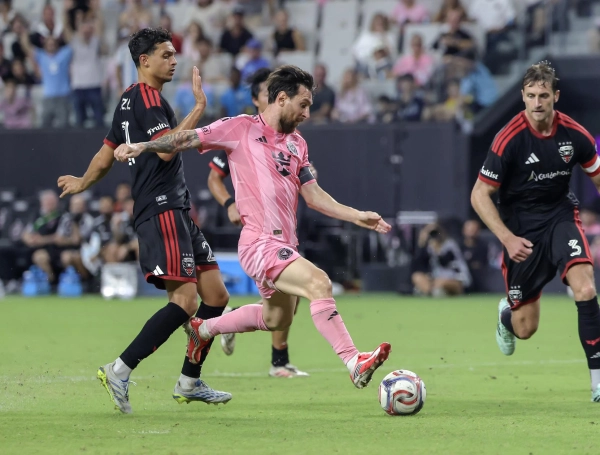
This selection marks the 18th time Messi has appeared in the FIFPRO World 11, an unprecedented feat that highlights a career spanning nearly two decades of dominance. The fact that he continues to command such a high percentage of votes from the very players he competes against—many of whom grew up idolizing him—speaks to a level of respect that transcends current-season statistics.
The Record-Breaking Youth: Lamine Yamal’s Historic Rise
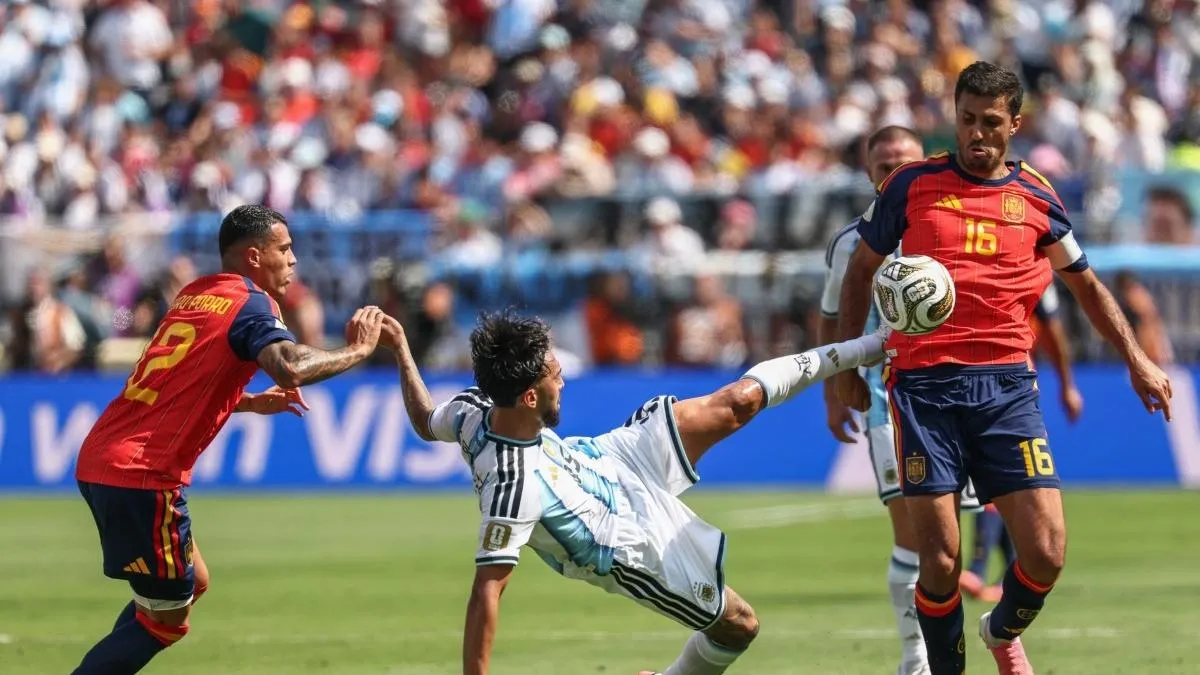
Amidst the controversy regarding the veteran players, the 2026 World 11 also solidified the arrival of a new generation. Lamine Yamal, the Spanish prodigy, made history by becoming the first player to be selected for the World 11 twice before his 20th birthday.
Yamal’s inclusion is not merely a symbolic nod to potential; it is a recognition of his tactical maturity and his ability to influence matches at the highest level. By securing 37.4% of the vote, Yamal has firmly planted his flag as one of the most respected players in the world, proving that his rise to the top is not a fluke, but a new standard for teenage excellence in the sport.

Implications of the "World 11" Discrepancy
The exclusion of the Ballon d’Or winner from the peer-voted World 11 raises significant questions about the divergence between institutional awards and the "locker room consensus."
1. The Subjectivity of Peer Voting
When journalists vote for the Ballon d’Or, they are theoretically looking at a holistic picture of a player’s season, weighing trophies, individual goals, and impact on team success. When players vote for the World 11, they are often voting based on the "eye test"—the player they least like to face, or the one they feel most intimidated by. This subjectivity explains why a goal-scoring machine like Kane might lose out to a playmaker or a more "hyped" forward like Haaland.
2. The Weight of Brand vs. Performance
The debate over Messi’s inclusion vs. Kane’s exclusion will undoubtedly persist. It forces the footballing world to ask: Does a "World 11" represent the best eleven players based on a specific season’s data, or is it a popularity contest? If the former, the process might require more rigorous data-backed filters. If the latter, then the selection is a reflection of the industry’s current cultural hierarchy, where legacy and narrative play a massive role.

3. The Future of Player Representation
FIFPRO now faces the challenge of addressing the dissatisfaction regarding the criteria. While the democratic nature of the vote is a point of pride for the organization, the "snub" of the Ballon d’Or winner creates a narrative of inconsistency. Moving forward, stakeholders may call for more transparency regarding the specific instructions given to players before they cast their ballots, perhaps asking them to weigh specific criteria such as "goals scored" or "clean sheets" more heavily.
The Verdict: A Snapshot of a Changing Era
The 2026 FIFPRO World 11 is, if nothing else, a fascinating historical document. It captures a sport in transition—a bridge between the final years of the greatest generation and the meteoric rise of the next.
While Harry Kane may feel aggrieved by his 0.4% margin of defeat, his Ballon d’Or victory remains the objective truth of his brilliance during that campaign. The World 11, however, is a different kind of truth: it is the subjective, biased, and deeply personal opinion of those who know the game best—the players themselves.

As the season progresses, the focus will undoubtedly shift back to the pitch. However, this episode will remain a central point of discussion for fans and analysts alike, serving as a reminder that in football, as in life, excellence is often in the eye of the beholder. Whether this leads to a reform in voting processes or remains a quirk of the game, one thing is certain: the debate over who truly belongs in the "World 11" is as eternal as the sport itself.
The inclusion of Messi and the exclusion of Kane may have been the headline, but the underlying story is the evolution of the game’s elite tier, where records are broken by teenagers, legacies are sustained by legends, and the margins of victory are thinner than ever before.