By Global Environmental Desk
Published: November 7, 2026
Main Facts
In an era defined by geopolitical turbulence, armed conflicts in Ukraine and the Middle East, and widespread fiscal austerity, governments around the globe face immense pressure to prioritize immediate security and economic growth over long-term environmental goals. However, a comprehensive analysis warns that sidelining ecological preservation is a catastrophic miscalculation.
Scientific projections indicate that a partial collapse of the world’s ecosystems could drain an estimated $2.7 trillion annually from the global economy. With more than half of the world’s Gross Domestic Product (GDP)—representing trillions of dollars in agriculture, forestry, and water management—directly tied to natural capital, experts emphasize that biodiversity loss is not merely an environmental crisis, but an imminent macroeconomic catastrophe.
As international leaders prepare for upcoming United Nations summits on biodiversity and climate change, economists and environmentalists alike are pushing to accelerate the implementation of the 30×30 initiative—a landmark global pact aiming to protect at least 30% of the planet’s land and ocean areas by 2030. Reaching this target will require scaling up global conservation financing from its current $24 billion annual baseline to between $100 billion and $180 billion per year.

Chronology: A Cascading Series of Crises
The interplay between geopolitical instability and ecological degradation has created a compounding series of economic shocks throughout recent years:
- December 2022: The historic UN Biodiversity Conference (COP15) concludes with the adoption of the Kunming-Montreal Global Biodiversity Framework, enshrining the 30×30 target as the cornerstone of global conservation efforts.
- Early 2024–2025: Ongoing geopolitical conflicts, particularly the disruption of key maritime trade routes such as the Strait of Ormuz, trigger severe logistical bottlenecks. Consequently, global fertilizer prices skyrocket by 71%, heavily burdening agricultural supply chains.
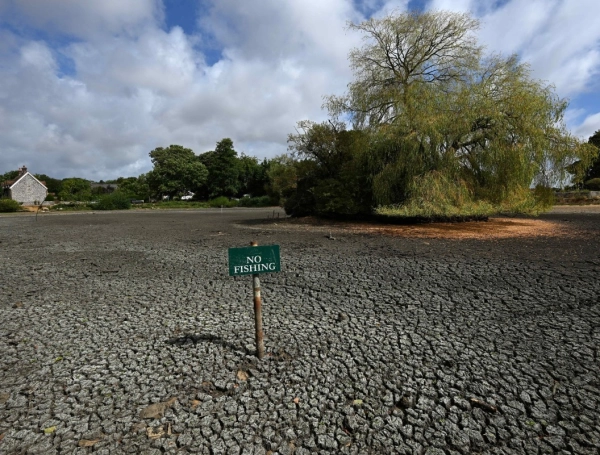
- Summer 2026: Exceptionally severe heatwaves and prolonged droughts grip Europe. Agricultural losses mount between $2 billion and $3 billion, compounding the financial pain already felt by farmers facing inflated fertilizer costs. The dual pressure of climate extremes and geopolitical friction drives global food prices to their highest levels since 2022.
- May 2026: A progress update shows that 116 countries have formally submitted commitments to protect up to 27% of terrestrial and inland water areas. However, many of these pledges still lack detailed, fully funded implementation frameworks.
- Late 2026: Ahead of the autumn UN climate and biodiversity summits, fresh evaluations reveal a stark disparity between terrestrial and marine conservation efforts, prompting urgent calls for increased funding, stronger governance, and binding enforcement mechanisms.
Supporting Data and Metrics
The economic argument for protecting the natural world is supported by extensive quantitative data compiled by scientific institutions, economic forums, and environmental campaigns:
- $2.7 Trillion: The projected annual cost to the global economy resulting from a partial ecosystem collapse.
- $9.5 Trillion: The value of the global food industry, which relies entirely on healthy, nutrient-rich soils.
- 1.5 Billion: The number of human livelihoods globally that depend directly on sustainable forestry and woodland management.
- 50%+: The share of global GDP that relies directly on ecosystem services, including clean water, climate regulation, and soil fertility.
- 20% vs. 10%: Current progress toward the 30×30 terrestrial and marine goals, respectively. While terrestrial protection stands at roughly 20% (with commitments pushing toward 27%), only about 10% of the ocean is officially designated for conservation—and independent analyses suggest that a mere 3.5% of marine areas are truly effectively protected from harmful industrial activities.
- $450 Billion: The estimated annual boost to global GDP by 2050 if the 30×30 targets are successfully financed and met, alongside the creation of 4 to 7 million new jobs worldwide.
Official Responses and Expert Perspectives
Governments, international bodies, and prominent figures have increasingly voiced concerns over the sluggish pace of execution regarding global environmental mandates.
Mary Robinson, former President of Ireland and former UN Special Envoy for Climate Change, has been a vocal proponent of redefining how the international community views ecological defense. In recent policy addresses, Robinson stressed that viewing nature conservation as a luxury for peaceful times is a dangerous delusion:

"In times of war, geopolitical agitation, and fiscal austerity, it is tempting to view the defense of nature as a desirable but non-urgent goal—something to aspire to when circumstances are calmer. But adopting this view exposes us to immense risk… Protecting natural systems is not just for the sake of the bees. Investing in their future is investing in ours."
Environmental watchdogs, such as the Campaign for Nature and Together for the Ocean, have echoed these sentiments. While acknowledging that 116 nations have stepped forward with terrestrial protection pledges, they caution that political promises without accompanying budgets and institutional enforcement are functionally meaningless.

Financial institutions and multilateral banks are also under mounting pressure to reform. Experts argue that public funds must be leveraged to unlock private sector investment, transforming conservation from a perceived budgetary drain into a high-yield investment in societal resilience.
Implications: The Path Forward
The convergence of climate anomalies, ecosystem degradation, and global market volatility demands a paradigm shift in policymaking. The implications of inaction extend far beyond abstract environmental metrics; they threaten food security, water availability, public health, and macroeconomic stability.

1. The Financial Imperative
Closing the funding gap—scaling conservation spending from $24 billion to upwards of $180 billion annually—must be reframed by fiscal authorities. Rather than an expense, it is a risk-mitigation strategy that prevents multi-trillion-dollar losses in productivity and supply chain failures.
2. Bridging the Marine Protection Deficit
While terrestrial conservation efforts are steadily advancing toward the 2030 threshold, marine ecosystems remain dangerously neglected. Governments must move beyond paper parks—areas legally designated as protected but lacking enforcement—to establish rigorous, well-funded marine reserves that safeguard oceanic biodiversity and coastal populations against rising sea levels and extreme weather events.

3. Integrating Security and Sustainability
As long as geopolitical conflicts dominate national budgets, environmental policies risk being pushed to the periphery. However, true national security is inextricably linked to resource security. Without stable agricultural yields, resilient freshwater systems, and functional supply chains, geopolitical conflict will only proliferate.
Ultimately, the decisions made by world leaders during this critical decade will dictate the trajectory of the global economy for generations. The warning signs written across scorched agricultural lands and destabilized markets are clear: protecting nature is no longer an optional environmental ideal—it is the baseline requirement for human survival and economic prosperity.