By [Journalist Name] Doctor in Social Communication & Consultant to the Dicastery for Communication Published: November 8, 2026
Main Facts: A Historic Homecoming Overshadowed by Health Concerns
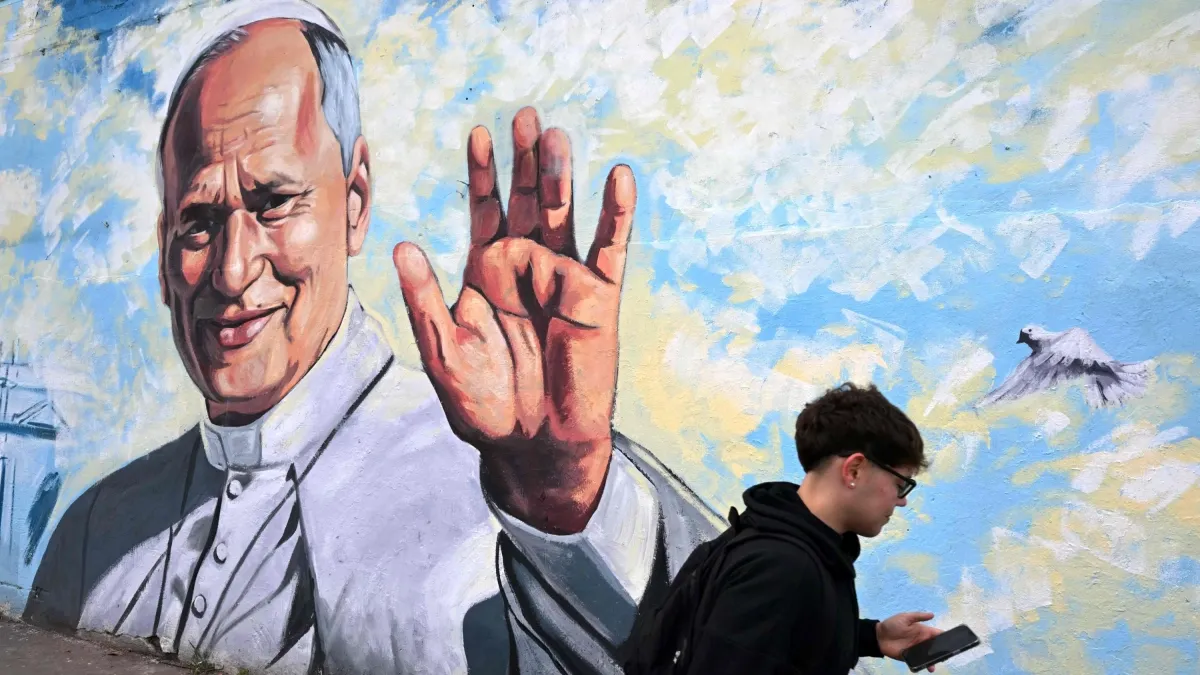
The return of Pope León XIV to Latin America—encompassing an ambitious apostolic journey to Uruguay, Argentina, and Peru—has ignited unprecedented global expectation. For the pontiff, this region is not merely a destination on a map; it is the crucible where he spent practically half of his priestly life, first serving as an Augustinian missionary and later as a bishop. Announced last August, the trip quickly transformed from a routine pastoral visit into a narrative of resilience, survival, and profound emotional homecoming.
Just weeks before embarking on this 12-day, 30,000-kilometer odyssey, the Vatican announced a stunning health crisis: the Pope had undergone surgery to remove a malignant pulmonary nodule, detected in its earliest stages. The revelation sent shockwaves through the global Catholic community. Could a newly diagnosed cancer patient endure a punishing itinerary featuring 10 cities, 36 speeches and homilies, and 14 separate flights? The logistical extremes alone—such as shifting within a single day from the dizzying 3,400-meter altitude of Cusco to the humid, tropical Amazonian rainforest of Pucallpa—seemed insurmountable for someone recovering from lung surgery.
Yet, dispelling months of nervous speculation, the Vatican’s press office confirmed just 11 days before departure that follow-up medical examinations showed the disease was entirely localized. According to his personal physician, Dr. Luigi Carbone, no additional oncological treatment was necessary, and there were no medical contraindications to cancel the tour. With a clean bill of health, the skepticism dissolved, and León XIV touched down on Uruguayan soil, ready to fulfill what his biographers describe as an inescapable spiritual mandate.
Chronology of the Crisis and the Journey
The timeline leading up to this monumental journey highlights the tightrope walk between papal determination and fragile human health:
August 5, 2026: The Vatican officially announces Pope León XIV’s upcoming apostolic journey to Uruguay, Argentina, and Peru, scheduled for November 6 to November 17.
Early October 2026: Shockwaves ripple through the Holy See and the global faithful as the Vatican reveals the pontiff has undergone successful surgery to remove an early-stage malignant nodule in his lung.
Late October 2026: Public anxiety mounts regarding the feasibility of a 12-day, multi-nation tour involving extreme geographical shifts. Media outlets and Vatican observers openly question whether the itinerary will be downscaled.
October 26, 2026: Dr. Luigi Carbone clears the Pope, confirming that post-operative exams reveal the cancer is localized, requiring no further oncological treatment. The itinerary remains locked.
November 4, 2026: During his Wednesday general audience before 13,000 pilgrims in St. Peter’s Square, León XIV asks for prayers, stating his desire to "strengthen faith, renew hope, and reavive the fire of charity."
November 6, 2026: The pontiff lands in Uruguay, officially kicking off his sixth and most extensive international apostolic voyage.
Supporting Data and Itinerary Logistics
The sheer magnitude of the journey underscores the physical demands placed upon the pontiff:
Duration: 12 days (November 6 – November 17, 2026).
Distance Covered: Over 30,000 kilometers.
Destinations: 10 cities across Uruguay, Argentina, and Peru.
Speaking Engagements: At least 36 scheduled speeches, homilies, and addresses.
Air Travel: 14 distinct flight legs, navigating severe climate and altitude variations—from sea level in Buenos Aires and Montevideo to the high-altitude Andes of Cusco (3,400 meters) and the tropical basin of Pucallpa.
Historical Context: It has been nearly four decades since a pope visited the Rio de la Plata region—John Paul II visited Uruguay in 1988 and Argentina in 1987.
Official Responses and Expert Insights
While the official line from Vatican officials—including press office director Mateo Bruni and Montserrat Alvarado, the new prefect of the Dicastery for Communication—insisted the schedule would proceed without modification, external analysts urged caution.
Elise Ann Allen, biographer of the Pope and author of León XIV: Citizen of the World, 21st-Century Missionary, noted prior to departure that adjustments might become necessary on the ground. Speaking to Buenos Aires daily La Nacion, Allen remarked, "He must be very careful and take it day by day, seeing what he can physically accomplish." Nevertheless, she emphasized his unyielding psychological resolve: "He said yes to the papacy and yes to this mission of being the world’s pastor."
A Deeply Personal Connection to Peru and the Southern Cone
For Latin Americans, the visit feels like a family reunion. Although Pope Francis completed numerous regional trips during his 13-year pontificate, he notably never visited his native Argentina or neighboring Uruguay. León XIV’s arrival thus carries immense symbolic weight for the Southern Cone.
Furthermore, Peru claims a particularly intimate bond with the pontiff. Long before ascending to the Chair of Peter, Robert Prevost lived, worked, and governed there as bishop of Chiclayo, holding Peruvian citizenship since 2015—a legal requirement for local bishops, as chronicled by Santiago Roncagliolo in his recent book, The Pastor and the Wolves. When Prevost was elected pope on May 8, 2025, his first Urbi et Orbi blessing featured a heartfelt greeting in fluent Spanish to his former diocese: "A greeting to all and in a particular way to my beloved diocese of Chiclayo… where a faithful people has accompanied its bishop." Across Peru, newspapers proudly proclaimed: "The Pope is Peruvian."
Dr. Emilce Cuda, secretary of the Pontifical Commission for Latin America (Pcal), underscored this sentiment in an interview with EL TIEMPO:
"León XIV is returning home, to a continent that recognizes him as one of its own. In Argentina, which has chosen the welcoming motto ‘Welcome Everyone,’ it is clear that while he is a different pontiff from Francis, he firmly continues his pastoral line and harbors the hope of being a sign of unity."
Cuda, who worked alongside Prevost for two and a half years when he led the Dicastery for Bishops, highlights that the pontiff intimately understands the region’s paradoxes: a land overflowing with natural, human, and cultural wealth, yet plagued by deep systemic inequalities. Having ministered in Peru during the turbulent 1980s and 90s—witnessing firsthand the brutal violence of the Shining Path insurgency in Piura and Trujillo—León XIV brings a battle-tested empathy to the social crises of the region.
From a sociological perspective, Dr. Néstor da Costa, a professor at the Catholic University of Uruguay, emphasized the broader secular impact of the papal visit. In a nation characterized by over a century of strict laicism and a demographic where non-believers outnumber practicing Catholics, da Costa noted:
"The Pope’s leadership transcends the borders of the Church. By positioning himself on sensitive issues like poverty, the excluded, injustice, and peace, his message will resonate with society at large—not solely due to his Catholicism, but because of a deep empathy with the values he defends."
Implications: A Defining Moment for the Pontificate
The itinerary reflects a grueling pastoral strategy. Beyond large-scale Eucharistic celebrations, youth prayer vigils, and meetings with heads of state, diplomatic corps, and local clergy, the pontiff’s schedule features high-risk, high-empathy encounters. In alignment with his predecessors, the Vatican confirmed that León XIV will hold private meetings with victims of clerical abuse, confronting the Church’s darkest systemic failures head-on.
The ideological and thematic underpinnings of this trip point directly to the intellectual framework of his pontificate. By choosing the name León—nodding to León XIII and the landmark encyclical on modern social challenges, Rerum Novarum—and following it with his own pioneering encyclical Magnifica Humanitas (a bold reinterpretation of Catholic social teaching in the age of artificial intelligence), the Pope has positioned himself as an intellectual and spiritual vanguard for the 21st century.
As León XIV traverses Uruguay, Argentina, and Peru, his journey is expected to crystallize his identity as a missionary pope. By placing himself at the service of the marginalized, listening to Amazonian indigenous communities, and demanding radical commitments to justice and peace, he is not merely visiting a region that shaped him—he is offering a masterclass in pastoral resilience. For a man who recently stared mortality in the face with a cancer diagnosis, this homecoming is a living testament to his ultimate mission: making his own the cries of the poor and the Earth.
BOGOTÁ — A major restructuring of the Colombian executive branch is quietly taking shape, igniting a fierce debate between government fiscal planners and the nation’s scientific community. Under the proposed Economic Rescue Law (Bill 477…
Global Energy Systems Face Fragmented Progress, Rising Demand from Artificial Intelligence, and Steep Financial Hurdles, Warns WEF Expert Nicholas Wagner. Main Facts The global transition toward sustainable energy sources has hit a critical juncture. According…
By: Environmental and Pet Health Editorial Desk Published: October 27, 2026 Category: Life & Pets / Veterinary Science Main Facts: Understanding the Architecture of Feline Sleep Comprehending the resting routines of domestic felines often presents…