By Justice Desk Editorial Team
September 27, 2026
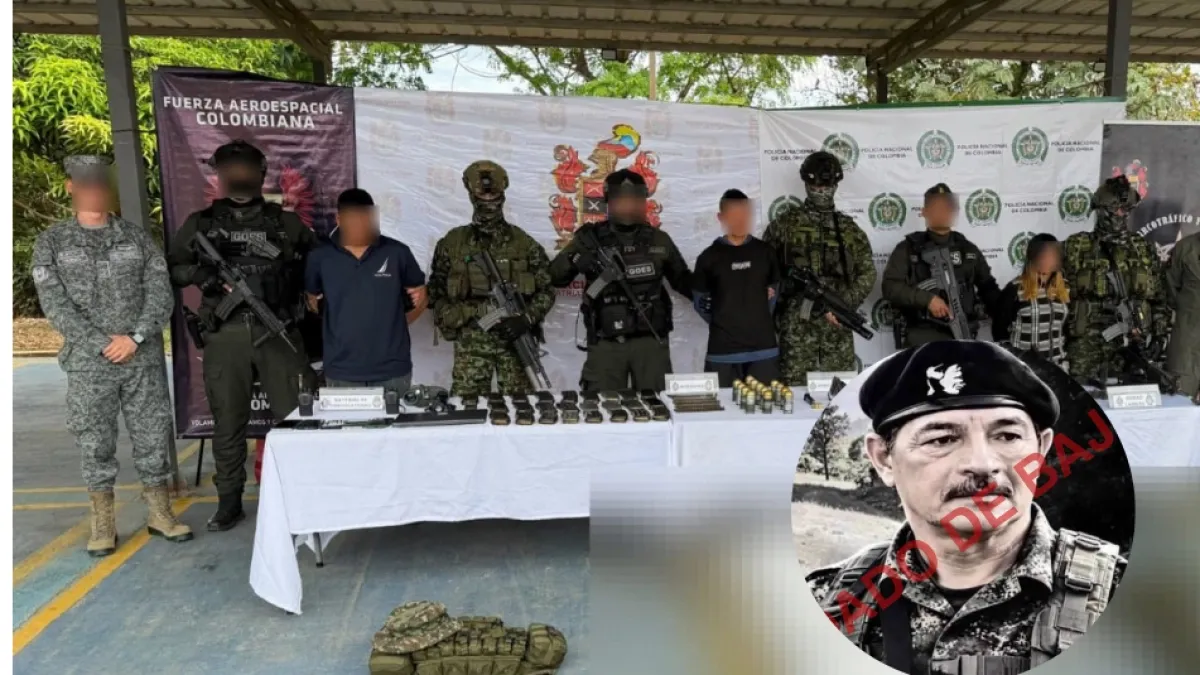
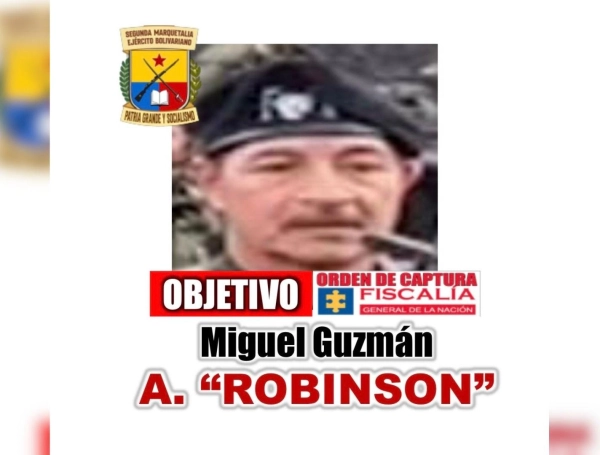
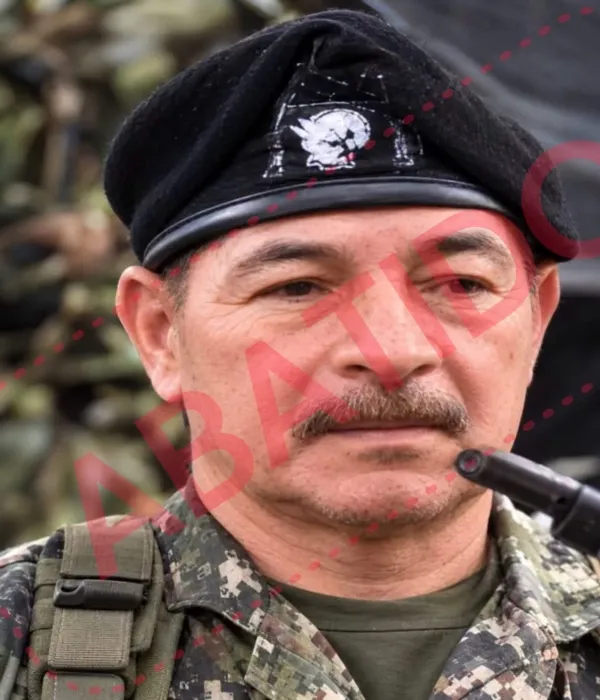
In the dense, mountainous terrain of the vereda Río Blanco, located in the municipality of Tello, Huila, a pivotal chapter in the history of Colombia’s internal armed conflict reached its definitive conclusion. Miguel Orlando Guzmán González, widely known in the criminal underworld as alias "Robinson Gutiérrez," was neutralized in a precision-guided joint operation conducted by the National Army, the National Police, and the Colombian Air Force.
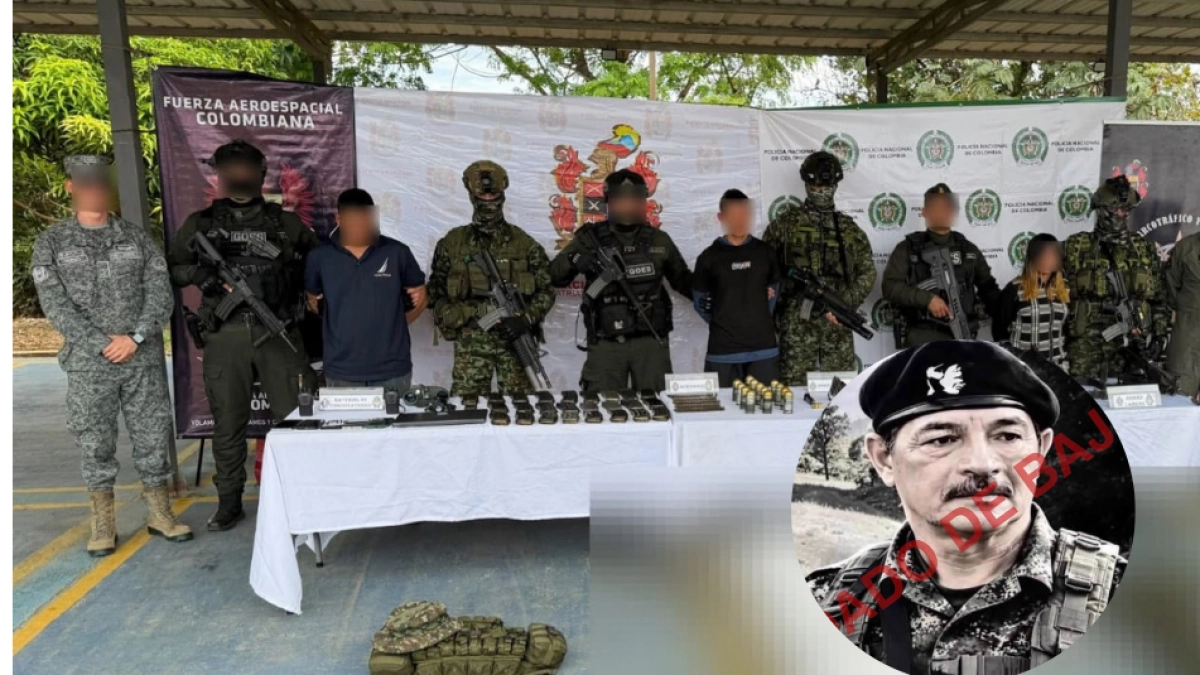
The death of Robinson marks the end of a 35-year career characterized by extreme violence, strategic kidnapping, and the orchestration of some of the most harrowing attacks in the nation’s modern history. As the head of finances for the "Teófilo Forero" structure—a notoriously lethal unit historically linked to the FARC and now operating under the "Segunda Marquetalia" umbrella—Guzmán González was a linchpin in the criminal ecosystem that has plagued the Huila, Caquetá, and Meta regions for decades.
A Strategic Blow to the Segunda Marquetalia
The operation in Tello was not merely a tactical victory; it was a strategic dismantling of a core financial engine. According to official reports, the Teófilo Forero structure had been actively attempting to consolidate a geographic corridor connecting the departments of Huila, Caquetá, and Meta. This "corridor of influence" was intended to serve as a staging ground for the expansion of their illicit activities toward the capital, Bogotá, and the surrounding Cundinamarca region.

Intelligence gathered by security forces indicated that Robinson was the primary architect behind the funding of these expansionist ambitions. His methods relied on the systemic use of extortion, kidnapping for ransom, and the forced recruitment of minors—a practice that fueled the organization’s coffers while devastating local communities. By neutralizing Robinson, the state has effectively disrupted the logistics and financial stability of the Segunda Marquetalia’s most aggressive regional faction.
The Legacy of the Teófilo Forero Structure
To understand the gravity of Robinson’s removal, one must look at the organization he served. The Teófilo Forero mobile column was, for decades, the "elite" strike force of the FARC, historically commanded by the late Hernán Darío Velásquez Saldarriaga, known as "El Paisa." Robinson spent years as one of El Paisa’s most trusted lieutenants, inheriting his operational ruthlessness and administrative discipline.

After the 2016 peace process, while many combatants sought reintegration, Robinson remained entrenched in the illicit economy. By 2024, he had ascended to the role of financial chief, overseeing the transformation of the Teófilo Forero unit into a key component of the Segunda Marquetalia. His tenure was defined by a transition from traditional insurgency to a sophisticated, transnational criminal model that blended ideological discourse with pure, profit-driven terrorism.
A Chronology of Horror: 35 Years of Bloodshed
The life and career of Miguel Orlando Guzmán González are inextricably linked to the darkest moments of Colombian history. His involvement spans three and a half decades, leaving behind a trail of grief that has touched every sector of Colombian society.
The Early Years: 1991–2000
Robinson’s entry into the conflict was marked by brutal tactical strikes. On August 10, 1991, he was identified as a participant in an ambush on the police station in Guadalupe, Huila. The attack, which involved the execution-style murder of six police officers, set the tone for his future trajectory. Throughout the 90s, he operated as a shadowy figure within the Huila-based insurgency, eventually rising through the ranks during the organization’s most violent phase. In December 2000, his structure was implicated in the assassination of Congressman Diego Turbay Cote, who was ambushed and killed along with his mother and four others in a chilling display of violence that sent shockwaves through the political establishment.
The Darkest Era: 2001–2006
The early 2000s saw the Teófilo Forero unit evolve into a symbol of terror. In 2001, Robinson was involved in the kidnapping of 15 residents from the Torres de Miraflores building in Neiva, followed by the high-profile abduction of Representative Consuelo González de Perdomo.
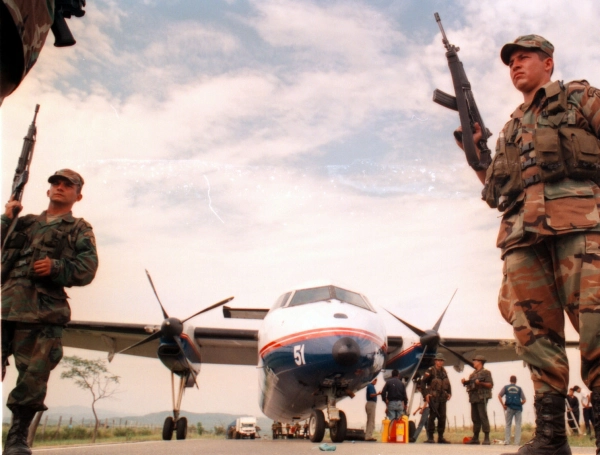
The year 2002 became synonymous with the collapse of the Caguán peace negotiations. On February 20, 2002, the guerrilla group hijacked a commercial Aires flight, forcing it to land on a highway in Huila to kidnap Senator Jorge Eduardo Gechem Turbay. This act effectively ended the peace process. Shortly after, the group stormed the Valle del Cauca Assembly in Cali, kidnapping 12 deputies in a raid that would end in the tragic death of 11 of the hostages years later.
In 2003, the violence reached the heart of the capital. The February 7 car bomb at the El Nogal Club in Bogotá, which claimed 36 lives and injured nearly 200, remains a defining crime of the era. This was followed only days later by a house-bombing in Neiva, intended to assassinate then-President Álvaro Uribe, which resulted in 18 deaths and 48 injuries.
Institutional Assaults: 2009–2012
The violence continued to target state officials with impunity. In December 2009, the Governor of Caquetá, Luis Francisco Cuéllar, was kidnapped and murdered, a crime that drew national outrage. By 2012, the structure had mastered the use of urban terror, as demonstrated by the "bomba lapa" (magnetic bomb) attack on the vehicle of former Minister Fernando Londoño in Bogotá, which killed two security personnel and injured over 50 civilians.
The Magnicidio of Miguel Uribe Turbay
Perhaps the most significant and recent chapter in Robinson’s criminal life was the assassination of Senator and presidential hopeful Miguel Uribe Turbay. On June 7 of last year, Uribe Turbay was gunned down in the El Golfito park in the Modelia neighborhood of Bogotá.
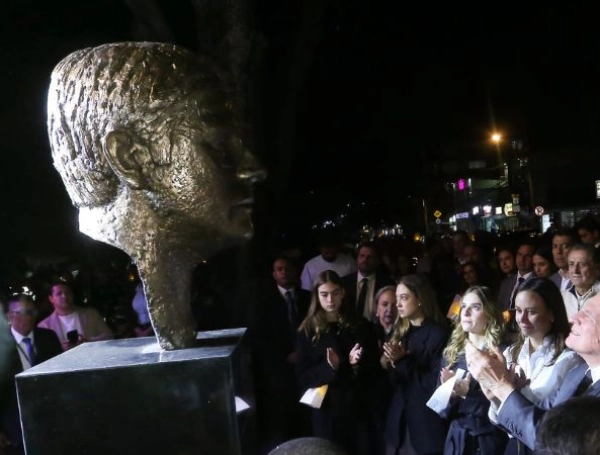
The investigation into the murder revealed a sophisticated web of urban criminal networks operating under the guidance of the Segunda Marquetalia. Authorities have presented evidence linking Robinson to the financial orchestration of this magnicidio. His death comes as a direct response to this crime, representing a symbolic and practical act of state justice. The murder of Uribe Turbay served as a wake-up call to the nation, proving that the disident groups had not abandoned their strategy of destabilizing the state through targeted political violence.
Official Responses and Political Implications
The neutralization of Robinson has been met with firm resolve from the current administration. President Abelardo De La Espriella issued a statement via social media, explicitly linking the operation to the ongoing pursuit of justice for the murder of Miguel Uribe Turbay.
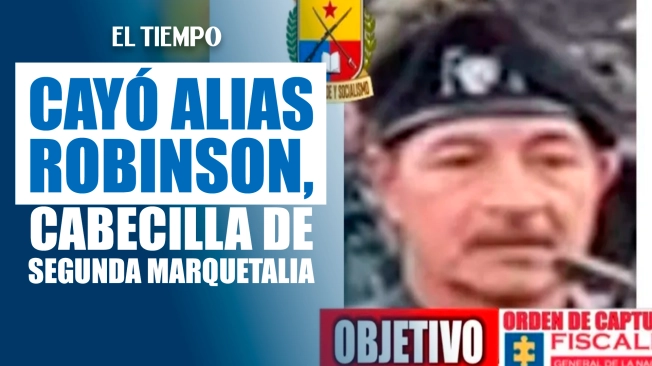
"We are delivering justice for Miguel Uribe Turbay," the President stated. "This is the result of the operation in Tello, Huila: alias Robinson Gutiérrez is down, three members have been captured, and a significant cache of weaponry has been seized. Now, we turn our full focus to the leader of this criminal enterprise: Iván Márquez."
The capture of three other high-ranking associates during the operation is expected to yield a treasure trove of intelligence, potentially exposing the current hideouts and communication channels of the Segunda Marquetalia’s top leadership.

The Path Forward
The death of Miguel Orlando Guzmán González provides a moment of relief for the families of his thousands of victims, yet the structural threat posed by the Segunda Marquetalia remains. The challenge for the Colombian state is now to ensure that the power vacuum left by Robinson is not filled by another figure of similar tactical capacity.
As the security forces continue their efforts to dismantle the remnants of the Teófilo Forero structure, the focus remains on the "high-value targets" like Iván Márquez. The fall of Robinson is a testament to the efficacy of intelligence-led military and police coordination, but as history has shown, the struggle for peace in Colombia is a long and arduous process that requires constant vigilance against those who choose violence over democratic discourse.

For the citizens of Huila, and indeed for all Colombians, the end of Robinson’s 35-year reign is a signal that no criminal, regardless of how deeply they embed themselves in the shadows of the mountains, is beyond the reach of the law. The long, bloody history of the Teófilo Forero column has suffered a devastating blow, but the quest to bring all responsible for these decades of suffering to justice continues unabated.