By International Desk Reporting Published: September 15, 2026
Main Facts
In what can only be described as a harrowing ordeal for everyone on board, passengers aboard a domestic flight in Iran experienced moments of sheer terror on September 15, 2026. A Boeing 737 operated by Sepehran Airlines was forced to execute an immediate, high-stakes emergency return to its departure point shortly after taking off from Mashhad, located in northeastern Iran.
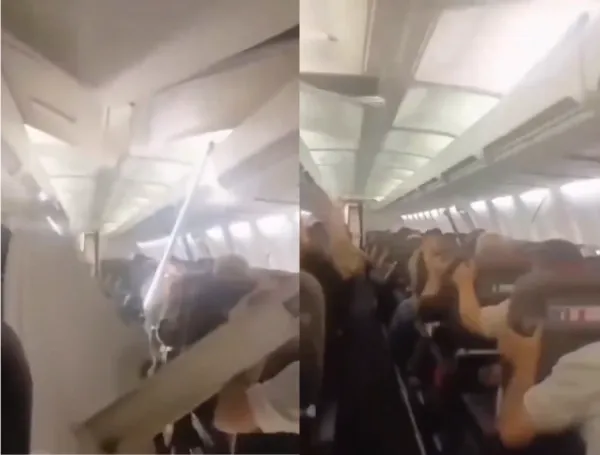
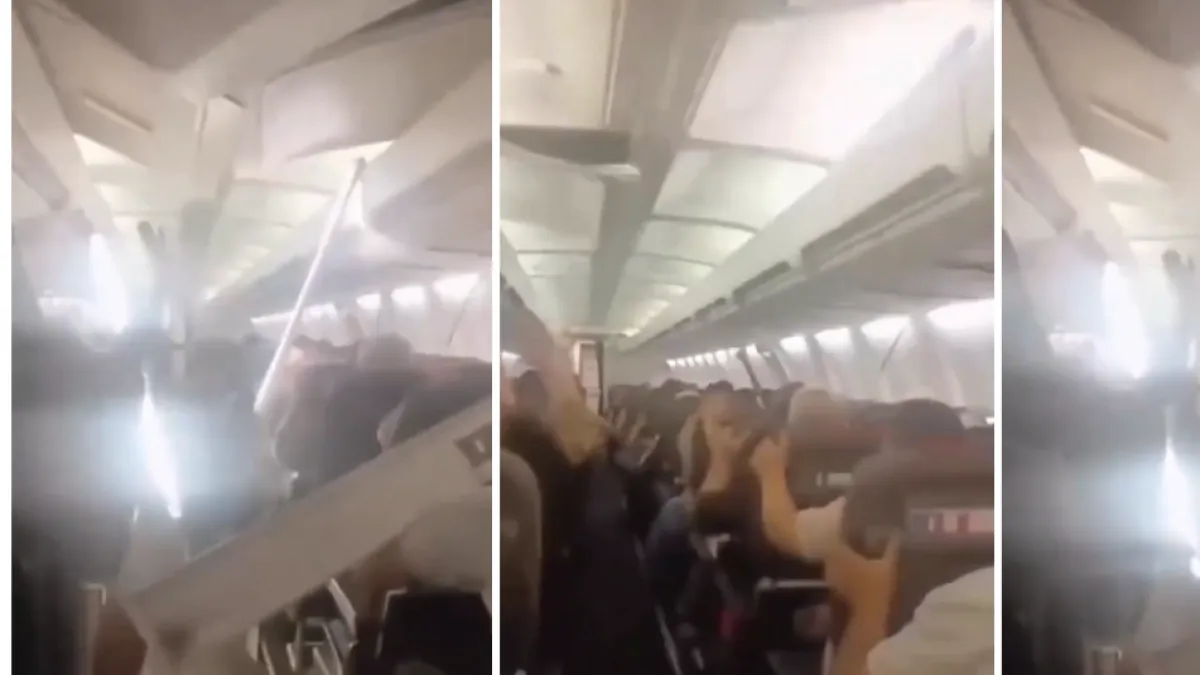
The aircraft, which was scheduled to fly westward to the city of Kermanshah, encountered a catastrophic technical anomaly moments after leaving the tarmac at Mashhad’s Shahid Hashemi Nejad International Airport. As the plane climbed into the airspace, passengers were subjected to violent, unsettling vibrations that rattled the cabin, tearing away interior fixtures, opening overhead luggage compartments, and fracturing the psychological composure of those on board.
Despite the alarming structural distress and the panic that ensued within the cabin, the veteran flight crew managed to regain control, communicate effectively with air traffic controllers, and successfully guide the damaged twin-engine jet back to the airport of origin. Miraculously, despite the visible destruction inside the cabin and the terrifying nature of the flight, aviation authorities and local officials confirmed that no injuries or fatalities were reported among the passengers and crew members.
The incident has since sparked intense public scrutiny across global aviation forums and local media networks, fueled heavily by dramatic, user-generated videos captured inside the cabin. These clips, which quickly went viral across platforms like X (formerly Twitter) and international news channels, document the raw fear of travelers—some shouting in panic, others praying fervently—while the aircraft shook violently mid-flight.
Chronology of the Incident: A Timeline of Terror
To understand how a routine domestic transit transformed into an emergency aviation scenario, a detailed chronology of the events surrounding the Sepehran Airlines flight reveals the rapid escalation of the crisis.
1. Pre-Flight and Departure from Mashhad
The day began normally at Shahid Hashemi Nejad International Airport in Mashhad, the capital of Iran’s Khorasan Razavi province. Passengers boarded the Boeing 737 aircraft, anticipating a standard, short-haul flight to Kermanshah in western Iran. Pushback and taxiing proceeded without incident, and the aircraft was cleared for takeoff by the control tower. The plane lifted off the runway smoothly, but within moments of leaving the ground, the trajectory of the flight changed dramatically.
2. The Anomaly During Takeoff
Initial reports circulating in the immediate aftermath suggested that one of the aircraft’s tires had suffered a violent blowout during rotation or liftoff, which subsequently caused secondary damage to one of the primary engines. However, these early rumors were later refined by official spokespersons. According to Hassan Jafari, the Director of Public Relations for the airports of Khorasan Razavi province, the incident did not involve a tire explosion. Instead, during the rapid acceleration of takeoff, the outer tread or cover of one of the main landing gear wheels detached from the assembly. Simultaneously, pilots noted abnormal parameters from one of the engines, prompting immediate concern regarding the aircraft’s operational safety.
3. Mid-Air Crisis and Severe Cabin Vibrations
As the Boeing 737 gained altitude, the combination of the wheel cover detachment and the suspected engine irregularity created severe aerodynamic drag and mechanical feedback. This manifested inside the cabin as intense, sustained mechanical vibrations. The force of the shaking was so severe that it compromised the integrity of the interior fittings.
Footage recorded by terrified passengers shows overhead baggage compartments springing open under the stress, while portions of the ceiling lining and interior paneling dislodged from their structural mounts, dangling precariously above the seating rows. The physical deformation of the cabin environment intensified the psychological terror, leading to widespread screaming, crying, and desperate prayers from the trapped travelers.
4. The Decision to Turn Back
Recognizing the severity of the onboard emergency and the abnormal behavior of the aircraft systems, the flight deck crew did not hesitate. Operating under strict emergency protocols, the captain contacted Mashhad’s air traffic control tower, reported an engine-related emergency, and requested an immediate clearance to abort the flight path to Kermanshah and return to Mashhad International Airport.
5. Safe Return and Evacuation
Navigating the distressed aircraft back toward the origin airport required immense skill from the flight crew. The Boeing 737 successfully touched down on the runway at Shahid Hashemi Nejad International Airport, greeted by standby emergency vehicles, fire suppression units, and medical personnel.
Upon coming to a complete halt, the aircraft was met by ground crews who assisted the shaken passengers in disembarking safely. Despite the chaotic atmosphere and structural damage inside the cabin, all occupants walked off the plane uninjured. The passengers were subsequently managed by airline representatives, provided with necessary support, and later rescheduled onto alternative flights to ensure they reached their final destination in Kermanshah.
Supporting Data and Context
The Aircraft: Sepehran Airlines and the Boeing 737
Sepehran Airlines is a private Iranian commercial carrier headquartered in Shiraz, operating a fleet primarily composed of older-generation aircraft, including several variants of the Boeing 737. The 737 family is renowned globally as the workhorse of short-to-medium-range commercial aviation; however, the aging fleets operated by airlines in regions subjected to long-term international economic sanctions often face unique maintenance and spare-parts acquisition challenges.
While investigators have not yet attributed the Mashhad incident to maintenance bottlenecks or parts scarcity, international aviation analysts routinely point out that older airframes require rigorous, meticulous upkeep to prevent mechanical fatigue, structural wear, and component failures like the wheel-tread detachment seen in this case.
The Viral Documentation of Fear
The incident serves as a striking modern case study in how passenger documentation instantly shapes the narrative of an aviation emergency. Within minutes of the plane touching down, multiple clips filmed on mobile phones from inside the cabin were uploaded to social media.
[Timeline of Information Flow]
Takeoff from Mashhad ──> Tread Detachment / Engine Alert ──> Severe Cabin Vibrations ──> Emergency Landing ──> Viral Social Media Videos ──> Official Government Clarification
The contrast between the initial rumors of an outright tire explosion and the official correction provided by airport authorities highlights the vital role of real-time digital reporting balanced against authoritative fact-checking. The videos not only captured the human element of fear—the trembling hands holding cameras, the sound of distressed travelers, and the physical rattling of the fuselage—but also provided a clear visual record of the interior damage, specifically the collapsed ceiling panels and structural strain.
Official Responses and Authority Statements
In the wake of conflicting initial reports disseminated by social media accounts and regional news channels, the government and aviation authorities moved swiftly to establish a single, verified narrative.
Clarification from Khorasan Razavi Airports Directorate
Hassan Jafari, serving as the Director of Public Relations for the airports in the Khorasan Razavi province, stepped forward to correct the early media reports that had terrified families waiting for their relatives in Kermanshah.
Jafari explicitly denied that a tire had exploded during takeoff. Instead, he clarified the precise nature of the mechanical failure:
"During the takeoff roll from Mashhad, the outer cover (tread) of one of the wheels experienced a detachment. Furthermore, following airborne operations, the pilot reported an engine-related issue to the control tower, necessitating a precautionary return to our facility to ensure the absolute safety of all souls on board."
The Role of the Iran Civil Aviation Organization (CAO)
Following the safe evacuation of the passengers, the regulatory spotlight turned toward the Iran Civil Aviation Organization (CAO). Representatives from the CAO confirmed that an official investigative panel has been constituted to dissect the sequence of events.
The inquiry will focus heavily on:
The Landing Gear Assembly: Inspecting the remaining wheels, braking systems, and structural housing to determine why the wheel cover detached during the high-stress takeoff roll.
Engine Diagnostics: Pulling the flight data recorder (FDR) and cockpit voice recorder (CVR) to analyze the exact nature of the engine anomaly reported by the captain.
Maintenance Records: Reviewing the historical maintenance logs of the specific Boeing 737 airframe to ensure compliance with mandatory service intervals and part replacements.
Implications of the Incident
While the immediate crisis ended without loss of life or physical injury, the Sepehran Airlines emergency carries several broader implications for regional aviation safety, passenger psychology, and airline operations within Iran.
1. Reassessing Fleet Safety and Sanctions Impact
Aviation experts note that airlines operating within sanction-hit jurisdictions face persistent hurdles in sourcing OEM (Original Equipment Manufacturer) certified spare parts. Although mechanical failures can happen to any airline anywhere in the world, the scrutiny on maintenance practices in Iranian domestic aviation is bound to intensify following this incident. The CAO’s upcoming findings will be heavily scrutinized by international observers to determine whether component wear, material fatigue, or maintenance oversight played a decisive role.
2. Passenger Confidence and Psychological Trauma
For the passengers on board the flight to Kermanshah, the psychological impact lingers far beyond the tarmac. Aviation psychologists emphasize that while physical safety is the primary metric of a successful emergency landing, the emotional trauma experienced by travelers during extreme turbulence and cabin structural failure is profound. The sight of open overhead bins and falling ceiling panels shatters the illusion of safety that many passengers rely upon, potentially leading to long-term anxiety regarding air travel.
3. Operational Resilience at Mashhad International
The handling of the emergency by both the flight deck crew and ground personnel at Shahid Hashemi Nejad International Airport ultimately averted a tragedy. The swift clearing of the runway, the immediate deployment of emergency response units, and the efficient reaccommodation of passengers onto alternative flights demonstrated a high level of operational readiness. The airport managed to resume normal scheduling shortly after the aircraft was towed away and the runway cleared of debris.
As the Iran Civil Aviation Organization continues its deep-dive investigation into the mechanical logs and physical components of the Sepehran Airlines Boeing 737, the incident stands as both a stark reminder of the unpredictable nature of flight and a testament to the cool-headed professionalism required of commercial pilots when crisis strikes at 300 feet.
By Laura Daniela Alarcón Vargas Updated: September 19, 2026 Executive Summary: The Main Facts A sweeping and controversial new federal regulation officially entered into force, fundamentally altering the landscape for legal immigrants seeking permanent residency…
By María Paula Lozano Digital Reach Newsroom Published: September 21, 2026 – 3:07 PM Updated: September 21, 2026 – 5:22 PM Main Facts A violent meteorological system swept across the central region of Argentina on…
Madrid, Spain – July 19, 2026 – Spain is grappling with a relentless onslaught of wildfires, with two major infernos raging across the country, consuming tens of thousands of hectares and forcing the evacuation of…