By Justice Desk, El Tiempo
Updated: September 13, 2026
In a coordinated display of administrative and judicial authority, Migración Colombia, in partnership with local police forces and municipal authorities, has executed a series of high-impact security operations across major Colombian urban centers. Over the past 48 hours, authorities have shifted their focus from traditional border checkpoints to the heart of major metropolitan areas, including Medellín, Itagüí, and Bucaramanga, to identify and process foreign nationals linked to criminal activity, international warrants, and recurring violations of the National Code of Security and Citizen Coexistence.
This offensive signals a significant shift in the government’s approach to migration management. The state is no longer merely monitoring entry and exit points; it is actively patrolling urban environments to mitigate risks to public order. The results of this 48-hour sweep—which include arrests, formal expulsions, and the refusal of entry for individuals suspected of engaging in illicit activities—underscore a hardening stance toward those who violate the terms of their stay in the country.
The Strategic Shift: From Borders to Neighborhoods
For years, the discourse surrounding migration in Colombia was dominated by humanitarian concerns and the processing of asylum seekers at frontier crossings. However, the recent operations in Antioquia and Santander reflect a strategic pivot. By deploying specialized units into commercial hubs, tourist hotspots, and residential neighborhoods, authorities aim to address the growing public perception that foreign-linked crime is undermining safety in urban centers.
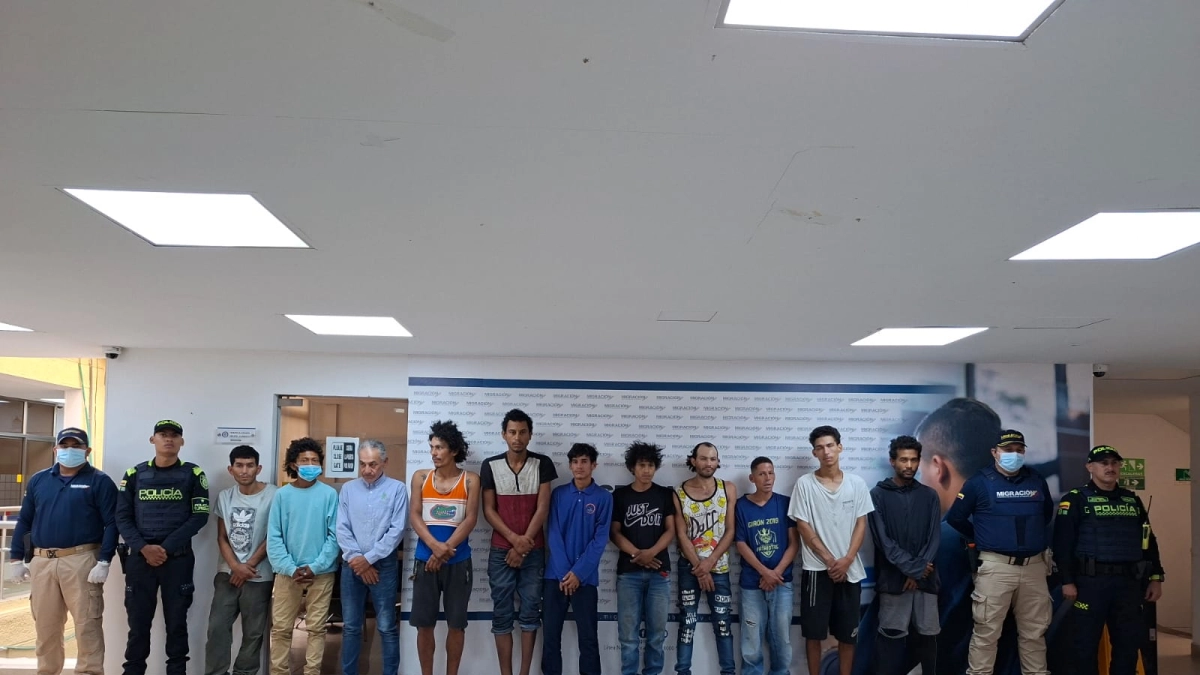
In Medellín, the operation targeted both the high-traffic Parque Lleras and the dense urban sectors of the Barrio Antioquia. In these areas, officials conducted meticulous identity verifications, resulting in the identification of 17 foreign nationals whose criminal records or active involvement in illicit conduct served as immediate grounds for expulsion.
The Itagüí Precedent
The crackdown in Itagüí, which preceded the broader operation, served as a pilot for this new enforcement model. Authorities there successfully apprehended four foreign nationals. Two were found to have active arrest warrants, while the others were processed for expulsion due to severe administrative infractions. This success proved to government officials that proactive, localized identification is the most effective tool for neutralizing threats before they escalate into violent incidents.

Chronology of Enforcement: A 48-Hour Timeline
The intensity of the operation was marked by several distinct phases, ranging from intelligence-led arrests to administrative expulsions.
Phase 1: The Medellín Sweep
The operation began in the capital of Antioquia with a focus on public safety. Migración Colombia’s regional teams, supported by local police, swept through sectors known for both legitimate commerce and nightlife. The objective was to cross-reference identity documents with national databases and international Interpol files.
Phase 2: Interdictions at Transport Hubs
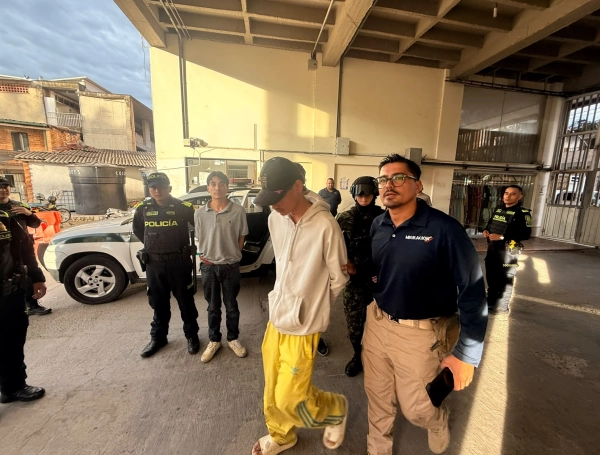
The Terminal of Transport in Medellín became a flashpoint for international security. Intelligence units identified a foreign national who was the subject of an Interpol "Blue Notice"—a request to locate, identify, or obtain information on a person of interest in a criminal investigation. The individual, wanted for drug trafficking and aggravated conspiracy, was apprehended and immediately placed under the custody of the DIJÍN (Directorate of Criminal Investigation and Interpol).

Phase 3: The Administrative Check-In
In a separate incident at the Migración Colombia office in Belén, a routine administrative check turned into a security breakthrough. An individual attempting to process residency-related paperwork was identified as being wanted by Panamanian authorities, also via an Interpol Blue Notice, for charges related to fraud. This incident highlights the efficacy of integrating bureaucratic procedures with judicial databases.
Phase 4: Border Security and the Prevention of Exploitation
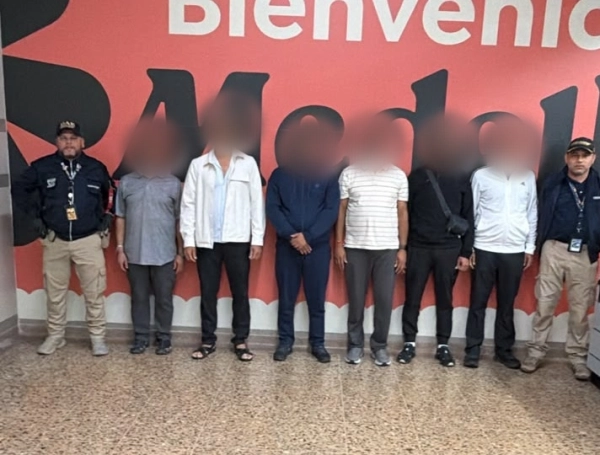
At the José María Córdova International Airport, authorities shifted their focus to prevention. Seven foreign nationals were denied entry after detailed interviews revealed that their stated purpose for travel—tourism—was a pretext. Officials determined that the individuals intended to engage in the exploitation of women. One traveler explicitly admitted to arriving with the intent of soliciting services linked to sexual exploitation, leading to an immediate inadmissibility order.
Bucaramanga: Tackling Recidivism
The situation in Bucaramanga and its metropolitan area followed a different, yet equally rigorous, logic. Rather than focusing solely on criminal warrants, authorities targeted "reincidentes"—individuals who repeatedly violate the National Code of Security and Citizen Coexistence.
During the sweep, 11 foreign nationals were detained. The infractions included carrying prohibited bladed weapons, disturbing the peace, and the public consumption of controlled substances in areas designated as sensitive or restricted. Because these individuals had previously received multiple warnings and administrative sanctions, the authorities determined that continued presence in the country was a direct threat to public safety. Consequently, an executive order of expulsion was issued for all 11 individuals.
Official Responses: A Unified Front
José Luis Castañeda, the Director General of Migración Colombia, has been vocal about the necessity of these operations. During a press briefing, he emphasized that the agency is moving away from a passive, desk-based role toward a more assertive enforcement posture.
"The work of Migración Colombia is no longer confined to the sterile environments of airport terminals," Castañeda stated. "We are embedded throughout the department, conducting rigorous verifications that yield concrete, measurable results. Our coordination with the National Police and local municipal governments is the engine behind this success. We have a clear mandate: to identify those who disregard our laws and to ensure that the consequences of such actions are immediate and definitive."
Castañeda further elaborated that these actions are not about stigmatizing the migrant population as a whole, but about targeting specific individuals whose actions compromise the safety of Colombian citizens and residents. "Our purpose is the restoration of security. We are acting with absolute legal clarity to protect the fabric of our communities."
Implications: The Future of Migration Policy
The intensity of these recent operations raises significant questions about the future trajectory of migration policy in Colombia. Several key implications emerge from these events:
1. Enhanced Inter-Agency Data Integration
The success in locating individuals wanted by Interpol suggests that Colombia has significantly improved the integration of its local civil databases with international criminal registries. This synchronization is a powerful tool that allows authorities to spot high-risk individuals before they can integrate into the local shadow economy.

2. The End of "Impunity for Infractions"
The expulsion of the 11 individuals in Bucaramanga for recidivism marks a change in how minor offenses are treated. By linking the National Code of Security—often associated with minor social disturbances—to the severe administrative penalty of expulsion, the state is signaling a "zero tolerance" policy for those who repeatedly flout local regulations.
3. Public Perception and Political Pressure
There is mounting political and social pressure to address the perception that foreign nationals are contributing to crime rates. These operations serve as a visible response to that pressure. By showing that the state is "taking back the streets," the current administration aims to maintain public confidence in its ability to manage both the migratory flow and the security of the country’s urban centers.
4. International Cooperation
The use of Interpol Blue Notices to secure individuals in local transport terminals and administrative offices highlights the growing reliance on transnational cooperation. Colombia’s commitment to this level of partnership suggests that the country is positioning itself as a proactive player in regional security, rather than a passive observer of migrant movements.

Conclusion: A New Standard of Oversight
The events of the past 48 hours in Colombia are a watershed moment for the country’s migration oversight. By moving into neighborhoods, transport hubs, and administrative offices, the authorities have demonstrated that no sector of the country is beyond the reach of security verification.
While the operations have been met with support from citizens concerned about public safety, they also set a precedent for how future administrative and criminal issues will be handled. The message from the government is clear: while Colombia remains a country of opportunity, those who violate the law—whether through criminal acts or persistent disregard for social norms—will face the full weight of the state, including the loss of their right to remain in the country. As these operations continue, the focus will remain on balancing humanitarian obligations with the state’s fundamental duty to protect its citizens and ensure the rule of law.