
By Editorial Staff, Economic News Desk
October 28, 2026
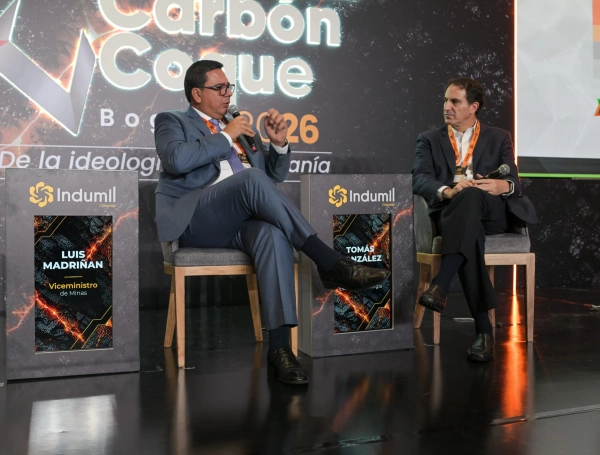
In a bold move to reshape Colombia’s economic landscape and accelerate growth toward the 2030 horizon, the administration of President Abelardo De La Espriella has unveiled a structural transformation of its investment regime. During the recent Colombian Coal and Coke Summit 2026, the government signaled its intent to launch "El Ruge," a comprehensive regulatory and fiscal framework designed to position Colombia as the most competitive mining and energy destination in Latin America.

The strategy, which will be formally presented to international investors during the upcoming "Milagro Week" in New York, scheduled for November 16–18, aims to provide long-term legal certainty, tax incentives, and a simplified contractual environment to attract large-scale capital.
The Core of "El Ruge": A New Era for Investors
At the heart of the "El Ruge" policy is the concept of long-term stability. The government recognizes that the primary barrier to massive capital infusion in the mining sector is the volatility of domestic policy and the lack of predictability in contractual obligations.

The 30-Year Guarantee
Under the proposed regime, the Colombian government will offer ironclad 30-year contracting frameworks for projects exceeding $150 million. This window of time is intended to span the entire lifecycle of major mining operations, from exploration and infrastructure development to extraction and closure.
"We are establishing rules of the game that persist for three decades," said Luis Madriñán, Vice Minister of Mines. "This is designed to eliminate the ‘fear factor’ that investors often associate with shifting political tides. When a company commits $150 million or more, they deserve to know that the regulatory environment will remain a bedrock of stability throughout their operational lifespan."

Fiscal Incentives and Job Creation
Beyond contract duration, the government is fine-tuning a package of fiscal sweeteners. Specifically, the administration is considering additional income tax reductions for corporations that meet aggressive local employment quotas. Projects that generate upwards of 500 new, high-quality jobs will be eligible for prioritized tax treatment.
While the Ministry of Finance is still calibrating the final percentages, the intent is clear: to incentivize the "Colombianization" of the workforce while maintaining global cost-competitiveness.
Strategic Reclassification of Mineral Assets
A pivotal component of the "El Ruge" strategy is the recent decision by the National Mining Agency (ANM) to formally reclassify thermal and metallurgical coal as "strategic and critical minerals" for the nation.
Why Coal Matters for the Energy Transition
Critics of the move have questioned the focus on coal in an era of global decarbonization. However, Vice Minister Madriñán defended the policy as a pragmatic necessity for the national grid. "In Colombia, coal is not just a commodity; it is a critical pillar of our energy security," he explained. "Given the geographic and technical limitations in constructing new large-scale hydroelectric plants, the country requires high-efficiency thermal power generation to maintain grid stability. Coal is the backbone of that transition."

The government intends to present this reclassification to the Colombian Congress to codify it into law, effectively shielding the industry from ideological shifts every four years. By enshrining the status of coal as "strategic," the administration seeks to provide the "certitude" that multinational mining firms require to invest in the country’s infrastructure.
Economic Projections and Growth Targets
The ambition of the De La Espriella administration is to reach a 6% annual GDP growth rate by 2030. According to government economic advisors, this target is unattainable without a significant overhaul of the extractives sector.

The 10% Expansion Goal
The Ministry of Mines has set an internal goal for the mining sector to expand at a rate of 10% annually. To achieve this, the country requires a massive injection of capital. The government estimates that at least $5 billion in fresh investment is needed over the next six years, which they project will generate roughly $25 billion in economic output.
"We are laying the technical and legal groundwork to transform Colombia into a global mining powerhouse," said Madriñán. "This is not just about extraction; it is about building the infrastructure, the ports, and the logistics chains that will anchor the Colombian economy for the next generation."

Chronology: The Path to Milagro Week
- October 20, 2026: Government releases preliminary data on fiscal pressures, highlighting the need to diversify revenue and increase foreign direct investment (FDI).
- October 24, 2026: Economic analysts and labor groups raise concerns regarding the cost of living and the difficulty for middle-class families to secure housing, putting pressure on the government to boost industrial productivity.
- October 27, 2026: A technical audit of the Cartagena regasification plant reveals operational failures, triggering concerns over natural gas shortages and underscoring the urgency of the government’s energy security plan.
- October 28, 2026: Vice Minister Luis Madriñán presents the "El Ruge" framework at the Colombian Coal and Coke Summit, confirming the government’s commitment to the 30-year contracting model.
- November 16–18, 2026: The official launch of "El Ruge" and the presentation of specific investment portfolios to international stakeholders at "Milagro Week" in New York City.
Implications for the National Economy
The implementation of "El Ruge" carries profound implications for Colombia’s socio-economic future.
Addressing Fiscal "Maladies"
The government has acknowledged that the country currently struggles under a complex tax system consisting of 18 different primary taxes. This, combined with high inflation and energy supply risks—as highlighted by the current concerns regarding the "El Niño" weather phenomenon—has hindered private investment. By offering a "special regime," the government is essentially creating a "safe harbor" for large capital that might otherwise avoid the complexities of the broader national tax code.

The Human Element: Employment and Development
While the government focuses on the macro-level, the success of this plan will ultimately be measured by its impact on local communities. The requirement for 500+ jobs per project is an ambitious target intended to mitigate the social unrest that often accompanies large-scale mining projects. If successful, the strategy will provide the tax revenue necessary to fund the social programs requested by the public, effectively linking corporate success to national welfare.
Official Responses and Industry Outlook
The industry reception to the "El Ruge" announcement has been cautiously optimistic. Industry leaders at the Coal and Coke Summit expressed relief at the government’s explicit pivot toward supporting the mining sector.

"For years, we have dealt with policy ambiguity," said one industry representative on the condition of anonymity. "If the government follows through on the 30-year legal guarantee and makes this a matter of law through Congress, it changes the risk profile of Colombia entirely. We can finally plan for the long term."
However, the opposition and environmental advocacy groups have already begun to voice concerns. Critics argue that doubling down on coal and minerals, even under the guise of "critical minerals," risks delaying the necessary shift toward renewable energy sources. The government’s rebuttal remains consistent: until technology and national infrastructure catch up, coal is the only bridge to a stable energy future.

Conclusion
As the Colombian government prepares for "Milagro Week" in New York, the message to the international community is clear: Colombia is open for business, the rules are being rewritten for longevity, and the goal is a rapid, resource-driven economic expansion. Whether this strategy will lead to the promised 6% growth rate remains to be seen, but one thing is certain: under the "El Ruge" initiative, the stakes for the nation’s future have never been higher.
For more detailed insights on the Colombian economic landscape, register for our weekly newsletter or follow our live updates on the official El Tiempo digital channels.