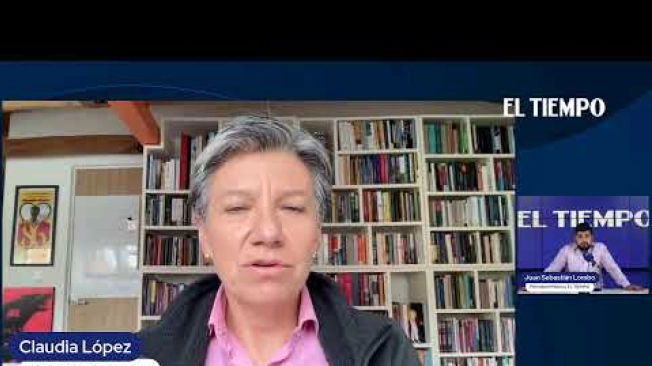
Bogotá, Colombia — In a political development that has sent shockwaves through the Colombian establishment, former Bogotá Mayor Claudia López has addressed her recent, unexpected reconciliation with former President Gustavo Petro. Once fierce political adversaries who frequently traded sharp public rebukes, the two prominent figures of the Colombian center-left and left now find themselves exploring the framework of an electoral alliance.
In an exclusive, wide-ranging interview, López defended her decision to sit down for coffee with the former head of state, framing the dialogue not as a personal capitulation, but as an urgent, pragmatic necessity to confront what she characterizes as an authoritarian and "fascist" threat from the rising right wing, spearheaded by figures such as Abelardo De La Espriella.

Main Facts
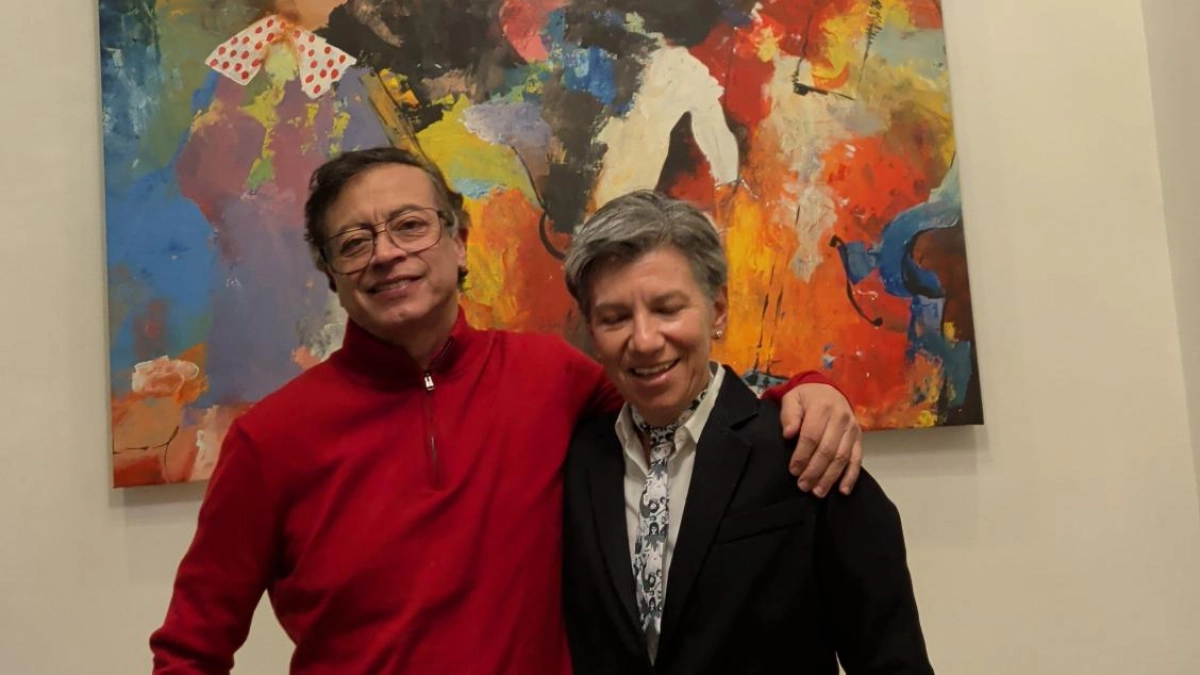
The core of the recent political earthquake centers on a photograph capturing Claudia López and Gustavo Petro meeting cordially, signaling a thawing of hostilities that had defined their relationship during López’s tenure at the Liévano Palace and Petro’s time in the Casa de Nariño.
According to López, the encounter served three explicit purposes:

- Confronting Past Enmity: She directly addressed the sectarianism and political calumny directed at her and her partner, Angélica Lozano, by factions within Petro’s Pacto Histórico movement, categorizing those past attacks as "unjust, infamous, and a strategic error."
- Redefining the Political Spectrum: López argues that the geopolitical landscape has shifted dramatically, necessitating a unified front among progressive forces to counter a resurgent, conservative, anti-rights political project.
- Establishing Electoral Pragmatism: While denying that she or Petro discussed specific future candidacies—such as a potential bid for the Bogotá Mayoralty—López acknowledged that the dialogue aims to lay the groundwork for a broader protective platform for progressive social leaders, women, and youth heading into upcoming regional and national cycles.
Despite extending an olive branch, López maintained that her past institutional denunciations of corruption within the previous government stand, asserting that accountability and legal consequences for corrupt actors must proceed independently of political reconciliations.
Chronology of an Unlikely Rapprochement
To understand the magnitude of this political pivot, one must examine the trajectory of relations between López and the broader Pacto Histórico ecosystem:
- The Mayoralty Years (2020–2023): As Mayor of Bogotá, Claudia López frequently clashed with President Gustavo Petro over major infrastructure projects—most notably the ongoing construction and design of the Bogotá Metro—as well as issues concerning public security, fiscal management, and governance style.
- The 2022 Presidential Runoff: While López maintained an independent stance, she consistently positioned herself outside the traditional conservative bloc, ultimately supporting progressive alternatives in second rounds when faced with right-wing contenders, while remaining a vocal internal critic of Petro’s governing methods.
- Post-Presidency and Electoral Realignment (2024–2026): Following the conclusion of Petro’s presidential term and the subsequent mobilization of a stronger conservative opposition—highlighted by figures like Abelardo De La Espriella and commentary from former presidential candidate Vicky Dávila—the progressive movement suffered significant electoral setbacks.
- The September 2026 Meeting: Culminating months of private, behind-the-scenes conversations with various progressive leaders, the public meeting between Petro and López signaled a mutual acknowledgment that divided leftist factions risk total political marginalization.
Supporting Data and Context
The urgency driving López’s strategic recalculation is rooted in tangible electoral arithmetic and institutional shifts:
- Electoral Costs: The Pacto Histórico paid a historic price for its internal scandals and governance missteps, ultimately losing the executive branch in the wake of voter discontent. López points out that this penalty has already been exacted by the electorate, making self-correction a mandatory survival mechanism for the left.
- The Cost of Corruption: High-profile legal proceedings, such as those involving figures tied to the previous administration like Juliana Guerrero—who recently faced a firm judicial conviction—have heavily burdened the progressive brand. López insists that true amends cannot merely be verbal apologies; they require unwavering cooperation with the judiciary.
- The Rise of the Right: The emerging conservative coalition, frequently associated with robust law-and-order rhetoric and figures like De La Espriella and Dávila, commands substantial financial backing, media platforms, and grassroots momentum. López argues this bloc represents a systematic rollback of civil liberties, minority protections, and freedom of expression.
- Voter Base Dynamics: The Pacto Histórico remains the single largest progressive party in Colombia, commanding a base of over 12 million voters and looking to Gustavo Petro as its primary political leader. López notes that any viable coalition aiming to protect democratic institutions must reckon with this heavy political gravity.
Official Responses and Public Reactions
The rapprochement has drawn immediate and polarizing reactions across the Colombian political spectrum:

- Claudia López’s Defense: Addressing critics who label her alignment with Petro as opportunistic or contradictory, López emphasized her lifelong progressive credentials. When questioned by journalists about being branded a "closeted petrista" by figures like Vicky Dávila, López dismissed the label as internet meme culture, choosing instead to focus on addressing the legitimate confusion expressed by moderates and allies. “Petro is the leader of the largest progressive party in Colombia… How can there be amends and reconciliation in the progressive world without taking into account the majority party?” she stated.
- Critiques from the Right: Conservative commentators and opposition figures have seized upon the meeting to argue that independent centrists are merely exposing their true partisan leanings. They contend that attempting to sanitize the image of the previous administration ignores systemic institutional decay.
- Internal Left-Wing Dynamics: Within the progressive movement, leaders such as Senator Iván Cepeda have navigated the shifting landscape while working to maintain organizational cohesion. López expressed deep personal respect for Cepeda, warning that attempts to sow division within the progressive camp only serve to benefit the political right.
Implications for the Future of Colombian Democracy
The unfolding alliance between Claudia López and Gustavo Petro carries profound implications for the future of Colombian politics:
- A Unified Progressive Front: If successful, this coalition-building effort could prevent the fragmentation of the center-left and left, pooling resources, local leadership platforms, and voter mobilization strategies to counter the conservative aplanar in upcoming legislative and executive contests.
- The Battle for Bogotá and Beyond: While López has explicitly denied finalizing any personal ambitions for a return to the Bogotá Mayoralty or other high offices, the structural framework being discussed is explicitly designed to give young, female, and grassroots progressive candidates a fighting chance against entrenched regional political clans.
- The Tensions of Accountability: A central paradox of this alliance is balancing political pragmatism with moral authority. López insists that legal accountability—ensuring that corrupt actors face severe judicial penalties—must run parallel to political reconciliation. Whether the electorate can accept this nuanced coexistence of legal justice and political coalition remains one of the defining questions of the current political era.
As Colombia looks toward the next major electoral cycles, the dialogue between its most prominent former mayor and its most influential leftist leader marks a pivotal turning point—transforming past animosities into a high-stakes calculus for democratic survival.