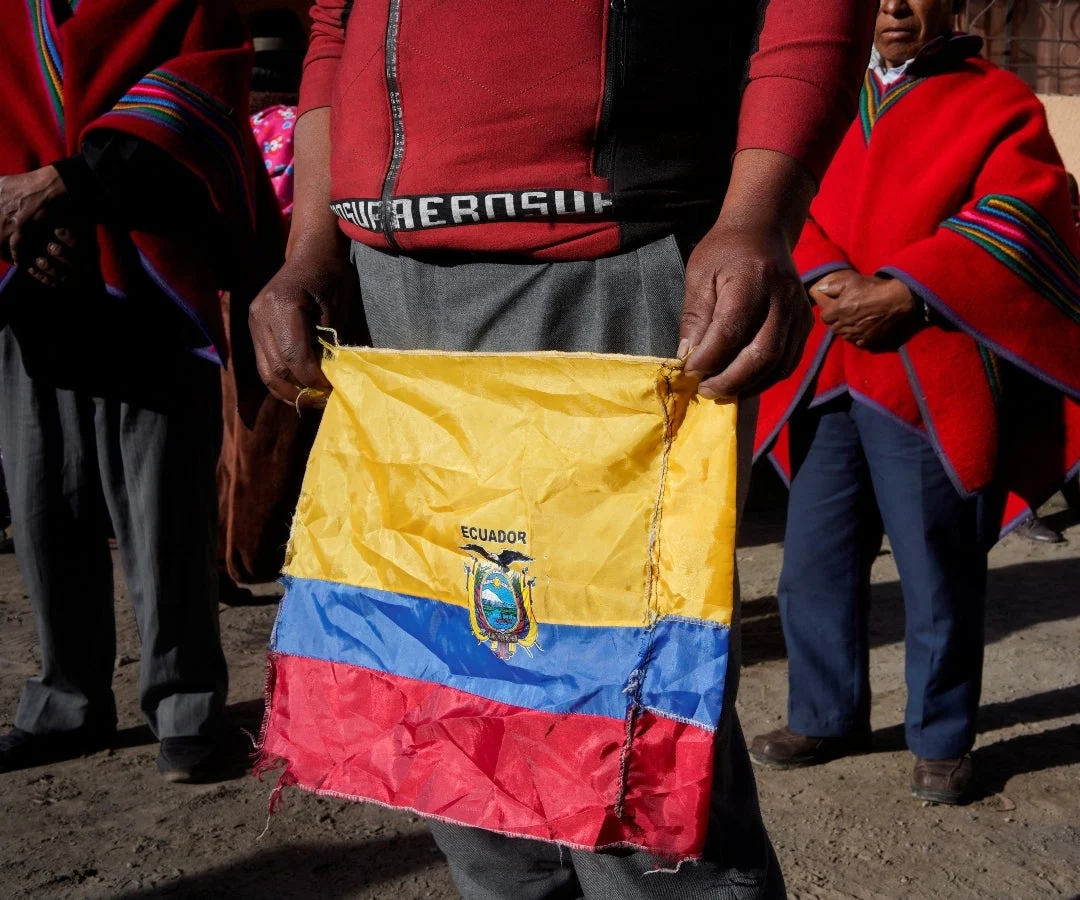
QUITO, Ecuador — In a robust display of discontent, hundreds of citizens, labor unionists, students, and members of various social organizations took to the streets of Quito on Saturday, November 7. The mass mobilization served as a direct indictment of the administration of President Daniel Noboa, focusing public ire on compounding crises in education, public health, national security, and environmental protection.
Beyond economic and governance grievances, the protest evolved into a prominent political rally demanding the immediate release of former presidential candidate Luisa González. González has been held in preventative detention since October 23, facing charges of alleged money laundering tied to her 2023 electoral campaign.
The demonstrations, which also echoed across several other urban centers in Ecuador, transpired under the watchful eye of heavy anti-riot police deployments. Coming just three weeks before crucial regional and sectional elections, the mobilization has heightened political tensions in an already polarized Andean nation.
Main Facts
The core of Saturday’s protests centered on a multifaceted rejection of current state policies. Demonstrators converged to voice profound dissatisfaction with the Noboa administration’s handling of three foundational pillars of civil society: public health, education, and security.
- The Core Demands: Protesters denounced what they termed the systematic deterioration of public services, highlighting severe budget cuts, institutional neglect, and a perceived failure by the executive branch to curb rising insecurity and organized crime.
- The Political Demands: The freedom of Luisa González emerged as a central rallying cry. González, a prominent figure in the political opposition and a close ally of former President Rafael Correa, is currently contesting her preventative detention via a pending habeas corpus appeal.
- Sectoral Coalitions: The march was notable for its broad-based coalition. It united traditional labor unions, student federations, environmental activists, and vulnerable patient demographics—most notably, renal patients dependent on state-provided dialysis who face critical shortages and administrative hurdles in hospitals.
- Geographical Scope: While the epicenter of the mobilization was Quito—where marchers moved from the historic Parque La Alameda through central thoroughfares—synchronized protests and gatherings were reported in other key provinces, demonstrating a nationwide resonance of the grievances.
Chronology of the Mobilization
The events of Saturday unfolded methodically, reflecting the high degree of organization among the participating social movements and labor syndicates.
Early Morning: The Assembly at Parque La Alameda
Beginning at approximately 9:00 AM local time, diverse contingents of workers, indigenous representatives, and student groups began gathering at Parque La Alameda, a traditional staging ground for political protests in the Ecuadorian capital. Chanting anti-government slogans and unfurling massive Ecuadorian flags alongside banners representing their respective organizations, the crowds steadily swelled over the course of two hours.
Mid-Day: The March Through Central Quito
By 11:30 AM, the assembly transformed into a moving column of protestors. Escorted closely by specialized anti-riot units of the Ecuadorian National Police—who maintained a visible but largely reactive presence—the march advanced down major avenues toward the historic center and government zones. The atmosphere remained largely vociferous yet disciplined, characterized by speeches projected through portable sound systems, drumming, and theatrical performances critiquing the current economic model.
Afternoon: Plenary Speeches and Sectoral Testimonies
Upon reaching the designated rally points, leaders from the various organizing blocks took the microphone. Representatives of the education sector decried falling investments in public universities and schools. Simultaneously, health advocates and kidney disease patients detailed the harrowing conditions of public hospitals, where shortages of medications and operational dialysis machines have placed lives at risk.
The mobilization formally dispersed in the mid-afternoon without major violent clashes, though traffic throughout central Quito remained paralyzed for hours.
Supporting Data and Context
To fully understand the weight of Saturday’s mobilizations, one must examine the socio-economic and political backdrop against which they occurred. Ecuador has navigated a turbulent post-pandemic era marked by fiscal austerity, soaring public debt, and an unprecedented surge in drug-related violence that prompted President Noboa to declare a state of internal "armed conflict" early in his term.
The Economic Squeeze and Public Services
Social organizations point to shrinking state allocations for health and education as primary drivers of popular discontent. According to reports from various civil society watchdogs, public hospitals have operated at severely reduced capacities, forcing patients to purchase basic surgical supplies out of pocket.
The inclusion of renal patients in the march underscores a particularly acute humanitarian crisis within the public health infrastructure. Dialysis centers across the country have repeatedly warned of imminent closures due to millions of dollars in unpaid state arrears to private clinic providers.
The Legal and Political Quagmire of Luisa González
The detention of Luisa González has fundamentally altered the political calculus in Ecuador. Arrested on October 23, González faces prosecution over alleged financial irregularities and money laundering linked to the funding streams of her 2023 presidential bid under the Revolución Ciudadana movement.
Her legal team filed an urgent habeas corpus petition, arguing that her preventative detention is arbitrary, politically motivated, and lacks evidentiary justification. As the judiciary deliberates on this appeal, her supporters have successfully weaponized her detention as a symbol of judicial persecution against the political opposition. The timing of these events—occurring a mere three weeks ahead of sectional elections—has turbocharged political rhetoric, transforming a standard labor and social march into a high-stakes referendum on the rule of law and democratic freedoms in Ecuador.
Environmental and Anti-Extractivist Stance
Adding another layer of complexity to the protests, environmental groups used the platform to voice vehement opposition to large-scale mining and resource extraction projects. Citing threats to water sources, ancestral lands, and biodiversity, these groups demanded that the government respect local consultations and halt concessions granted to multinational extractive corporations.
Official Responses
As of late Saturday evening, the executive branch and allied government ministries had maintained a cautious posture regarding the scale and demands of the demonstrations.
- The Government’s Stance on Security and Governance: Historically, the Noboa administration has framed its policies—particularly in security and fiscal management—as necessary, albeit painful, measures to rescue the nation from structural bankruptcy and criminal dominance. Government spokespersons have consistently maintained that security operations and fiscal reforms are non-negotiable prerequisites for attracting foreign investment and restoring public order.
- Response to Health Sector Protests: The Ministry of Public Health previously issued statements acknowledging logistical hurdles within hospital supply chains while insisting that administrative overhauls are underway to normalize payments to dialysis providers and pharmaceutical suppliers. However, patient advocacy groups argue these bureaucratic promises have failed to translate into tangible daily relief.
- The Judiciary and the González Case: Judicial authorities have repeatedly emphasized their operational independence in the ongoing case involving Luisa González. Officials from the Attorney General’s Office maintain that the prosecution is proceeding strictly according to procedural codes regarding financial transparency and campaign finance laws, rejecting allegations of political bias or executive interference in the judicial branch.
Implications
The convergence of labor disputes, healthcare crises, environmental demands, and high-profile political imprisonments in Quito carries profound implications for the immediate and long-term future of Ecuador’s political landscape.
1. Heightened Electoral Polarization
With sectional elections looming in just three weeks, the mass mobilization acts as an early indicator of voter sentiment. The integration of Luisa González’s plight into broader socioeconomic grievances consolidates the opposition base, galvanizing anti-government sentiment among core segments of the electorate. This polarization threatens to sharpen ideological divides at the ballot box, complicating governance for the central administration regardless of local electoral outcomes.
2. Fragility of Social Truces
The ability of disparate groups—ranging from university students and environmentalists to trade unionists and chronic health patients—to mount a unified front poses a persistent challenge to the executive branch. If the Noboa administration fails to deliver substantive improvements in hospital supplies, educational budgets, and cost-of-living adjustments, these ad-hoc coalitions could morph into sustained, indefinite national strikes reminiscent of historical indigenous and labor uprisings that have previously paralyzed the Andean nation.
3. Judicial Independence Under Scrutiny
The handling of Luisa González’s habeas corpus petition and the broader legal proceedings against opposition figures will serve as a definitive litmus test for the credibility and autonomy of Ecuador’s judicial system. Any perception of politically motivated jurisprudence risks further eroding public trust in democratic institutions, potentially inviting international scrutiny and deepening domestic instability.
As Ecuador marches toward an intensely contested electoral cycle, Saturday’s demonstrations in Quito stand as a stark reminder of the deep-seated structural challenges and acute political tensions currently shaping the nation’s destiny.