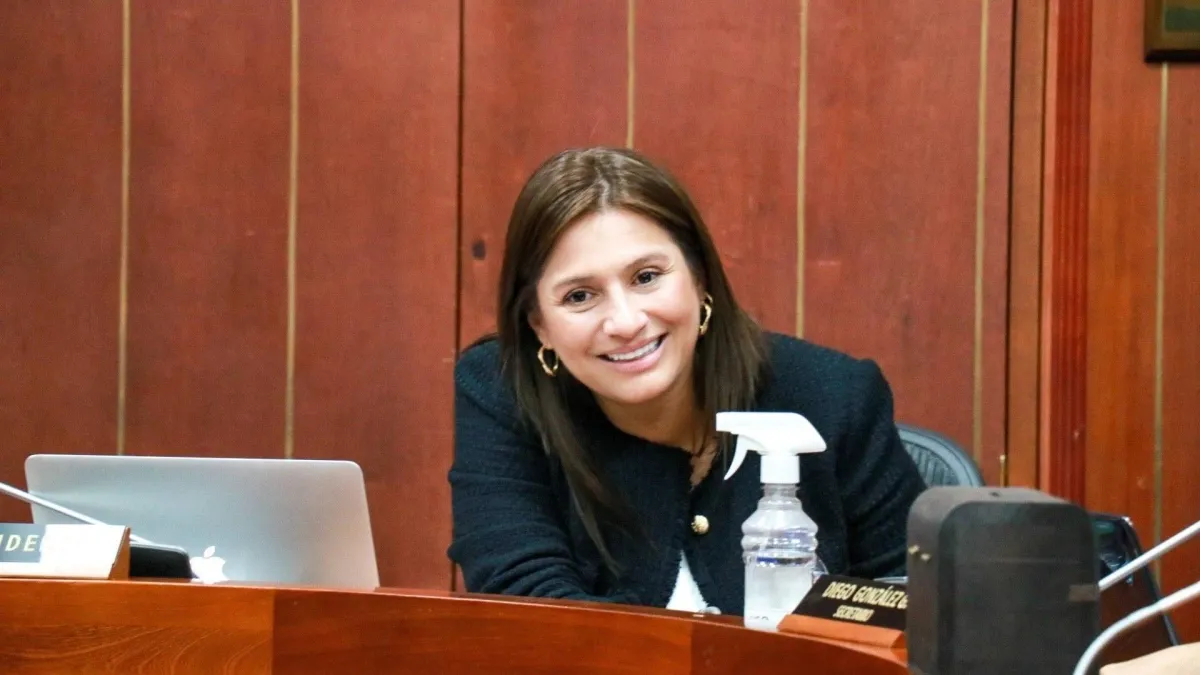
In a significant move within Colombia’s educational administration, the government of President Gustavo Petro has officially removed Elizabeth Blandón Ramírez from her position as Director of the Colombian Institute for the Evaluation of Education (ICFES). The decision, characterized as an "insubsistente" (a discretionary removal of a public servant in a position of trust), marks the end of a tenure that began in August 2023.
The departure was confirmed by high-level government sources, noting that Blandón’s final day of service was November 9. As of the time of reporting, the institution remains in a state of leadership transition, with the Presidential office yet to announce a successor or publish the curriculum vitae of an interim replacement.
The Context of the Removal
The ICFES is the backbone of Colombia’s academic assessment system, responsible for conducting the Saber tests—the mandatory evaluations for secondary students and university graduates that determine institutional quality and individual access to higher education. Given the institute’s role in shaping public policy, the sudden departure of its director has sent ripples through the educational sector.
While the government has not issued a formal, detailed explanation for the "insubsistencia," such moves are typically interpreted as a shift in strategic alignment or a response to internal management reviews. Blandón, an experienced technocrat, had been appointed by the Petro administration to oversee the modernization of evaluation metrics, a task that sits at the intersection of political vision and technical implementation.
Chronology of a Public Service Career
Elizabeth Blandón Ramírez is not a newcomer to the complexities of the Colombian state. Her exit follows more than 25 years of continuous service in the public sector, a period marked by significant contributions to digital transformation and administrative planning.
- Early Career: Before her high-profile roles, Blandón built a reputation as a specialist in public management and institutional efficiency.
- Technological Leadership: Her tenure as Director of Digital Government at the Ministry of Information and Communications Technology (MinTIC) and her time as Deputy Minister (e) of Digital Economy were defined by efforts to bridge the digital divide in public administration.
- Institutional Planning: Blandón served as the Director of Planning for the National Training Service (SENA), one of the largest and most complex training institutions in Latin America.
- Regulatory Oversight: Her experience also spans the health sector, having served as the Director of Innovation and Development for the Superintendency of National Health (Supersalud).
- August 2023: Appointed by President Gustavo Petro to lead the ICFES, bringing her expertise in digital processes to the evaluation institute.
- November 9, 2024: Final day in office following the government’s decision to declare her position vacant.
The Weight of the ICFES Portfolio
To understand the implications of this change, one must consider the sheer scale of the ICFES. The institute is responsible for:
- Saber 11 Tests: Administered annually to hundreds of thousands of students, serving as the gateway to higher education.
- Saber Pro/TyT: Evaluating the quality of undergraduate education, providing data that allows the Ministry of Education to accredit programs.
- Research and Analysis: Providing the evidentiary basis for educational policy in Colombia.
The removal of the director comes at a sensitive time. The academic community is currently debating the future of standardized testing in a post-pandemic world, where the focus has shifted toward "soft skills," socio-emotional development, and the integration of artificial intelligence in testing methodology. The lack of a named successor creates a vacuum that, if prolonged, could stall ongoing projects regarding the digital transformation of these national exams.
Official Responses and Administrative Implications
The term "insubsistente" is a specific legal mechanism in Colombia. Unlike a resignation, which is a voluntary departure, or a firing for cause (which involves a disciplinary process), the "insubsistencia" applies to "libre nombramiento y remoción" (free appointment and removal) positions. These are roles where the government requires total alignment with the administration’s policy goals.
While the government has remained tight-lipped regarding the specific catalyst for the decision, observers within the Ministry of Education suggest that the administration is seeking a "new phase" of policy implementation.
The Search for a Successor
The absence of a published curriculum vitae for a replacement is standard in the initial hours of such announcements, but it raises questions about the administration’s readiness. The position requires a unique blend of psychometric knowledge, administrative experience, and political acumen.
Critics of the current administration argue that the frequent changes in leadership across state entities create institutional instability. Conversely, supporters argue that the President is exercising his constitutional prerogative to ensure that the individuals leading key institutions are fully committed to his "Plan Nacional de Desarrollo" (National Development Plan).
Broader Implications for the Educational Sector
The change at the helm of the ICFES is likely to have several ripple effects:
1. Continuity of Current Projects
The ICFES has been working on a multi-year project to digitize testing centers and incorporate more adaptive testing models. The new director will have to decide whether to accelerate these changes or recalibrate the timeline to align with the government’s specific educational priorities.
2. Trust and Stakeholder Relations
The ICFES works closely with university rectors, high school principals, and international accreditation agencies. A leadership change in the middle of an academic cycle can lead to uncertainty. The incoming director will need to quickly establish credibility with these stakeholders to ensure that the upcoming Saber test seasons proceed without logistical hiccups.
3. Alignment with the "Potencia Mundial de la Vida"
President Petro’s educational platform emphasizes inclusion, closing the gap between rural and urban academic performance, and rethinking how students are evaluated. The new director of the ICFES will almost certainly be tasked with implementing these specific ideological goals, perhaps moving away from traditional evaluation models toward more holistic assessments.
Conclusion: The Path Ahead
Elizabeth Blandón leaves behind a legacy of long-term commitment to digital transformation and public efficiency. Her departure is a reminder of the inherent fragility of high-level positions in the Colombian government, where tenure is often contingent on the shifting sands of political strategy.
As the Ministry of Education prepares to announce the next Director of the ICFES, the education sector remains watchful. The challenge for the successor will be monumental: maintaining the technical integrity of the Saber tests—which are the gold standard for quality control in the country—while simultaneously navigating the political expectations of a government committed to radical change in the educational system.
For now, the hallways of the ICFES are quiet, waiting for the arrival of new leadership. The academic calendar, however, does not wait. With thousands of students preparing for upcoming evaluations, the government is expected to act with speed to fill the vacancy and restore full operational capacity to the institute. The coming weeks will clarify whether this change is merely an administrative adjustment or the beginning of a broader restructuring of how Colombia measures the success of its students and the quality of its institutions.
Redacción Educación | El Tiempo
Follow the latest developments in Colombian education via our weekly newsletter and our social media channels on Facebook and X (formerly Twitter).