By: Editorial Desk (Reporting on Gender Violence)
The pursuit of justice for Erika Valeria Guzmán Sierra has become a harrowing marathon for her mother, Jenny Carolina Sierra. More than seven years after the tragic events that ended the life of the 17-year-old, and two years following a definitive judicial conviction, the perpetrator remains at large, shielded by international borders. The case has evolved into a symbol of the structural frustrations faced by victims’ families in Colombia, where legal victories often feel hollow when the condemned party successfully evades the reach of the law.
The man responsible for the crime, Massimo Alessandro Sierra Ortiz—formerly known as Juan Sebastián Sierra Ortiz—fled Colombia in May 2023, just as legal proceedings were reaching their final, decisive stages. His departure has turned a domestic tragedy into a complex international legal struggle, with the victim’s family now demanding that the Colombian state act with greater urgency to activate a Red Notice through Interpol and secure his extradition.
The Tragic Case of Erika Valeria Guzmán
Erika Valeria Guzmán was a young woman with a bright future. On November 18, 2019, she celebrated her graduation as a high school student, a milestone that promised the start of her adult life. However, just eight days later, on November 26, her life was violently cut short.

The incident occurred in the La Coruña neighborhood of Bogotá. According to the court records, the family had left the apartment they shared in a residential complex, leaving the 17-year-old alone with Massimo Alessandro Sierra Ortiz, then 18. By midday, Jenny Carolina Sierra had lost contact with her daughter. The silence was deafening; messages went unanswered, and calls were ignored. Concerned, the mother contacted other family members and the victim’s boyfriend to check on the residence.
When the apartment was finally accessed that night, the family was met with an unthinkable scene. Erika was found lifeless. Subsequent forensic investigations and the autopsy confirmed that the teenager had died of mechanical asphyxiation by strangulation. Furthermore, the findings revealed clear evidence of sexual violence, painting a horrific picture of an attack perpetrated by someone she trusted within her own home.

Chronology of a Failed Protection System
The legal process that followed the discovery of the crime was arduous. The judicial system eventually found Massimo Alessandro Sierra Ortiz guilty of feminicide and sexual abuse. The court concluded that the defendant had exploited his position of proximity within the domestic unit to exert control and dominance over the teenager, ultimately using physical force to commit his crimes.
However, the timeline of his escape suggests a significant failure in surveillance and prevention:

- November 26, 2019: The date of the crime in the La Coruña neighborhood, Bogotá.
- May 2023: Massimo Alessandro Sierra Ortiz, having legally changed his name from Juan Sebastián, departs from Colombia, successfully identifying the Netherlands as his destination.
- Post-2023: The case moves from the jurisdiction of the Prosecutor’s Office to the Court of Execution of Sentences.
- Present Day: Despite a formal conviction, the defendant remains a fugitive, and the family is left grappling with the reality that the justice system’s reach is currently limited by bureaucratic delays.
The Frustration of a Mother: "A Sentence Written on Paper"
For Jenny Carolina Sierra, the conviction was supposed to be the beginning of closure. Instead, it has become a new source of torment. In a recent interview, she expressed the deep sense of helplessness that defines her current struggle.
"A sentence that we waited so much for, that in the end will only serve to be written on a piece of paper," she stated. "We haven’t managed to make it effective. I spent so much time waiting for the guilty verdict, but I was left with the same bitter taste because there is no arrest."

Her frustration is directed at the perceived lack of communication and the glacial pace of inter-institutional cooperation. As she explained, as a victim, she lacks formal legal expertise, yet she has been forced to navigate the complex world of international law, extradition treaties, and police cooperation. Her primary concern is that the request for an Interpol Red Notice—a critical tool for international fugitive apprehension—is either stuck in administrative limbo or being handled with insufficient priority.
The Role of Interpol and International Extradition
A Red Notice is not an international arrest warrant per se, but rather a request to law enforcement worldwide to locate and provisionally arrest a person pending extradition. For the family, this is the only viable path to bringing Massimo Sierra to justice.
The mother’s plea is clear: "They were in the process since May of sending the request to Interpol, but I haven’t heard anything else. I don’t know if the Red Notice is finally active, or if they are actually looking for him."
Furthermore, she has raised a valid concern regarding the geography of the search. While the last known location was the Netherlands, she fears that the authorities may be too narrowly focused on one country. She argues that the defendant, given the time that has passed, could easily have moved across the European Union. She is calling for a broader, more aggressive search strategy that transcends individual borders.

Implications for the Colombian Justice System
The case of Erika Guzmán highlights a recurring issue in the Colombian justice system: the "flight risk" of dangerous criminals during or after the judicial process. Critics and victim advocates argue that the system fails to impose the necessary precautionary measures, such as travel bans, for individuals under investigation for severe gender-based crimes.
"It is not possible that, during a process like this, they allow people like this to leave the country," the mother lamented.
The case also brings into focus the challenges faced by the Ministry of Justice and the Prosecutor’s Office in coordinating with international entities. When a convicted individual flees, the burden of coordination—ensuring that the extradition request is correctly filed, translated, and prioritized by the destination country—often falls on the victims’ families, who are already struggling with the psychological toll of their loss.
A Call to Action: #NoEsHoraDeCallar
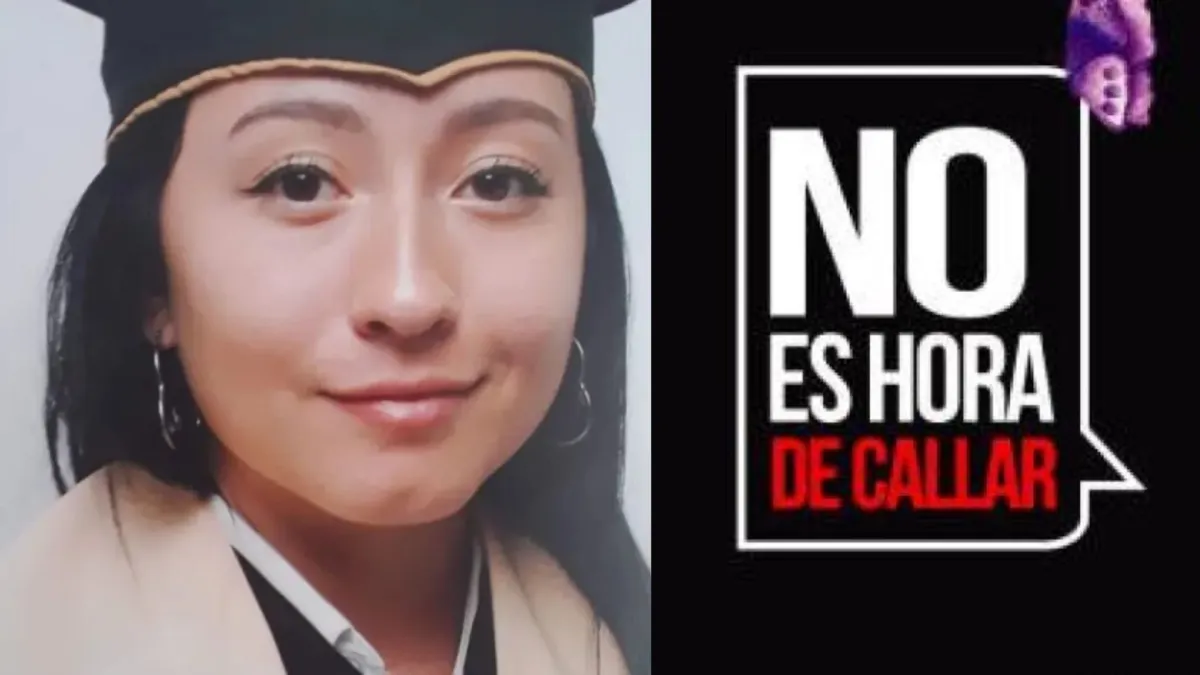
The campaign "No Es Hora De Callar" (It Is Not Time to Be Silent), led by renowned journalist and activist Jineth Bedoya Lima, has been a pillar of support for families like the Guzmáns. The movement serves as a reminder that the fight against gender-based violence in Colombia is far from over and that the accountability of the state is just as crucial as the accountability of the perpetrator.

The authorities in Colombia are under pressure to prove that they are committed to international cooperation. As the case continues to develop, the demand for transparency regarding the status of the extradition request grows louder.
For the legal system, this case is a test of its capacity to follow through. A sentence is only as strong as its enforcement. If the state cannot secure the presence of those it has already deemed guilty, the deterrence factor of the law is diminished, and the suffering of families like the Sierras is compounded.

Support Services for Victims of Gender Violence in Colombia
If you or someone you know is a victim of violence, the following resources are available:
- Emergency Line: 123
- National Hotline for Gender-Based Violence: 155
- Prosecutor’s Office (Fiscalía General): 018000919748 or 122 (for mobile devices).
As the search for Massimo Alessandro Sierra Ortiz continues, the hope remains that the international community and the Colombian state will prioritize this case, ensuring that Erika Valeria Guzmán’s memory is honored not just through a court document, but through the fulfillment of justice.