By Editorial Justice Desk
Updated: July 21, 2026 – 22:11
Executive Summary: A Targeted Threat
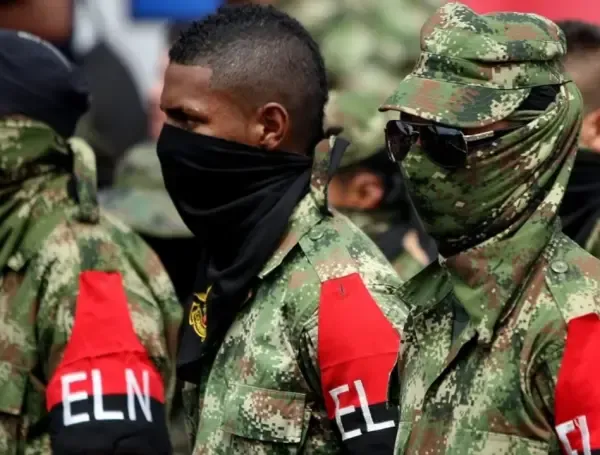
The national security landscape in Colombia has been plunged into a state of high alert following the emergence of intelligence reports indicating a sophisticated plot to assassinate the President-elect, Abelardo De La Espriella. The threat, which has been corroborated by multiple internal sources within the security apparatus, has sent shockwaves through the political establishment during a sensitive transition period. According to official communications from the incoming administration, criminal structures associated with the National Liberation Army (ELN) and various dissident factions of the FARC are allegedly coordinating a multi-million-dollar operation to destabilize the country’s democratic transition.
1. The Genesis of the Intelligence Alert
The alarm was formally raised this past Monday, when the President-elect’s transition team released an urgent communiqué warning of a concrete plan to terminate Mr. De La Espriella’s life. The intelligence, reportedly gathered through signal intercepts and clandestine field reports, suggests that the plot is not merely a localized threat but a well-funded, coordinated attempt to disrupt the regional "empalme" (transition) agenda.

According to the dossier currently being reviewed by national intelligence agencies, the perpetrators have allegedly set a bounty of up to 3 billion Colombian pesos for the successful execution of the assassination. The specificity of the planning—which includes infiltration tactics into public events and press conferences—has forced an immediate and drastic reassessment of the President-elect’s security protocols.
The Vulnerability of Public Appearances
The threat assessment specifically highlights a chilling modus operandi: the exploitation of civilian-dense environments. Intelligence indicates that the planners are looking to infiltrate public gatherings, particularly those involving vulnerable populations like children and the elderly, to shield themselves while closing in on the President-elect. This strategic choice of timing and venue is designed to complicate the defensive posture of the protection detail, as the security team must balance the need for public proximity with the risk of collateral damage.
2. Chronology of Escalating Tensions
To understand the gravity of the current situation, one must look at the recent trajectory of the incoming administration’s policy positions.

- Early July 2026: Abelardo De La Espriella publicly advocates for his inauguration ceremony to be held within a military base in the country’s southwest. This region is notoriously volatile, serving as a primary stronghold for the ELN and the dissident factions loyal to "Iván Mordisco."
- Mid-July 2026: Reports emerge of an increased movement of armored vehicles and tactical teams in the departments of Cauca and Nariño. Intelligence agencies begin tracking the suspicious activity.
- July 20, 2026: Internal security reports are consolidated, linking the regional security threats to the specific movements of the President-elect’s transition team.
- July 21, 2026: The formal announcement is made public. The transition team confirms they have received information about potential car bombs and targeted infiltration strategies.
3. The "Five-Car" Threat: Tracking Explosives in the Southwest
While the political threat against De La Espriella dominates the headlines, a parallel and equally alarming operation is currently underway. Sources within the military and intelligence sectors have confirmed to EL TIEMPO that they are actively tracking five vehicles, allegedly laden with high-grade explosives, moving through the southwestern corridor of the nation.
Technical Challenges of Surveillance
The intelligence gathering, based on radio intercepts and signal analysis, has proven difficult to pinpoint geographically. "The information was detected through listening to the communications of the armed groups. We are currently working to decrypt the specific coordinates to which these vehicles have been mobilized," noted a high-ranking official familiar with the investigation.
The logistical challenge lies in the nature of the region. The mountainous and dense jungle terrain of Cauca and Nariño provides ample cover for insurgent groups to hide assets. The question remains: Are these five vehicles part of a broader, synchronized campaign to disrupt the transfer of power, or are they isolated components of the ELN’s ongoing insurrectionist campaign? Authorities are working under the assumption that the risks are interconnected.

4. Official Responses and Institutional Resilience
Despite the severity of the warnings, the transition team has maintained a posture of resolve. In the wake of the public announcement, they confirmed that the President-elect will not deviate from his scheduled agenda.
"The work of the transition must continue," a spokesperson for the incoming administration stated. "We will not allow criminal organizations to dictate the movement or the governance of the next administration."
However, this resilience comes with a heavy price. The security detail surrounding Mr. De La Espriella has been significantly augmented. New protocols include:
- Pre-event Sweeps: Extensive, multi-layered bomb-detection sweeps at every location on the itinerary.
- Increased Air Support: Enhanced surveillance and escort capabilities for ground transport.
- Enhanced Intelligence Cooperation: Closer coordination between the incoming team and existing military and intelligence leadership to ensure real-time information sharing.
5. Broader Implications: The "Total Peace" Paradigm
The attempted sabotage of the President-elect’s safety is deeply rooted in the ideological shift currently taking place in Colombia. Mr. De La Espriella has been a vocal critic of the previous administration’s "Total Peace" policy, suggesting that it has empowered, rather than neutralized, criminal entities.
The Shift in Military Cooperation
The threat also emerges against the backdrop of the "Plan Patriota 2.0," a strategic shift aimed at revitalizing military cooperation between Colombia and the United States. By moving toward a more assertive security posture, the incoming government has effectively declared a new era of confrontation with illegal armed groups.
The assassination plot, therefore, is interpreted by analysts as a "preemptive strike" by these organizations to test the mettle of the new administration before it has even taken the oath of office. If the state can be intimidated now, the logic follows, it will be easier to negotiate from a position of strength later.

6. Public Safety and National Stability
The potential for collateral damage remains the greatest concern for the state. If the insurgents are willing to risk a high-profile attack on a President-elect, the safety of the general public in the southwest becomes increasingly fragile.
As the government continues to investigate the provenance of the five suspected car bombs, residents in the affected regions have been advised to exercise extreme caution and report any suspicious activity immediately. The state is currently operating on a high-alert status, with checkpoints expanded and intelligence units working around the clock to intercept the threat before it can manifest in violence.
Conclusion: A Critical Juncture
Colombia stands at a crossroad. The threats against President-elect Abelardo De La Espriella are a stark reminder of the resilience of the violent actors that have plagued the country for decades. Whether this represents a desperate final act of a dying insurgency or the beginning of a renewed campaign of terror will depend largely on the efficacy of the current intelligence response and the resolve of the incoming administration.

As the nation waits for further updates, one thing is certain: the transition of power in 2026 will be remembered as one of the most security-intensive periods in the history of the republic. The state’s ability to protect its future leader will serve as a definitive indicator of its capacity to restore order and establish long-term stability in the face of persistent, well-funded, and deeply entrenched criminal networks.
Redacción Justicia
[email protected]
For continuous updates on this developing story, follow our live coverage on Twitter and Facebook, or subscribe to our daily security newsletter.