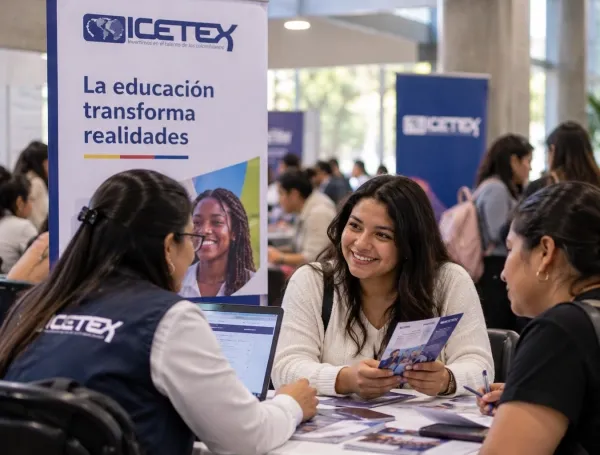
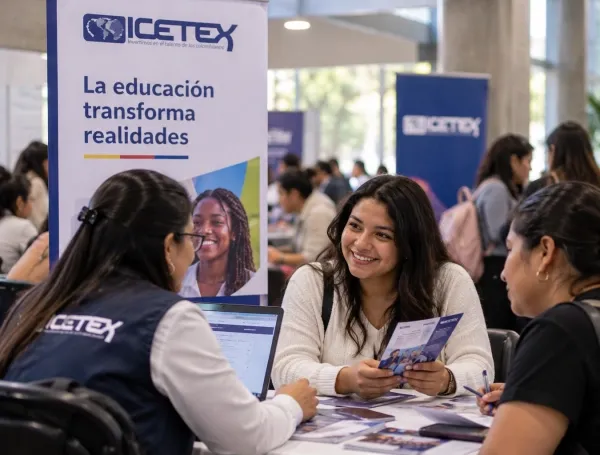
Bucaramanga, Colombia — In a decisive move to secure the future of higher education financing in the country, the Colombian Institute for Educational Credit and Technical Studies Abroad (Icetex) has officially unveiled its comprehensive funding roadmap for the first semester of 2027. The announcement was made during a high-profile institutional event in Bucaramanga, featuring the Vice President of the Republic, José Manuel Restrepo, alongside key members of the institute’s board of directors.
Amid ongoing national discussions regarding the structural reform and financial sustainability of state-backed educational credit, the government delivered a clear and resounding message. “We are not going to bury Icetex,” Vice President Restrepo declared firmly, addressing widespread public speculation and reinforcing the administration’s commitment to maintaining the institution as a vital engine for social mobility and academic advancement.
The sweeping overhaul encompasses modernized credit lines, preferential interest rates, specialized financial relief for regions struck by natural disasters, the return of vital sustenance credits, and expanded pathways for undergraduate, postgraduate, technical, and technological education. With a projection to scale up to 25,000 new educational loans throughout 2027, the institute is moving swiftly to ease the economic burden on students and families navigating an increasingly competitive academic landscape.
Main Facts: What the 2027 Icetex Convocation Entails
The upcoming funding cycle marks a significant evolution in how Icetex distributes resources, balancing broad-based accessibility with highly targeted financial instruments.
1. Expansion of Credit Volume
For the entirety of 2027, Icetex projects the delivery of 25,000 new educational credits. To kick off this initiative, the first-semester call—opening officially on November 3, 2026—will immediately onboard 15,000 new beneficiaries. These slots are structured across diverse financial modalities tailored to fit the diverse economic realities of Colombian households and the specific demands of varying academic programs.
2. Scope of Academic Programs
The funding umbrella is expansive, covering:
Traditional undergraduate (pregrado) degrees in both domestic and international institutions.
Postgraduate (posgrado) specializations, master’s, and doctorate degrees.
Technical and technological training programs, aligning with national industrial productivity goals.
Specialized language and vocational courses abroad.
3. Key Deadlines for Applicants and Current Beneficiaries
New Applications Open: November 3, 2026. Prospective students can begin reviewing eligibility guidelines and submitting their applications directly through the official Icetex web portal.
Credit Renewals for Active Students: Approximately 95,000 current beneficiaries must renew their financing for the first semester of 2027. This mandatory process requires updating personal data on the Icetex portal and completing institutional validation steps with their respective universities or technical institutes before the firm deadline of February 26, 2027.
Chronology of Events: From Disaster Relief to National Strategy
The rollout of the 2027 strategy is the culmination of months of institutional restructuring, emergency response planning, and regional outreach by the Colombian government.
August 10, 2026: A major earthquake strikes regions across western and central Colombia, causing extensive infrastructural damage, disrupting local economies, and placing severe financial strain on student households, particularly in departments such as Chocó, Caldas, Quindío, Risaralda, and Valle del Cauca.
Late October 2026: Icetex conceptualizes specialized emergency and productivity credit lines to address both macroeconomic demands and localized post-disaster recovery.
October 29, 2026: Vice President José Manuel Restrepo and Icetex leadership preview the strategic framework during a special address in Bucaramanga, definitively pushing back against liquidation narratives and branding the institute as a resilient pillar of educational equity.
October 30, 2026: The institute formally publishes the structural guidelines, timelines, and interest rate models for the 2027-1 academic cycle, setting the application launch date for early November.
November 3, 2026: Official opening of the 2027-1 educational credit convocation across all digital channels.
February 26, 2027: Final deadline for the 95,000 active credit holders to complete their mandatory enrollment renewals.
Supporting Data and Innovative Financial Lines
To ensure long-term sustainability while easing immediate liquidity pressures on students, Icetex has introduced innovative repayment structures that separate obligations during study years from post-graduation milestones.
The ‘Human Talent for Productivity’ Line
Designed to bridge the gap between academic training and workforce demands, this line targets students enrolled in technical, technological, and professional programs.
Target Audience: Students in high-demand technical and professional tracks.
Interest Rate: Competitive baseline of IPC + 5 points (Consumer Price Index plus five percentage points).
Repayment Scheme: A progressive model where the student pays 30% of the credit while actively studying, allowing the remaining 70% to be amortized after graduation, once employment has been secured.
The ‘Gente Milagro’ Relief Line
Directly responding to the devastating seismic events of August 2026, this specialized humanitarian and educational instrument aims to prevent mass university dropouts in affected regions.
Target Audience: Students officially registered in government disaster censuses who are enrolled in higher education institutions within Chocó, Caldas, Quindío, Risaralda, and Valle del Cauca.
Interest Rate: Set at IPC + 7 points.
Repayment Scheme: Structured similarly to ease immediate post-disaster stress—30% paid during the academic term and 70% deferred until completion of the program.
The Return of Sustenance Credits (Créditos de Sostenimiento)
Responding to persistent student advocacy and institutional data showing that lack of living expenses is a primary driver of academic dropouts, Icetex has officially reintroduced sustenance credits. Available to students across both public and private institutions, these funds are specifically earmarked to cover housing, transportation, and feeding costs, ensuring that students can maintain continuous physical and digital presence on their campuses.
Official Responses and Institutional Positioning
The future of Icetex has been a frequent subject of legislative debate and public anxiety in recent years, particularly concerning debt burdens, high variable interest rates during inflationary cycles, and the financial viability of student loans. The Bucaramanga announcement served as a political and administrative reaffirmation of the institute’s social mandate.
Vice President José Manuel Restrepo emphasized that dismantling or phasing out the entity would deal a catastrophic blow to lower- and middle-class families who rely on credit to enter higher education.
"We are not going to bury Icetex," Restrepo reiterated during his address. "Instead, we are reforming it to be smarter, more compassionate, and deeply aligned with regional needs and economic realities. Education cannot be the privilege of a few; it must be the catalyst that lifts entire regions out of vulnerability."
Icetex executives echoed these sentiments, stressing that the institute has tightened its internal operational efficiency to offer more forgiving repayment models, such as the split 30/70 payment scheme. Furthermore, the administration issued a stern warning to applicants regarding fraudulent actors: all credit applications, renewals, and advisory services must be conducted exclusively through official Icetex channels (icetex.gov.co). The institute emphasized that no intermediaries, external agencies, or paid third-party agents are authorized to manage applications or guarantee credit approvals.
Implications for Colombian Higher Education and Students
The launch of the 2027-1 financing window carries profound implications for the broader Colombian educational ecosystem, coming at a time when academic indicators face complex headwinds—such as recent fluctuations in national standardized testing scores (Pruebas Saber 11) and institutional efforts to crack down on admissions fraud in public universities like the Universidad de Antioquia.
1. Mitigation of Dropout Rates
By pairing tuition financing with the revival of sustenance credits and regional relief programs like ‘Gente Milagro’, Icetex is directly attacking the multifaceted socioeconomic barriers that force thousands of young Colombians to abandon their studies prematurely. Financial stability outside the classroom is recognized as just as crucial as classroom instruction.
2. Alignment with Regional Development
The inclusion of productivity-focused credit lines indicates a strategic shift toward regional industrial needs. By encouraging technical and technological education with favorable interest rates (IPC + 5), the government is channeling human capital directly into sectors experiencing critical labor shortages.
3. Restoring Institutional Trust
For years, public perception of Icetex was strained by complaints regarding compound interest and aggressive collection methods during economic downturns. By institutionalizing predictable, split-payment modalities (paying a minority percentage during active semesters and deferring the bulk until employability is achieved), the institute is signaling a cultural shift toward student-centric public service.
As the November 3 application window opens, thousands of prospective undergraduate, postgraduate, and technical students across Colombia face a renewed horizon of academic opportunity, backed by a restructured state institution determined to prove its enduring value to the nation’s social fabric.
By Edwin Caicedo | Environmental and Health Journalist Published: September 26, 2026 1. Main Facts: A Nationwide Water Crisis Unfolds The severe hydrological deficit gripping Colombia has officially transitioned from an environmental warning into a…
During his final address to the Congress of the Republic on July 20, 2026, President Gustavo Petro painted a picture of an educational revolution. Standing before the legislature, the President heralded a significant surge in…
By Global Aviation & Travel Desk Published: September 10, 2026 Executive Summary: A New Chapter in U.S.–Colombia Aviation In what is being heralded as a milestone development for international tourism and economic exchange, U.S.-based ultra-low-cost…