By Edwin Caicedo, Environmental and Health Correspondent
October 27, 2026
In a significant move that has reignited the national debate over the balance between top-down environmental regulation and the rights of ancestral communities, the Colombian Ministry of Environment and Sustainable Development officially revoked Resolution 0961. This administrative act, signed just two days before the transition of power in August 2026, had sought to designate the entire Colombian Amazon biome as a "definitive reserve" for renewable natural resources.
The current administration, led by Minister Fabio Arjona, argues that the previous government’s measure was fundamentally flawed, not only in its lack of legal consultation but also in its failure to provide a realistic roadmap for the protection of the territory. The decision, announced on October 26, 2026, marks a pivotal moment in the government’s "ABC" agenda—an acronym standing for Agua, Biodiversidad y Comunidades (Water, Biodiversity, and Communities)—which seeks to integrate local inhabitants as active stakeholders rather than passive subjects of conservation.
The Core Conflict: Procedural Omissions and Consultation
At the heart of the Ministry’s decision is the failure to complete the "prior consultation" (consulta previa) process. Under Colombian law and international standards, such as ILO Convention 169, any major administrative or legislative act that directly affects the territory or way of life of Black, Afro-Colombian, Raizal, and Palenquero communities must be preceded by a process of dialogue and consensus-building.

The Ministry of Environment determined that Resolution 0961 was expedited without this constitutional requirement being fulfilled. According to the government, the oversight was not merely a bureaucratic error but a symbolic exclusion of the people who have served as the historical guardians of the Amazonian basin. By bypassing these communities, the previous administration undermined the legitimacy of the environmental protection measures it intended to implement.
Chronology of the Resolution and Its Reversal
The timeline of these administrative actions highlights the volatility of environmental policy in the final days of political transitions.

- August 4, 2026: The outgoing government issues Resolution 0961, declaring the Colombian Amazon a "definitive reserve of renewable natural resources," aiming to solidify its conservation legacy in the final 48 hours of its mandate.
- August 7, 2026: The administration of President Abelardo de La Espriella takes office, initiating a review of the outgoing cabinet’s late-term decrees.
- September–October 2026: The Ministry of Environment conducts a legal and social audit of the resolution, identifying significant gaps in the required prior consultations with ethnic communities in the Amazon region.
- October 26, 2026: Minister Fabio Arjona announces the formal revocation of Resolution 0961, citing the lack of community participation and the absence of sustainable economic alternatives for the region’s inhabitants.
Official Stance: The Critique of "Paper Parks"
Minister Fabio Arjona has been vocal about his dissatisfaction with the previous administration’s approach to conservation, which he characterizes as performative rather than practical.
"We are again facing a resolution issued at the last minute by the previous government," Arjona stated during his announcement. "Resolution 0961 did not guarantee, on its own, the effective protection of the Amazonian biome. Instead, it created economic and territorial uncertainty for those who live in the region and are, in reality, our primary allies in conservation."
The Minister emphasized that the government is moving away from the concept of "paper parks"—protected areas that exist on maps but lack the resources, security, and institutional presence to prevent illegal activity. Arjona explicitly identified the threats plaguing the region: illegal mining, systematic deforestation, land grabbing, and the influence of criminal economies.
"These phenomena are not combated solely with resolutions," Arjona added. "They require a true institutional presence, territorial control, security, and sustainable productive alternatives for the communities. We need to move beyond administrative declarations and toward concrete, grounded action."

Legal Framework: Why the Amazon Remains Protected
A primary concern following the announcement of the revocation was whether the Amazon would be left in a legal vacuum. The Ministry was quick to clarify that the reversal of Resolution 0961 does not imply a withdrawal of the state from the region. The Colombian Amazon remains protected under a robust, pre-existing legal framework that is far more comprehensive than the revoked resolution.
Key pillars of this ongoing protection include:
- The Forest Reserve (Law 2 of 1959): This foundational legislation remains the backbone of forest conservation in Colombia, prohibiting land-use changes that would jeopardize the Amazon’s ecological integrity.
- The Law of Environmental Crimes: Strengthened in recent years, this provides the penal framework to prosecute those involved in illicit activities like illegal logging and mining.
- National Natural Parks (PNN): The network of protected areas within the Amazon continues to function under the authority of Parques Nacionales Naturales de Colombia.
- Judicial Mandates: The landmark Supreme Court ruling that declared the Amazon a "subject of rights" remains in full force, compelling the state to take affirmative action to stop deforestation.
The Ministry maintains that by removing the "definitive reserve" label, they are not removing protections, but rather clearing the path to replace a flawed instrument with one that is technically, legally, and socially sound.
Implications for Future Governance
The decision to revoke the resolution signals a strategic shift in how the current administration intends to govern the Amazon. By focusing on the "ABC" agenda, the government is signaling that environmental policy in the future will prioritize:

1. Inclusion as a Conservation Tool
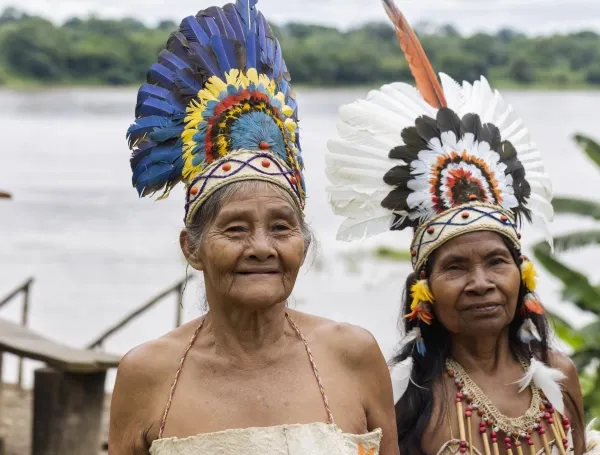
The Ministry argues that conservation is impossible without the active participation of local, indigenous, and Afro-descendant populations. The government intends to initiate a new round of administrative actions, but this time, they will be preceded by the necessary consultations to ensure the measures are culturally sensitive and economically viable.
2. Combating Criminality Through Presence
The rhetoric from the Ministry suggests that the government will move away from relying on "paper-based" solutions. Future policies are expected to focus on state presence—investing in rural infrastructure, technical support for sustainable agriculture, and increased coordination with security forces to reclaim areas currently dominated by illegal actors.
3. Economic Stability for Locals
A key criticism of the previous resolution was that it created "uncertainty." By declaring the region a definitive reserve without offering a transition plan for the local economy, the previous administration arguably pushed local residents toward the very informal or illegal economies they were trying to discourage. The current Ministry aims to provide "productive alternatives," such as payment for ecosystem services (PES) or support for sustainable forest product cooperatives, ensuring that conservation provides a livable income for the local population.
Conclusion: A New Path Forward?
The revocation of Resolution 0961 is, in many ways, a critique of the previous administration’s legacy, but it also represents a high-stakes bet on a different model of governance. By choosing to reset the clock on this designation, the Ministry of Environment is banking on the idea that long-term environmental stability is better achieved through rigorous legal processes and community alignment than through rushed, high-level decrees.

Whether this approach will yield better results in the fight against deforestation remains to be seen. The Ministry has yet to announce the specific terms of a new resolution, leaving a period of anticipation as both environmental NGOs and local community leaders wait to see how the government will translate its "ABC" agenda into reality.
For now, the legal protections of the Amazon remain firmly in place, but the path forward for the region’s governance is being rewritten. The government faces the significant challenge of proving that its commitment to "consultation and inclusion" will lead to a more effective, and more permanent, defense of one of the planet’s most vital ecosystems.
Key Data Summary
- Resolution Revoked: Resolution 0961 (August 4, 2026).
- Reason for Revocation: Failure to complete prior consultation with Black, Afro-Colombian, Raizal, and Palenquero communities.
- Policy Focus: The "ABC" Agenda (Water, Biodiversity, and Communities).
- Status of Protection: All previous legal frameworks (Law 2 of 1959, PNNs, and Supreme Court mandates) remain fully operational and active.
- Current Priority: Development of new, evidence-based, and legally sound administrative policies involving direct community participation.