
By Paula A. Gaviria Aucique
Subeditor of Print – EL TIEMPO
The rapid acceleration of two global phenomena is currently reshaping societies worldwide: the unprecedented aging of the population and the explosive integration of sophisticated technologies, particularly artificial intelligence (AI), across nearly every sector of human life. While these two trends may at first glance seem entirely unrelated, progressive public policy is revealing a critical intersection where they act as powerful complements.
A compelling proof of concept is underway in the municipality of Santa Rosa de Cabal, located in the department of Risaralda, Colombia. Through its pioneering "Centro Día Red" (Red Day Center) program, spearheaded by the local Secretariat of Social Development, the administration is transforming eldercare. By combining community-based welfare structures with advanced technology—specifically artificial intelligence—Santa Rosa de Cabal is charting a new course for preventative health care among senior citizens.
Main Facts: Smart Wearables and Autonomous AI Agents
At the heart of this municipal strategy is a high-tech pilot program designed to monitor and safeguard the health of vulnerable older adults in real time. Ten participants out of more than 100 enrolled in the Centro Día Red program were selected to spearhead the initiative, receiving a comprehensive digital ecosystem consisting of smartwatches, mobile devices, and an AI-driven integration platform.

This deployment makes Santa Rosa de Cabal the very first municipality in Risaralda to introduce intelligent, wearable technology into geriatric care. However, the pilot goes far beyond passive data collection.
The crown jewel of the system is a first-line, fully autonomous interaction protocol: program beneficiaries receive a daily phone call from an artificial intelligence agent. This conversational AI system acts as a virtual health assistant, verifying whether the participant has taken their prescribed medications, eaten properly, and inquiring about their emotional state and daily needs.
This automated screening filters vital data back to human caregivers, allowing medical and psychosocial staff to intervene swiftly and precisely. Rather than waiting for symptoms to escalate or emergencies to occur, the system enables a proactive, deeply humanized approach to preventative medicine.
"What is truly innovative is the integration of modern technology into this program," explains the Mayor of Santa Rosa de Cabal, Paulo César Gómez Hoyos, who is also a practicing physician. "For the older adults attended to by the Centro Día Red, we measure daily variables that give us precise data regarding their heart rate, oxygen saturation, and various clinical evaluation scales."
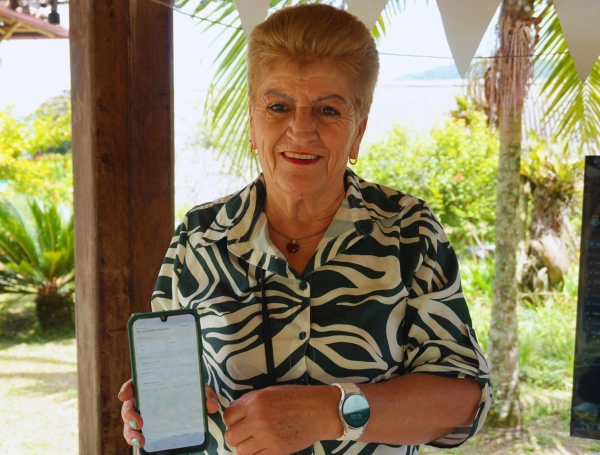
According to the mayor, the initiative has already driven down markers of chronic anxiety and depression. "The data we obtain allows us to make better decisions for the well-being of our older adults," he emphasizes.
Chronology of the Initiative: From Concept to Community Impact
To understand how Santa Rosa de Cabal achieved this technological milestone, it is necessary to examine the timeline of implementation and the broader structural framework supporting it:
- April 2026: The high-tech pilot program officially launches. Ten senior citizens are equipped with smartwatches and smartphones integrated with the AI monitoring platform.
- April – July 2026: Initial impact metrics are evaluated. During this period, the broader Centro Día Red program delivers 1,973 meals, executes 101 transportation routes to bring seniors to the physical center, and performs 120 targeted in-home health interventions.
- September 2026: Preliminary results from satisfaction surveys and health indicators show a 100% positive perception among participants regarding respect and empathy from staff, alongside notable drops in reported anxiety and depressive symptoms.
- Ongoing (2026 and Beyond): The municipal administration looks toward scaling the pilot, aiming to expand the wearable and AI monitoring system to a larger percentage of the aging population.
For beneficiaries like Mario Benjumea, one of the initial ten participants in the technological pilot, the transformation has been profound. "We are very happy. This program has helped us immensely with our health; they monitor us, they look out for us, and they communicate with us every day. We are deeply grateful. Here, we feel like we have been born again," Benjumea shares.
Supporting Data: The Global and National "Silver Tsunami"
The rollout of Santa Rosa de Cabal’s pilot does not happen in a vacuum. It is a localized response to a sweeping demographic shift taking place across Colombia and the rest of the world—a phenomenon frequently termed the "Silver Tsunami."

The Colombian Demographic Reality
According to the National Administrative Department of Statistics (DANE), Colombia is aging rapidly:
- Older Population Surge: The country is home to 8.1 million adults aged 60 and older, accounting for 15.3 percent of the total population. This figure stood at just 13.2 percent in 2018. DANE projects that this demographic will skyrocket to 24.6 percent by 2050.
- Declining Birth Rates: This aging population is compounded by a persistent drop in national fertility. Last year saw 433,678 births—a 4.5 percent decrease compared to the previous year. This downward trend has been uninterrupted since 2018, representing a staggering 34 percent reduction from the peak of 656,704 births recorded in 2017.
- Fertility Rate Collapse: The general fertility rate has plummeted to 30.9 births per 1,000 women aged 15 to 49, down sharply from 54.3 births in 2014.
- Life Expectancy: Life expectancy in Colombia now stands at an average of 76.59 years, according to DANE figures.
Global Trends
This demographic reconfiguration is a planetary phenomenon. World Bank data indicates that the global share of individuals aged 65 and older rose from 7 percent in 2005 to 10 percent last year.
Meanwhile, the World Health Organization (WHO) projects that by 2030—when one in six people globally will be aged 60 or older—the total number of older individuals will surge from 1 billion in 2020 to 1.4 billion, reaching an estimated 2.1 billion by 2050.
Official Responses and Expert Perspectives
The convergence of longer lifespans, falling birth rates, and technological innovation has forced public institutions to rethink social safety nets and embrace concepts like the "silver economy."

Addressing the gravity of this transition, Hernando Torres Corredor, a professor at the Faculty of Law, Political and Social Sciences at the National University of Colombia, recently noted in the Periódico UNAL:
"Changes in population architecture affect not only a single age group, but the entire set of society’s structures and its institutions."
Public officials are actively internalizing this warning. Mayor Paulo César Gómez Hoyos emphasizes that data-driven municipal governance is the only way to tackle the looming healthcare pressures of an aging populace. By merging public administration with predictive AI tools, Santa Rosa de Cabal is attempting to future-proof its local healthcare infrastructure before systemic bottlenecks overwhelm traditional care models.
The broader strategy behind the pilot involves an investment of 859.2 million pesos structured across three distinct operational modalities:

- Centro Día Sede (Center-Based): Directly serves 53 individuals within the physical facilities of the program.
- Proyecto en Casa (Home-Based): Delivers specialized care directly to the residences of 12 seniors with limited mobility.
- Centro Día Móvil (Mobile Unit): Reaches 50 beneficiaries across outlying rural and urban sectors who cannot regularly access the permanent facilities.
In addition to technological health monitoring, these modalities guarantee fundamental human needs: nutrition, specialized transportation, primary and home healthcare, psychosocial counseling, physical education, and community engagement.
Implications: Humanizing Technology for the Elderly
The ultimate success of the Santa Rosa de Cabal pilot lies not merely in its algorithms or hardware, but in its psychological and emotional impact on participants.
When researchers administered a satisfaction survey to 45 program beneficiaries, the results exceeded expectations:
- 100% of respondents reported feeling treated with absolute respect and kindness by professionals and staff.
- Over 90 percent stated that the program directly improved their mood, provided necessary emotional support during moments of vulnerability, and made them feel heard and expertly guided when navigating health services.
When asked to name the words that best defined their experience with the program, beneficiaries overwhelmingly chose terms such as joy, well-being, companionship, love, happiness, support, and respect.

Echoing these sentiments, beneficiary Rubén Darío Cuartas sums up the emotional anchor the program provides:
"I feel more accompanied, stronger, we are all very happy, and we already miss being here when we are away."
Conclusion
As nations grapple with the undeniable realities of an aging world, the experiment in Santa Rosa de Cabal offers a blueprint of hope. By deploying artificial intelligence not to replace human empathy, but to amplify it—and by anchoring smart devices within a robust framework of community care, nutrition, and psychological support—this Colombian municipality demonstrates that innovation and compassion can successfully march hand in hand into the future.