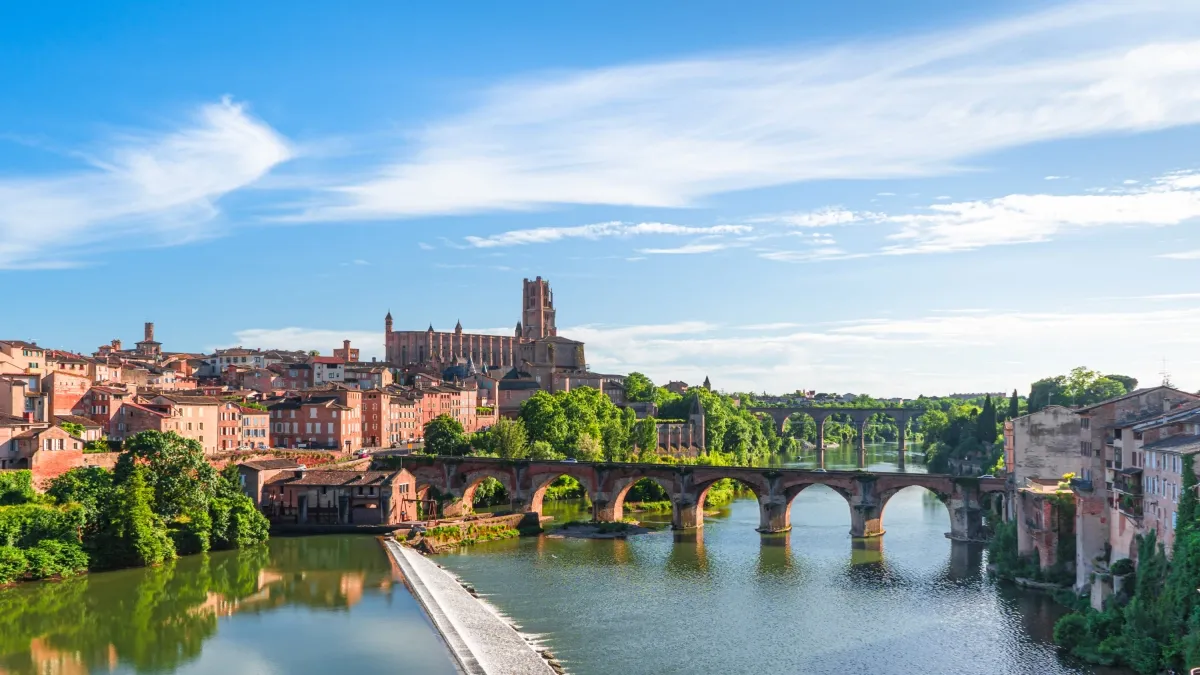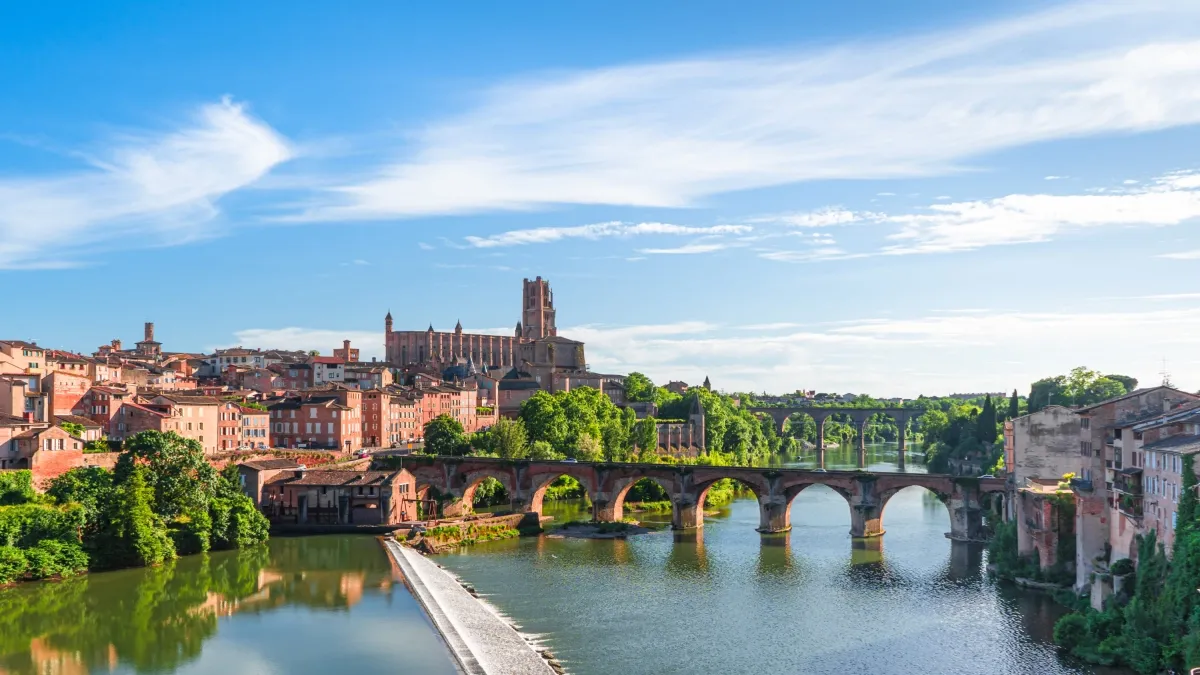
Nestled in the lush river valley of the Tarn, surrounded by undulating hills, vineyards, and a distinct medieval atmosphere, lies Albi. Despite boasting the largest brick cathedral in the world and earning designation as a UNESCO World Heritage site in 2010, this colorful city remains delightfully understated—overshadowed by more heavily touristed destinations in the south of France.
Yet, for travelers seeking authenticity, deep historical resonance, and a visual feast of medieval and Renaissance architecture, Albi offers a uniquely compact and walkable escape. From its crimson-hued fortress overlooking the water to its world-class art collections, the city stands as one of the most culturally rich yet softly spoken jewels of the Occitanie region.
Main Facts
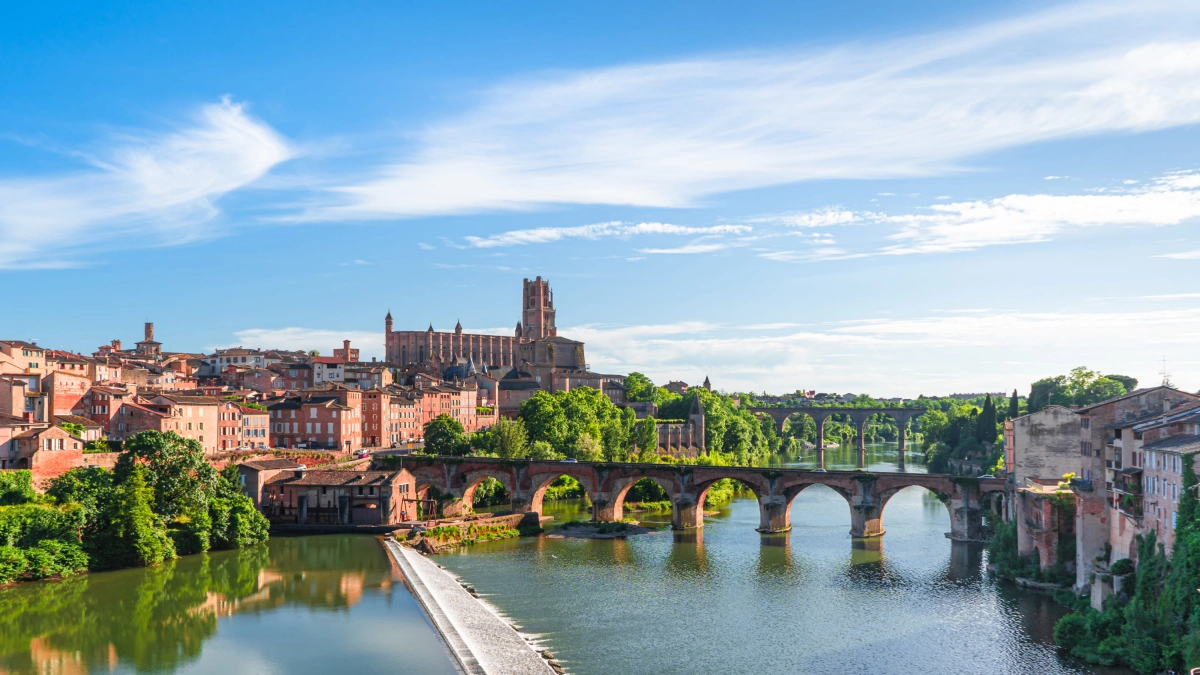
Albi sits quietly in the south of France, positioned geographically between the snow-capped Pyrenees and the azure waters of the Mediterranean Sea. Home to approximately 50,000 residents, the city seamlessly blends a slow-paced, nature-connected lifestyle with a monumental past.
Among its standout geographic and structural features:
- The Tarn Valley Setting: The city thrives on the banks of the Tarn River, surrounded by the prolific Gaillac wine region, which encompasses around 400 independent wine estates and vineyards under the Appellation d’Origine Contrôlée (AOC) designation.
- Architectural Identity: Lacking local stone quarries historically, Albi’s builders innovated by using river clay to manufacture thousands of red bricks. This signature building material defines the city’s cohesive, terracotta-toned skyline.
- Sainte-Cécile Cathedral: Standing as the largest brick-built cathedral in the world, it features a towering 78-meter bell tower and an interior blanketed by 18,000 square meters of deep blue Renaissance frescoes—making it the largest painted cathedral in Europe.
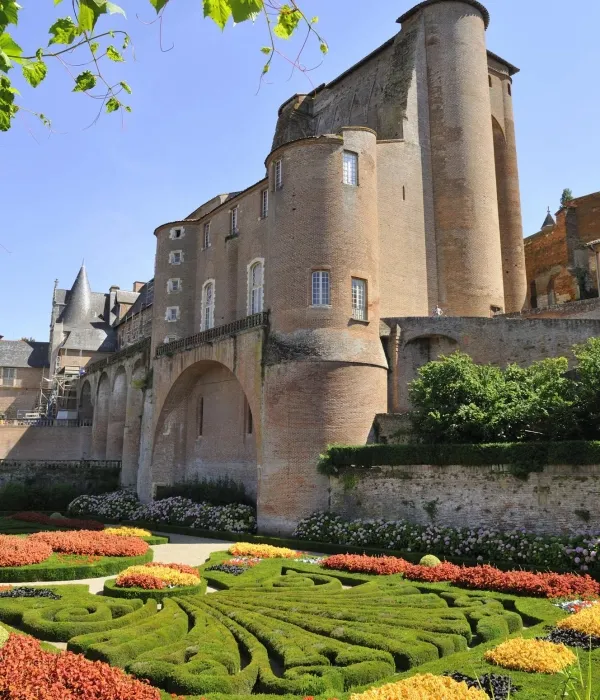
- The Palais de la Berbie: Built in the 13th century, this imposing episcopal fortress now houses the world’s largest collection of works by master post-Impressionist painter Henri de Toulouse-Lautrec.
Chronology: A Tapestry of Time and Architecture
To understand Albi is to trace a timeline that stretches from ancient cartographic milestones to late-19th-century artistic revolution.
- 8th Century: The creation of the mysterious Mappa Mundi, an exceptional manuscript document preserved in Albi that represents the oldest known graphical depiction of the known world, mapping 25 countries across early medieval geography.
- 13th Century (The Fortresses Rise): Amidst the religious conflicts of the Albigensian Crusade, construction begins on both the Palais de la Berbie and the massive Sainte-Cécile Cathedral. The Berbie predates the famous Papal Palace of Avignon, serving initially as a formidable defensive stronghold.
- 15th to 16th Century (Renaissance Transformation): The defensive nature of the Palais de la Berbie transitions into a luxurious residential palace. Influenced by the Amboise family—bishops of Albi originally from the Loire Valley—slate roofs characteristic of northern French châteaux are added to the red-brick structure.
- 1864: Henri de Toulouse-Lautrec is born in Albi into an aristocratic, land-owning family with deep roots in the French southwest.
- 1862: The Palais de la Berbie is officially classified as a French historical monument, ensuring its long-term structural preservation.
- 2010: UNESCO recognizes Albi’s episcopal city as a World Heritage site, cementing its status as an architectural masterpiece of international significance.
Supporting Data: Treasures of Art, Wine, and Cartography
Albi’s modest geographical footprint belies a dense concentration of cultural and historical artifacts.
The Toulouse-Lautrec Museum Collection
Housed within the imposing halls and courtyard of the Palais de la Berbie, the museum is an obligatory pilgrimage for art lovers. Its holdings are staggering:
- Over 220 paintings spanning the artist’s entire career, from early childhood equestrian sketches to iconic late-period portraits.
- 560 distinct drawings detailing his surgical precision as a draughtsman.
- 185 rare lithographies, capturing the electric nightlife, burlesque aesthetic, and iconic posters of Paris’s Belle Époque, including immortalized advertisements for the Moulin Rouge.
The Mappa Mundi
Housed in the city’s archival repositories, this singular parchment stands as a milestone in the history of cartography. It illustrates an early medieval worldview through handwritten text and spatial drawing, documenting territories that stretched across 25 geopolitical regions of the ancient and medieval epochs.
The Gaillac Wine Region
At the gates of the city, the Gaillac AOC represents one of the oldest viticultural areas in Gaul, pre-dating Roman occupation in some sectors. Today, the 400 wine estates surrounding Albi produce distinct white, red, rosé, and sparkling wines derived from indigenous grape varieties found almost nowhere else in the world.
Official Responses and Preservation Efforts
The preservation of Albi’s medieval core is the result of decades of coordinated municipal and national oversight. Following its 1862 designation as a historical monument, the French Ministry of Culture, alongside local heritage boards, has maintained rigorous conservation protocols.

City officials and regional tourism boards have deliberately chosen a sustainable approach to tourism development. Rather than chasing the mass-market volume seen in destinations like Nice or Paris, Albi markets itself as a slow-travel destination.
Local authorities emphasize pedestrian-friendly urban planning within the historic center, ensuring that vehicles are kept away from narrow brick lanes, botanical gardens, and river viewpoints. Furthermore, the upkeep of the formal French gardens at the Palais de la Berbie is managed by municipal horticulturists dedicated to preserving 19th-century landscape design traditions right down to the arabesque flower beds that line the Tarn.

Implications for Travelers and the Regional Economy
Albi’s low-key international profile compared to its Provençal counterparts carries significant implications for both modern tourists and the local economy of the Occitanie region.
For the Traveler
Visitors are increasingly turning away from overcrowded European hotspots in search of authentic, stress-free cultural immersion. Albi delivers this seamlessly. Because its primary attractions—the cathedral, the Palais de la Berbie, and the medieval bridges—are clustered within a compact, highly walkable historic district, travelers can explore comfortably on foot without the friction of congested transit systems. A stroll through the brick-lined alleyways, perhaps accompanied by a traditional crêpe de marron glacé (sweet chestnut purée), offers an intimate encounter with French heritage.

For the Local Economy
The balanced influx of travelers provides a steady, sustainable economic engine for the region without overwhelming local infrastructure. This benefits small-scale enterprises, from independent winemakers in the Gaillac hills to artisanal bakeries and boutique hotels within the city center. As trends in global tourism shift toward regional diversification—paralleling a rising interest in secondary destinations across Europe—Albi is uniquely positioned to capture a growing share of culturally curious travelers who value depth, history, and natural beauty over commercialized mass tourism.