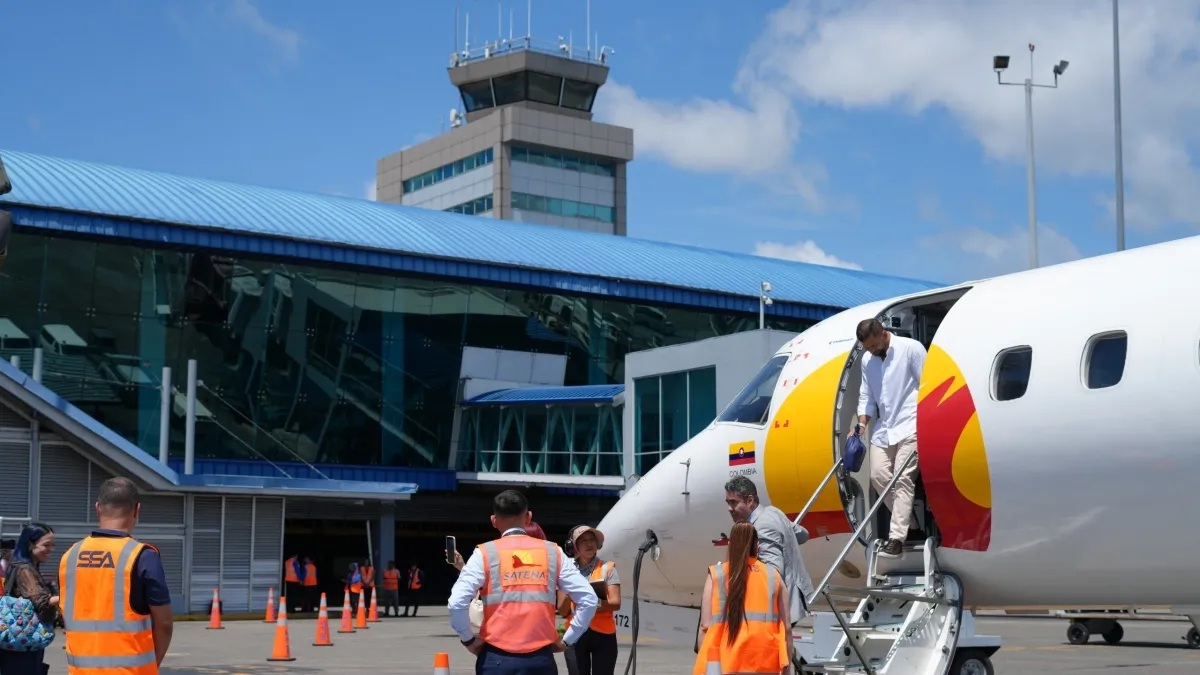
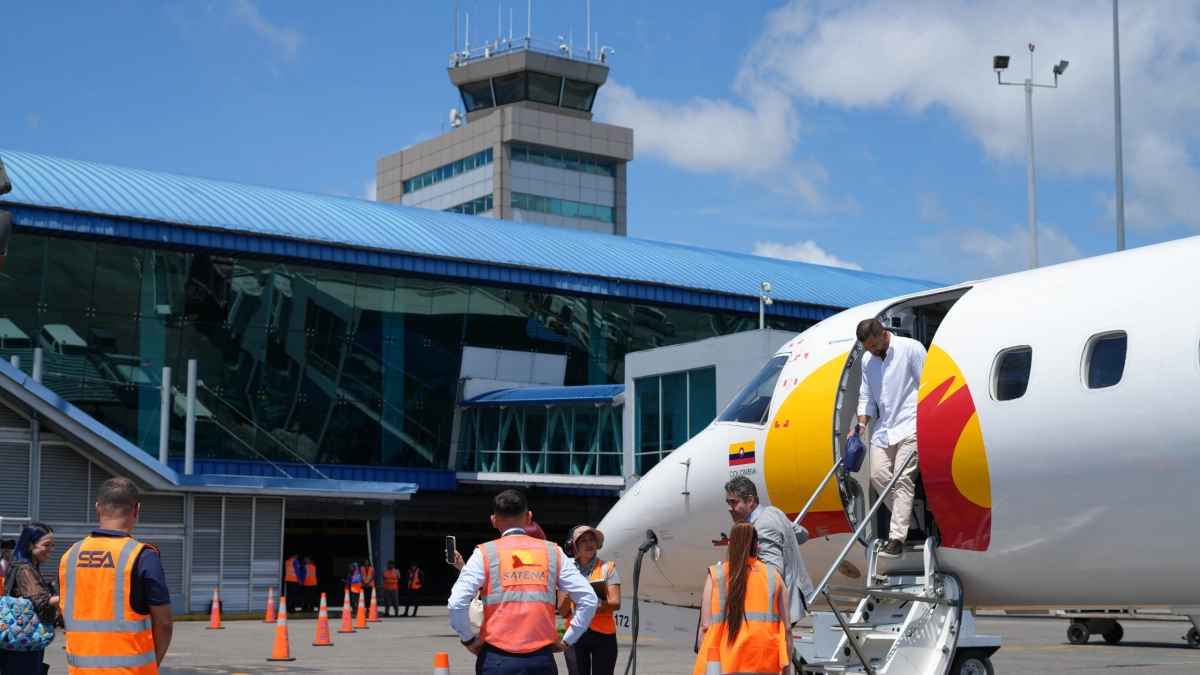
BOGOTÁ & MONTERÍA — In a strategic move designed to bridge regional markets and enhance international accessibility, state-run airline Satena has officially inaugurated its first direct route connecting Montería, the capital of Colombia’s Córdoba department, with Panama City. The new cross-border connection aims to stimulate bilateral tourism, facilitate commercial exchange, and open fresh economic horizons for the Colombian Caribbean region.
The launch represents a significant milestone in Satena’s ongoing expansion strategy, moving beyond domestic routes to link secondary and tertiary Colombian markets directly with key international hubs. By cutting out layovers in major cities like Bogotá or Medellín, the airline is positioning Córdoba as an emerging destination for international travelers while offering local residents seamless access to Central America.
Main Facts
The newly inaugurated route is designed to provide consistent, reliable service between Los Garzones Airport (MTR) in Montería and Tocumen International Airport (PTY) in Panama City.
Operational Frequency: The route operates three times a week, specifically on Mondays, Wednesdays, and Fridays.
Aircraft and Capacity: Flights are serviced by modern Embraer ERJ-145 regional jet aircraft, featuring a single-class cabin configuration with a capacity of 50 passengers per flight.
Flight Schedule:
Outbound (Montería to Panama City): Departs Montería at 9:55 a.m., arriving in Panama City at 10:59 a.m. local time.
Inbound (Panama City to Montería): Departs Panama City at 11:50 a.m., landing back in Montería at 12:49 p.m. local time.
Pricing and Promotions: To stimulate initial demand during its launch phase, Satena introduced introductory fares starting at USD $195 per trayecto (one-way), backed by a special promotional campaign running throughout the month of October.
Strategic Partnerships: To bolster the route’s commercial viability, Satena has established a formal alliance with Golden Tower in Panama. This partnership is engineered to build direct bridges with the Panamanian hotel sector, streamlining lodging options for travelers and encouraging reciprocal tourism.
Chronology of the Route’s Development
The realization of the Montería–Panama City route is the culmination of months of logistical planning, regulatory approvals, and bilateral coordination between regional authorities in Colombia and aviation stakeholders.
Recognizing the untapped potential of Colombia’s departments outside the traditional Bogotá-Medellín-Cali axis, Satena leadership began evaluating secondary cities capable of supporting international routes. Montería emerged as a top candidate due to its booming agricultural economy, growing tourism appeal, and strong infrastructural capacity at Los Garzones Airport. Regional stakeholders in Córdoba continually pushed for direct international connectivity to reduce travel times and logistics costs for local entrepreneurs and tourists.
Phase 2: Regulatory Approvals and Fleet Allocation (Early 2026)
Following extensive market studies, Satena secured the necessary bilateral aviation permits to operate scheduled international flights between Colombia and Panama. Management designated the Embraer ERJ-145 fleet as the ideal aircraft type for the route, balancing operational efficiency with the passenger volume expected during the initial stages of market penetration.
Phase 3: Commercial Partnerships and Marketing (Mid-to-Late 2026)
As the launch date drew closer, Satena forged critical alliances to ensure sustainable passenger flow. The agreement with Panama’s Golden Tower was finalized to package hotel stays with airline tickets, creating an attractive proposition for leisure travelers. Concurrently, promotional pricing starting at USD $195 was announced to capture early-bird travelers and business commuters.
Phase 4: Inaugural Flight and Commercial Launch (October 2026)
The official inauguration took place in late October 2026, marking the operational commencement of the three-weekly frequencies. Dignitaries, airline executives, and regional leaders gathered to celebrate the departure of the first flight, signaling a new chapter for Córdoba’s aviation and tourism landscape.
Supporting Data and Operational Metrics
To understand the scope and impact of Satena’s new route, it is essential to examine the operational mechanics and the broader economic framework of the regions involved.
Aircraft Specifications: Embraer ERJ-145
Manufacturer: Embraer (Brazil)
Configuration: Twin-engine regional jet
Seating Capacity: 50 passengers (2×1 seating layout with no middle seats, enhancing passenger comfort)
Cruising Speed: Mach 0.78 (~828 km/h)
Range: Optimized for short- to medium-haul regional routes, making the roughly one-hour flight between Montería and Panama City highly efficient.
Economic Indicators of Córdoba and Panama
Córdoba’s Tourism & Production: Known for its rich cattle ranching, agriculture (cotton, corn, plantains), and vibrant culture (including the birthplace of the famous sombrero vueltiao), Córdoba has increasingly focused on eco-tourism and coastal getaways. The new route acts as a funnel to showcase these local industries to international visitors.
Panama City as a Global Hub: Tocumen International Airport ("The Hub of the Americas") handles millions of connecting passengers annually. By plugging Montería directly into this network, travelers from Córdoba gain instantaneous access not just to Panama, but to onward connections across North America, Central America, the Caribbean, and Europe.
Official Responses and Statements
The launch of the international connection elicited enthusiastic responses from top-tier airline executives and regional tourism promoters, who highlighted the transformative nature of decentralized international travel.
Mateo Arjona, President of Satena, emphasized the developmental power of regional international routes during the inaugural announcements:
"International routes from the regions have the capacity to bring markets closer, facilitate exchange, and generate new opportunities for the territories," stated Arjona. "This flight will allow Montería to be closer to Panama and, in turn, allow more travelers to discover the tourist, cultural, and productive offerings of Córdoba."
Echoing these sentiments, representatives from Satena’s corporate communications department elaborated on the cooperative framework established in Central America:
"As part of the actions to strengthen tourism between both countries, Satena has an alliance with Golden Tower in Panama. This collaboration seeks to facilitate articulation with the hotel sector and promote new opportunities for tourist exchange between Colombia and Panama, taking advantage of direct connectivity between Montería and the Panamanian capital," the airline explained in an official corporate statement.
Local business leaders and Chambers of Commerce in Montería also welcomed the news, noting that frequent business travelers will no longer endure grueling multi-leg domestic layovers just to attend meetings in Central America.
Implications for Tourism, Trade, and Regional Development
The opening of the Montería–Panama City route carries profound implications that extend far beyond simple passenger transit. Experts point to several key areas where this development will reshape the local and national economy:
1. Decentralization of Colombian Aviation
For decades, international travel originating in Colombia was heavily concentrated in Bogotá (El Dorado), Medellín (José María Córdova), and Cali (Bonilla Aragón). By opening direct international routes from secondary capitals like Montería, Satena is spearheading a structural shift in Colombian aviation. This decentralization reduces congestion at major hub airports and makes regional airports economically self-sustaining.
2. Boosting Regional Competitiveness and Foreign Investment
For local entrepreneurs, agriculturists, and manufacturers in the Córdoba department, time is money. Having a direct, one-hour flight to Panama City—a major global financial and logistics hub—simplifies cross-border commerce. Businessmen can now execute day trips or short-stay negotiations without losing days to domestic layovers, greatly enhancing the global competitiveness of the region’s products.
3. Cultural Exchange and Tourism Influx
Panama serves as a natural gateway for international tourists looking to explore alternative destinations in South America. With aggressive introductory pricing starting at USD $195 and targeted hotel partnerships through Golden Tower, the route makes Córdoba an accessible, exotic alternative for travelers based in Panama or those transiting through Tocumen. The anticipated influx of foreign tourists is expected to stimulate local hospitality, gastronomy, and guide services, driving job creation throughout the department.
4. Future Expansion Prospects
The success of the Montería–Panama route using 50-seater Embraer ERJ-145 aircraft serves as a litmus test for Satena’s broader international ambitions. If passenger load factors remain high and corporate demand stays robust, industry analysts predict that Satena may consider increasing frequencies or replicating this model in other vibrant Colombian regions hungry for direct global links.
Ultimately, Satena’s bold bet on Montería proves that regional connectivity is no longer just a domestic luxury, but a vital catalyst for international integration and economic prosperity.
In the modern travel landscape, the traditional trifecta of "sun, sand, and savings" is being superseded by a more profound requirement: safety and social alignment. For the global LGBTQIA+ community, the choice of a vacation…
By Angie Rodríguez Travel and Trends Journalist Main Facts: A New Era for Panamanian Tourism Panama has long been a favored destination for travelers across Latin America, particularly from Colombia. Historically, the nation’s appeal was…
By Global Travel & Culture Desk Published: October 24, 2026 Main Facts: The Multifaceted Metropolis of South Africa For generations, Western cinema and romanticized literature have painted a monolithic picture of Africa—a distant, untamed expanse…