By Global News Desk
Published: October 26, 2026
Updated: October 26, 2026
Main Facts
The political landscape of Venezuela has been thrust into profound uncertainty following the high-profile return of opposition leader and Nobel Peace Prize laureate María Corina Machado. After months of operating from the clandestine shadows and a subsequent period spent abroad—including a late 2025 departure to Oslo, Norway, to collect her Nobel distinction, followed by weeks residing quietly in Panama—Machado re-emerged on domestic soil on Sunday, October 25, 2026.
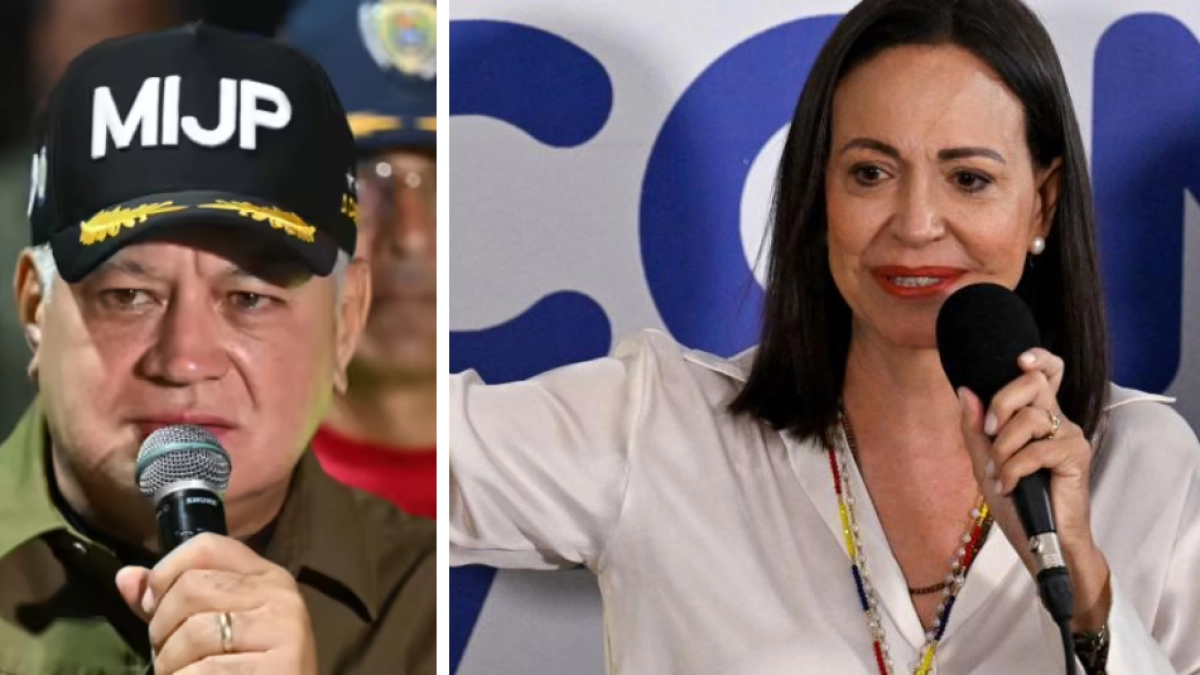
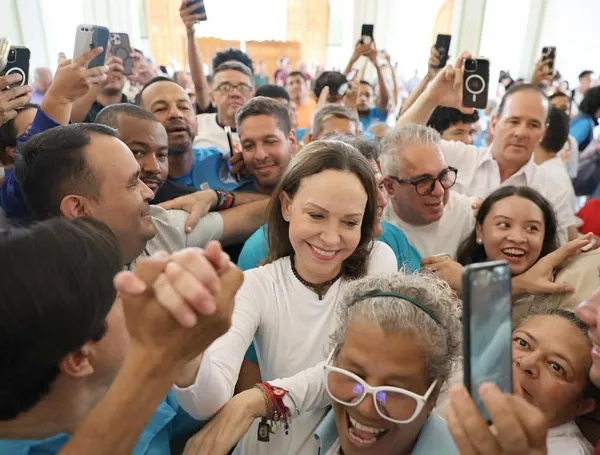
Her return shattered months of speculation and thwarted entry attempts. Thousands of jubilant supporters flooded the streets of Barquisimeto in Lara State, greeting her with chants of "libertad" and demands for democratic presidential elections. Machado subsequently led a massive vehicle caravan from Lara to the nation’s capital, Caracas.
The response from the highest echelons of the Venezuelan government was swift, defiant, and dismissive. Diosdado Cabello, Minister of the Interior and a prominent figure within the ruling United Socialist Party of Venezuela (PSUV), minimized the historic homecoming during a televised press conference. Cabello asserted that the government bore no responsibility for Machado’s self-imposed exile, claiming instead that the administration had long maintained an open-door policy for all returning citizens.

Simultaneously, Venezuela’s acting president, Delcy Rodríguez, characterized Machado’s triumphant homecoming as an unnecessary "show," pointing to standard international airport infrastructure as a routine alternative to public spectacles.
Meanwhile, the United States weighed in heavily on the geopolitical chessboard. U.S. Secretary of State Marco Rubio revealed that Washington had negotiated Machado’s safe corridor with interim authorities weeks in advance, shedding light on the complex web of backroom diplomacy, regional calculations, and shifting alliances that ultimately paved the way for the opposition figure’s return.
Chronology
To understand the weight of Machado’s October 2026 return, it is necessary to examine the timeline of events that defined her prolonged absence and the lead-up to her homecoming:
- July–August 2024: Following heavily contested presidential elections characterized by widespread allegations of fraud and systemic irregularities by the incumbent regime, María Corina Machado goes into deep hiding inside Venezuela to evade potential arrest and persecution.
- December 2025: Machado successfully slips out of Venezuela to travel to Oslo, Norway, where she is formally awarded the Nobel Peace Prize in recognition of her tireless defense of democratic principles and human rights.
- Early 2026: After accepting the award, Machado relocates to Panama, maintaining a low profile while orchestrating multiple, ultimately frustrated attempts to return to her homeland across land and air borders.
- June 24, 2026: A major regional earthquake strikes, prompting U.S. Secretary of State Marco Rubio to temporarily advise against Machado attempting an immediate return due to severe logistical strains and the prioritization of humanitarian aid flights.
- Late September – Early October 2026: Washington engages in quiet, sustained diplomatic communications with Venezuelan interim authorities, securing tacit guarantees that Machado can re-enter the country without immediate structural hindrance. Third-party countries, wary of diplomatic fallout, briefly complicate transit routes, but the path is eventually cleared.
- Sunday, October 25, 2026: María Corina Machado officially reappears in Venezuela. She surfaces in the western state of Lara, specifically at the Santuario Divina Pastora in Barquisimeto, where enthusiastic supporters welcome her. She immediately initiates a high-visibility caravan toward Caracas.
- Monday, October 26, 2026: Acting President Delcy Rodríguez publicly dismisses the homecoming as a "show" during an address at the Hospital Militar Dr. Carlos Arvelo. Later that day, Interior Minister Diosdado Cabello addresses the PSUV press corps, downplaying the events, denying systemic political persecution, and issuing warnings regarding accountability for past street actions. Concurrently, U.S. Secretary of State Marco Rubio holds a telephonic press briefing detailing Washington’s diplomatic involvement in securing the passage.
Supporting Data and Background
The mechanics of Machado’s return highlight a delicate interplay between domestic resistance movements and international statecraft. According to statements furnished by U.S. Secretary of State Marco Rubio, the diplomatic track to ensure Machado’s safety began weeks prior to her landing. Rubio clarified that while Washington pushed persistently for her safe re-entry, the U.S. government intentionally paused its active lobbying immediately following the June 24 earthquake to allow logistical channels to focus entirely on incoming humanitarian aid flights.
Furthermore, Rubio’s disclosures shed light on the clandestine nature of the journey. While Machado’s exact entry route remains officially undisclosed—and deliberately obscured to protect her logistical network—the diplomatic pressure exerted by North American and regional partners was vital. Rubio noted that several third-party nations hesitated to assist or openly facilitate her transit, fearing political blowback or regional friction with Caracas.
Domestically, the political geography of Machado’s re-emergence centers heavily on Lara State and the urban centers of Caracas. Her choice to begin her tour at the Santuario Divina Pastora in Barquisimeto carried immense symbolic weight, tapping into deep cultural and religious traditions before embarking on a vehicular mobilization designed to test the limits of public assembly permitted by the state.
Official Responses
The official reactions from Caracas and Washington present starkly contrasting narratives regarding the state of political freedoms, civil rights, and governance in Venezuela.
The Venezuelan Regime’s Stance
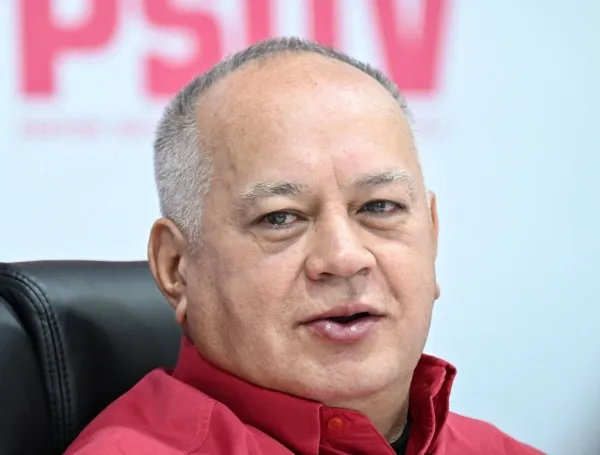
During a routine press conference held by the United Socialist Party of Venezuela (PSUV), Interior Minister Diosdado Cabello adopted a mocking and defiant tone. He refused to utter Machado’s name directly, instead framing her return as a theatrical performance meant to distract from internal opposition divisions.
"¿Desde cuándo estamos diciendo nosotros que el que se quiera venir que se venga? Aquí no hay persecuciones para nadie. Entonces montan un show. Tenemos tiempo diciendo que dejen el show y se venga todo el que se quiera venir," Cabello declared, dismissing accusations of authoritarian crackdowns.
Cabello emphasized that anyone returning to Venezuela must be prepared to face political accountability for historical actions. "El que regrese al país debe asumir la responsabilidad de lo que dijo y de lo que hizo en las calles, y tendrá que hacer política," he stated. In a characteristically idiosyncratic moment, Cabello deflected deeper journalistic inquiries by quoting a historical letter written by Simón Bolívar to General Antonio José de Sucre in 1823: "No me espanta, estamos acostumbrados a ver muy de cerca fantasmas más horribles que han desaparecido al acercarnos a ellos. Fin de la cita y el que entendió, entendió."
Acting President Delcy Rodríguez echoed these sentiments earlier on Monday following an inspection at the Dr. Carlos Arvelo Military Hospital. Rodríguez asserted that Machado could easily have avoided unnecessary drama. "Podía evitarse el show, ahí están los aeropuertos, hay unas estructuras transitorias que la gente tiene muy buenos comentarios, así que alejémonos del show," Rodríguez told reporters, deliberately omitting details regarding the closed airspace restrictions and targeted passport revocations historically deployed against opposition figures.
The United States Response
In stark contrast, Washington framed the event as a minor victory for diplomatic channels and negotiated reconciliation. Secretary of State Marco Rubio detailed the behind-the-scenes negotiations during his briefing, confirming that the U.S. had laid the groundwork for weeks.
Rubio firmly rejected notions that the United States had dictated every logistical move or that Washington was responsible for the roadblocks Machado previously encountered across various transit hubs. Instead, he pointed the finger at cautious regional allies: "Había países que no querían que se les viera involucrados. Tienen sus propios intereses en lo que respecta a Venezuela y había países que no querían, por una razón u otra, enemistarse con nadie."
Implications
The return of María Corina Machado to Venezuelan soil carries massive, multi-layered implications for the immediate future of the nation’s political trajectory:
- Reinvigoration of the Opposition Base: By returning physically to the country despite severe regime threats, Machado has re-established her position as the undisputed figurehead of the Venezuelan democratic resistance. The enthusiastic street receptions in Barquisimeto and Caracas demonstrate that her populist appeal and moral authority—bolstered by her Nobel Peace Prize—remain potent catalysts for civic mobilization.
- A Test of Regime Tolerance and Strategy: The PSUV’s decision to permit her entry rather than forcing a violent, high-visibility arrest at the border suggests a calculated tactical shift. Rather than making her a detained martyr, the regime has opted to normalize her presence while attempting to delegitimize her return as a "show," while simultaneously warning her of legal consequences for past protests. This opens a precarious gray zone where Machado must navigate the fine line between open political organizing and targeted legal retribution.
- Shifts in International Diplomacy: Rubio’s public confirmation of U.S.-backed channels highlights the continuing relevance of foreign mediation in Venezuelan affairs. However, it also exposes the friction among regional neighbors who remain anxious about aligning too closely with opposition efforts. As preparations for upcoming electoral cycles take shape, the international community will be forced to evaluate whether quiet diplomatic assurances can translate into genuine, verifiable democratic openings on the ground.
- Internal Opposition Dynamics: As Cabello noted with rhetorical glee, Machado’s return introduces fresh variables into an already fractured opposition camp. Managing expectations, uniting disparate factions, and translating street-level enthusiasm into concrete electoral power will be the paramount challenges facing Machado and her allies in the grueling months ahead.