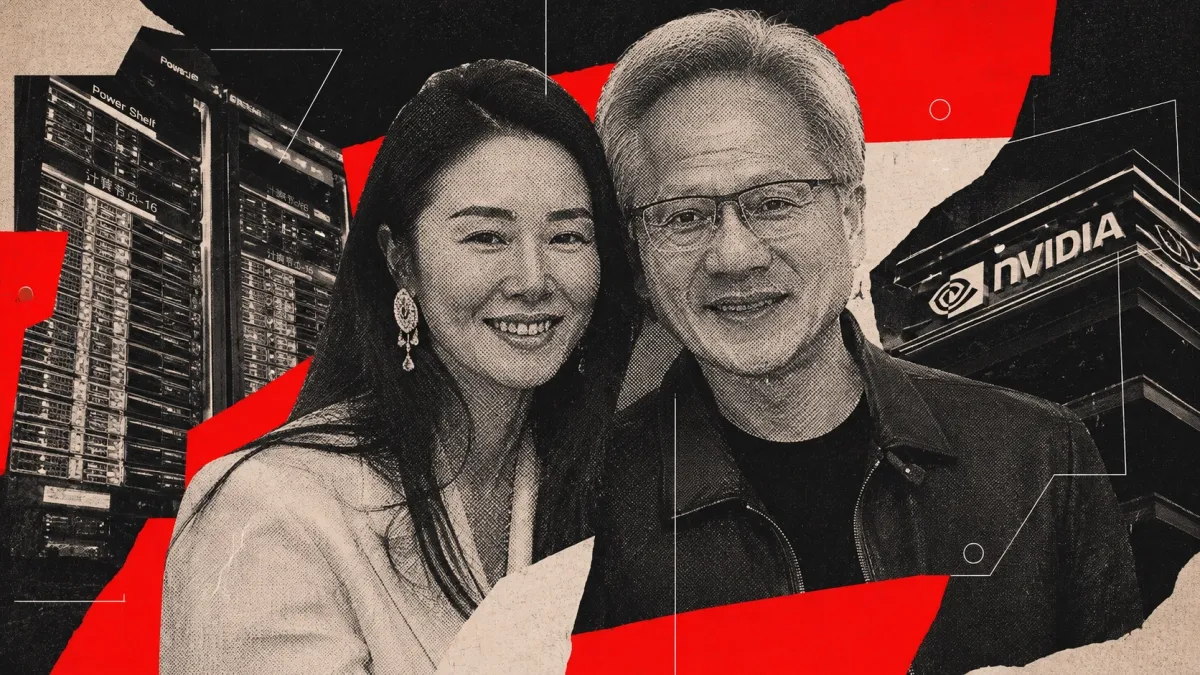
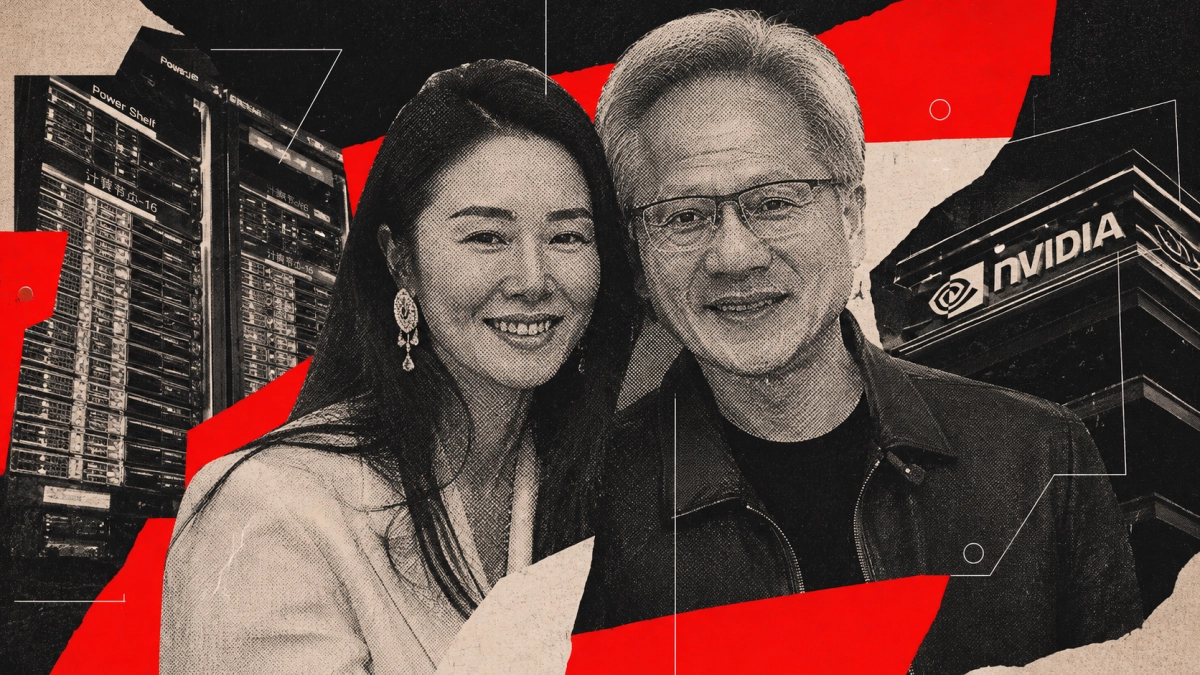
WASHINGTON / SANTA CLARA — In what is rapidly unfolding as one of the most explosive corporate and geopolitical scandals of the decade, Jensen Huang has stepped down as Chief Executive Officer and member of the board of directors of Nvidia. The resignation of the visionary tech leader, who built Nvidia into the undisputed titan of the artificial intelligence boom, comes on the heels of a cascading series of revelations involving undisclosed personal relationships, alleged Chinese intelligence operations, unauthorized high-tech shipments routed through Singapore, and mounting scrutiny from the highest levels of the United States government.
As Washington prepares to grill the former CEO in closed-door congressional hearings, the turbulence at Nvidia has not only destabilized the governance of a critical pillar of America’s technological infrastructure but has also triggered a fierce political crossfire regarding federal oversight, corporate governance, and national security vulnerabilities.
Main Facts: A Corporate Titan Collapses Under Geopolitical Weight
The domino effect that brought down one of Silicon Valley’s most celebrated figures reached its climax on Thursday, November 12, 2026. Jensen Huang formally relinquished his executive responsibilities following days of intense investigative reporting by major news outlets, most notably Reuters, which detailed a web of entanglement combining personal misconduct and grave security implications.
The core of the scandal centers around multiple extramarital relationships maintained by Huang. Investigative reports revealed that Huang sustained a relationship with Alice Huang—a woman whose alleged ties to Chinese intelligence operations have ignited severe counterintelligence concerns within the U.S. national security apparatus. Compounding this, further disclosures revealed a secondary relationship with Kimberly Powell, Nvidia’s Vice President of Healthcare, alongside a third, previously unreported liaison with an anonymous female employee within the company.
The convergence of personal exposure and access to proprietary, export-controlled semiconductor technology has transformed what might have historically remained a private matter into an urgent national security crisis. Nvidia processors (GPUs) are the fundamental hardware driving modern artificial intelligence, making them assets of supreme strategic value in the ongoing technological competition between the United States and China.
In the wake of Huang’s abrupt departure, Nvidia’s board of directors moved quickly to stabilize the corporation. Colette Kress, who previously served as the company’s Chief Financial Officer (CFO), has assumed the role of interim CEO. Meanwhile, the search for a permanent successor remains open, even as lawmakers and intelligence officials demand a comprehensive accounting of Nvidia’s internal security protocols.
Chronology of a Crisis: From Silicon Valley Summit to Capitol Hill Subpoenas
The timeline leading to Jensen Huang’s resignation and the unfolding congressional investigations maps out a rapid descent from corporate supremacy to intense federal scrutiny:
Late October – Early November 2026: Intelligence and media reports begin to surface regarding Jensen Huang’s associations, specifically flagging his connection to Alice Huang amid wider investigations into covert technology transfers to Asia.
Early November 2026: Investigative journalism uncovers patterns of unauthorized high-tech equipment shipments routed through Singapore, adding a complex logistical and smuggling dimension to the burgeoning Nvidia scandal. Bipartisan pressure begins to mount in Washington.
Thursday, November 12, 2026:
Reuters publishes a fresh report detailing a third, previously undisclosed romantic relationship between Huang and an unnamed Nvidia employee.
Faced with mounting internal pressure and imminent congressional action, Jensen Huang officially resigns as CEO and board member of Nvidia. Colette Kress is named interim CEO.
Republican Representative Brian Mast, Chairman of the House Foreign Affairs Committee, announces that Huang has agreed to testify voluntarily before the committee in a closed-door deposition.
Mid-November 2026 (Ongoing): Congressional leaders from both parties demand deeper investigations into how these relationships may have compromised national security, while questioning executive awareness and potential administrative blind spots.
Supporting Data: The Anatomy of the Nvidia Scandal
To fully understand the gravity of the crisis, analysts are examining several interconnected investigative threads that extend far beyond boardroom gossip:
1. The Alice Huang Dossier and High-Tech Smuggling
At the center of the geopolitical storm is Alice Huang, whose alleged intelligence links have drawn the focus of federal investigators. Investigators are actively tracing a sophisticated network that allegedly bypassed U.S. export controls on advanced semiconductors. According to recent disclosures, sensitive high-technology equipment—primarily high-performance AI chips—was funneled through third-party intermediaries in Singapore. This secondary distribution route was purportedly designed to circumvent strict U.S. Department of Commerce restrictions intended to keep cutting-edge computing power out of the hands of adversaries like China.
2. The Internal Footprint: Multiple Relationships
Corporate governance experts have pointed out that multiple entanglements involving senior executives and subordinates (such as VP of Healthcare Kimberly Powell and the newly revealed anonymous employee) represent profound conflicts of interest. In the tech sector, such relationships can create severe vulnerabilities to corporate espionage, coercion, and insider threats, overriding standard HR compliance frameworks.
3. Market and Leadership Disruption
Nvidia’s market capitalization and strategic centrality to the global AI ecosystem cannot be overstated. The sudden evacuation of its long-serving CEO introduces systemic uncertainty into global supply chains. Interim CEO Colette Kress inherits a company navigating not only a leadership vacuum but also potential regulatory penalties, export audits, and reputational damage.
Official Responses: Washington Demands Answers
The political fallout in Washington has been swift, bipartisan, and unrelenting. Lawmakers from both sides of the aisle have made it clear that Jensen Huang’s resignation does not close the book on the matter.
Representative Brian Mast (R-FL), chair of the House Foreign Affairs Committee, confirmed that Huang has agreed to testify at a closed-door hearing on Capitol Hill. While initial discussions pointed toward Wednesday, November 18, negotiators are finalizing a date that will guarantee the deposition takes place before the Thanksgiving holiday recess on November 26.
"Huang has accepted the request to appear, and we are working through the final scheduling details," Rep. Mast stated to U.S. media outlets.
The sentiment for a rigorous probe is shared across the Capitol. Senate Democratic Leader Chuck Schumer issued a searing critique, arguing that corporate restructuring is wholly insufficient to address potential breaches of national security.
"Piscine or corporate exits do not erase potential security lapses. The Congress must demand direct answers from Huang and other Nvidia executives regarding how they allowed national security safeguards to be compromised," Schumer declared.
Furthermore, Schumer directed sharp inquiries toward the executive branch and the administration of President Donald Trump. He questioned whether government officials deliberately softened their oversight of Nvidia due to the close personal access Huang previously enjoyed—including high-profile invitations aboard Air Force One.
“Did the administration look the other way because of personal proximity? What did executive branch officials know, and when did they know it?” Schumer asked.
Senate Majority Leader John Thune (R-SD) echoed these sentiments, confirming that Senate committees are fully prepared to launch parallel inquiries. "Given the nature of the relationship and the strategic assets involved, a congressional investigation is entirely logical and necessary," Thune stated.
Implications: The Future of U.S. Technology Governance
The downfall of Jensen Huang carries profound long-term implications for the intersection of Silicon Valley entrepreneurship and American national security:
Stricter Compliance and Corporate Governance: Tech conglomerates are expected to face rigorous internal audits regarding executive conduct, particularly concerning relationships with subordinates and foreign nationals. The traditional "founder-centric" governance model, which often grants unchecked authority to visionary CEOs, will likely face heightened skepticism from institutional investors and regulators.
Tighter Export Controls and Supply Chain Audits: The revelations regarding Singapore-based transit routes for advanced hardware will trigger immediate clampdowns by the U.S. Bureau of Industry and Security (BIS). Expect intensified monitoring of secondary distribution hubs, stringent end-user verification, and more aggressive enforcement of AI chip embargoes.
Politicization of Tech Leadership: As political leaders demand accountability from both corporate boards and federal regulators, the technology sector finds itself more deeply embedded in geopolitical friction. The expectation that tech giants operate as sovereign, purely commercial entities has evaporated; they are now explicitly viewed as instruments of national power.
As preparations continue for Jensen Huang’s upcoming testimony before the House Foreign Affairs Committee, the tech world watches with bated breath. The era of unchecked dominance that defined Nvidia’s rise has given way to an era of intense reckoning, proving that even the architects of the artificial intelligence revolution are ultimately subject to the laws of nations and the gravity of state security.
This is a developing story. Further updates will be provided as new details emerge from Washington and Silicon Valley.
By International Desk Analysis Published: September 26, 2026 Main Facts: The Rejection of the Political Center Germany, long considered the bedrock of political stability and the primary containment wall against extremist movements in post-World War…
TÁCHIRA, VENEZUELA — A routine Tuesday afternoon transformed into a scene of sudden devastation in the southwestern region of Venezuela when a major aqueduct pipeline ruptured, sending a colossal geyser crashing onto a busy roadway.…
Internacional | Actualizado el 21 de septiembre de 2026 La provincia canadiense de Columbia Británica ha dado un paso sin precedentes en el ámbito legal internacional al presentar formalmente una demanda contra la gigante tecnológica…