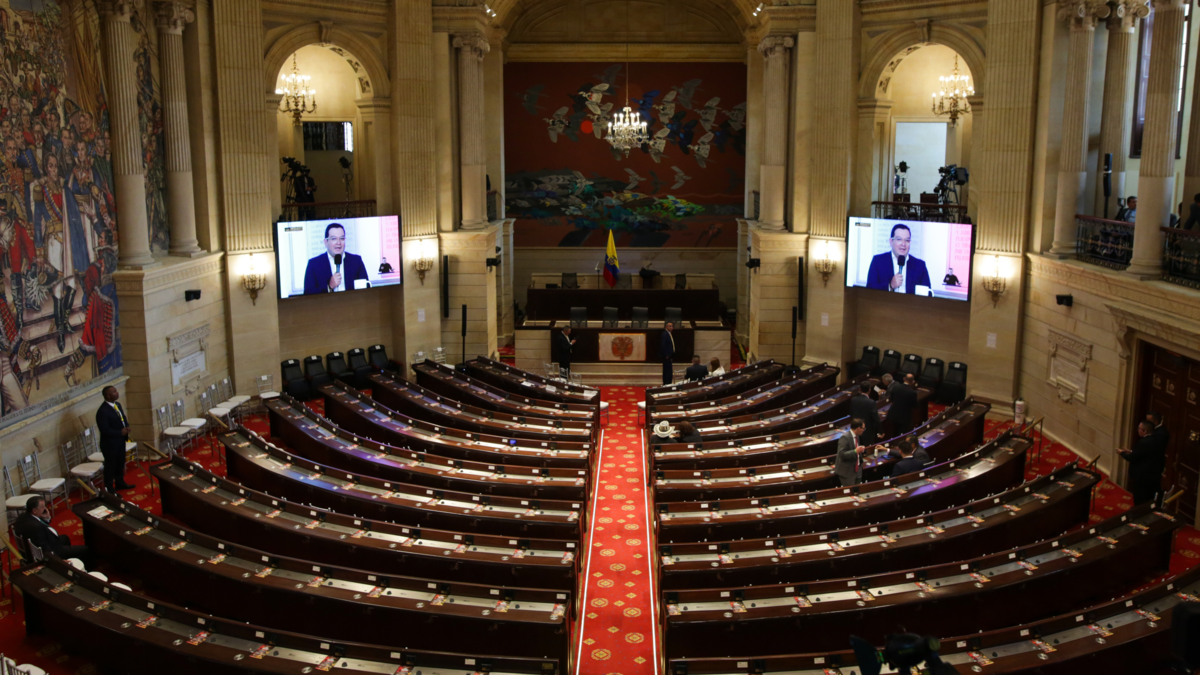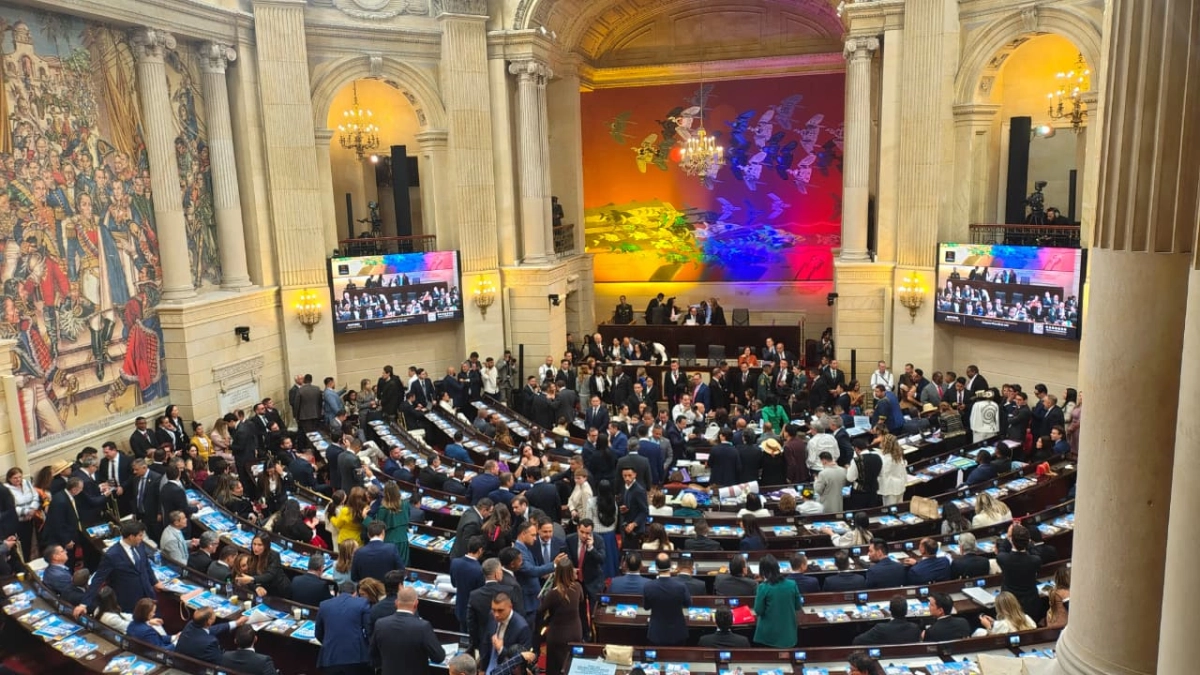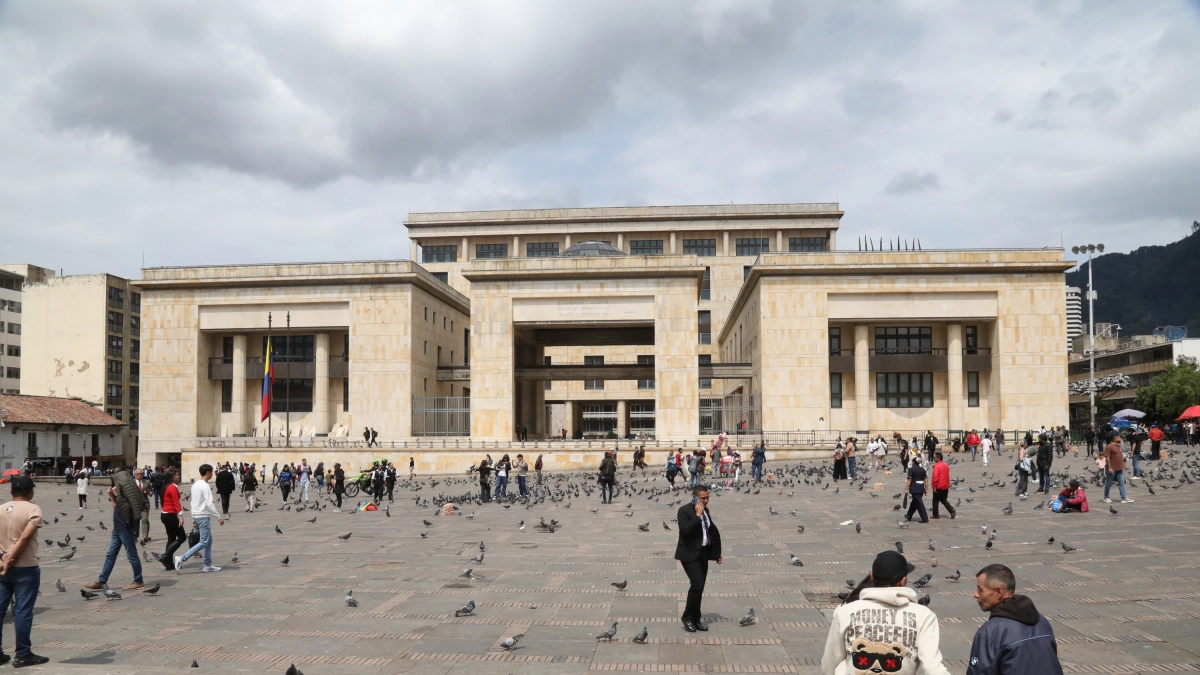
BOGOTÁ — In a move designed to permanently insulate judicial competence from shifting political winds, the Colombian Congress is advancing a legislative initiative aimed at anchoring the handling of constitutional injunctions (acciones de tutela) involving the President of the Republic exclusively to the Council of State.
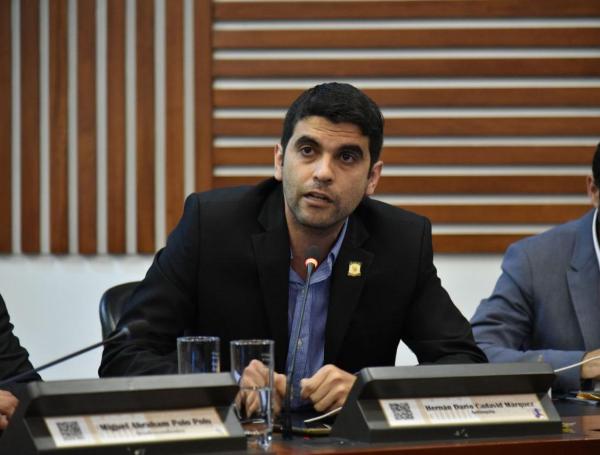
The proposal, formally introduced by opposition lawmaker Hernán Cadavid of the Centro Democrático party, seeks to strip lower-court judges of their current jurisdiction over presidential litigations. By elevating this rule from a mere executive decree to a formal statute of the Republic, proponents hope to establish a permanent barrier against what they describe as "capricious" modifications by successive administrations.
Main Facts
The core of the debate centers on who holds the legal authority to review tutelas—constitutional mechanisms designed to protect fundamental human rights—filed against the head of state.
Under the newly proposed legislation, any legal challenge or protection action directed against the President of the Republic, governmental acts, national security policies, or related executive strategies would bypass local circuit judges and be routed directly to the Council of State, Colombia’s supreme tribunal for administrative litigation.

According to Senator Cadavid, the shifting landscape of jurisdictional rules in recent years has undermined legal stability. "Over the past few years, the rule has varied in a discretionary or capricious manner depending on convenience," Cadavid stated during the filing of the initiative. "While the current National Government has announced its intention to return this competence via executive decree, we want to enshrine it in a Law of the Republic. This ensures that future governments cannot alter the rules of competence at a whim, and that decisions concerning the President of the Republic remain firmly within the purview of the Council of State."
The legislative push arrives amidst a broader national conversation regarding the checks and balances governing Colombia’s branches of power, highlighting an ongoing friction between executive prerogatives and judicial oversight.
Chronology of Jurisdictional Shifts
To understand the urgency behind Cadavid’s bill, political analysts point to a distinct timeline of regulatory changes that have altered how presidential actions are scrutinized in court:
- Pre-2025 Framework: Historically, petitions and tutelas challenging the executive branch and the actions of the sitting president frequently fell under the specialized competence of high courts, notably the Council of State, ensuring that high-profile disputes were handled by magistrates with deep expertise in public law.
- The Petro Administration (2025): Amid heightened political friction and vocal public clashes between the Casa de Nariño and high judicial bodies, the administration of former President Gustavo Petro altered the landscape. Through Decree 799 of 2025—signed by the then-Minister of Justice, Eduardo Montealegre—the government modified Decree 1069 of 2015.
- Decentralization of Presidential Litigations: Decree 799 mandated that actions of tutela against any national public entity, including the president, national security operations, and counter-narcotics strategies (such as the eradication of illicit crops), would henceforth be distributed in first instance to regular Circuit Judges or judges of equal category across the country. Critics argued this dispersed jurisdiction diluted oversight and exposed presidential actions to localized or politically influenced rulings.
- The De La Espriella Administration (2026): Following the transition of power, the administration of President Abelardo De La Espriella signaled its intent to modify the decree, returning primary competence over presidential tutelas to the Council of State. While welcomed by legal purists as a return to institutional equilibrium, critics like Cadavid argue that relying on executive decrees leaves the judicial system vulnerable to cyclical manipulation.
- September 2026: Senator Hernán Cadavid formally files the legislative bill in Congress, seeking to bypass the volatility of presidential decrees by making the Council of State’s exclusive jurisdiction a matter of permanent statutory law.
Supporting Data and Institutional Context
The debate over jurisdiction is not merely procedural; it touches upon the operational capacity of the Colombian judiciary and the principle of legal certainty (seguridad jurídica).

Circuit judges across Colombia routinely manage thousands of local civil, labor, and criminal tutelas, dealing with issues ranging from healthcare access to localized property disputes. Legal experts have long argued that burdening these lower-tier courts with complex, high-stakes matters of national security, international relations, and presidential decrees can lead to conflicting judicial precedents, inconsistent rulings, and severe administrative bottlenecks.
Conversely, the Council of State possesses specialized chambers dedicated to constitutional rights and administrative law, allowing for uniform jurisprudence when evaluating acts emanating from the nation’s highest office.

Data compiled by legislative researchers indicates that during the implementation of Decree 799 of 2025, hundreds of decentralized tutelas against national policies were filed in various regional circuits, creating a fragmented judicial map where lower courts often issued contradictory temporary measures regarding high-level executive policies. Proponents of the new bill argue that centralizing these cases in the Council of State will streamline judicial review and restore predictability to executive-judicial relations.
Official Responses and Political Reactions
The legislative initiative has generated diverse reactions across the political spectrum, drawing lines between defenders of executive flexibility and advocates for strict institutional checks and balances.

- Proponents of the Bill: Lawmakers aligned with the Centro Democrático and various legal guilds have championed the initiative as an essential reform to protect the integrity of the high courts. They argue that leaving jurisdiction to the stroke of a presidential pen invites structural abuse. "A rule as vital as who judges the head of state cannot depend on who happens to occupy the Casa de Nariño," remarked a senior congressional advisor. "It requires the solemnity and permanence of a statutory law."
- Executive Branch Perspective: While the administration of President Abelardo De La Espriella has moved independently to reverse the Petro-era decree and return powers to the Council of State, the executive branch has yet to issue a formal binding stance on whether it will support Cadavid’s legislation. However, administration allies have noted that returning to the Council of State aligns with the current government’s stated goals of stabilizing institutional norms.
- Critics of the Previous Administration: Several constitutional lawyers have voiced retrospective criticism of Decree 799 of 2025, describing it as an attempt to dilute high-court oversight during a period of intense institutional confrontation. They view Cadavid’s bill as a necessary legislative correction to close legal loopholes that could be exploited by future administrations seeking favorable judicial forums.
Implications for the Colombian Legal and Political Landscape
If approved by Congress, the bill sponsored by Senator Hernán Cadavid will carry profound implications for the Colombian constitutional framework:
- Permanent Separation of Powers: By shifting the competence permanently to the Council of State, the law would institutionalize a structural firewall, ensuring that the judicial scrutiny of executive acts remains insulated from the political motivations of any temporary administration.
- Jurisdictional Clarity: The reform promises to end years of administrative ping-pong between local circuit judges and high tribunals, providing clear, unambiguous routing for citizens, organizations, and political actors seeking legal redress against presidential decisions.
- Precedent and Uniformity: Centralizing these high-profile actions within the Council of State guarantees that rulings regarding national security, public policy, and executive authority will be guided by specialized, uniform jurisprudence rather than fragmented regional interpretations.
- A Precedent for Legislative Preemption: The debate underscores a growing legislative appetite in Colombia to clip the wings of executive regulatory power, setting a precedent where Congress steps in to codify matters previously left to the discretion of presidential decrees.
As the bill begins its mandatory debates in the Colombian Congress, legal scholars, political analysts, and judicial authorities will closely monitor its progress, viewing it as a critical test of the nation’s commitment to institutional stability and the separation of powers.