The global conversation surrounding higher education is undergoing a profound paradigm shift. No longer is academic excellence measured solely by traditional metrics such as publication counts, citation indices, or the prestige of Nobel laureate alumni. Today, the modern university is increasingly evaluated through the lens of ecological stewardship, climate action, and institutional accountability.
This transformation is captured by the UI GreenMetric World University Rankings 2026, a comprehensive global assessment tool that has tracked and evaluated the sustainability efforts of higher education institutions since its inception in 2010. The 2026 edition highlights an unprecedented level of international engagement, featuring rigorous evaluations of 2,016 universities across 110 countries.
At its core, the UI GreenMetric framework operates on a foundational premise: that universities do not exist in a vacuum. As micro-cities replete with laboratories, lecture halls, residential housing, and sprawling infrastructure, higher education institutions bear a profound ethical and practical responsibility to lead the fight against global climate change. By translating complex institutional data into standardized, objective scores, the ranking measures environmental progress while actively fostering a competitive yet collaborative spirit among global campuses.
Main Facts: The 2026 UI GreenMetric Framework
The scale of the 2026 UI GreenMetric World University Rankings underscores the growing urgency with which academic institutions worldwide are approaching environmental sustainability. Led globally by the University of Indonesia, the ranking evaluates participating institutions based on six critical pillars of campus sustainability:
Infrastructure and Setting (SI): Assessing campus green surface area, the ratio of open space to built-up area, and overall spatial planning geared toward ecological preservation.
Energy and Climate Change (EC): Measuring energy-efficient appliance usage, smart building implementation, renewable energy production, total carbon footprint reduction, and energy conservation policies.
Waste Management (WS): Analyzing recycling programs, policies to reduce plastic and hazardous waste, organic waste treatment, and overall circular economy practices.
Water Usage (WR): Evaluating water conservation policies, recycling programs, water-efficient fixtures, and the protection of water resources on campus.
Transportation (TR): Tracking policies that limit parking and vehicle use on campus, the implementation of zero-emission vehicles, the promotion of bicycles and walking, and public transportation access.
Education and Research (ED): Reviewing the integration of sustainability concepts into the academic curriculum, the volume of sustainability-related research grants and publications, and student-led environmental organizations.
Through this multi-layered methodology, the ranking seeks to drive systemic change. It pushes universities beyond performative green initiatives, demanding quantifiable, structural transformations in campus operations, governance, and community outreach.
Chronology: The Evolution of Green Metrics and Institutional Commitment
To understand the weight of the 2026 findings, it is essential to trace the historical evolution of institutional sustainability reporting over the past decade and a half.
2010–2015: The Genesis of Global Eco-Campuses
When the University of Indonesia launched UI GreenMetric in 2010, the initiative was a modest attempt to rank domestic and regional universities based on their environmental friendliness. In its inaugural years, participation was heavily skewed toward Southeast Asian and European institutions. However, as international concern regarding global warming accelerated following the 2015 Paris Agreement, the ranking gained significant traction, morphing into a gold standard for international campus sustainability benchmarking.
2020–2024: The Acceleration of Climate Pledges
The COVID-19 pandemic served as a watershed moment for higher education. While physical campuses temporarily emptied, long-term strategic plans underwent a radical green reset. During this window, institutions began viewing sustainability not as an elective extracurricular pursuit, but as an existential core competency. Universities worldwide started adopting net-zero carbon targets, phasing out single-use plastics entirely, and overhauling their energy grids.
2025–2026: The Maturation of Circular Systems
By 2025 and into the newly unveiled 2026 rankings, the nature of the competition had shifted. Simple energy-saving lightbulbs and basic recycling bins were no longer sufficient to secure top-tier placements. Instead, the leading institutions—spanning over 2,000 global campuses—demonstrated advanced circular economies, heavy investment in on-site renewable energy generation, and deeply integrated, cross-disciplinary sustainability curricula.
Supporting Data: Colombia’s Stellar Asccent on the Global Stage
While universities from Europe and North America traditionally dominated early environmental rankings, Latin American institutions have mounted a formidable challenge in recent years, with Colombian universities emerging as regional pioneers.
In the 2026 results, the Universidad del Rosario secured the number one position among Colombian universities, crowning a remarkable half-decade of systematic institutional evolution. A retrospective analysis of the university’s trajectory illustrates an aggressive, data-driven commitment to environmental engineering and campus sustainability:
2021: Ranked 41st globally.
2022: Climbed to 28th globally.
2023: Secured the 32nd position.
2024: Maintained a stable spot at 30th.
2025: Reached its historical peak at 24th globally, while securing the 1st place in Colombia and 3rd place in Latin America.
2026: Continued its reign at the pinnacle of Colombian higher education sustainability.
Hard Metrics Behind the Success
The success of institutions like the Universidad del Rosario is not built on rhetoric; it is anchored in verifiable, quantifiable physical metrics:
Water Conservation: The institution successfully slashed its per capita water consumption by nearly 50% through advanced smart-metering and greywater recycling systems.
Circular Economy: By the close of 2025, the university achieved a remarkable 58% circularity rate, ensuring that more than half of all campus waste is recycled, composted, or reintroduced into productive cycles.
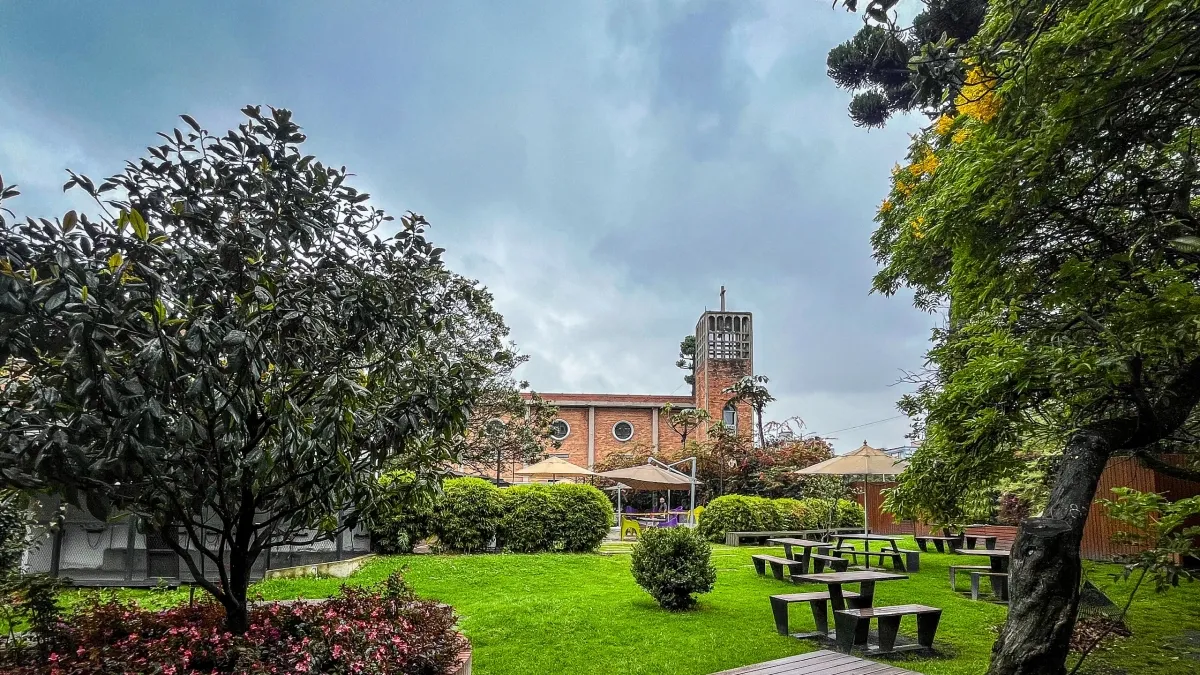
Biodiversity and Infrastructure: The campus boasts more than 200,000 square meters of designated green zones, actively protecting local flora and fauna while mitigating urban heat island effects.
Official Responses and Expert Perspectives
The transition from theoretical environmentalism to practical campus engineering requires visionary leadership and cross-departmental collaboration. Academic leaders across the region have emphasized that sustainability must permeate every level of university governance.
Dr. Benjamín Quesada, Dean of the School of Engineering and Sciences at the Universidad del Rosario, highlighted the symbiotic relationship between academic instruction and operational reality in a formal institutional statement:
"We are working within our university precisely as we teach in our classrooms. We maintain numerous academic programs infused with rigorous environmental components, but we also translate these concepts directly into physical reality—through our infrastructure, our governance models, and our applied research. This recognition is entirely objective, built upon verifiable facts and tangible engineering outcomes."
According to Dr. Quesada and institutional planners, the secret to sustained excellence lies in breaking down traditional academic silos. Faculty members in economics collaborate with civil engineers and biologists to audit campus carbon footprints, turning the university itself into a living, breathing laboratory for sustainable urban development.
Furthermore, international higher education analysts point out that rankings like UI GreenMetric serve an essential accountability function. By forcing universities to publicly disclose their energy consumption, waste generation, and transport footprints, institutions are held accountable not just by accreditation boards, but by an increasingly environmentally conscious student body.
Implications: The Future of Global Higher Education
The implications of the 2026 UI GreenMetric World University Rankings extend far beyond a celebratory press release or a badge of honor for university prospectuses. They signal a fundamental realignment of institutional priorities worldwide.
1. Student Demand and Enrollment Trends
Today’s prospective university students are acutely aware of the climate crisis. Generation Z and Generation Alpha applicants increasingly factor environmental credentials, ethical governance, and visible sustainability efforts into their university selection process. Institutions that lag in eco-friendly infrastructure risk losing top-tier domestic and international talent to greener, more progressive campuses.
2. The Campus as a Micro-City Living Lab
As global cities grapple with the realities of climate change, resource scarcity, and waste management crises, universities are uniquely positioned to act as testing grounds for municipal solutions. Innovations pioneered on campus—such as district-level solar microgrids, advanced organic waste composting systems, and zero-emission internal mobility networks—can be scaled up and adopted by municipal governments.
3. Financial and Regulatory Pressures
Governments and international funding bodies are increasingly tying research grants, infrastructural subsidies, and accreditation standards to verified sustainability metrics. Institutions that fail to modernize their energy grids or optimize their water and waste management face mounting operational costs and regulatory hurdles. Conversely, green campuses are discovering significant long-term financial savings through reduced energy consumption and efficient resource allocation.
Conclusion
The 2026 UI GreenMetric World University Rankings demonstrate that the fight against climate change requires more than international summits and political declarations; it requires structural, ground-level execution. From the pioneering efforts of global leaders to the remarkable ascent of institutions like the Universidad del Rosario in Colombia, universities are proving that they can—and must—lead by example. By transforming their campuses into models of ecological efficiency, higher education institutions are not only preparing students for a changing world, but actively building a more sustainable future.
Introduction: The Philosophy of Stillness and Inner Alignment As humanity continues to navigate the fast-paced demands of modern existence, ancient wisdom traditions often provide a much-needed sanctuary for reflection. In the realm of astrology, weekly…
The cosmos is preparing to stage one of its most awe-inspiring displays. On August 12, 2026, the Moon will align perfectly between the Earth and the Sun, casting a deep, celestial shadow across a significant…
By Edwin Caicedo, Environment and Health Correspondent In January 2023, when scientist Ghisliane Echeverry Prieto took the helm of Colombia’s Institute of Hydrology, Meteorology and Environmental Studies (IDEAM), she inherited an institution grappling with profound…