By Angie Rodríguez
Updated September 11, 2026
Main Facts
The landscape of La Guajira, Colombia, is undergoing a profound social and economic transformation. At the heart of this change is Misión La Guajira, a sweeping multi-sector initiative spearheaded by Grupo Aval. Designed to tackle deep-rooted structural challenges in one of Colombia’s most vulnerable regions, the initiative has officially expanded its scope to incorporate robust economic inclusion strategies for indigenous communities.
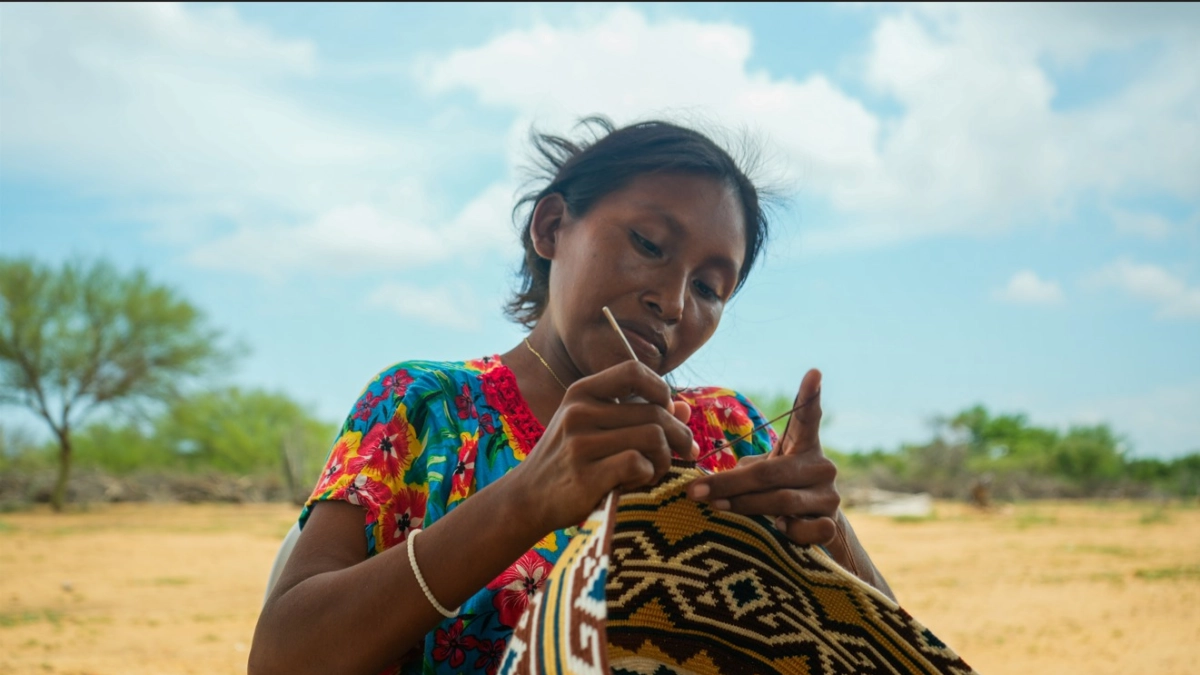
The newest phase of the project focuses specifically on the empowerment of 1,500 Wayuu artisans, providing them with comprehensive training, technical accompaniment, and direct access to high-scale commercial markets through a strategic partnership with the Tienda de la Empatía and retail giant D1.

Rather than relying purely on short-term philanthropic relief, Misión La Guajira centers on sustainable development, fair trade, and long-term autonomy. The initiative has already permeated 81 Wayuu communities, introducing critical infrastructure such as access to clean drinking water, solar energy, and internet connectivity.
However, physical infrastructure is only part of the equation. By connecting the rich, centuries-old ancestral weaving traditions of Wayuu women with modern retail supply chains, the initiative aims to build lasting economic engines within these desert communities. Starting this month, traditional Wayuu creations—beginning with an initial production run of 650 mochilas (traditional hand-woven bags) and 750 pencil cases (cartucheras)—will hit the shelves of D1 stores across Bogotá. A second production round featuring over 800 mochilas and 100 additional pencil cases is already underway, proving that indigenous craftsmanship can successfully scale to meet the demands of large-scale commercial retail while preserving its cultural integrity.
Chronology
The success of Misión La Guajira and its artisan-focused commercialization strategy did not happen overnight. It is the culmination of years of meticulous dialogue, community trust-building, and logistical alignment.

- The Foundation Phase (2023–2025): Before any commercial ventures could be discussed, foundational needs had to be met. Misión La Guajira deployed infrastructural projects across 81 Wayuu communities. This phase was defined by exhaustive community engagement: the project’s facilitators conducted over 500 distinct meetings and logged more than 2,000 hours of direct dialogue with community leaders and members. The goal was to co-create solutions tailored specifically to the cultural and geographical realities of the Guajira desert.
- Infrastructure and Connectivity Integration: Concurrently, teams deployed solar energy grids, established reliable sources of potable water, and connected isolated settlements to the internet. This reduced daily survival burdens, freeing up community bandwidth to focus on productive and educational projects.
- The Commercial Pivot (Early 2026): Recognizing that infrastructural support must be paired with economic self-sufficiency, organizers initiated a partnership with the Tienda de la Empatía. This phase shifted the focus toward the formalization and scaling of local artistic traditions—chiefly the intricate crochet and weaving work of Wayuu women.
- The Retail Breakthrough (September 2026): Marking a historic milestone for indigenous entrepreneurship in Colombia, September 2026 marks the official launch of Wayuu artisan products in D1 stores throughout Bogotá.
- Exhibition and Expansion (September 2026 Onward): Parallel to the D1 retail launch, the artisans are expanding their reach into high-end physical events, securing a prominent presence at the Feria Eva (occupying stand 257 in the Home Pavilion over two successive weekends) to showcase their work directly to urban consumers who value artisanal authenticity and fair trade.
Supporting Data
The operational scale and economic ambitions of Misión La Guajira are underpinned by concrete metrics that highlight both the depth of the intervention and its measurable outcomes:
- 1,500: The total number of Wayuu artisans targeted for specialized training, operational accompaniment, and capacity-building in this new phase.
- 81: The number of Wayuu communities thus far reached and positively impacted by the broader Misión La Guajira umbrella projects (water, solar power, internet, and development).
- 500 & 2,000: More than 500 working sessions and over 2,000 hours of intensive community dialogue dedicated to concerting sustainable development solutions.
- 650 Mochilas & 750 Cartucheras: The exact volume of the initial commercial batch destined for D1 stores in Bogotá.
- 900+ Additional Units: The immediate pipeline of a second production round, which includes over 800 additional mochilas and 100 supplementary pencil cases to sustain retail inventory.
- Stand 257: The designated location of the Wayuu artisan collective at the upcoming Feria Eva’s Home Pavilion.
Beyond these operational numbers, the initiative tracks vital economic indicators designed to ensure household resilience, including the optimization of production times, the efficient use of raw materials, the reduction of intermediary supply-chain costs, and the implementation of structured community savings programs.
Official Responses
The transition from isolated desert workshops to metropolitan supermarket shelves has drawn high-level praise from institutional leaders driving the project. Central to this vision is Paula Durán, Vice President of Corporate Sustainability and Strategic Projects at Grupo Aval.
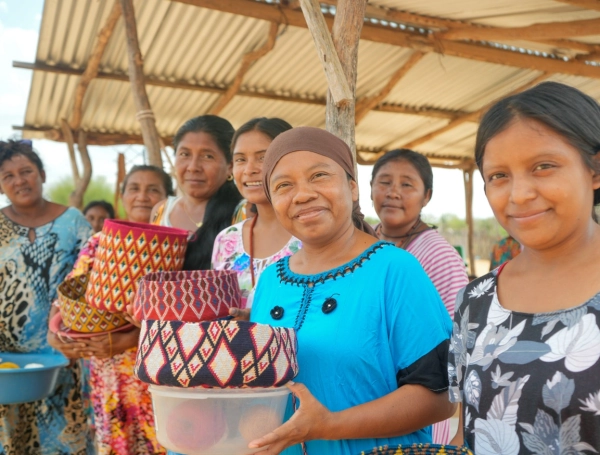
"This alliance represents a very important step in our purpose of generating sustainable opportunities for Wayuu communities," stated Paula Durán.
"Beyond commercializing artisanal products, we seek to strengthen capacities, create income opportunities, and connect the talent of the artisans with markets that value their work and tradition. Seeing their products arrive at D1 stores is a tangible demonstration of how the articulation between different actors can generate real and lasting transformations in the territory."
Durán emphasized that the project’s long-term design deliberately avoids paternalistic aid models. By focusing on education, design optimization, and direct commercial channels, Grupo Aval and its partners aim to build self-sustaining systems where the artisans themselves manage their enterprise, negotiate fair values for their labor, and retain a greater share of the economic value generated by their cultural heritage.

Furthermore, representatives from the Tienda de la Empatía noted that the retail partnership guarantees fair trade benchmarks, ensuring that pricing reflects not just the physical materials used, but the complex, generational expertise and hours of manual labor embedded in every single weave.
Implications
The integration of Wayuu artisans into large-scale commercial retail carries profound implications for the socio-economic landscape of northern Colombia, indigenous rights, and modern corporate social responsibility (CSR).
1. Economic Autonomy vs. Historical Vulnerability
La Guajira has historically suffered from systemic neglect, extreme poverty, and severe environmental vulnerabilities, compounded by climate change and infrastructural deficits. By establishing guaranteed, high-volume sales channels like D1 and platforms like Feria Eva, the project shifts the paradigm from charity to commerce. Regular income generation allows families to invest in their own nutrition, education, and healthcare, breaking multi-generational cycles of poverty.

2. Safeguarding Cultural Heritage Through Commerce
Globalization often threatens indigenous crafts through cheap industrial knock-offs and exploitative intermediary practices that pay artisans pennies on the dollar. By creating a direct pipeline that honors fair-trade pricing, Misión La Guajira proves that cultural preservation and commercial viability can coexist. When traditional mochilas are valued at their true worth in metropolitan supermarkets, younger generations of Wayuu are incentivized to learn, value, and perpetuate their ancestral crafts rather than abandoning them for low-wage urban labor.
3. A New Benchmark for Corporate-Community Partnerships
The success of the Grupo Aval, Tienda de la Empatía, and D1 collaboration establishes a new operational blueprint for private-sector involvement in indigenous territories. It demonstrates that meaningful intervention requires patience—evidenced by the 2,000 hours of dialogue—and cross-sector cooperation. By combining infrastructural aid (water, energy, internet) with productive integration (retail distribution), the initiative addresses human needs holistically.
4. Broadening Horizons for Future Market Access
The current roll-out in Bogotá’s D1 stores and the Feria Eva exhibition are viewed by organizers as merely the beginning. By standardizing production processes, improving quality control, and managing supply-chain logistics efficiently, these 1,500 artisans are building the operational muscle required for national and potentially international expansion. As these commercial foundations solidify, they will pave the way for future alliances, opening up new domestic and global markets that recognize, respect, and adequately compensate the rich cultural legacy of the Wayuu people.