
By Breaking News Desk
Published: November 12, 2026 | Updated: November 12, 2026, 4:37 PM
Main Facts
In what is rapidly shaping up to be one of the most extensive technological disruptions of the decade, a sweeping digital blackout crippled critical online infrastructure across the globe on Thursday, November 12, 2026. Miles of corporate and individual users found themselves abruptly locked out of their daily digital ecosystems as a cascading series of failures hit industry giants including Microsoft 365, Outlook, Gmail, Google services, social media platforms X and Facebook, and cloud computing behemoth Amazon Web Services (AWS).

According to real-time outage monitors such as Downdetector, the incident triggered an unprecedented wave of digital distress, registering more than 36,000 distinct reports of service interrupters spanning 72 countries in a matter of hours. The blackout affected millions of remote workers, educational institutions, financial markets, and communication networks, highlighting once again the fragile interdependence of modern cloud architecture.
While the exact root cause remains under active investigation by cybersecurity experts and infrastructure engineers, early technical telemetry points toward a major backend routing anomaly and localized server overloads that rapidly rippled through interconnected corporate ecosystems. Companies scrambled to deploy emergency mitigation protocols, working around the clock to restore normalcy to an increasingly frustrated global user base.

Chronology of the Crisis: How the Outage Unfolded
The digital disruption did not happen all at once; rather, it cascaded through global time zones in a series of shockwaves that began early Thursday morning.
Phase 1: The Initial Glitches (Early Morning)
The first signs of trouble began appearing shortly after sunrise in European markets. Users attempting to log into their enterprise email accounts via Outlook and Microsoft 365 were greeted with infinite loading loops, authentication errors, and server timeout messages (Error 500). Initially dismissed by many as localized internet service provider (ISP) hiccups, the volume of complaints on social media quickly outpaced normal baseline levels.

Phase 2: The Peak and Spread (Midday)
By midday, the issue metastasized into a full-scale international crisis. Monitoring platforms recorded a vertical spike in outage notifications as the American workdays began. In addition to Microsoft platforms, users reported widespread difficulties accessing Gmail, performing Google searches, and refreshing feeds on X and Facebook. Simultaneously, critical enterprise infrastructure hosted on Amazon Web Services (AWS) began reporting latency spikes, causing dependent third-party applications, e-commerce sites, and financial portals to crash or stall indefinitely.
Phase 3: Emergency Interventions and Stabilization (Afternoon)
By 2:00 PM local time, engineering teams across the affected tech giants had mobilized emergency response task forces. By throttling traffic, rolling back recent server deployments, and manually rebooting core data clusters, companies began to see gradual recovery curves. By late afternoon, Microsoft and other providers confirmed that core functionalities were slowly coming back online, though residual lag and synchronization queues continued to plague intensive corporate users.
Supporting Data and Scale of the Impact
The sheer velocity and geographic spread of Thursday’s outage underscore the vulnerability of a hyper-connected global economy. Key data points illustrating the magnitude of the incident include:
- Geographic Reach: Outage telemetry confirmed disruptions in 72 countries across North America, Europe, Asia, and Latin America.
- Volume of Complaints: Downdetector and independent monitoring networks logged over 36,000 high-priority incident reports within the first three hours of the blackout.
- Sector Vulnerability: While casual consumers experienced frozen social media feeds and inaccessible personal emails, the corporate sector bore the brunt of the crisis. Financial institutions, multinational corporations, healthcare scheduling systems, and academic institutions reliant on Microsoft 365 and AWS infrastructure were forced to halt operations or revert to manual contingencies.
- Core Systems Impacted:
- Microsoft 365 & Outlook: Enterprise email routing, calendar synchronization, and document collaboration suites.
- Google Ecosystem: Consumer and enterprise mail delivery, search engine API latency, and cloud storage access.
- Social Networks: Intermittent delivery failures, missing media attachments, and login loop errors on X and Facebook.
- Cloud Infrastructure: AWS server response timeouts affecting countless independent SaaS (Software as a Service) providers.
Official Responses and Remediation Efforts
As panic mounted across corporate boardrooms and remote-work households, tech conglomerates issued formal statements detailing the technical nature of the failures and the steps being taken to resolve them.

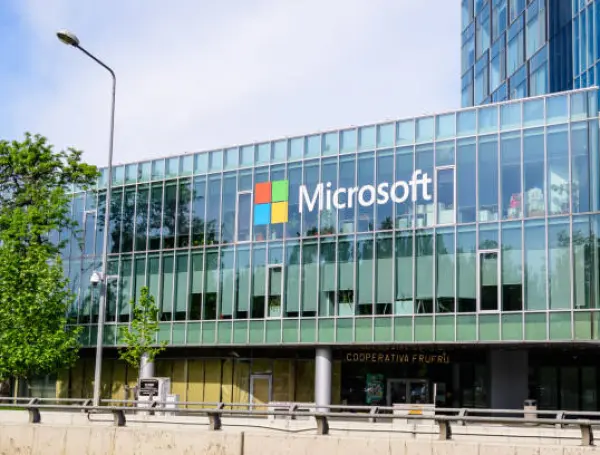
Microsoft was among the first to acknowledge the gravity of the situation, specifically identifying severe operational bottlenecks within Exchange Online. In an official incident update, Microsoft engineering leads explained that the disruptions were being actively mitigated through a three-pronged approach:
- Server Reboots: System administrators initiated controlled reboots of primary authentication and mail-routing servers to clear memory leaks and unblock queuing threads.
- Traffic Redistribution: Global network operations centers (NOCs) actively diverted user traffic away from degraded data centers and toward healthy regional clusters to balance network loads.
- Halt on Deployments: As a precautionary measure, Microsoft suspended all new software updates, patches, and feature implementations globally to prevent introducing additional variables into an already unstable environment.
Meanwhile, representatives for Google, Meta (Facebook), and Amazon Web Services confirmed that their respective monitoring teams were tracking localized latencies. While their core infrastructures did not suffer the same systemic collapse as Microsoft’s Exchange services, the secondary shockwaves of the global traffic redirection caused temporary strain on their edge servers.

Implications: The Fragility of Modern Cloud Infrastructure
While services have largely been restored, Thursday’s blackout serves as a glaring wake-up call for corporations, governments, and technology providers regarding the systemic risks of centralized cloud computing.
1. The Risk of Monoculture in Enterprise Software
When a massive percentage of the global workforce relies on a single ecosystem—such as Microsoft 365 or AWS—for daily communications, document storage, and operational management, a single point of failure can instantly paralyze international commerce. Analysts are once again raising questions about the necessity of robust multi-cloud strategies and decentralized redundancy.

2. Economic Toll and Productivity Losses
Though a precise monetary figure will take weeks to calculate, the collective loss of millions of productive man-hours across 72 countries translates to billions of dollars in unrealized economic activity. Deadlines were missed, customer service desks were grounded, and high-stakes financial transactions were delayed while engineers fought to revive dead servers.
3. The Urgency of Enhanced Resilience
As companies increasingly migrate their entire operations to the cloud, user expectations for 99.999% uptime leave virtually zero margin for error. Cybersecurity and infrastructure experts argue that tech giants must heavily invest in predictive AI-driven anomaly detection to catch routing loops and server overloads before they cascade into international blackouts.

As life slowly returns to normal across the digital landscape, the events of November 12 will undoubtedly prompt a thorough reassessment of how the world’s digital infrastructure is built, maintained, and safeguarded against catastrophic failure.