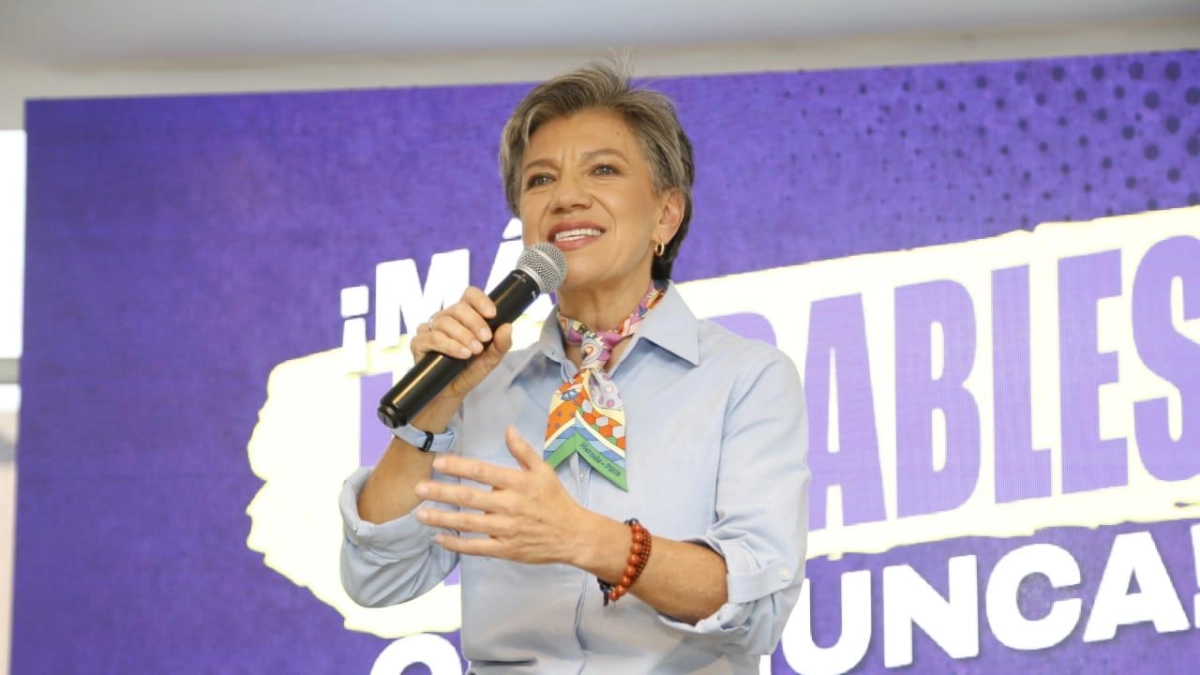
BOGOTÁ — In a dramatic twist that underscores the volatile nature of Colombia’s progressive political alliances, former Bogotá Mayor Claudia López has once again upended the national conversation. Just weeks after publicly sharing a conciliatory cup of coffee and discussing potential electoral coalitions with President Gustavo Petro, López delivered a sharp critique of the head of state, signaling that the rebuilding of political bridges remains fraught with deep mistrust and ideological friction.
The renewed tensions broke into the open on social media when López shared and forcefully endorsed a scathing opinion column written by journalist María Jimena Duzán, published in Cambio magazine. The public rebuke has raised immediate questions about the longevity and sincerity of the nascent "Alliance for Life" ("Alianza por la Vida"), a political project hatched last September to unify fragmented leftist and progressive factions ahead of the crucial 2027 regional elections.
Main Facts: The Endorsement and the Fracture
The flashpoint occurred when López took to the platform X (formerly Twitter) to amplify Duzán’s analysis of the Petro administration. Without reservation, the former mayor embraced the column’s harshest conclusions regarding the president’s legacy and current political standing.
"I subscribe to every word: ‘Petro wanted to go down in history as the president who changed this country, but he is going to go down as the president who was dominated by blackmail and who disappointed those who believed in him,’" López wrote, quoting the text directly.
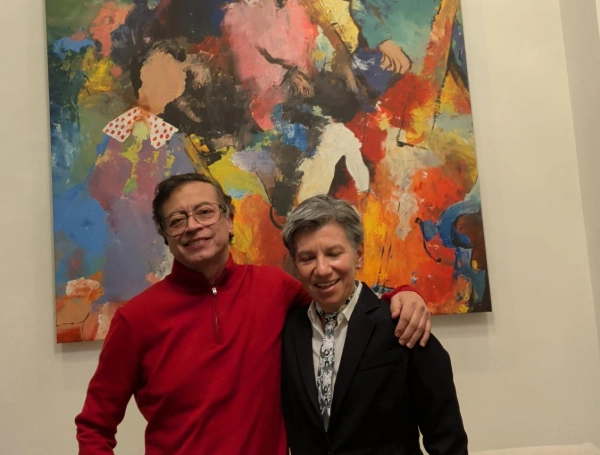
This direct strike comes a mere two months after López and Petro staged a high-profile political reconciliation. On September 10, the pair met privately at the home of former senator Gustavo Bolívar in Bogotá. The meeting yielded a widely circulated photograph, posted by Petro himself, which served as a visual testament to a potential thaw in relations. The imagery was framed around a shared objective: uniting the progressive spectrum to field competitive, joint candidacies in the 2027 regional contests.
At the time, López acknowledged the meeting and the dialogue, but offered a measured caveat that foreshadowed the current rupture. She insisted that engaging in political dialogue did not equate to erasing years of bitter public hostility.

"It is not simply turning the page," López remarked in September. "It is rebuilding bridges, trust, and purpose. It will take time. This is the first coffee. Neither more nor less."
Yet, by endorsing Duzán’s column, critics and allies alike argue that López has abruptly thrown the stability of those newly minted bridges into question, proving that her tactical willingness to converse with Petro has done nothing to blunt her willingness to excoriate his governance.
Chronology: From Electoral Allies to Bitter Rivals and Uneasy Truces
To understand the weight of López’s recent statements, it is necessary to examine the turbulent trajectory of her relationship with Gustavo Petro—a dynamic that has oscillated between strategic pragmatism and open hostility over the past decade.

1. The Early Years of Convergence (2018–2022)
Claudia López, a prominent figure within Colombia’s center-left and progressive movements, initially threw her weight behind Gustavo Petro during the second round of the 2018 presidential election. She repeated this pragmatic alignment in 2022, supporting his historic bid that eventually brought the Historic Pact (Pacto Histórico) to power. At various points, both politicians were viewed as natural leaders of a modernizing, progressive Colombia.
2. The Institutional Collisions (2020–2023)
Cracks in the relationship widened significantly while López served as Mayor of Bogotá (2020–2023) and Petro governed the nation. Governing the capital city placed López in direct administrative and political friction with the central government.
The epicenter of this conflict was the Bogotá Metro project. While Petro aggressively lobbied and campaigned to modify the mass transit design to include a subterranean stretch, López stood firm on maintaining the legal continuity and execution of the ongoing elevated metro design. The policy dispute escalated into a bitter ideological tug-of-war over urban planning, executive authority, and financial priorities.
3. The Public Breakdown and Legal Actions (2024–2025)
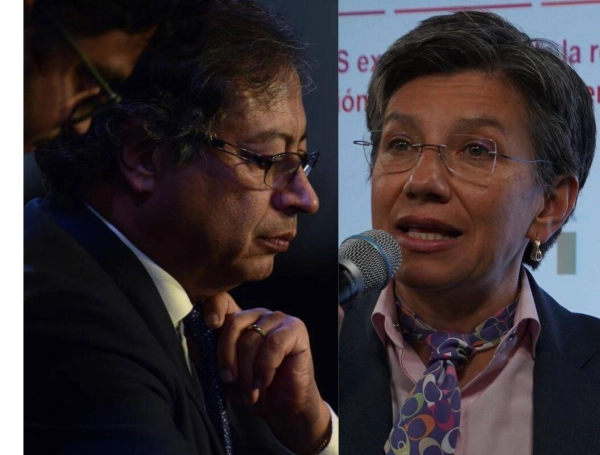
By early 2025, the relationship had completely deteriorated into open warfare. In March 2025, Petro publicly accused López of having "betrayed him seven times."
López retaliated swiftly and fiercely, asserting that it was the president who had betrayed the democratic trust and hope of millions of Colombians, including her own vote. Her opposition went beyond rhetoric: López officially filed a formal complaint against Petro before the Investigation and Accusation Committee of the House of Representatives (Comisión de Acusación de la Cámara), alleging unconstitutional and illegal interference in domestic politics.
4. The September "Coffee" and the Fragile Truce (September 2026)
Defying expectations, the political landscape shifted in late 2025 and 2026 as the specter of the 2027 regional elections loomed large. Recognizing that fragmentation among progressive and center-left forces could hand power to conservative or right-wing coalitions, intermediaries facilitated the September 10 meeting at Gustavo Bolívar’s home. The meeting produced the "Alliance for Life" narrative and the famous photograph over coffee.
However, interviews following the encounter revealed that López had no intention of softening her oversight. Speaking with Caracol Radio, she defended her historical criticisms of the Petro administration and vowed that her participation in political alignments would never force her to compromise her anti-corruption stance or her willingness to denounce wrongdoing, regardless of political affiliation.
Supporting Data and Contextual Analysis
López’s calculated repositioning occurs against a broader backdrop of political realignment in Colombia. The center-left is currently grappling with deep internal identity crises, ideological purity tests, and strategic debates over how to preserve the legislative and executive gains achieved in 2022.
Recent political data and public opinion metrics highlight the fragility of the progressive bloc:
- The 2027 Horizon: Regional and local elections in Colombia frequently serve as a referendum on the sitting national government. With Petro’s approval ratings facing headwinds and traditional opposition forces mobilizing effectively—evidenced by recent political shifts and legislative debates—center-left leaders like López are acutely aware that running a fractured campaign will guarantee defeat in key municipalities and departments.
- The Burden of Governance: Duzán’s column, which resonated so deeply with López, captures a prevailing sentiment among moderate progressives: that the historic opportunity presented by the 2022 electoral victory has been compromised by internal scandals, political overreach, and a failure to deliver institutional transformation without succumbing to traditional clientelism and political blackmail.
- Independent Positioning: By maintaining a foot in both worlds—engaging in coalition talks for 2027 while refusing to offer unconditional loyalty to the executive branch—López is carving out a distinct political space. She aims to position herself as a pragmatic, uncorruptible voice capable of leading a reformed progressive movement that distances itself from the perceived administrative failures of the current administration.
Official Responses and Political Repercussions
The immediate aftermath of López’s tweet has sent shockwaves through the corridors of power in Bogotá, triggering a flurry of reactions from political allies, adversaries, and observers.
The Reaction from the Historic Pact
Loyalists within the Petro administration and the Historic Pact have reacted with predictable frustration to López’s public endorsement of the critical column. Several lawmakers accused the former mayor of opportunism, arguing that true coalition-building requires mutual respect and a cessation of public hostility.
"You cannot sit down to drink coffee, agree on a path for national unity and regional coordination in 2027, and then turn around a few weeks later to throw verbal grenades at the president to court media approval," remarked a senior legislator aligned with the Historic Pact, who spoke on condition of anonymity. "This behavior proves that some actors are more interested in personal political calculations than in defending the broader progressive project."
The Center and Opposition Perspectives
Conversely, analysts outside the traditional leftist bloc view López’s move as a masterclass in political hedging. By publicly validating criticisms of Petro while keeping the door open for tactical electoral coordination, she appeals simultaneously to disillusioned centrists, independent voters, and progressive pragmatists.
Political analysts note that López’s stance illustrates the core dilemma facing Colombia’s non-uribista center and moderate left: how to distance themselves from an increasingly unpopular and isolated executive branch without entirely burning down the electoral machinery required to win future regional contests.
Implications for the Future of Colombian Politics
The ripple effects of this episode extend far beyond a mere social media sparring match. They point directly to systemic vulnerabilities within Colombia’s political ecosystem as the nation prepares for the 2027 electoral cycle.

- The Viability of the "Alliance for Life": The primary casualty of López’s public endorsement may well be the credibility of the "Alliance for Life." Trust between Petro and López—already tenuous after years of litigation, public name-calling, and policy battles over the Bogotá Metro—remains superficial. If key figures in the progressive coalition continue to air their dirty laundry and critique each other’s foundational competence, forming a unified front against surging right-wing and alternative movements will become an insurmountable task.
- López’s 2027 and 2030 Ambitions: Claudia López remains one of the most polarizing yet influential figures in contemporary Colombian politics. Her refusal to submit to party discipline or executive pressure enhances her credentials as an independent leader, but it severely alienates the hardline base of the Historic Pact. Whether she can successfully thread the needle—acting as a coalition builder while retaining her role as a fierce institutional critic—will determine her viability as a top-tier contender in future national leadership races.
- The Erosion of Progressive Hegemony: Duzán’s column, by articulating the narrative that Petro "deceived those who believed in him," captures a broader narrative of disillusionment that threatens the entire progressive movement. As Colombia looks toward the post-Petro era, the debate over who inherits the mantle of reform—pragmatic reformers like López or orthodox loyalists—will define the ideological battles of the decade.
As the political dust settles from this latest social media exchange, one reality remains indisputable: in the high-stakes theater of Colombian politics, the distance between sharing a cup of coffee and drawing a line in the sand is measured in hours, and the road to 2027 is destined to be paved with further ideological clashes.