By Global Business & Environment Desk
Published: October 2023
Main Facts
In the pristine waters of the Gulf of Chiriquí, along the verdant western coast of Panama, a fierce battle is being waged over the future of one of Central America’s most ecologically sensitive regions. At the heart of the conflict is Puerto Barú, a proposed US$260 million commercial port development spearheaded by American businessman John McKeown through his firm, Ocean Pacific Investments.
Proponents pitch the 124-hectare project—located just south of the city of David—as Panama’s first "green" port. They argue it will relieve commercial congestion in Panama City, establish a crucial logistics nexus for trade with North America and Asia, and inject vital economic stimulus into the agricultural province of Chiriquí, home to roughly 500,000 residents who produce much of the nation’s coffee, papaya, and shrimp.
However, the project has run into a formidable wall of opposition, bankrolled and championed by another wealthy American: hedge fund billionaire Louis Bacon. Bacon, whose eco-tourism resort Islas Secas sits in an archipelago roughly 48 kilometers southwest of the proposed port, views the development as an unacceptable threat to an intact ecological oasis. The confrontation has escalated far beyond a local zoning dispute, transforming into a high-stakes legal war that has reached Panama’s Supreme Court, triggered criminal complaints against local environmental non-governmental organizations (NGOs), and ignited an international debate over corporate accountability, environmental protection, and the weaponization of the legal system against critics.
Chronology of the Conflict
The friction over Puerto Barú spans years of regulatory maneuvering, private confrontations, and escalating legal battles:
- Pre-2020 (Inception): John McKeown conceives the idea for a maritime hub in Chiriquí following a deep-sea fishing excursion where his boat was forced to travel seven hours simply to refuel due to a lack of adequate infrastructure.
- 2017–2021 (Permitting Phase): Ocean Pacific Investments spends four years navigating Panama’s environmental assessment process. The company holds public hearings and ultimately secures environmental approval for Puerto Barú. An economic assessment commissioned by the firm estimates the port will generate more than 1,100 jobs.
- 2021–Present (The Bacon Intervention): Recognizing the threat to the region, hedge fund billionaire Louis Bacon steps in to back local opposition groups, including CIAM and Adopta Bosque. Bacon’s philanthropic entities finance alternative impact studies—pegging environmental costs at roughly US$30 million over 20 years—and fund an alternative proposal to relocate the port to Puerto Armuelles, some 80 kilometers to the west.
- The Legal Counter-Offensive: As local environmental groups and six major NGOs challenge the port’s environmental permits before Panama’s Supreme Court, Ocean Pacific launches a counter-offensive. The company files criminal and civil complaints against at least two environmental NGOs for slander, defamation, and economic damages.
- The Asset Freezing Crisis: Prompted by the lawsuits, judicial orders freeze the bank accounts of the targeted non-profits. Deprived of operational funds, the organizations struggle to pay staff, sparking widespread concerns over the chilling effect of Strategic Lawsuits Against Public Participation (SLAPP suits) in Panama.
Supporting Data and Environmental Context
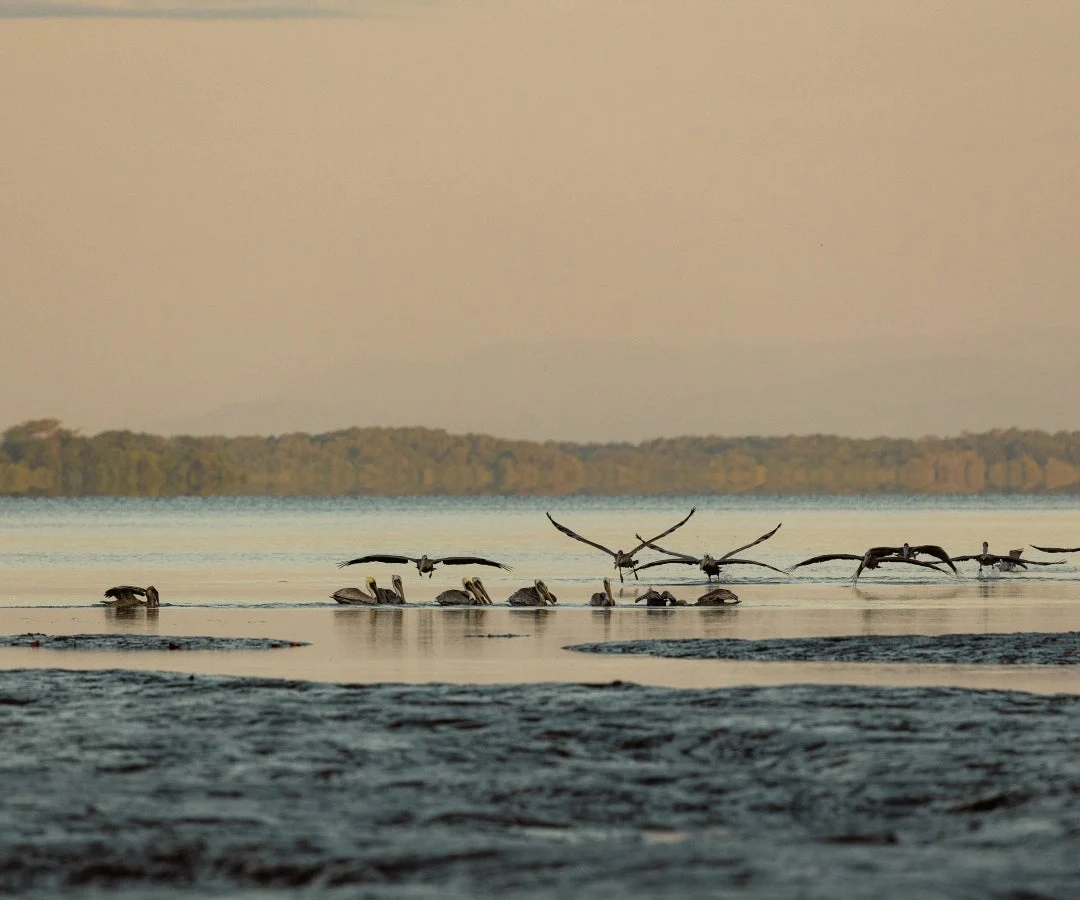
The geographical epicenter of the dispute is a fragile labyrinth of winding tidal channels and mangrove forests. According to environmental data, the Gulf of Chiriquí harbors roughly a quarter of all mangroves in Panama. These coastal ecosystems serve as natural storm barriers, critical spawning grounds for marine life, and massive carbon sinks.
The two sides present starkly divergent figures and risk assessments regarding the project:
- The Developer’s Projections: Ocean Pacific maintains that Puerto Barú represents the largest private investment in the history of Chiriquí. The project includes provisions for a recreational boat marina to boost tourism, features a design intended to run entirely on solar energy, and incorporates dedicated conservation zones. The company insists its environmental impact study was exhaustive and modeled after rigorous U.S. infrastructure standards.
- The Conservationists’ Counter-Data: Backed by funding from Louis Bacon, a coalition of six Panamanian environmental groups commissioned a 20-year environmental cost assessment that values potential ecological damage at approximately US$30 million. Scientists and independent experts—such as Juan Carlos Monterrey Gómez, executive director of environmental consultancy VANGLabs and former special representative for climate change for Panama—have noted that any industrial project of this magnitude will inevitably cause local disruption through water agitation, dredging, and habitat fragmentation.
- The Billionaire Patrons:
- Louis Bacon: Ranked by The Land Report as the 70th largest landowner in the U.S., Bacon has placed 94% of his massive land holdings under permanent conservation easements. A co-founder of the Waterkeeper Alliance, Bacon has a long history of activist philanthropy, having previously fought industrial projects near his properties in North Carolina and engaged in a high-profile multi-year neighbor dispute with late fashion mogul Peter Nygard in the Bahamas.
- John McKeown: A part-time resident of Panama and president of Synergy Oil & Gas, McKeown previously helped broker a deal with California authorities to close an old oil field and establish one of the state’s largest protected wetlands. He brings a background in commercial real estate and container terminal operations to the table.
Official Responses
The controversy has placed the Panamanian government—and specifically the Ministry of Environment—in a delicate political and legal crossfire.
-
Ministry of Environment: Environment Minister Juan Carlos Navarro issued a formal statement noting that the ministry is legally "obliged to respect" the environmental approval granted to Puerto Barú by a prior administration. Navarro stated that the agency will ultimately abide by the rulings of the Supreme Court. However, Navarro admitted that the nature of Ocean Pacific’s aggressive legal actions against local NGOs has left ministry officials "deeply concerned."
"Panama is a democratic country," Navarro said. "In the Ministry of Environment, we value and promote active and robust citizen participation, as well as the contributions of civil society and the scientific community to environmental management."
-
Ocean Pacific Investments: Representatives for McKeown have defended their legal actions while declining to comment on ongoing litigation. The firm maintains that its environmental review was comprehensive, dismissing the call to relocate the port to Puerto Armuelles because that site is too far removed from Chiriquí’s agricultural hubs. McKeown has characterized his efforts as a genuine attempt to modernize Panama’s supply chains, asserting that he would never invest his time and capital into a country he considers his home if he believed the project would cause systemic harm.
-
Louis Bacon: Condemning the use of the legal system to silence whistleblowers, Bacon expressed utter disbelief at the developer’s tactics.
"I have never had to support environmental defenders facing criminal sanctions simply for raising concerns about a development project," Bacon stated. "The use of legal actions to persecute watchdogs is abominable."
Implications
The Puerto Barú controversy carries profound implications that extend far beyond the shores of the Gulf of Chiriquí, touching upon issues of national governance, international investment, and freedom of expression.
1. The Threat of SLAPP Suits in Emerging Democracies
The freezing of bank accounts belonging to groups like CIAM and Adopta Bosque has sent shockwaves through Panama’s civil society. Legal experts have pointed out that the aggressive deployment of criminal defamation charges mirrors SLAPP tactics (Strategic Lawsuits Against Public Participation) commonly used globally to bankrupt and silence critics. Activists warn that this creates a pervasive chilling effect, intimidating other community leaders and watchdogs from speaking out against major infrastructure developments.
2. The Paradox of Panama’s Environmental Reputation
Panama has long cultivated an international image as a global leader in environmental conservation, pioneering carbon-negative initiatives and marine protected areas. However, local activists argue that the state’s handling of the Puerto Barú dispute exposes a glaring hypocrisy—a widening chasm between high-level diplomatic environmental pledges and the harsh realities faced by grassroots organizations operating without institutional protection.
3. Economic Growth vs. Ecosystem Integrity
Ultimately, the conflict encapsulates the timeless tension between rapid economic expansion and ecological preservation. While developers promise hundreds of jobs, industrial modernization, and regional prosperity, critics warn that the extraction of wealth and the degradation of natural assets leave local populations to bear the ecological costs while private investors reap the rewards.
As the case sits before Panama’s Supreme Court, the final verdict will do more than determine whether a $260 million green port rises from the mangroves of Chiriquí. It will set a crucial precedent for how Panama balances the ambitions of global capital against the preservation of its natural heritage—and how it treats those brave enough to question the balance.