By International Desk Analysis
Updated: November 9, 2026
Main Facts
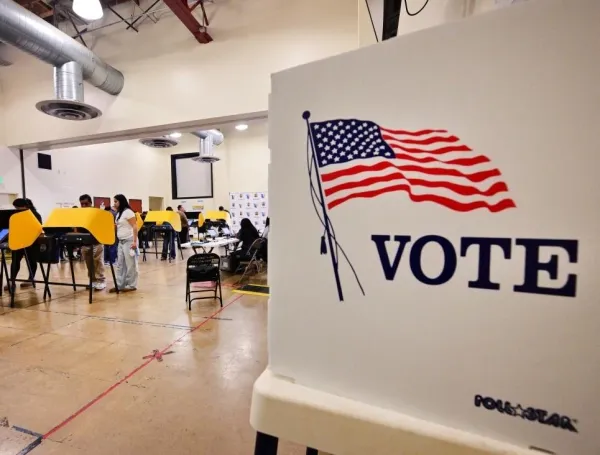
The political landscape of the United States has been fundamentally upended following the 2026 midterm elections. In a stunning reversal of legislative power, the Democratic Party secured decisive majorities in both the Senate and the House of Representatives, while also capturing critical gubernatorial seats—most notably in the traditionally Republican stronghold of Texas.
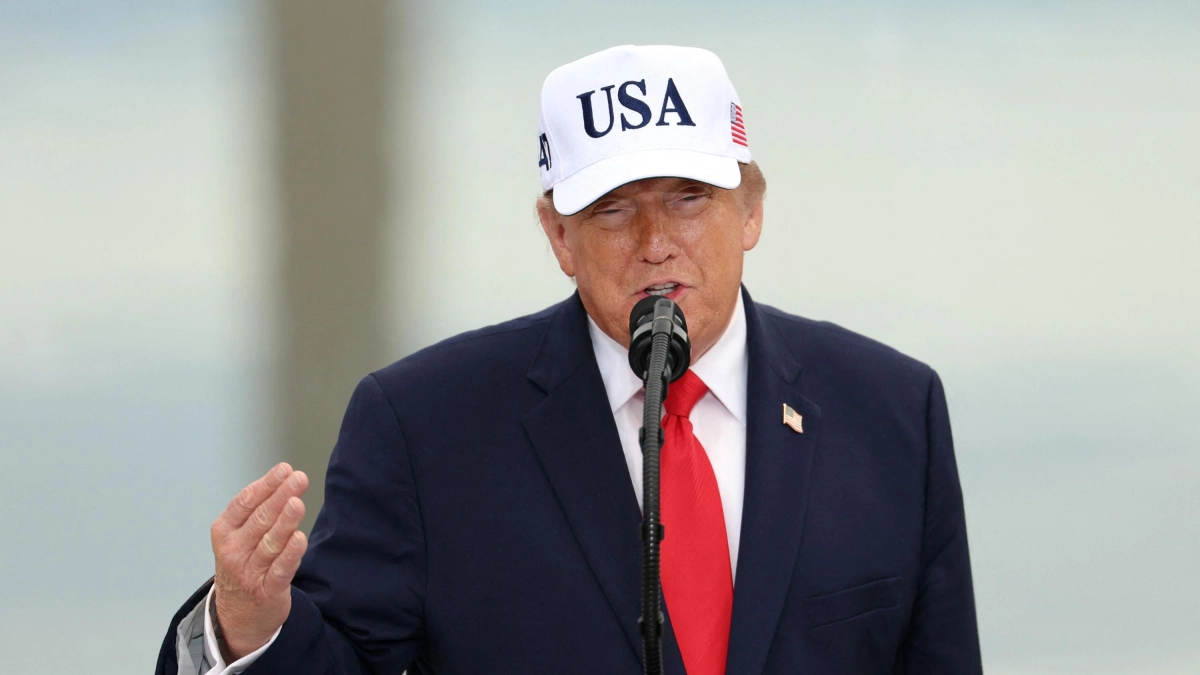
Faced with a devastating electoral rebuke, President Donald Trump launched a blistering attack on the legitimacy of the vote. Abandoning his initial conciliatory stance, Trump took to social media to propagate unsubstantiated claims of widespread electoral fraud. Citing unexpected polling discrepancies and a massive turnout of early voters, the president sought to undermine public confidence in the democratic process.
Simultaneously, the White House announced a major administrative consolidation. Stephen Miller, the architect of the administration’s hardline immigration policies, officially assumed his role as White House Chief of Staff. This high-stakes appointment, combined with growing bipartisan calls for a congressional impeachment inquiry into Secretary of War Pete Hegseth over military operations in Iran, underscores a moment of severe political volatility in Washington.

Chronology of Events
To understand the rapid escalation of political tensions in the American capital, it is essential to trace the timeline of events leading up to and immediately following the midterm elections:
- November 3, 2026 (Election Night / Early Morning): Americans head to the polls for the midterm elections. Early exit polls and initial returns indicate a massive wave of voter mobilization. Hours after the initial tallies begin, President Trump tells reporters from The New York Times that he is "prepared to accept the results" of the election, regardless of the outcome.
- November 4–5, 2026: As final votes are tabulated, it becomes clear that the Democratic Party has swept both chambers of Congress, claiming solid majorities in the Senate and the House of Representatives, and pulling off major upsets at the state level.
- November 8, 2026: Political pressure mounts across Washington as analysts and lawmakers begin dissecting the fallout of the defeat. Reports surface detailing the political fallout of the administration’s strict deportation policies, which internal critics begin labeling as "too harsh."
- November 9, 2026 (Morning): President Trump executes a sharp rhetorical pivot. In a series of posts on Truth Social, he questions the integrity of the election, writing, "Does anybody really believe that these ‘elections’ were clean? How is it possible that the polls were so wrong?" He singles out early voting volumes and electronic voting infrastructure, declaring, "It all comes down to the machines, which are much more important than the voter!"
- November 9, 2026 (Afternoon): Stephen Miller officially takes office as White House Chief of Staff, stepping into the most powerful operational role within the executive branch. Concurrently, pressure peaks on Capitol Hill regarding Secretary of War Pete Hegseth’s handling of military engagements in the Middle East, setting the stage for a contentious legislative session.
Supporting Data and Context
The 2026 midterm cycle will be studied by political scientists for decades as a masterclass in voter behavior, early-ballot dynamics, and systemic polling errors.

The Shift in Congress and State Houses
While midterm elections traditionally favor the party out of power, the scale of the Democratic victory exceeded even the most optimistic internal projections. By securing control of the House of Representatives and flipping the Senate, the opposition party now holds the constitutional power to block judicial and executive nominations, launch independent congressional investigations, and dictate the legislative calendar for the remainder of Trump’s term.
Furthermore, the loss of the Texas governorship sent shockwaves through Republican party headquarters. For decades, the Lone Star State served as an impenetrable bastion of conservative executive power. The Democratic victory there signals a profound demographic and shifting political alignment in the Sun Belt.
The Mechanics of the President’s Allegations
Trump’s assertions regarding the election center heavily on two distinct phenomena:
- Early Voting Volumes: Millions of citizens utilized mail-in and in-person early voting options—a method heavily utilized by progressive and independent constituencies. Trump argued that the sheer volume of these non-Election-Day ballots warped the final tallies.
- Electronic Tabulation Systems: Echoing rhetoric from previous election cycles, Trump targeted voting machinery. Independent election security experts, bipartisan state election officials, and federal cybersecurity agencies have repeatedly verified that electronic voting systems utilize rigorous paper-audit trails and rigorous testing protocols, rendering large-scale algorithmic manipulation statistically and physically implausible. Despite these facts, the president’s narrative resonates deeply with a base that remains skeptical of mainstream electoral infrastructure.
Official Responses and Administrative Shakeups
The political earthquake of the midterms has triggered immediate structural and personnel adjustments within the executive branch.

Stephen Miller Takes the Reins
The official swearing-in of Stephen Miller as White House Chief of Staff is perhaps the clearest signal of President Trump’s intended counter-strategy. Miller, renowned as the chief strategist behind the administration’s aggressive immigration agenda and mass deportation frameworks, assumes control over the inner workings of the West Wing.
In his new capacity as the president’s highest-ranking assistant, Miller controls access to the Oval Office, manages the White House staff, and acts as the primary liaison between the executive branch and Capitol Hill. Political analysts note that placing a hardliner like Miller at the helm—immediately following a devastating legislative defeat—proves that Trump has no intention of moderating his policy positions or seeking legislative compromises with the newly empowered Democratic majority.
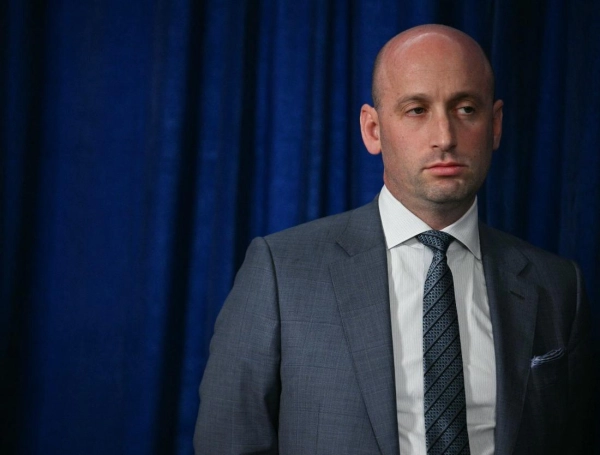
Instead, the appointment points toward an era of heightened institutional friction, executive defensiveness, and ideological polarization.
The Controversy Surrounding Secretary of War Pete Hegseth
Compounding the administration’s legislative woes is a brewing crisis at the Pentagon. Growing calls from both opposition lawmakers and select independent voices are demanding an impeachment inquiry or formal congressional investigation into Secretary of War Pete Hegseth.
Hegseth has come under intense fire for strategic decisions made during recent military operations, most notably concerning the execution and fallout of military engagements involving Iran. Critics argue that these operations lacked proper congressional authorization and suffered from strategic miscalculations. As the new Congress prepares to take office, the Hegseth inquiry threatens to become a primary battleground, diverting administrative energy and attention away from domestic governance.
Implications for Domestic Governance and Foreign Policy
The combination of a hostile Congress, an unyielding executive branch under a hardened leadership team, and looming military oversight creates a volatile institutional environment for the United States.

Domestic Policy Gridlock
With Democrats controlling both congressional chambers, major legislative initiatives originating from the White House are effectively dead on arrival. Conversely, the executive branch retains the power of the veto, setting the stage for a prolonged legislative stalemate. Issues ranging from federal budget allocations and tax policy to judicial confirmations will likely face intense gridlock, increasing the risk of federal funding showdowns and government shutdowns.
Foreign Policy and International Relations
The tremors from Washington are already being felt globally. Allies and adversaries alike are recalibrating their foreign policy strategies in response to a weakened U.S. executive branch forced to contend with a resurgent, investigative legislative branch.

For international partners—such as those in Latin America, Europe, and the Middle East—the uncertainty surrounding American political stability complicates long-term diplomatic and economic agreements. For instance, nations managing complex bilateral ties with Washington, such as Colombia and other hemispheric partners, must now navigate a dual-track American foreign policy where the executive branch’s aggressive posture may be routinely challenged or counterbalanced by congressional oversight committees.
The Road Ahead
As the dust settles on the 2026 midterms, the United States enters a precarious transitional phase. President Trump’s refusal to accept the legitimacy of the results, coupled with the aggressive consolidation of power via Stephen Miller’s appointment, guarantees that the remainder of the presidential term will be marked by intense legal, political, and constitutional battles. Whether the system of checks and balances can weather this acute polarization will depend heavily on the actions of the newly seated Congress and the resilience of the nation’s democratic institutions.