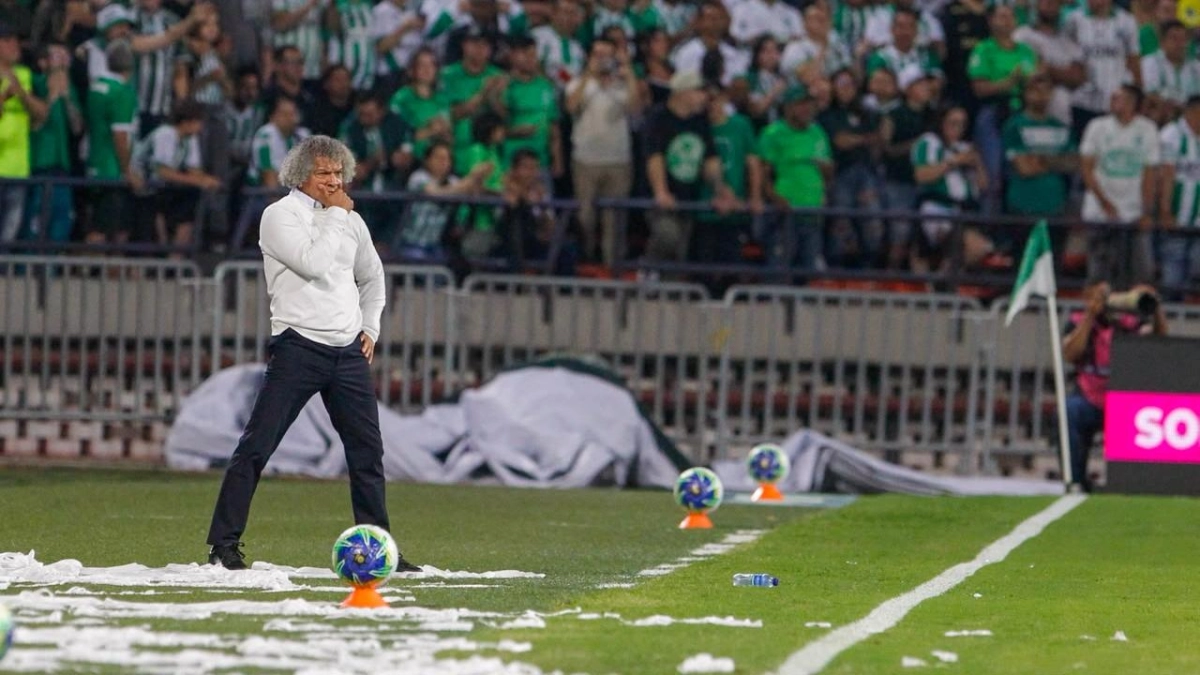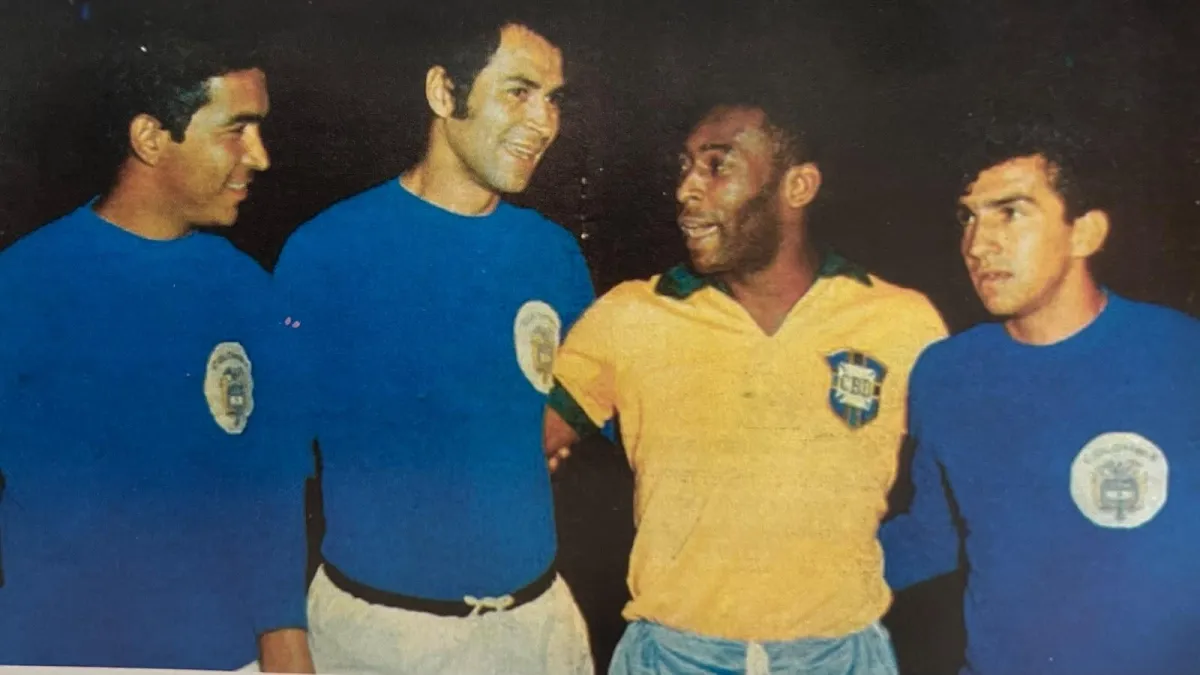
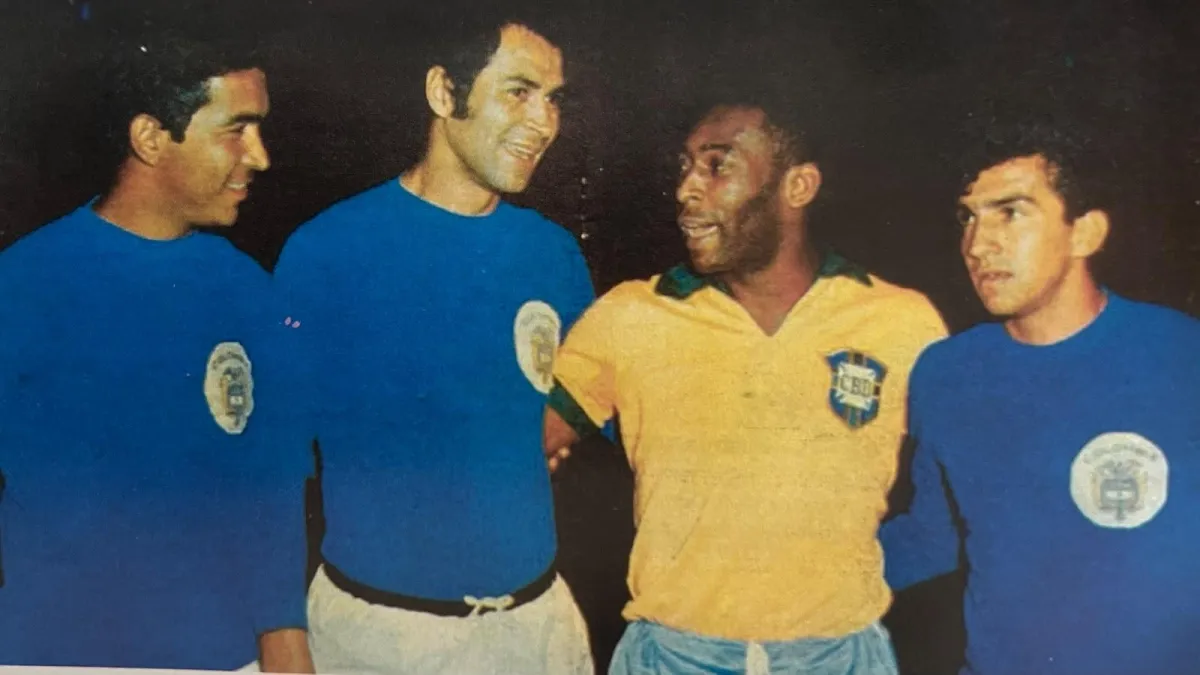
The Colombian football community is in mourning following the passing of Javier "El Toro" Tamayo, a legendary figure whose impact on the national game spanned decades and bridged generations. The Antioquian attacker, known for his tenacity and clinical finishing, passed away this Wednesday in his hometown of Medellín at the age of 76. Preliminary reports from local media indicate that his death was the result of complications following a household accident sustained earlier in the week.
Tamayo’s departure marks the end of an era for those who followed the golden age of Colombian football in the late 1960s and 1970s. A player who embodied the grit and technical prowess of the Antioquian school of football, he left an indelible mark on the domestic league and secured a unique place in the record books of the Colombian National Team.
A Life Dedicated to the Beautiful Game: The Chronology of a Career
Javier Tamayo’s journey into professional football was not paved with ease, but rather built through persistence and raw talent. His roots were firmly planted in the amateur circuits of Medellín, where he first honed his skills with the club Metalúrgicas Apolo. It was there that his nickname, "El Toro," began to gain traction—a testament to his combative style of play and his refusal to be bullied by defenders.
The Rise of a Prodigy (1968–1970)
In 1968, shortly before reaching his 18th birthday, Tamayo took the leap into professional football, signing with the Deportivo Independiente Medellín (DIM). His debut marked the beginning of a storied relationship with the club, spanning three distinct periods up until 1974. His immediate impact was undeniable, and his rapid progression through the ranks of the "Poderoso de la Montaña" caught the attention of national selectors.

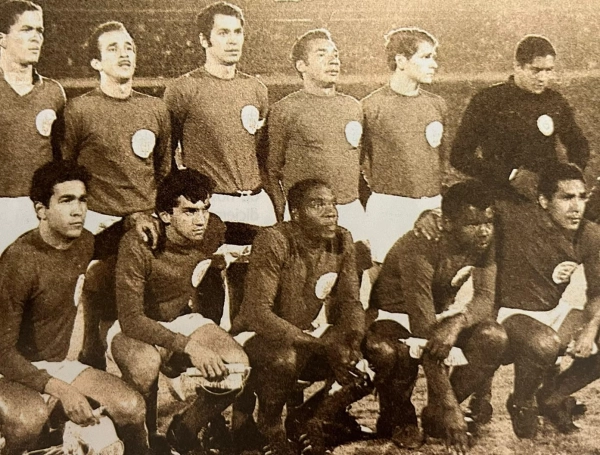
By 1969, his career trajectory hit a pivotal milestone. Having transferred to América de Cali, Tamayo was scouted by the legendary Francisco "Cobo" Zuluaga, who was at the helm of the Colombian National Team. Under Zuluaga’s guidance, Tamayo was drafted into the senior squad for the grueling 1970 World Cup qualifiers.
The Journeyman and the Goalscorer (1971–1981)
Tamayo’s career was defined by his ability to adapt to different systems and expectations across Colombia’s most iconic clubs. Following his stint with América, he returned to his Antioquian roots, featuring for Atlético Nacional (1971-1972 and 1975). He also donned the jerseys of Once Caldas (1974), Millonarios (1976-1977), Unión Magdalena (1978), and Atlético Quindío (1979-1981).

His international experience was brief but significant; in 1978, he ventured to Venezuela to play for Barinas. However, his heart remained in Colombia, and he returned to finalize his professional journey with a standout performance for Atlético Quindío. In 1981, his leadership helped propel that squad to a remarkable campaign, reaching the semifinal quadrangulars of the domestic league.
Supporting Data: By the Numbers
To understand the stature of Javier Tamayo, one must look beyond the nostalgia and examine the raw statistics of his career. He was a quintessential forward, the kind of player whose presence on the pitch always demanded the attention of the opposition’s defensive line.
- Total Professional Appearances: 437 matches.
- Total Professional Goals: 90.
- National Team Appearances: 8 matches (7 as a substitute).
- National Team Goals: 1.
While the raw numbers paint a picture of a consistent professional, they don’t capture the magnitude of his most famous strike.
The Immortal Record: A Legacy in the Record Books
Among the many highlights of his career, one statistic stands as a testament to his precocity. On August 2, 1969, during a qualifying match for the 1970 FIFA World Cup, Colombia faced Venezuela in Caracas. At 19 years and 78 days old, Javier Tamayo found the back of the net, helping the team secure a 1-1 draw.
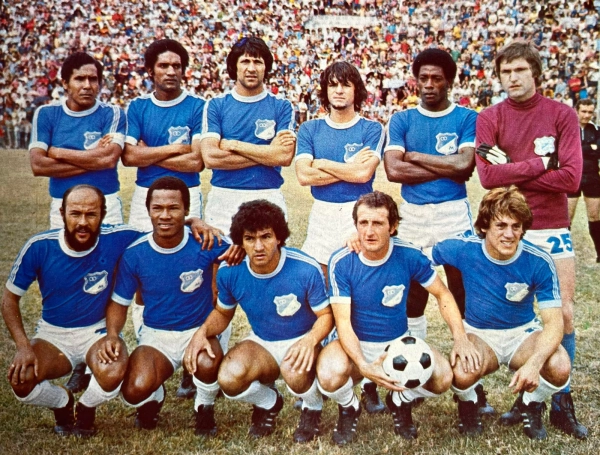
Over five decades later, that goal remains a significant piece of trivia and pride for the national team: Javier Tamayo is still recognized as the youngest Colombian player to score in a FIFA World Cup qualifying match.
This record speaks volumes about the level of maturity he displayed as a teenager. In an era when football was physically demanding and youth development lacked the modern structures of today, performing at the international level at 19 was a rarity. His ability to step onto the pitch in Caracas and perform under the pressure of a World Cup cycle cemented his reputation as a "big game" player.

Industry and Peer Perspectives: The Impact of "El Toro"
The death of Javier Tamayo has triggered a wave of tributes from sports journalists, former teammates, and historians of Colombian football. Guillermo Ruiz, the renowned historian whose archives have documented much of the national team’s journey, notes that players like Tamayo were the bedrock upon which the modern Colombian professional structure was built.
"Tamayo belonged to an era where the player’s personality was just as important as his technical skill," says a contemporary football analyst. "He didn’t play for the cameras or for the social media age; he played for the club, the jersey, and the result. To have his record stand for so long in the era of modern football, where youngsters are often more physically prepared, proves just how natural his talent was."

While no formal statement has been issued by the Colombian Football Federation (FCF) as of this writing, the outpouring of grief across social media channels from former clubs like Independiente Medellín and Millonarios underscores the void left by his passing. These organizations have acknowledged his contribution not just as a goalscorer, but as an ambassador of the sport during a transformative time in South American football.
The Broader Implications: What Tamayo Represents for Future Generations
The passing of Javier Tamayo offers a moment of reflection for the current state of football in Colombia. As the national team continues to evolve, the history of players like Tamayo serves as a reminder of the foundational grit required to represent the country on the world stage.

The Evolution of the Forward Position
Tamayo’s style of play—a direct, physical, and opportunistic striker—stands in contrast to the more fluid and tactical roles of the modern forward. His career trajectory, moving between multiple clubs across the country, reflects a time when loyalty was often balanced with the practicalities of a professional life in a league that was still finding its financial footing.
A Lesson in Resilience
Perhaps the most significant takeaway from his life is his resilience. Surviving in the professional ranks for over a decade in the 1970s and 80s required a specific type of mental fortitude. His transition from an amateur talent in Medellín to a national record-holder and finally a veteran leader for Quindío is a blueprint of a life fully committed to one’s craft.

As the Colombian football community bids farewell to one of its most persistent and talented figures, the legacy of Javier "El Toro" Tamayo remains secure. His record, though perhaps eventually destined to be broken by a new generation of talent, serves as a permanent marker of his place in the pantheon of Colombian football greats. He was a player who defined the spirit of his time—a time of passion, hard work, and a relentless pursuit of the goal.
Rest in peace, Javier Tamayo. Your contribution to the game will continue to be studied and celebrated by those who hold the history of Colombian football dear.