By International Desk Published: November 11, 2026
Main Facts: A Beloved Figure Returns to Familiar Grounds
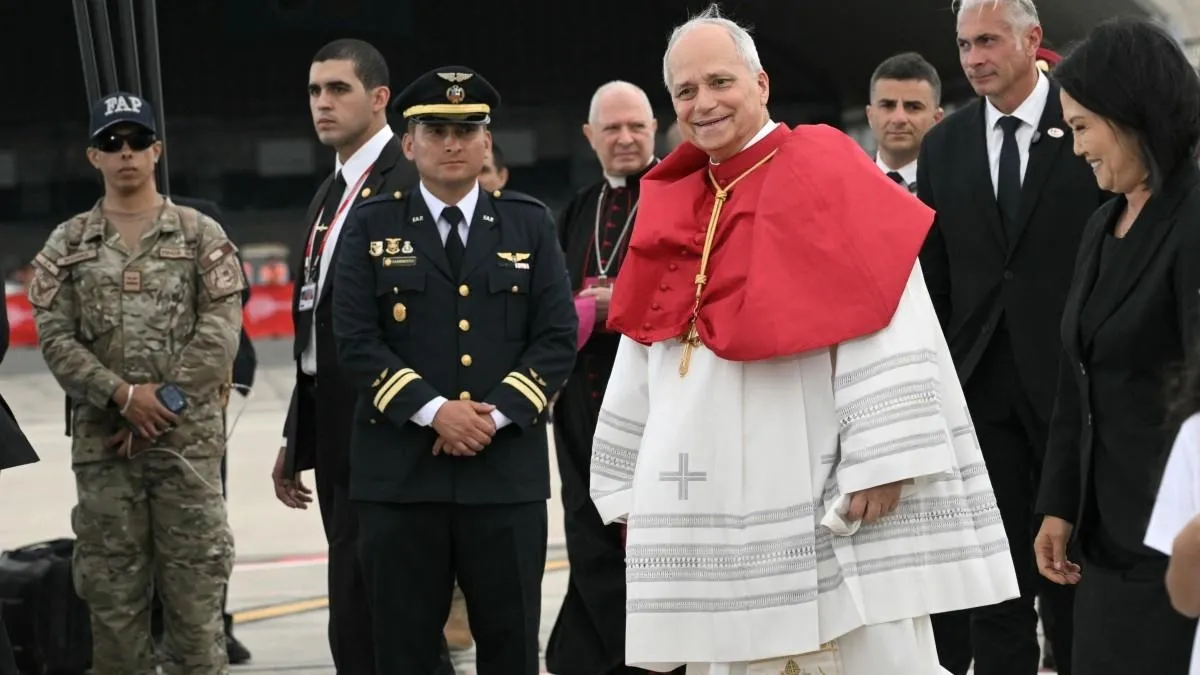
In what is widely regarded as both a triumphant pastoral visit and an emotional homecoming, Pope León XIV arrived on Wednesday in Peru, marking the final, highly anticipated leg of his extensive South American tour. Having previously drawn millions of devoted followers across Uruguay and Argentina, the 71-year-old pontiff touched down at the Callao military air base near Lima, entering a nation where he spent nearly two decades of his life and where he holds dual citizenship.
Despite having undergone recent surgery for lung cancer, the leader of the worldwide Catholic Church stepped off the aircraft with visible resolve, ready to embark on an intense agenda of Masses, state meetings, and grassroots encounters. Peru, a country where approximately 67 percent of the population professes the Catholic faith—surpassing neighbors like Argentina (55 percent) and Uruguay (35 percent)—turned out in massive numbers to welcome a religious leader whom many locals view not merely as a visiting dignitary, but as a returning compatriot.
At the foot of the aircraft’s stairs, the pontiff was officially received by Peru’s president, Keiko Fujimori, dressed in traditional black attire. As the papal plane taxied to a halt, the flags of Vatican City and Peru fluttered from the cockpit windows, setting a tone of deep national and spiritual significance.
For millions of Peruvians, the visit transcends standard diplomatic protocols. "The Pope is not coming; he is returning home. The Pope is a part of Peru," expressed Mateo Flores, a 68-year-old electrician donning a custom t-shirt bearing the pontiff’s image, as he waited along a barricaded street in Lima’s Breña district.
Chronology of the Papal Journey: From the Southern Cone to the Amazon
Pope León XIV’s itinerary through South America has tested his resilience, particularly given his recent health battles. However, his schedule reflects a deep personal commitment to the diverse geographic and cultural landscapes of the region.
The South American Leg: Uruguay and Argentina
Before arriving on Peruvian soil, the pontiff completed rigorous stops in Uruguay and Argentina. The culmination of his time in Argentina drew international headlines on Wednesday morning, when an estimated three million faithful gathered for a monumental farewell Mass in Luján, the nation’s premier pilgrimage site. The sheer scale of the turnout underscored his enduring popularity across the Southern Cone.
Arrival and Lima Engagements
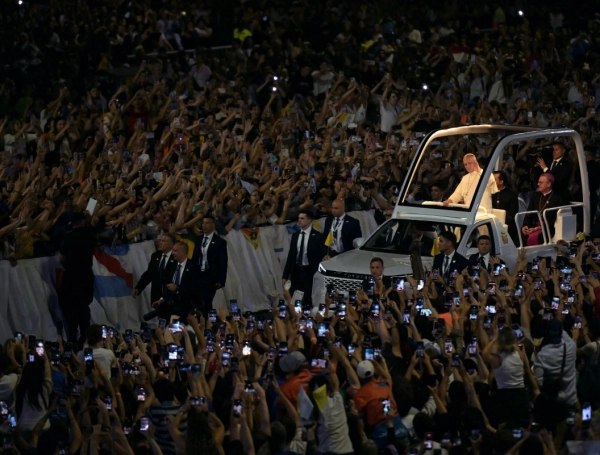
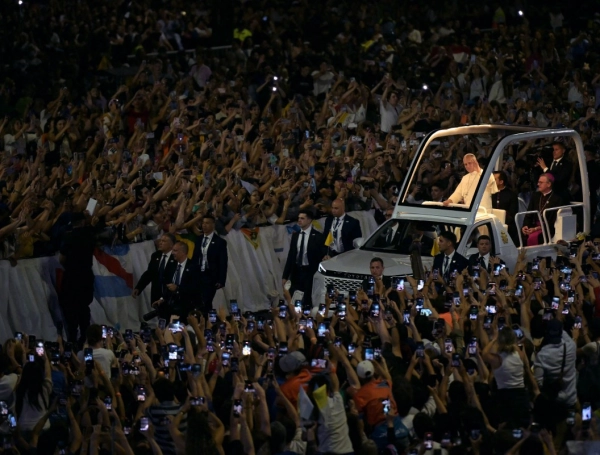
Upon his arrival in Callao, Pope León XIV transitioned directly into a packed schedule. He traveled toward Lima’s iconic Basilica of Mary Help of Christians, where thousands of devotos had gathered hours in advance, waving Vatican flags, clutching papal memorabilia, and chanting: "¡León, amigo, el Perú está contigo!" ("León, friend, Peru is with you!").
From there, the pontiff boarded the iconic Popemobile to head toward the Government Palace. There, he held a private working meeting with President Keiko Fujimori before delivering a keynote address to government authorities, diplomats, and representatives of civil society at the Gran Teatro Nacional.
The Northern Route: Chiclayo
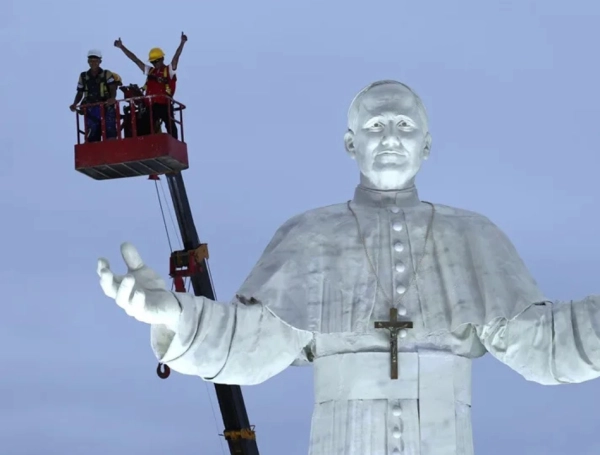
Following his engagements in the capital, Pope León XIV will travel to Chiclayo, a coastal city in northern Peru where he served faithfully as bishop for nearly eight years, between 2015 and 2023. The city has fully embraced its historic connection to the pontiff; immense street monuments and municipal markers proudly proclaim it the "City of Pope León XIV."
The high point of his time in Chiclayo will be an open-air Mass held in the arid plains of Pimentel, located roughly 15 kilometers from the city center along the Pacific coast. Local church organizers anticipate an astounding gathering of 1.5 million worshipers in the vast desert expanse.
The Andes and the Amazon
The concluding days of the itinerary will take the pontiff into high-altitude and tropical terrains. On Sunday, he is scheduled to arrive in Cusco—the historic capital of the Inca Empire—nestled high in the Andes at 3,400 meters above sea level. Finally, his journey will conclude in Pucallpa, nestled deep within the Peruvian Amazon, where he is slated to hold a high-profile summit with indigenous communities to discuss environmental preservation, cultural heritage, and social justice—themes that defined his years of grassroots ministry in the country prior to his election to the papacy in May 2025.
Supporting Data: Demographics, Crime Statistics, and Political Flux
While the papal visit has generated profound spiritual elation, it unfolds against a backdrop of complex socio-political realities. Peru is currently grappling with compounding crises ranging from institutional instability to an unprecedented surge in violent crime.
Demographic Indicators and Popular Devotion
Catholic Population: According to recent data compiled by Latinobarómetro, approximately 67% of Peru’s population identifies as Catholic, making it one of the most devoutly traditional nations in Latin America.
Comparative Reach: This percentage is notably higher than regional peers, outstripping Argentina (55%) and Uruguay (35%).
Scale of Turnout: Local authorities and church dioceses project attendance figures exceeding 1.5 million for individual major Masses, building upon the massive crowds of over 3 million recorded during his recent services in Luján, Argentina.
Geographic Span: The papal itinerary covers vast climatic and developmental divides, moving from sea-level arid coastal zones (Callao and Chiclayo) to high-altitude Andean peaks (Cusco at 3,400 meters) and tropical river basins (Pucallpa in the Amazon).
The Security Crisis: Crime and Extortion
For everyday citizens, the papal visit offers a much-needed psychological respite from escalating violence. Official data released by the National Police reveals a stark upward trajectory in violent crime over recent years:
Homicides: Annual homicides across the country surged dramatically from 1,000 cases in 2018 to 2,600 cases by 2025.
Extortion: Reports of extortion skyrocketed from 3,200 complaints to a staggering 26,500 over the same timeframe, paralyzing small businesses and urban centers alike.
Chronic Political Instability
Compounding the security crisis is a severe, recurring cycle of political turbulence. President Keiko Fujimori, who assumed office in late July 2026, holds the distinction of being Peru’s ninth head of state in a single decade, illustrating deep-seated systemic fractures within the nation’s governance structures.
Official Responses and Public Sentiment
The intersection of spiritual hope and temporal suffering has framed the public discourse surrounding the visit. Government officials have sought to project an image of unity and preparedness, while ordinary citizens look to the pontiff for moral guidance and solace.
The Voice of the Faithful
For many Peruvians, the hardships of daily life make the Pope’s presence feel urgent and necessary. Martha Cruz, a 56-year-old accountant standing outside the basilica alongside her family, voiced a sentiment echoed across urban centers:
"We want him to shower blessings upon our country because we are passing through an emergency situation regarding delinquency, contract killings, and public insecurity."
This perspective highlights a widespread hope that moral authority can influence national conscience where political mechanisms have frequently stumbled. The papal call for peace, solidarity, and justice resonates deeply within a society exhausted by systemic volatility.
State Preparations and Coordination
The Peruvian government, under the administration of President Fujimori, has mobilized extensive state apparatuses to ensure both the physical security of the supreme pontiff and the management of millions of pilgrims traveling between Lima, Chiclayo, Cusco, and Pucallpa. Controversies surrounding administrative delegation—such as logistical coordination involving members of the executive branch and foreign ministries—have been largely overshadowed by the sheer logistical feat of crowd control and public infrastructure mobilization.
Furthermore, civil authorities have emphasized the economic boost expected from international and domestic tourism during the week-long papal tour, though the primary focus remains centered on security, medical readiness, and public safety across all designated mass-gathering sites.
Implications: The Legacy of a Pope of the Peripheries
Pope León XIV’s current journey to Peru is laden with profound geopolitical, religious, and social implications for the global Catholic Church and the Andean nation alike.
Reinvigorating the Latin American Church
Having spent nearly two decades living, working, and advocating for marginalized communities in Peru—culminating in his acquisition of Peruvian nationality in 2015—León XIV represents a unique bridge between the Vatican and the Global South. His past criticisms of local authorities, combined with his unwavering defense of the poor and the environment, established a blueprint for his pastoral identity long before he ascended to the papacy.
By prioritizing Peru as a cornerstone of his South American tour, the pontiff is signaling that the issues facing Latin America—inequality, environmental degradation in the Amazon, and institutional fragility—remain central to his overarching pontifical mission.
A Moral Compass for a Fractured Nation
For Peru, the visit acts as a temporary pressure valve for a population fatigued by political musical chairs and rampant organized crime. While a papal visit cannot legislate legislative reforms or dismantle criminal syndicates, it offers a powerful platform for national introspection. Observers note that León XIV’s explicit messaging on social justice, anti-corruption, and the protection of vulnerable populations provides civil society groups and religious leaders with renewed moral leverage to demand accountability from state institutions.
Environmental and Indigenous Advocacy
The final leg of the journey in Pucallpa carries distinct global implications. As the Catholic Church continues to emphasize ecological stewardship—following the frameworks established by encyclicals like Laudato si’—León XIV’s direct dialogue with Amazonian indigenous communities reinforces the Vatican’s commitment to defending native lands against deforestation, illegal mining, and systemic neglect. This engagement ensures that environmental protection remains at the forefront of international religious diplomacy.
Ultimately, as Pope León XIV navigates the streets of Lima, the coastal sands of Chiclayo, the high-altitude stones of Cusco, and the green expanses of the Amazon, his journey is much more than a routine apostolic voyage. It is a powerful testament to a spiritual leader returning to the very soil that forged his worldview, bringing a message of endurance, faith, and hope to a nation standing at a critical historical crossroads.
By Laura María Villarraga Ariza / Last News Desk Updated: September 10, 2026 Introduction: A New Reality at the Border and Beyond The immigration landscape across the United States has undergone a radical and rapid…
INTERNATIONAL DESK — In what could mark one of the most dramatic geopolitical realignments in modern Latin American history, the United States and Venezuela are reportedly engaged in discreet negotiations to establish a foundational military…
International Desk Published: September 20, 2026 | Updated: September 20, 2026 Main Facts In what authorities have officially labeled an unprecedented escalation of the ongoing war, a historic and massive drone offensive targeted Moscow and…