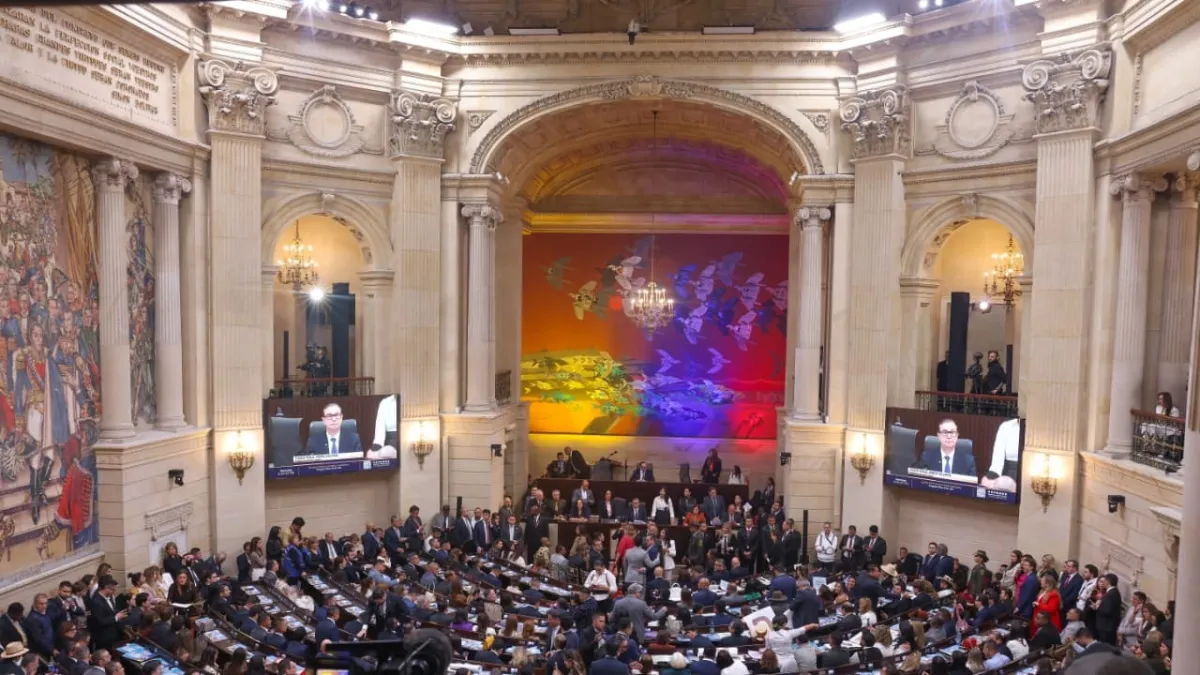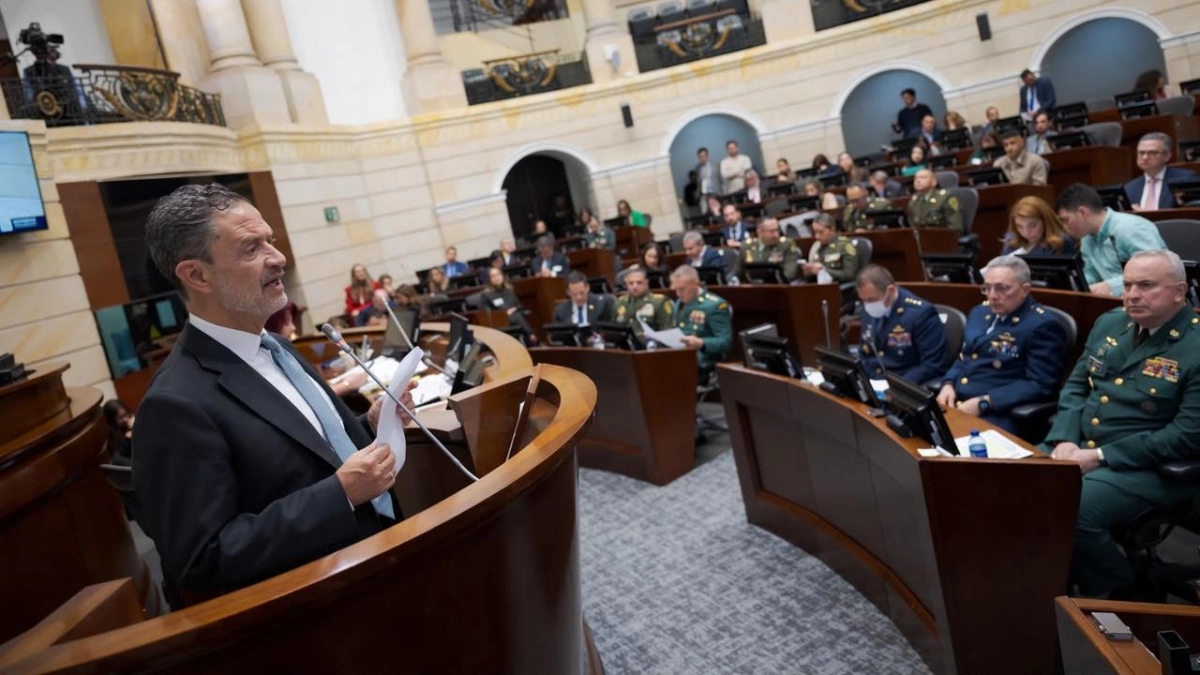
Bogotá, Colombia – July 16, 2026 – In a move that could redefine the symbolic landscape of Colombian political power, the nation’s legislative body has formally acknowledged the constitutional possibility of relocating its ordinary seat, thereby paving the way for President-elect Abelardo de la Espriella to be inaugurated outside the traditional confines of Bogotá. This unprecedented prospect, however, is shadowed by a significant point of contention: the outgoing administration of President Gustavo Petro has explicitly prohibited the use of any military installations for the ceremony, setting the stage for a potential political and logistical showdown ahead of the August 7 transition of power.
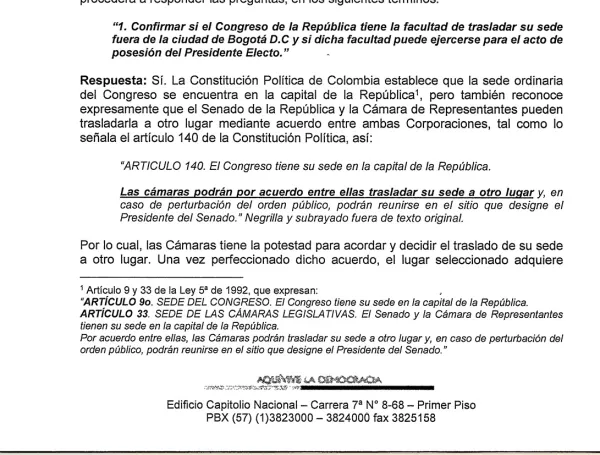
The formal response from the secretaries of both the Senate and the House of Representatives came in a detailed letter addressed to De la Espriella’s transition team, outlining the precise legislative procedure required for such a momentous shift. While the Constitution designates Bogotá as the ordinary seat of Congress, Article 140 provides a clear mechanism for its temporary relocation through a joint agreement between both chambers. This legal interpretation offers a pathway for De la Espriella to fulfill his stated desire to hold his oath of office in the southern regions of the country, a decision laden with symbolic weight and regional implications.
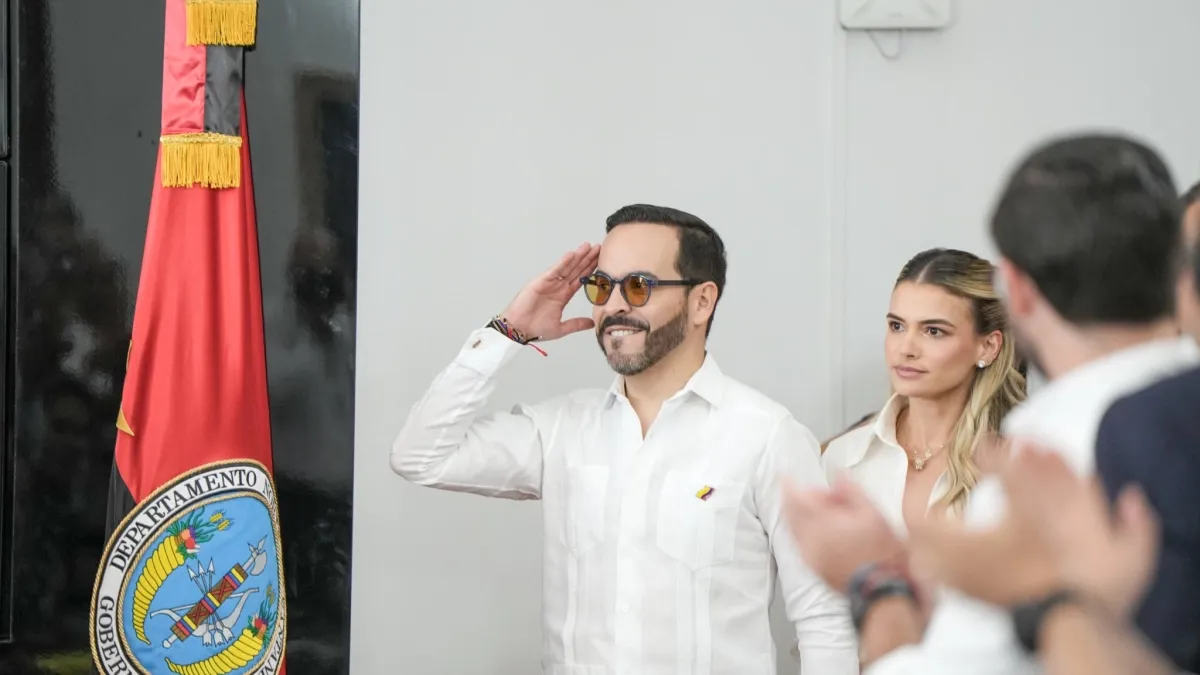
The President-elect, captured in an official photograph alongside his wife, Ana Lucía Pineda, appears resolute in his vision for a non-traditional inauguration. Yet, the path forward is far from straightforward. The logistical complexities of moving an entire legislative body, along with the attendant security and protocol arrangements for a head of state’s swearing-in, are immense. Compounding these challenges is the firm directive from President Petro, who, asserting his role as commander-in-chief until the very moment of his successor’s oath, has effectively closed off military garrisons as a potential venue. This directive introduces a layer of political tension into what is traditionally a solemn and unifying transition of democratic power.
Main Facts
The core of this unfolding political narrative revolves around President-elect Abelardo de la Espriella’s intention to hold his presidential inauguration outside of Bogotá, a break from decades of tradition. The Colombian Congress, through its legislative secretaries, has confirmed that such a move is constitutionally permissible under specific conditions. Specifically, Article 140 of the Political Constitution allows for the temporary relocation of the Congress’s seat through a joint agreement between the Senate and the House of Representatives. This requires a formal legislative process involving proposals, debate, and a simple majority vote in both chambers.
However, a significant hurdle remains regarding the President-elect’s reported desire to utilize a military garrison for the ceremony. Outgoing President Gustavo Petro has issued a direct order prohibiting the use of any armed forces installations for the inauguration, emphasizing that he remains the legitimate commander-in-chief until his successor officially takes the oath of office. This creates a direct point of conflict between the incoming and outgoing administrations, highlighting the sensitive nature of the transfer of power and the symbolic control over state institutions, particularly the military.
The political party Salvación Nacional has expressed its readiness to present the necessary legislative propositions on July 20, 2026, when the new Congress is sworn in, demonstrating a clear intent to facilitate De la Espriella’s vision. The entire process must conclude with sufficient time before the August 7, 2026, inauguration date to ensure all logistical, security, and protocol arrangements can be meticulously organized for an event of national and international significance.
A Chronology of Deliberation and Desire
The journey towards a potentially historic inauguration began with a formal inquiry from the team of President-elect Abelardo de la Espriella to the Colombian Congress. This request sought clarity on the feasibility of conducting the presidential oath of office in a location other than Bogotá, the nation’s capital and traditional seat of government.
July 16, 2026: The Secretaries of the Senate, Diego González, and the House of Representatives, Jaime Luis Lacouture, issued a comprehensive letter in response. This crucial document meticulously outlined the constitutional provisions and legislative procedures that would allow for the temporary relocation of Congress for the purpose of the presidential inauguration. Their response confirmed that while Bogotá serves as the ordinary seat, Article 140 of the Political Constitution explicitly grants both chambers the authority to move their meeting place through a mutual agreement.
The letter further detailed the procedural steps necessary for such a relocation:
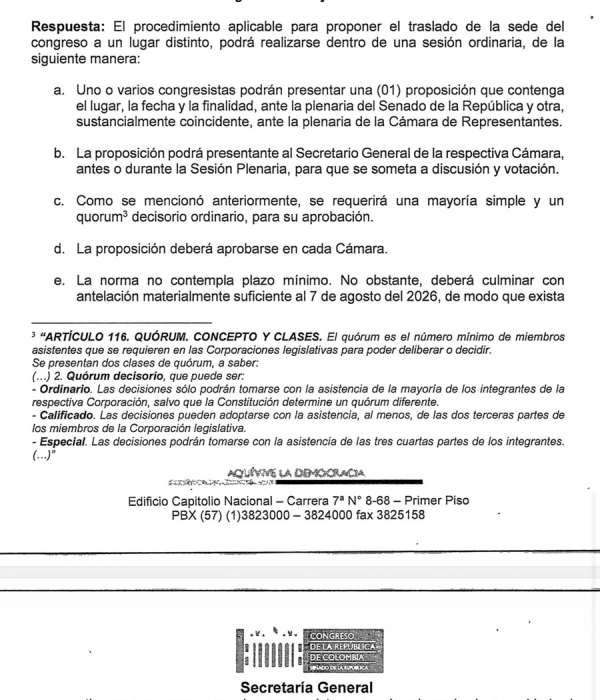
- Initiation of Proposal: One or more members of Congress would need to present a formal proposition in both the plenary of the Senate and the plenary of the House of Representatives. This proposition must clearly specify the desired location, the date, and the purpose of the temporary relocation – in this case, the presidential inauguration. The proposals presented to each chamber must be substantially coincident in their content.
- Submission and Debate: The proposition can be submitted to the Secretary General of the respective chamber either before or during a plenary session. Following its submission, it would be subjected to debate among the legislators.
- Voting Requirements: For approval, the proposition would require a simple majority vote, meaning more votes in favor than against, and the presence of an ordinary decisory quorum in each chamber.
- Bicameral Approval: Crucially, the proposition must be approved independently in both the Senate and the House of Representatives. A single chamber’s approval is insufficient; a concerted effort and agreement across the bicameral legislature are paramount.
- Timeliness: While the Constitution does not stipulate a minimum timeframe for this legislative process, the secretaries underscored the critical need for its completion well in advance of the scheduled inauguration date of August 7, 2026. This temporal imperative is dictated by the extensive logistical requirements of organizing a presidential swearing-in ceremony, which includes, but is not limited to, the convocation of all congresspersons, the preparation of the new venue, the establishment of robust security protocols, the coordination of official protocol, the arrangement of transportation and accommodation, and the meticulous handling of official documentation.
July 20, 2026: The incoming Congress is scheduled to be sworn in. This date is significant as it marks the formal beginning of the new legislative term and provides the first opportunity for members of the Salvación Nacional party, who have publicly expressed their support, to introduce the necessary propositions in both plenaries. Their willingness to act swiftly underscores the political momentum behind De la Espriella’s vision.

The period between July 20 and August 7 will be a race against time, requiring efficient legislative action and seamless coordination to ensure that all constitutional and logistical prerequisites are met for an inauguration that promises to be a departure from established norms.
Supporting Data and Constitutional Framework
The feasibility of President-elect De la Espriella’s proposed inauguration site hinges entirely on the interpretation and application of the Colombian Political Constitution, specifically Article 140. This article serves as the foundational legal basis that allows for the temporary departure from Bogotá as the ordinary seat of legislative power.
Article 140 of the Political Constitution: This article explicitly states: "The ordinary seat of the Congress will be the Capital of the Republic. However, the Senate of the Republic and the House of Representatives may, by agreement between both corporations, move to another place." This provision is critical because it introduces a degree of flexibility into what would otherwise be a rigid constitutional mandate. The term "ordinary seat" implies a default location but does not prohibit temporary deviations under specific circumstances and through a defined process.
The legal interpretation provided by Senate Secretary Diego González and House Secretary Jaime Luis Lacouture clarifies that while the President must take the oath of office before Congress, the Constitution does not specify a fixed location for this act. Therefore, if Congress validly relocates its seat in accordance with Article 140, the President-elect can legitimately be sworn in before the full Congress convened in that new, temporary location. This nuanced reading acknowledges both the constitutional requirement for the oath to be taken before the legislative body and the constitutional flexibility regarding the physical location of that body.
Procedural Requirements for Relocation: The secretaries’ letter elaborates on the practical application of Article 140, detailing the legislative mechanism:
- Bicameral Agreement: The phrase "by agreement between both corporations" is paramount. It necessitates a coordinated and successful legislative initiative in both the Senate and the House. This is not a unilateral decision by the President-elect or even by a single legislative chamber. It demands consensus and formal approval across the entire legislative branch.
- Simple Majority and Quorum: The requirement for a simple majority means that a proposal to relocate will pass if it receives more "yes" votes than "no" votes, provided that the minimum number of legislators (quorum) required to conduct official business is present. This is a standard legislative threshold, but in a potentially divisive issue, securing such a majority in both chambers could still be a challenge.
- Legal Precedent and Interpretation: While the specific act of moving the entire Congress for a presidential inauguration is unprecedented in recent Colombian history, the constitutional provision itself implies that such flexibility was envisioned by the framers. The secretaries’ legal opinion provides the authoritative interpretation necessary for Congress to proceed, reassuring all parties involved of the legality of the proposed action, provided the procedural steps are strictly followed.
This constitutional framework provides the necessary legal scaffolding for De la Espriella’s aspiration. However, the political will to enact these procedures and navigate the inherent complexities of such a move will ultimately determine its success.
Official Responses and Political Maneuvering
The proposal to move the presidential inauguration has elicited distinct official responses, underscoring the political dynamics at play during a transition of power.
Congress’s Conditional Green Light
The most critical official response came from the legislative branch itself. The joint letter signed by Diego González, Secretary General of the Senate, and Jaime Luis Lacouture, Secretary General of the House of Representatives, represents a formal and authoritative interpretation of the constitutional possibilities. Their response was not a simple approval but a detailed roadmap, carefully delineating the legislative procedure that must be followed.
The secretaries emphasized that while Bogotá is the "ordinary seat" of Congress, Article 140 of the Constitution allows for a temporary relocation through a bicameral agreement. This nuanced stance highlights Congress’s role as a guardian of constitutional norms while acknowledging its own inherent flexibility. By providing a clear, step-by-step process – including the necessity of presenting coinciding propositions in both chambers, securing simple majorities with quorum, and ensuring timely approval – Congress has effectively placed the ball in the court of the President-elect and his political allies. The emphasis on completing the process "with antelación materialmente suficiente" (materially sufficient anticipation) before August 7 underscores the gravity of the logistical and security preparations required for such an event. This official communication serves as a legislative instruction manual, guiding the political actors on how to transform an aspiration into a constitutionally sound reality.
The Outgoing President’s Firm Stance
In stark contrast to the conditional openness of Congress, outgoing President Gustavo Petro has issued a firm and unequivocal directive regarding the use of military installations. Petro’s order prohibits the use of any facilities belonging to the Armed Forces for De la Espriella’s inauguration. His rationale is rooted in his constitutional role as commander-in-chief of the military, a position he legally holds until the very moment his successor takes the oath of office.
This directive is not merely a bureaucratic decision; it carries significant symbolic and political weight. By asserting his authority over military assets until the last possible second, President Petro is reinforcing the principle of continuity of command and the sanctity of the transitional period. It could also be interpreted as a subtle, yet firm, message to the incoming administration, asserting the limits of its influence before the official transfer of power. The implication is that any attempt by De la Espriella to use a military base would be an overreach of authority before his official investiture, potentially leading to a direct confrontation between the outgoing executive and the incoming one. This creates a significant logistical and political obstacle, forcing De la Espriella to either reconsider his preferred venue or seek an alternative non-military location in the south.
Political Momentum from Salvación Nacional
Amidst these official pronouncements, the political party Salvación Nacional has emerged as a key facilitator for De la Espriella’s initiative. Several congresspersons from the party have publicly stated their "toda la disposición" (full disposition) to present the necessary propositions in both the Senate and the House plenaries. This commitment is particularly significant as the new Congress is set to be sworn in on July 20, 2026.
The readiness of Salvación Nacional indicates that De la Espriella has active political support within the legislative branch to push forward with his plan. Their swift action on July 20, the very day the new legislative session begins, would signal strong intent and attempt to gain early momentum for the proposal. However, even with this political backing, the success of the initiative will depend on garnering broader support beyond a single party, requiring cross-party consensus to secure the simple majorities needed in both chambers. The political maneuvering in the coming days will be crucial in determining whether this historic relocation gains sufficient traction to become a reality.
Implications: Tradition, Security, and Regional Symbolism
The proposal to move the presidential inauguration outside Bogotá carries profound implications that extend beyond mere logistics, touching upon deeply ingrained traditions, complex security considerations, and the very symbolism of national unity.
Breaking with Tradition
For decades, the Plaza de Bolívar in Bogotá has served as the sacred stage for presidential inaugurations, a tradition that anchors the transfer of power firmly within the nation’s political and historical heart. To move this ceremony to another part of the country, particularly the south, would be a significant rupture with this established custom.

Symbolic Weight: Such a move would be a powerful symbolic gesture. For De la Espriella, it could represent a commitment to decentralization, a recognition of the diverse regions of Colombia, and a deliberate effort to connect the highest office with citizens beyond the capital. It might signify a rejection of a perceived centralist focus and an embrace of a more inclusive national identity. For the chosen southern region, it would be an immense source of pride and an economic boost, potentially highlighting its importance on the national stage.
Political Messaging: De la Espriella’s decision could also be a calculated political message. It might aim to demonstrate a new style of leadership, one that is less confined by the traditional corridors of power. It could also be interpreted as a challenge to the political establishment, signaling a desire for change and a fresh start. However, breaking with tradition can also invite criticism, with some potentially viewing it as a disregard for historical continuity or a divisive act that diminishes the capital’s role.
Logistical and Security Complexities
Moving a presidential inauguration, an event that attracts national and international dignitaries, heads of state, media, and thousands of citizens, is a monumental logistical and security undertaking.
Relocating Congress: The primary challenge is the relocation of the entire bicameral Congress. This involves transporting all 108 senators and 188 representatives, along with their staff, to a temporary venue. The chosen location would need to accommodate a plenary session of nearly 300 legislators, complete with voting systems, audio-visual equipment, and secure communication channels.
Dignitary Management: Beyond Congress, the inauguration ceremony typically hosts numerous international heads of state, ambassadors, diplomatic corps, and national officials. Coordinating their travel, accommodation, and security in an unfamiliar location, potentially one with less developed infrastructure than Bogotá, would be an unprecedented challenge for the presidential transition team, the Ministry of Foreign Affairs, and national security agencies.

Security Protocols: A presidential inauguration is a prime target for various threats. Moving it to a new location necessitates establishing a comprehensive security perimeter from scratch, involving the deployment of thousands of security personnel, intelligence gathering, crowd control measures, and emergency response planning. If the desired location is indeed in the "south of the country," it could imply regions with varying levels of infrastructure and potential security risks, demanding an even more robust and adaptable security apparatus. The costs associated with such an extensive logistical and security operation would be substantial, diverting resources that would typically be allocated to a pre-existing, well-established venue in the capital.
The Commander-in-Chief’s Authority and Transition Dynamics
President Petro’s firm directive against using military garrisons introduces a layer of constitutional and political tension that speaks to the very nature of a peaceful transfer of power.
Constitutional Authority: Until August 7, Gustavo Petro remains the legitimate President and, crucially, the commander-in-chief of the Armed Forces. His order regarding military installations is an exercise of this constitutional authority. It underscores the principle that control over state institutions, especially the military, remains exclusively with the incumbent until the successor formally takes office. Any attempt to circumvent this directive could be seen as an affront to presidential authority and a violation of the established norms of transition.
Preventing Perceived Overreach: Petro’s stance could be interpreted as a preventative measure against any perceived overreach by the incoming administration before its official investiture. By denying access to military bases, he is asserting the clear boundaries of executive power during the transitional period. This avoids any ambiguity regarding who holds ultimate command and control, especially concerning institutions as sensitive as the military.
Potential for Standoff: Should De la Espriella insist on a military venue, despite Petro’s order, it could lead to an unprecedented constitutional and political standoff. Such a situation would test the maturity of Colombia’s democratic institutions and the commitment of both leaders to a smooth, respectful transfer of power. It would force a difficult choice upon the military: obey the incumbent commander-in-chief or risk being seen as aligning prematurely with the incoming one.

Regional Focus and National Unity
Beyond the immediate political friction, the proposal also prompts a broader discussion about regionalism versus centralism in Colombia.
Fostering Regional Identity: An inauguration in the south could significantly boost regional pride and serve as a powerful symbol of national recognition for areas often perceived as being peripheral to the capital’s political and economic gravity. It could foster a stronger sense of inclusion and participation among citizens in those regions.
Challenging Centralism: The move could be seen as a deliberate effort to challenge the historical centralist tendencies of Colombian governance, where Bogotá often dominates political, economic, and cultural life. By physically moving the center of power, even temporarily, De la Espriella could be attempting to recalibrate the national focus and encourage a more equitable distribution of attention and resources across the country.
Potential for Division: Conversely, the decision could inadvertently create new divisions. Some in Bogotá might feel slighted or that the capital’s traditional role is being diminished. Debates over the specific region chosen could also arise, potentially creating friction among different southern departments vying for the honor. The true challenge will be to ensure that this symbolic gesture of decentralization genuinely contributes to national unity rather than inadvertently fostering new forms of regional rivalry or resentment.
The coming weeks will be critical as Congress navigates the legislative hurdles, and the President-elect’s team works to secure a suitable, and permissible, location for an inauguration that is poised to be etched into Colombia’s political history. The delicate dance between tradition and innovation, constitutional prerogative and political will, will define this pivotal moment in the nation’s democratic journey.