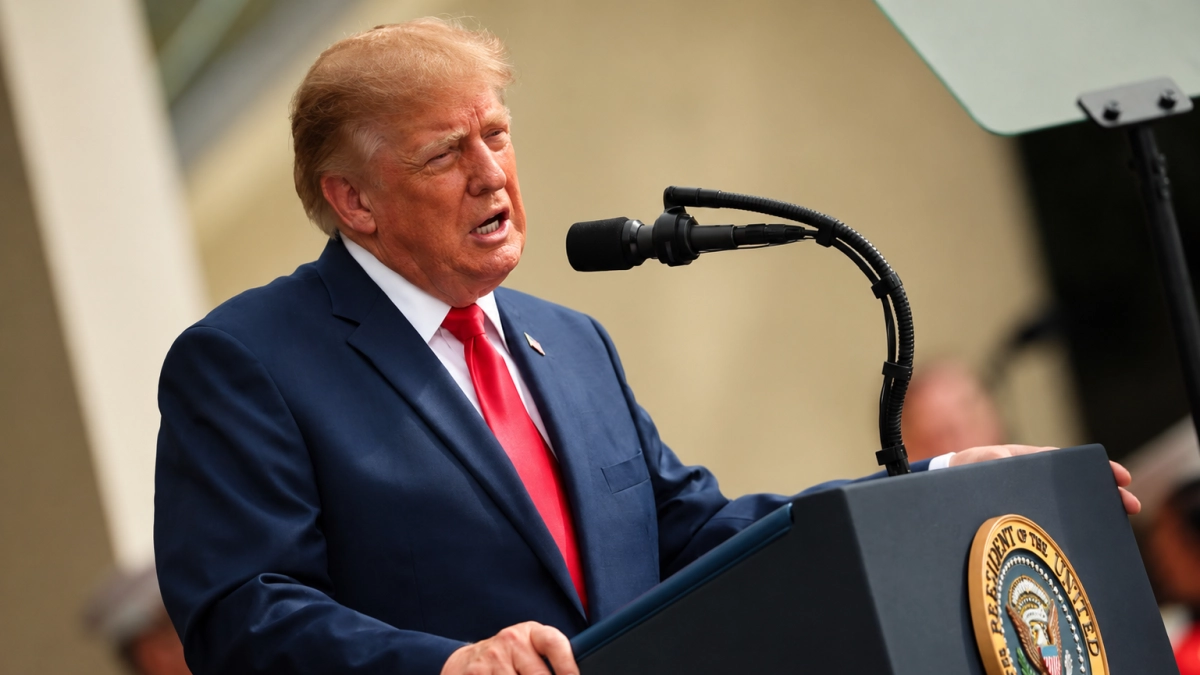
WASHINGTON — In a dramatic escalation of tensions between the executive branch and the American press corps, United States President Donald Trump announced on Friday that his administration is revoking the press credentials of several prominent news organizations, barring them from the White House complex with immediate effect.
The sweeping ban targets the cable news network CNN, the newly rebranded MSNOW (formerly MSNBC), and the digital political journalism outlet Politico. Citing what he termed persistent "fake news" and hostile coverage, the president declared that additional media outlets could soon face identical restrictions.
The announcement, delivered abruptly via social media, has sent shockwaves through Washington, drawing immediate condemnation from First Amendment advocates, media watchdogs, and journalism associations who warn that the move represents an unprecedented assault on democratic norms and the freedom of the press.
Main Facts of the Ban
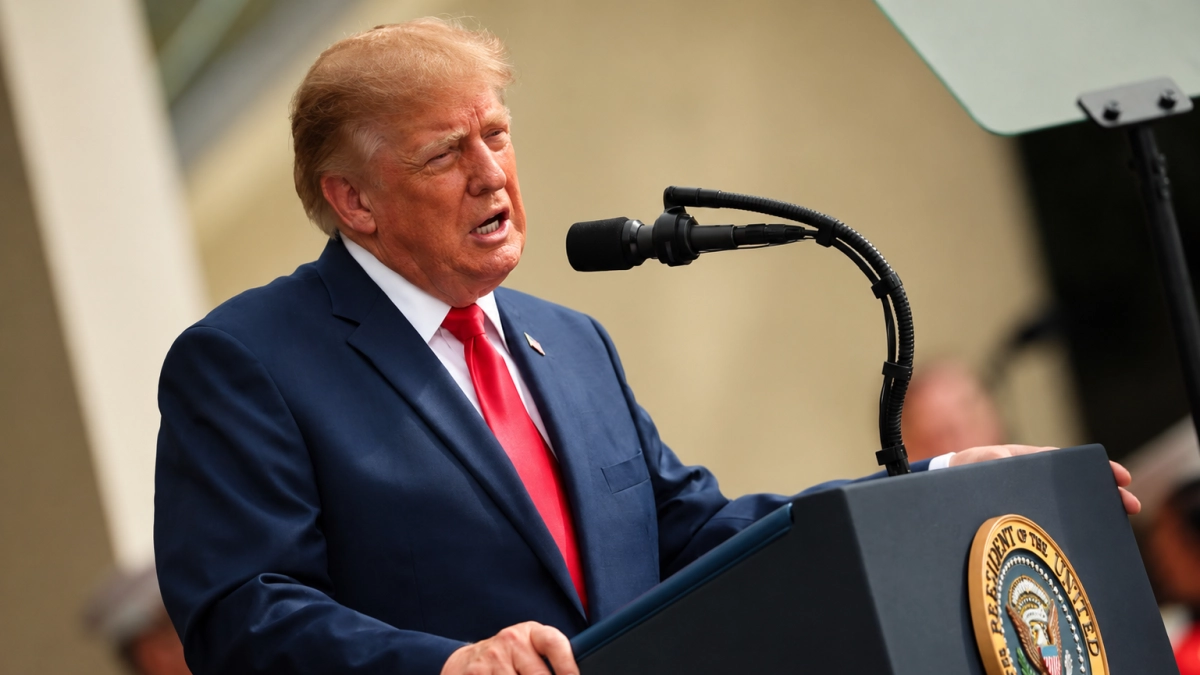
The sweeping directive was first made public through a post on President Trump’s preferred communications platform, Truth Social. In his statement, the president did not mince words regarding his administration’s grievances against the targeted organizations.
"The mainstream media should not be allowed to constantly write and broadcast fiction and lies when covering the president of the United States," Trump wrote. He elaborated further in a subsequent statement: "I am proud to announce that, with immediate effect, I am revoking access to the White House for the fake news CNN, MSNOW (which recently changed its name from MSNBC due to a total lack of audience and credibility), and Politico (…) as a direct result of their relentless and dishonest FAKE NEWS coverage."
According to White House officials, the directive means reporters, producers, and technical staff representing CNN, MSNOW, and Politico will no longer be permitted entry into the White House press briefing room, the West Wing, or any administration-led press events. The decision caught reporters working inside the White House press room completely off guard on Friday afternoon, disrupting active newsgathering operations and forcing bureaus to scramble for legal and logistical responses.

While the president did not cite specific investigative reports or broadcasts that triggered the ban, he issued a clear warning to the wider journalistic community, stating cryptically that other news organizations "are next."
Chronology of Tensions: A History of Hostility
The ban is not an isolated incident but rather the latest milestone in a long-standing, adversarial relationship between Donald Trump and the mainstream press corps, which stretches across his political career.
The First Term and Early Precedents
Throughout his initial tenure in the White House, Trump routinely attacked mainstream media outlets as "the enemy of the people." His administration frequently revoked or threatened to suspend the hard passes of individual journalists following contentious exchanges during press briefings—most notably the temporary revocation of CNN correspondent Jim Acosta’s credentials in 2018, which was later restored following a lawsuit filed by the network.

The Return to Office and Recent Escalations
Since returning to the presidency, Trump has intensified his efforts to police media terminology and coverage. Early in his current term, the administration restricted the access of the Associated Press (AP) to certain high-profile White House events. That punitive measure was triggered by the news agency’s editorial refusal to adopt the administration’s mandated terminology, which required referring to the Gulf of Mexico as the "Gulf of America."
Friday’s announcement, however, marks a severe escalation. Rather than targeting specific reporters for individual infractions or style-book disagreements, the administration has enacted a blanket ideological ban on entire corporate news entities, effectively cutting off major pillars of the American fourth estate from direct access to the seat of executive power.
Supporting Data and Context
To understand the weight of Friday’s directive, it is vital to examine the scale and operational footprint of the organizations targeted, as well as the broader financial and legal battles currently defining the media landscape.

The Impact on Targeted Outlets
- CNN: As one of the world’s largest 24-hour global television news networks, CNN relies heavily on a permanent White House reporting team to break domestic and international policy developments. Losing physical access severely hampers the network’s ability to question press secretaries, capture spontaneous West Wing interactions, and broadcast live from the executive mansion.
- MSNOW: Formerly operating under the NBCUniversal umbrella as MSNBC, the cable channel recently underwent a corporate rebranding—a vulnerability explicitly mocked by the president in his ban announcement. Despite shifting market dynamics and changing viewership metrics, the network remains a primary conduit for progressive and center-left political analysis in the U.S.
- Politico: Recognized as a premier digital publication specializing in inside-the-Beltway policy, legislative maneuvering, and executive branch reporting, Politico’s exclusion deprives its reporters of the face-to-face access necessary to cultivate sources within the West Wing.
Legal and Financial Pressures on the Press
The White House ban coincides with an aggressive legal strategy pursued by Trump and his allies outside of government. Over recent years, the president has filed numerous multi-million-dollar defamation lawsuits against major media companies, alleging bias and reputational damage. While many legal scholars view these suits as strategic lawsuits against public participation (SLAPPs) designed to drain newsrooms of resources and chill critical reporting, they have nonetheless created a climate of profound financial and operational anxiety within the industry.
Official Responses and Industry Rebuttals
The reaction from media organizations, press freedom coalitions, and political figures was swift and uncompromising.
Statements from the Affected Networks
Representatives for CNN issued a robust defense of their journalism shortly after the announcement. "Banning journalists from the White House because an administration dislikes their reporting is un-American and directly undermines the public’s right to a free press," a CNN spokesperson said. "Our reporting from the White House will continue, undeterred by attempts to silence us."

Executives at Politico echoed similar sentiments, emphasizing that physical access restrictions will not stop their reporters from uncovering government accountability stories. "A transparent government answers to the public, not just to media outlets that offer favorable coverage. We stand by our journalists and our vital work," the publication stated.
Condemnation from Freedom of the Press Foundations
Nonprofit organizations dedicated to protecting journalistic integrity labeled the directive an authoritarian overreach. The Reporters Committee for Freedom of the Press (RCFPP) released an urgent advisory condemning the ban.
"The White House is public property, paid for by taxpayers, and the press corps acts as proxies for those taxpayers to demand transparency and accountability from elected officials," said a senior spokesperson for the RCFPP. "Excluding news organizations based on the content of their coverage violates the First Amendment and sets a dangerous precedent that mirrors authoritarian tactics globally."
The White House Press Association (WHPA) also expressed profound disappointment, noting that open access to the executive branch is a cornerstone of American democracy that must be preserved regardless of which political party holds power.
Implications for American Democracy and the Free Press
The long-term ramifications of Trump’s decision to bar CNN, MSNOW, and Politico extend far beyond the daily news cycle, raising fundamental questions about the health of American democratic institutions.
1. The Normalization of Retaliatory Governance
By explicitly linking access to ideological approval, the administration risks normalizing a system where government accountability is conditional. When access is treated as a privilege granted only to friendly voices, the traditional adversarial role of the press—crucial for checking governmental overreach—is severely compromised.

2. Widening Information Polarization
In an era already defined by deep political polarization and fragmented media consumption, removing mainstream institutional reporters from the White House risks accelerating the spread of information bubbles. Audiences relying on the banned networks may find themselves entirely reliant on second-hand interpretations of executive branch actions, further eroding a shared set of baseline facts among the American electorate.
3. Potential Legal Battles
Legal experts anticipate immediate challenges in federal court. Previous legal precedents—most notably American Society of Newspaper Editors v. Dulles and the aforementioned litigation surrounding Jim Acosta—suggest that the White House cannot arbitrarily revoke press credentials without due process or viewpoint-neutral criteria. Constitutional lawyers are already reviewing grounds to seek an emergency injunction to halt the implementation of the ban while litigation proceeds.
As this developing story unfolds, the confrontation between the Trump administration and the press corps signals a volatile new chapter in American politics, where the boundaries of the First Amendment are set to be rigorously tested in both the court of public opinion and the courts of law.