PALM BEACH, FLORIDA — Federal aviation safety authorities and local emergency management officials have unveiled harrowing new details regarding the catastrophic private jet crash that claimed nine lives on Sunday afternoon. The accident, which involved a twin-engine Learjet 60, has left a densely populated Florida neighborhood devastated, displacing hundreds of residents—predominantly members of the local Hispanic community—and triggering an intensive multi-agency federal investigation into extreme weather phenomena, structural mechanical failure, and aviation protocols.
According to statements released on Monday by the National Transportation Safety Board (NTSB) and Palm Beach County officials, terrifying telemetry and radio communications indicate that the aircraft was actively breaking apart in mid-air before violently impacting a residential area near the Cresthaven neighborhood. The disaster has prompted local leadership to petition Florida Governor Ron DeSantis for an official state of emergency declaration, as recovery and remediation efforts strain local resources and upend hundreds of lives.

Main Facts: The Catastrophe in Palm Beach
The sequence of events unfolded rapidly on Sunday, transforming a routine international private charter flight into one of the deadliest aviation incidents in the region in recent memory.
- The Aircraft and Flight Path: The accident involved a Learjet 60 business jet that had successfully departed earlier in the day from Austin-Bergstrom International Airport in Austin, Texas. The aircraft was operating under an itinerary destined for North Eleuthera Airport in the Bahamas.
- The Crash Site: At approximately 12:50 p.m. local time (17:50 GMT), the aircraft plummeted from the sky, slamming directly into a residential zone comprised largely of mobile homes and manufactured housing near Cresthaven, Florida, within Palm Beach County.
- Casualties: All nine individuals on board—comprising the flight crew and passengers, including members of a traveling family—perished in the impact.
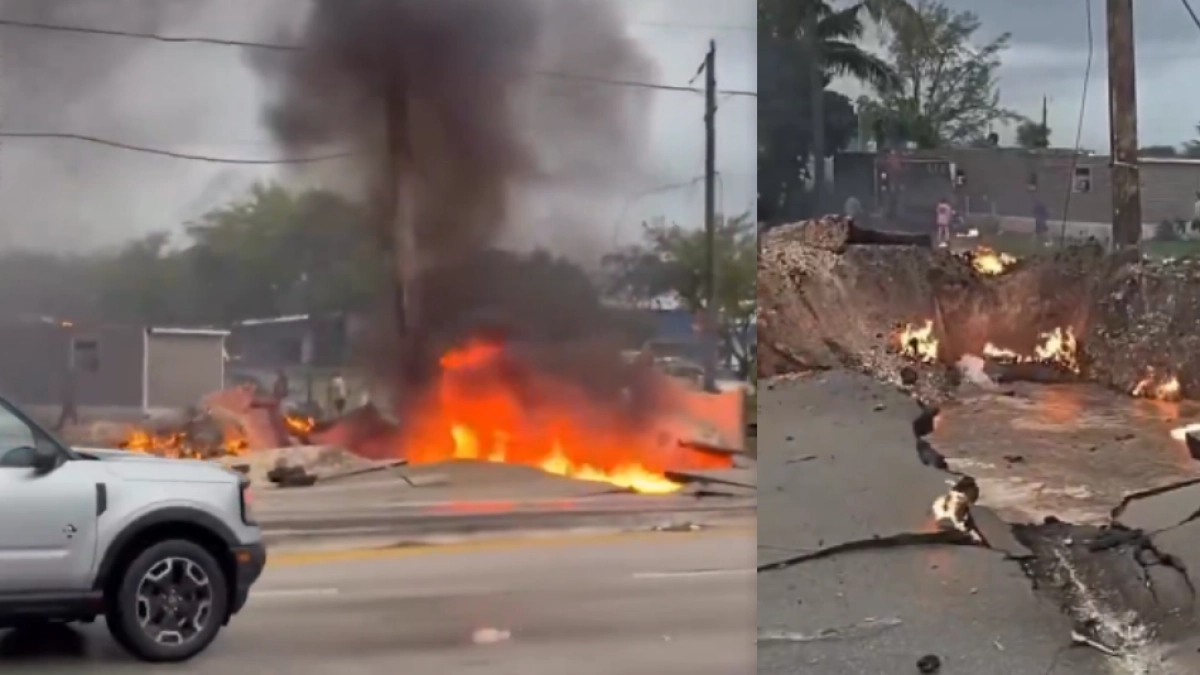
- The Impact and Destruction: Eyewitness accounts and preliminary footage captured on social media revealed that the Learjet struck the asphalt with tremendous kinetic force, instantly erupting into a massive fireball and leaving a deep crater burned directly into the pavement. Debris was scattered across a wide radius, turning a quiet residential enclave into an active hazardous materials and crime scene.
- Human Toll and Displacement: The physical destruction of the crash site heavily impacted a community of 77 mobile homes. Approximately 400 residents have been forced out of their homes due to safety perimeters and structural damage. While dozens are currently being housed in temporary emergency shelters, the socioeconomic impact weighs heavily on the area, which is primarily populated by Hispanic families.
Chronology of a Disaster: From Takeoff to Tragedy
Piecing together the final moments of the Learjet 60 requires a meticulous examination of air traffic control transcripts, radar data, and weather reports compiled by federal investigators.

1. Departure and Cruise Altitude (Morning Hours)
The flight began without incident in Austin, Texas, as the aircraft climbed smoothly to its assigned cruising altitude. Flight tracking data and NTSB disclosures show that as the journey progressed eastward across the Gulf of Mexico toward the Florida peninsula, the aircraft reached an altitude of 35,000 feet (approximately 10.6 kilometers).
2. The Distress Call and Atmospheric Hazards
Shortly before the catastrophic descent, the flight crew made contact with the Miami Air Route Traffic Control Center. Transcripts of this communication reveal that the pilots reported encountering severe environmental conditions at altitude.

- The crew explicitly described flying through "moderate turbulence."
- The pilots noted that the outside air temperature had plummeted to an extreme 47 degrees Celsius below zero (-52.6°F).
- Crucially, the flight deck informed air traffic controllers that they were actively managing and attempting to mitigate severe icing conditions forming on the airframe.
3. Rapid Descent and Mid-Air Breakup
Moments after the communication with Miami Center, radar returns indicate the aircraft began an abrupt, uncommanded descent at a high vertical velocity. Investigators later confirmed that telemetry and structural signatures strongly suggest the plane began to disintegrate while still airborne. Parts of the fuselage, control surfaces, and aerodynamic panels are believed to have detached prior to the terminal crash, explaining the wide debris field discovered by recovery teams.
4. Impact and Immediate Emergency Response
At 12:50 p.m., the aircraft struck the ground in Palm Beach County. Emergency services—including Palm Beach County Fire Rescue, local law enforcement, and federal agents—converged on the scene within minutes. First responders were met with towering flames, widespread spot fires, and a volatile debris zone that necessitated the immediate evacuation of surrounding residential blocks.

Supporting Data and Technical Analysis
As the investigation enters its second full week, the NTSB, alongside the Federal Aviation Administration (FAA), is directing its primary analytical focus toward environmental and mechanical stressors.
The Weather Factor
Tom Chapman, a board member of the NTSB, emphasized during Monday’s press briefing that meteorological factors are currently serving as a "major focus" of the ongoing probe. The combination of high-altitude freezing temperatures (-47°C) and reported moderate turbulence creates a high-risk operational environment, particularly for business jets encountering unexpected severe icing.

Aviation safety experts note that rapid ice accumulation can drastically alter the aerodynamic profile of a wing, leading to sudden stalls, loss of control, or excessive structural loads that exceed the design limits of the airframe.
Structural Integrity and Disintegration Indicators
"We have some indications that the aircraft was breaking up prior to impact, and part of this is still to be determined," Chapman stated during the media briefing. "It is possible that we will find parts of the aircraft at some distance from the exact impact site."
The confirmation of mid-air structural failure opens multiple lines of inquiry for forensic engineers:
- In-Flight Ice Accretion: Did asymmetric ice buildup cause severe vibrations or aerodynamic flutter that compromised the structural integrity of the wings or tail?
- Material Stress: Did the sudden transition through turbulent air at high altitude subject the Learjet 60’s airframe to over-stress conditions?
- Maintenance and Inspection History: Investigators will comb through the aircraft’s maintenance logs, looking closely at past structural repairs, component lifespans, and de-icing system functionality.
Official Responses and Government Action
The disaster has triggered a coordinated response across local, state, and federal levels of government, focusing heavily on public safety, victim identification, and community relief.

Local Leadership Demands State Action
Palm Beach County Commissioner Joel Flores addressed the media in both English and Spanish, detailing the immense strain the tragedy has placed on local infrastructure and vulnerable populations. Flores announced that county officials are actively pushing Florida Governor Ron DeSantis to issue a formal state of emergency declaration.
The declaration is deemed necessary to unlock specialized state funds, streamline disaster relief operations, and secure long-term housing assistance for the displaced families.

"Unfortunately, these people have been displaced from their homes because it is a crime scene and [investigators] are collecting all the evidence that they can," Commissioner Flores explained. "The community is primarily Hispanic, so we are helping them to return to some sense of normalcy."
Federal Investigation Protocol
The NTSB has deployed a full "Go-Team" to Palm Beach County, including specialists in aerodynamics, air traffic control, meteorology, structures, and powerplant performance. Recovered flight data recorders (black boxes)—if intact—are being transported to NTSB laboratories in Washington, D.C., for readout and audio analysis.

A preliminary accident report is expected to be published within 30 days, though a comprehensive final report detailing the definitive cause of the crash may take between 12 to 24 months.
Implications: Aviation Safety and Community Resilience
The Palm Beach Learjet 60 disaster carries profound implications for private aviation safety, municipal emergency management, and the socio-economic vulnerabilities of local residential communities situated near general aviation airports.

1. Scrutiny on Private Charter Regulations and Weather Protocols
The incident has reignited debates within the aviation community regarding the operational decision-making processes of Part 91 and Part 135 charter operators when confronting severe winter weather and high-altitude icing phenomena. While commercial airlines operate under rigid meteorological dispatch mandates, private jet operators often navigate dynamic environments where crew resource management and real-time weather avoidance are heavily reliant on pilot discretion. The NTSB’s findings are expected to yield safety recommendations regarding icing threshold guidelines for light-to-midsize business jets.
2. Urban Planning and Residential Airparks
The crash underscores the inherent risks associated with high-density residential developments located in the flight paths and vicinity of busy aviation hubs. The fact that an out-of-control aircraft impacted a manufactured housing community housing hundreds of residents highlights long-standing concerns regarding zoning laws, land-use planning, and the safety buffers required around regional and international airports.

3. Community Support and Long-Term Recovery
For the 400 displaced residents of the Palm Beach mobile home community, the road ahead is fraught with uncertainty. With many families lacking renter’s insurance or financial reserves, local community organizations, municipal agencies, and charitable groups have mobilized to provide food, clothing, and temporary shelter.
As federal investigators sift through the charred remains of the Learjet 60 to uncover the exact chain of events that turned a routine flight into a nightmare, the residents of Palm Beach County grapple with the enduring emotional scars of a tragedy that literally fell from the sky.