By: Andrés Felipe Bejarano Bejarano
Redaction: Breaking News Desk
Published: September 25, 2026, 15:37
Updated: September 25, 2026, 17:34
Main Facts
In an act of extreme brutality that has sent shockwaves across Mexico and drawn international condemnation, a Mayan Tseltal indigenous couple was brutally lynched, tortured, and set on fire. The atrocity occurred during the night of Tuesday, September 22, 2026, in Las Tacitas, a remote rural community situated within the municipality of Ocosingo, in the southern Mexican state of Chiapas.
The unnamed victims—a man and a woman belonging to the Tseltal ethnic group—were targeted by an enraged mob of local residents who accused them of practicing witchcraft. According to multiple verified reports from news agencies, including EFE and TV Azteca, the accusations lacked any substantive evidence. Despite this, the community acted as judge, jury, and executioner, detaining the couple, subjecting them to hours of intense physical and psychological abuse, and ultimately murdering them in a public spectacle of vigilante violence.
Following the assault, the perpetrators abandoned the charred remains of the victims on the outskirts of the community, neatly discarded beside a rural roadway, where they remained covered until state authorities and forensic teams could safely access the isolated area.

The incident highlights a deeply troubling resurgence of summary executions, community-driven violence, and deep-seated superstition in marginalized regions of Mexico. It also underscores the persistent vulnerability of indigenous populations who often live far from effective state security and institutional protection.
Chronology of the Attack
While the complete sequence of events is still being meticulously reconstructed by state investigators, preliminary timelines gathered from media reports, digital footprints, and eyewitness accounts outline a harrowing progression of abuse.
1. Detention and Abduction
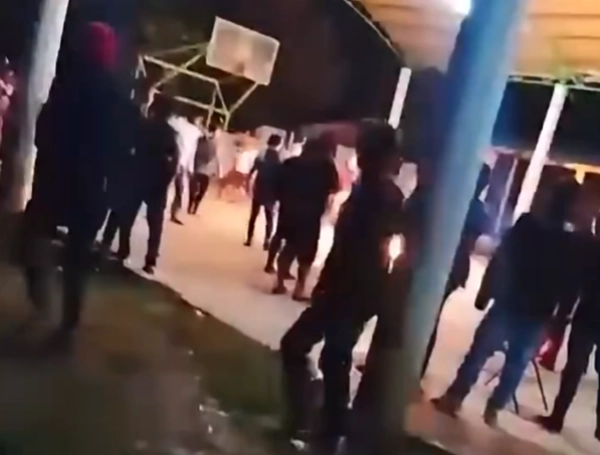
The events began on the evening of Tuesday, September 22. A group of residents in Las Tacitas organized to detain the indigenous couple. Rather than confronting them privately or notifying local authorities, the individuals forced the man and woman from their location and marched them toward the community’s primary public gathering space: the municipal dome (domo principal).
2. Hours of Public Interrogation and Abuse
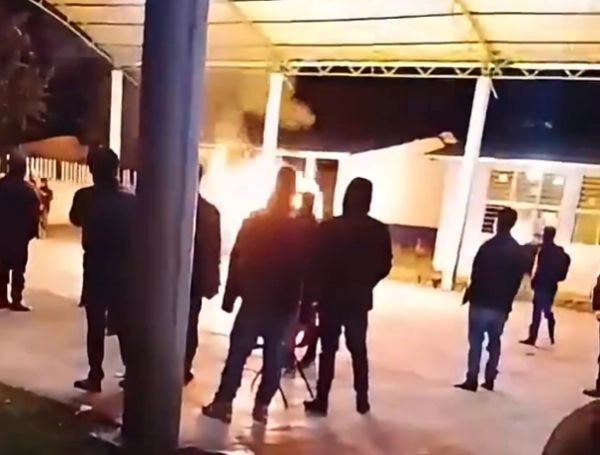
Once inside the communal dome, the couple was held captive for several hours. During this prolonged period, dozens of townspeople gathered. Rather than diffusing the situation, the crowd escalated into a frenzy of hostility. Witnesses reported that the victims were subjected to severe verbal harassment, public humiliation, and continuous physical beatings. The community operated under the unverified and hysterical premise that the couple was responsible for dark magic or curses affecting the village.

3. The Execution
As the night progressed, the level of violence escalated from beatings to lethal torture. According to accounts provided to the news agency EFE by residents who requested strict anonymity out of fear for their own safety, the mob brought forward containers of gasoline. The victims were systematically doused in the flammable liquid.
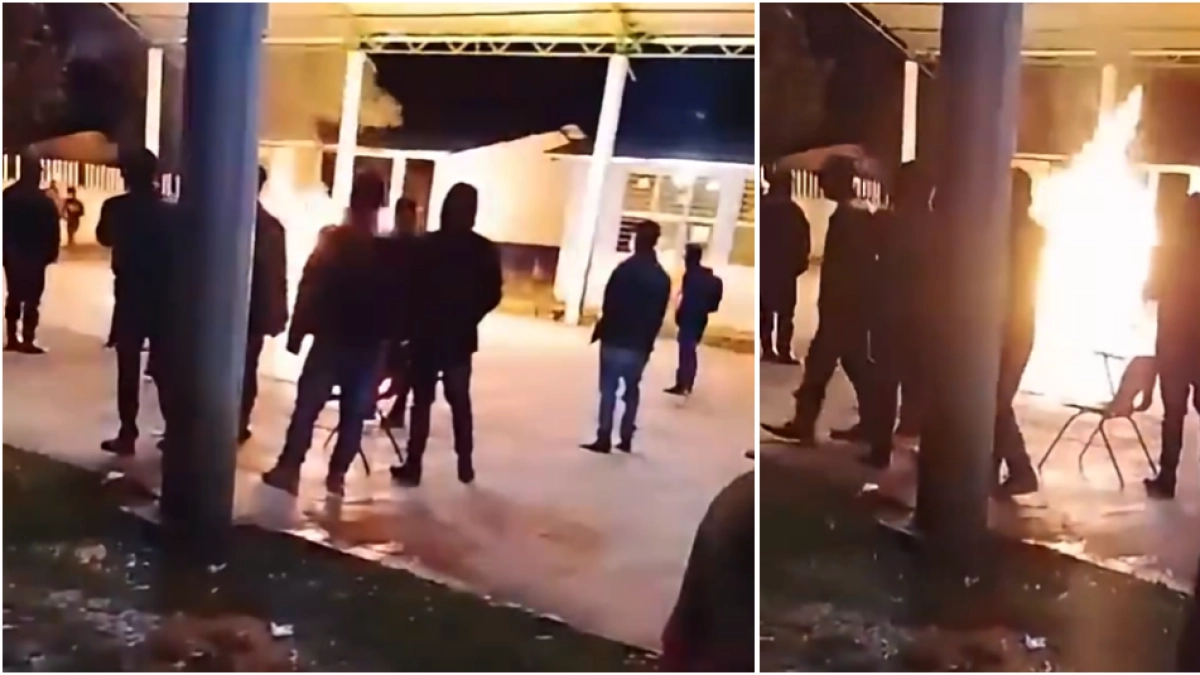
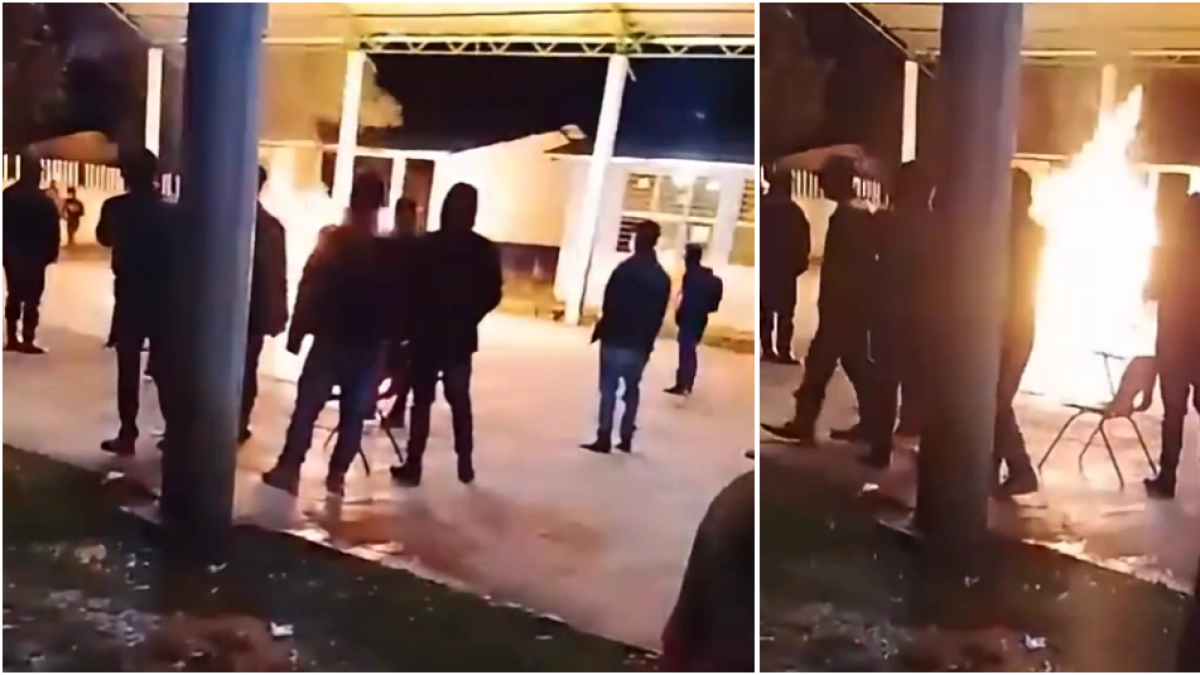
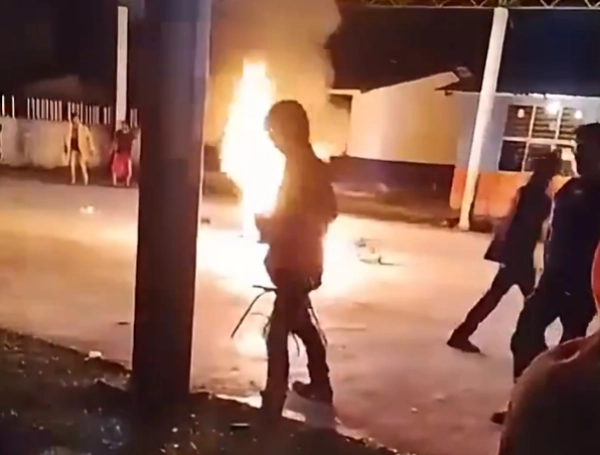
Graphic videos subsequently uploaded to social media platforms captured fragments of the horrific climax. In one widely circulated recording, one of the victims can be seen entirely engulfed in flames, desperately attempting to move or escape the immediate area while surrounded by onlookers who made little to no visible attempt to intervene or extinguish the fire.
4. Abandonment of the Bodies
Once the flames subsided and the victims succumbed to their catastrophic thermal injuries and trauma, the perpetrators did not report the deaths or attempt to hide their crime within a private structure. Instead, the bodies were loaded or dragged to the periphery of Las Tacitas. They were left exposed next to a dirt road, draped or covered, waiting for the authorities to discover them once news of the lynching filtered past the community’s self-imposed blockade.
Context and Supporting Data: The Shadow of Vigilantism
To fully comprehend the tragedy in Ocosingo, one must examine the broader socio-cultural and security landscape of Chiapas, a region rich in indigenous history and natural beauty, yet plagued by deep systemic issues, poverty, and complex social dynamics.
The Phenomenon of Lynching in Mexico
Lynchings and attempted lynchings—often referred to in Spanish as linchamientos—are unfortunately not isolated incidents in Mexico. According to data compiled by sociological researchers and human rights organizations over the past decade, hundreds of such vigilante attacks occur across the country annually.
Sociologists attribute this phenomenon to several systemic failures:

- Distrust in the Justice System: High rates of impunity, corruption, and a general perception that the formal judicial system is ineffective or inaccessible lead many rural communities to take matters into their own hands.
- Geographical Isolation: Many indigenous communities in Chiapas are geographically remote, lacking a permanent police presence, reliable telecommunications, or rapid emergency response mechanisms.
- Cultural Beliefs and Superstition: In some tightly knit, traditional, or isolated communities, fear of the supernatural, witchcraft (brujería), or unexplained illnesses and agricultural failures can quickly morph into scapegoating and mass hysteria.
The Vulnerability of Indigenous Communities
The Tseltal people represent one of the largest indigenous Mayan groups in Chiapas. Despite their rich cultural heritage and historical resilience, Tseltal communities frequently find themselves on the margins of economic development and institutional support. The fact that the victims belonged to this ethnic group adds a layer of vulnerability, as internal community power structures can sometimes override constitutional rights and civil protections.
Furthermore, Chiapas has witnessed increased tension in recent years due to territorial disputes, the presence of organized crime factions, and the fragmentation of social fabrics. In this volatile environment, fear and suspicion can be easily manipulated, resulting in catastrophic outcomes like the events in Las Tacitas.

Official Responses and Legal Actions
The brutal nature of the crime and the dissemination of video footage on social media triggered an immediate, albeit reactive, response from regional authorities and human rights advocates.
The Attorney General’s Office Steps In
The Fiscalía General del Estado (FGE) de Chiapas (State Attorney General’s Office), acting through its specialized Fiscalía de Justicia Indígena (Indigenous Justice Prosecutor’s Office), moved swiftly to open an official criminal investigation into the homicide and torture of the Tseltal couple.

Floralma Gómez Santos, the prosecutor for the Distrito Indígena, formally confirmed that state authorities had initiated contact with the grieving families of the victims. In statements to the press, Gómez Santos emphasized that investigative protocols are fully underway to unravel the exact sequence of events, identify the instigators, and bring those responsible to justice.
"The investigation must establish not only the immediate perpetrators of this heinous crime, but also how these baseless accusations originated and spread throughout the community," stated an official briefing from the prosecution. Investigators face the complex task of penetrating the wall of silence and collective complicity that often surrounds rural lynchings, where community members are frequently reluctant to identify neighbors or family members involved in the mob.

Condemnation and Demands for Justice
The response to the lynching extended far beyond state prosecutors. Relatives of the victims have raised their voices, demanding a thorough, transparent investigation and the immediate arrest of everyone who participated in the torture and murder.
Significantly, traditional authorities representing a nearby Zapatista-aligned indigenous community also stepped forward to condemn the attack. Their public statement added moral weight to the calls for justice, emphasizing that traditional governance and indigenous autonomy must never be weaponized to justify barbarism, lawlessness, or human rights violations.

Implications and Future Outlook
The lynching in Ocosingo is more than a localized crime; it is a profound symptom of a fractured social contract in rural Mexico. The implications of this event ripple across multiple dimensions of Mexican society:
- The Rule of Law vs. Community Autonomy: While indigenous communities in Mexico possess constitutional rights to self-determination and internal normative systems (usos y costumbres), legal experts and human rights defenders continually stress that these rights do not—and legally cannot—supersede fundamental human rights, particularly the right to life and due process. Incidents like the one in Las Tacitas test the delicate balance between respecting indigenous governance and enforcing federal constitutional law.
- The Danger of Misinformation and Hysteria: The unchecked spread of rumors regarding "witchcraft" demonstrates the lethal potential of unverified accusations in environments lacking critical media literacy or immediate access to objective information.
- The Urgency of State Presence: Human rights organizations argue that the Mexican government must move beyond reactive police investigations after a tragedy occurs. True prevention requires proactive state intervention: building trust between rural communities and law enforcement, improving infrastructure and communication, and investing heavily in education, mental health, and community-level dispute resolution mechanisms.
As the Fiscalía de Justicia Indígena continues its inquiries in Las Tacitas, the nation watches closely. For the family of the victims and the broader Tseltal community, justice will not merely be measured by the issuance of arrest warrants, but by a demonstrable end to the culture of impunity that allows fear and superstition to masquerade as community justice.