In a seismic shift for the technology sector, Dave Wehner, the long-standing architect of Meta’s financial operations and strategic vision, has announced his departure from the social media giant. After a distinguished 14-year tenure that saw Facebook evolve into the Meta conglomerate, Wehner is pivoting to the high-stakes world of artificial intelligence, joining Fireworks, a rapidly ascending startup specializing in AI inference and model training.
This move underscores a broader industry trend: the migration of veteran Big Tech executives toward the "picks and shovels" of the AI revolution. As Fireworks continues to solidify its position as a critical infrastructure provider for open-source AI, the appointment of a financial heavyweight like Wehner signals that the startup is preparing for a new phase of massive scale and global dominance.
The Architect of Meta’s Financial Discipline
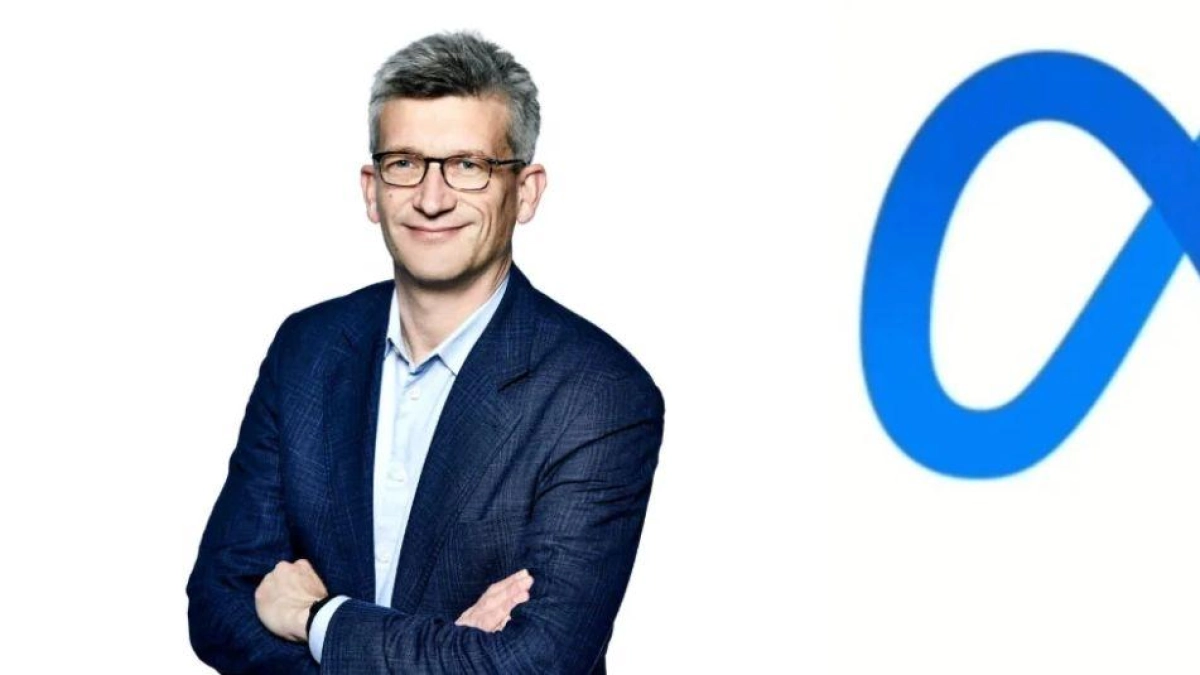
To understand the gravity of Wehner’s departure, one must look at his legacy at Meta. Joining the company in 2011—well before its massive public offering—Wehner ascended to the role of Chief Financial Officer (CFO) in 2014. During his tenure, he became the steady hand guiding Mark Zuckerberg’s ambitions through periods of immense volatility, including the pivot to the "Metaverse," the regulatory scrutiny following the Cambridge Analytica scandal, and the massive restructuring efforts necessitated by the rise of AI.
Wehner’s departure is not merely a personnel change; it is the exit of a key operator who institutionalized financial discipline at one of the world’s most powerful companies. Javier Olivan, Meta’s Chief Operating Officer, acknowledged this in a statement to CNBC, noting that Wehner provided "disciplined thinking" during the company’s most complex and transformative years. His exit marks the end of an era for Meta’s C-suite, leaving a vacuum that the company will undoubtedly struggle to fill with the same institutional memory.

Fireworks: The New Frontier in Open-Source AI
The destination of Wehner’s transition, Fireworks, is a company that has captured the imagination of Silicon Valley venture capitalists. Valued at a staggering $17.5 billion following a successful Series D funding round in July 2026, the startup is essentially the backbone of modern AI implementation.
Unlike companies focused solely on building proprietary Large Language Models (LLMs), Fireworks focuses on the "inference and training" layer. Its platform enables enterprises to deploy, fine-tune, and run open-source models with high efficiency and lower cost. In an industry currently obsessed with proprietary black-box models, Fireworks advocates for a future where companies can "own their alpha"—a concept Wehner himself championed in his public announcement of the move. By utilizing open-source models, businesses can retain control over their data and proprietary logic, avoiding the lock-in effects of massive, closed-source providers.

A Chronology of the Transition
- 2011: Dave Wehner joins Facebook, bringing his expertise from the financial sector to help prepare the company for its eventual IPO.
- 2014: Wehner is appointed CFO of Facebook, becoming a cornerstone of Mark Zuckerberg’s leadership team.
- 2022: Facebook rebrands to Meta, signaling a shift toward the metaverse. Wehner remains a vital component of the leadership, managing the company’s capital allocation during this transition.
- 2026 (July): Fireworks secures a massive valuation of $17.5 billion during its Series D funding round, cementing its status as an AI "unicorn" and a major player in the enterprise infrastructure space.
- 2026 (November): Dave Wehner formally announces his resignation from Meta to join Fireworks as its new Chief Financial Officer, tasking himself with scaling the company’s financial operations and global footprint.
Strategic Implications: Why Now?
The timing of this move is far from coincidental. We have reached an inflection point where AI is moving from the "experimental" phase to the "integration" phase. Enterprises across the globe are currently scrambling to implement AI in ways that are both secure and economically viable.
In his post on X (formerly Twitter), Wehner was explicit about his motivation. He framed AI as the most "transcendental technological shift" of his lifetime. By joining a platform that facilitates the deployment of specialized, open-source models, he is positioning himself at the center of the enterprise software ecosystem. Fireworks is not just selling AI; it is selling the infrastructure that allows businesses to build their own competitive advantages.
The "Alpha" Argument
Wehner’s belief that companies will use AI to enhance their unique strengths—their specific data and proprietary expertise—is the core thesis of Fireworks. The "alpha," a financial term for outperforming the market, is effectively what businesses are chasing through AI implementation. If Fireworks can provide the tools to build that "alpha" at a cost-effective price point, they will inevitably become a critical utility in the global economy.
Official Responses and Industry Outlook
The transition has been met with a mix of surprise and strategic approval from industry analysts. While Meta loses a proven strategist, Fireworks gains a leader capable of steering a company through the transition from a high-growth startup to a foundational enterprise pillar.

Lin Qiao, the CEO of Fireworks, expressed immense enthusiasm regarding the hire. In her statement, she emphasized that the company’s mission requires a specific blend of financial acumen and an understanding of the long-term technical roadmap. Wehner’s role will not be limited to accounting; he will be an instrumental figure in the company’s expansion strategy, potentially guiding Fireworks toward a future IPO or a global market expansion.
"I have known and respected Lin Qiao for a long time," Wehner stated in his address to the public. "As I spent more time with her and the team at Fireworks, I became increasingly optimistic about the depth of their technical talent and their pragmatic focus on customer needs."

The Future of Meta and the Road Ahead
Despite his departure, Wehner maintained a gracious tone regarding his former employer. He explicitly thanked Mark Zuckerberg for the opportunity to witness what a founder-led company can achieve. This signals a clean break, devoid of the acrimony that often accompanies high-level executive departures.
However, the departure poses a question for Meta: Can they maintain their momentum in the AI race without the financial architect who steered them through their last decade of growth? Meta has invested billions into its AI infrastructure, including its Llama models. While they have a robust team, the loss of someone with Wehner’s institutional knowledge represents a shift in the company’s internal dynamics.

For Fireworks, the arrival of Wehner is a clear signal to the market. A $17.5 billion valuation is only the beginning. With a seasoned veteran of Meta’s scale now at the helm of its finances, Fireworks is clearly signaling its intention to compete not just with smaller startups, but to eventually stand alongside the giants of the tech industry as a provider of the foundational infrastructure of the AI era.
Concluding Thoughts
The migration of talent from established giants to emerging AI leaders is a hallmark of the current era. It validates the belief that the next generation of tech giants will not necessarily be the ones building the most popular consumer apps, but rather those building the essential infrastructure upon which all future software will be built.

As Dave Wehner prepares to take on his new role, the tech world will be watching closely. Whether Fireworks can live up to the sky-high expectations of its $17.5 billion valuation, or whether Meta will suffer a "brain drain" from this high-profile exit, remains to be seen. What is certain, however, is that the chessboard of the artificial intelligence revolution has just seen a major piece move, and the game has only just begun.