By Nicolás Bustamante Hernández Science Journalist
Main Facts: A Nation Left Blind in the Wake of Disaster
When a devastating 7.4-magnitude earthquake struck Colombia on August 10, 2026, with its epicenter in San José del Palmar (Chocó), the immediate aftermath demanded an urgent, comprehensive assessment of the damage. Yet, in a bitter paradox for a country that has spent years attempting to carve out its own path in space exploration, the Colombian government was left entirely blind.
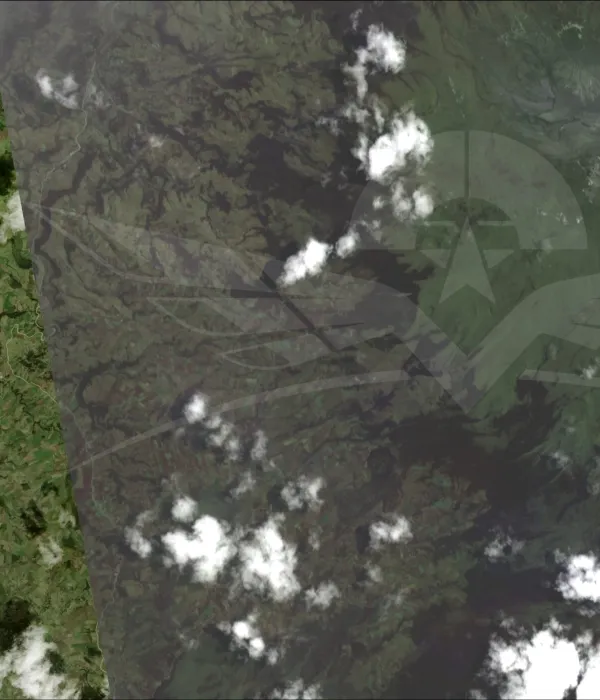
It was not until August 12—two days after the worst earthquake to hit the nation this century—that the country obtained its first useful satellite image to evaluate the tragedy: a view of Pereira capturing a fraction of the destruction. The image did not come from a national asset, but rather from the International Charter on Space and Major Disasters, an international cooperation mechanism activated by Colombia hours after the tremor.
The reason for this reliance on foreign aid is as striking as it is controversial: Colombia’s sole operational satellite, the FACSAT-2 "Chiribiquete", had quietly vanished from orbit nearly a year prior. Projected to last between five and fifteen years, the mission collapsed after just 30 months.
Far from the fanfare that accompanied its launch in April 2023, the premature demise of the FACSAT-2 was never publicly disclosed by the Colombian Aerospace Force (FAC). Official government websites continued to cite the satellite as active long after it had burned up in the atmosphere, leaving the country in an operational and informational vacuum.
Chronology: From Launch Triumph to Orbital Decay
The trajectory of Colombia’s second nanosatellite is a cautionary tale of rapid deployment, unpredicted space weather, and institutional opacity.
November 2018: Colombia launches its first nanosatellite, FACSAT-1, into low Earth orbit (LEO). Designed as an academic and technological pioneer, its mission ends when it re-enters the atmosphere in June 2023.
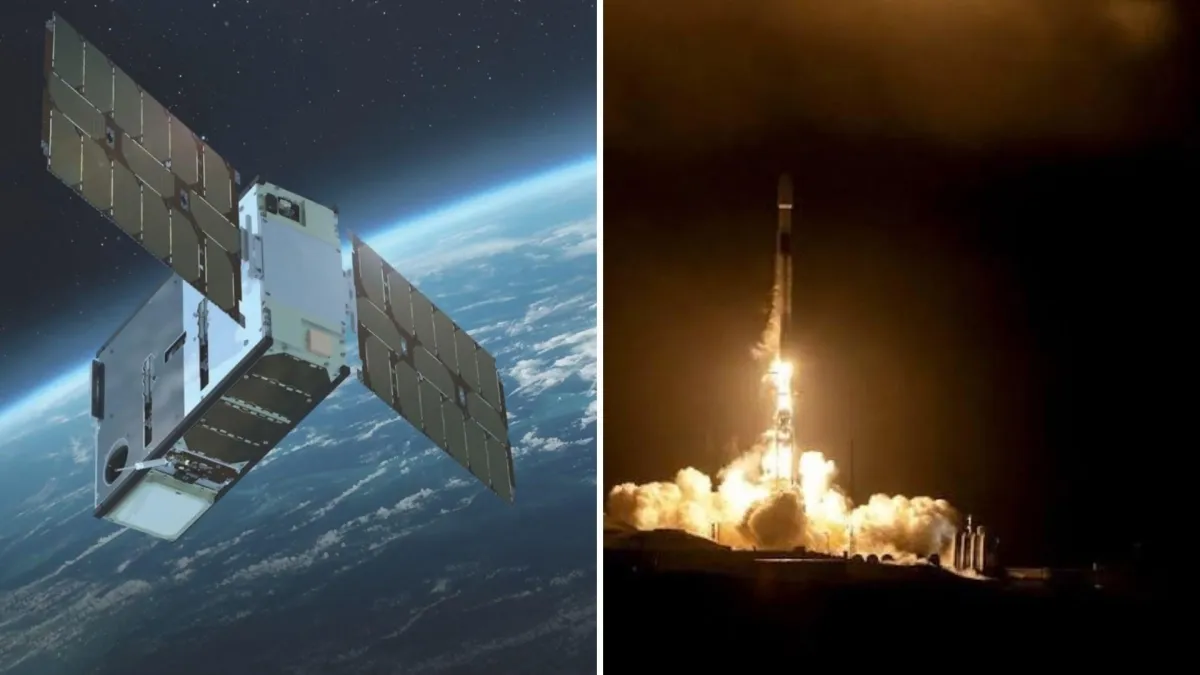
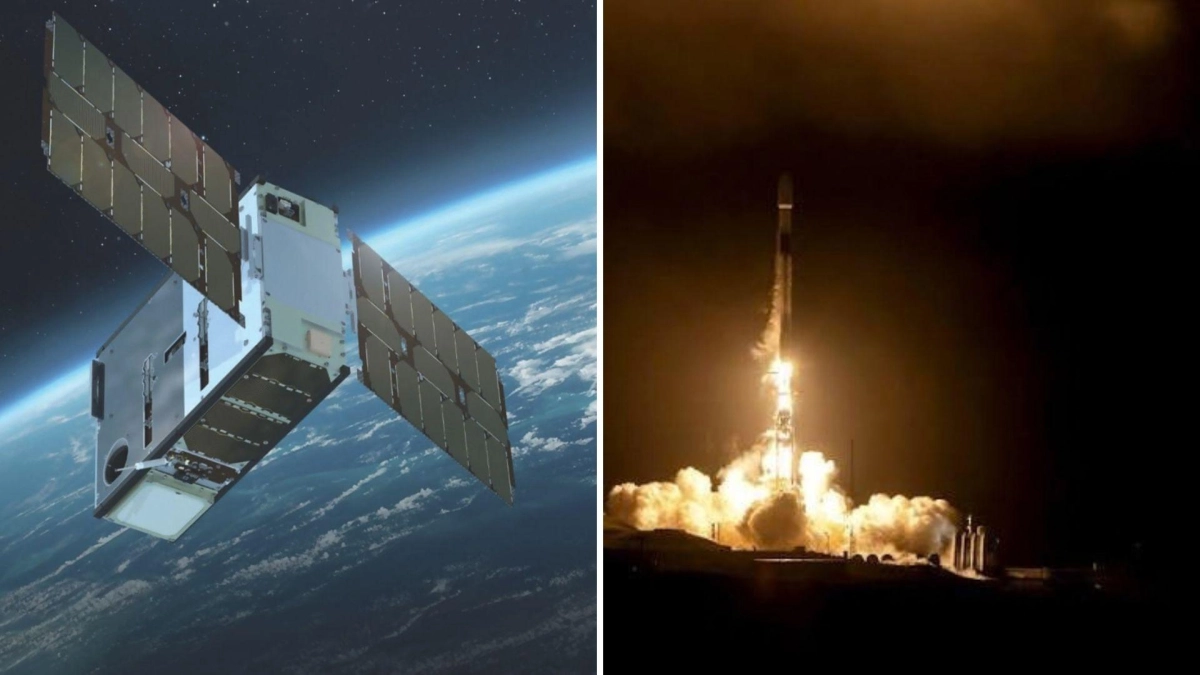
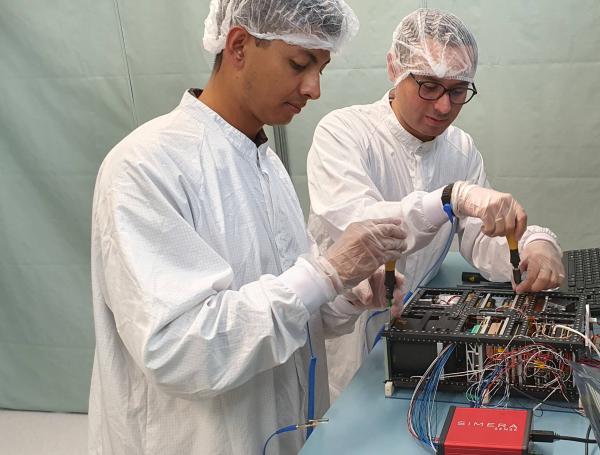
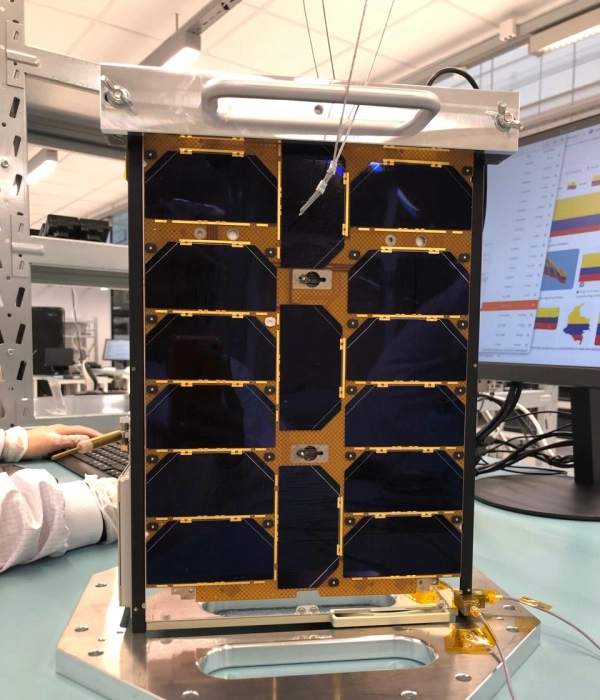
April 15, 2023: A wave of national pride sweeps the administration as the FACSAT-2 "Chiribiquete" is successfully launched from Vandenberg Space Force Base in California aboard a SpaceX Falcon 9 rocket. Built by GomSpace with a 4.7-meter-per-pixel multispectral camera and an Ecopetrol-backed infrared spectrometer to monitor greenhouse gases, the 7-kilogram device is hailed by then-President Gustavo Petro and Defense Minister Iván Velásquez as a leap forward for national environmental and security monitoring.
October 27, 2025: The Space Operations Center (SpOC) records its last bidirectional communication with FACSAT-2.
November 11, 2025: Analytical confirmation establishes that the satellite has re-entered Earth’s atmosphere and disintegrated, terminating the mission just two and a half years into its projected five-to-fifteen-year lifespan.
December 1, 2025: The FAC files a report with the Ministry of Foreign Affairs for transmission to the United Nations Office for Outer Space Affairs (UNOOSA). However, public-facing portals for the FAC and Ministry of Defense continue to publish reports through late December 2025 stating that FACSAT-2 is still operational and contributing data.
August 10, 2026: A 7.4-magnitude earthquake strikes San José del Palmar. Without domestic assets, Colombia must rely on the European Union’s Copernicus program and international disaster charters to secure imagery.
September 2026: An independent study led by National University astronomer Santiago Vargas exposes the premature decay of FACSAT-2, bringing the years-long silence of the FAC into the public eye.
Supporting Data: The Mechanics of a Premature Fall
To uncover the fate of FACSAT-2, researchers from the National University of Colombia—including Professor Santiago Vargas and doctoral students—utilized global tracking databases such as Space-Track and CelesTrak. Their findings point to a combination of unhedged environmental variables and intense solar dynamics.
The primary culprit was Solar Cycle 25, which proved significantly more active than initial mission projections indicated. As solar activity surged toward its peak in late 2024 and 2025, the Earth’s upper atmosphere heated up and expanded. This atmospheric swelling increased the drag exerted on low-Earth-orbit satellites.
Furthermore, severe space weather events—such as the historic "Gannon" geomagnetic storm of May 2024, the most intense in two decades—temporarily doubled the atmospheric drag on satellites. According to researchers, these compounded anomalies shaved nearly half the expected lifespan off FACSAT-2, causing it to re-enter the atmosphere a year ahead of schedule.
Data regarding the satellite’s capabilities underscore the magnitude of the loss:
Weight & Orbit: Weighing just 7 kg, FACSAT-2 orbited the Earth roughly 15 times a day, passing over Colombia approximately once every 24 hours.
Observation Windows: Factoring in daylight requirements and cloud cover, the satellite had an average observational frequency over the country of once every 1.85 days.
Disaster Response Assessment: Following the August 10, 2026 earthquake, the National Unit for Disaster Risk Management (UNGRD) processed 649 scenes from international providers, finding only 134 apt for analysis due to heavy cloud cover and optical limitations—a process that could have been substantially supplemented had a national radar or optical asset been operational.
Official Responses: Transparency vs. "New Space" Realities
When queried by EL TIEMPO through legal petitions regarding the satellite’s loss, the Colombian Aerospace Force defended its handling of the mission.
The FAC stated that the Space Operations Center (SpOC) maintained continuous command and control oversight throughout the satellite’s lifecycle. According to the military institution, the mission’s end was a "nominal process of atmospheric re-entry derived from LEO orbital mechanics," asserting that this continuous tracking allowed them to successfully manage the platform’s operational arc.
Furthermore, the FAC framed the event within the philosophy of the "New Space Race," which prioritizes short-duration missions in low Earth orbit to accelerate technological turnover, reduce space debris, and lower costs. The force maintained that it formally notified UNOOSA of the orbital termination, pointing to a finalized report routed through the Ministry of Foreign Affairs.
However, these explanations have met fierce pushback from academic and scientific circles. Independent researchers noted significant discrepancies: while the UN maintains a public record of FACSAT-1’s atmospheric disintegration (under verbal note ST/SG/SER.E/885/Add.1), a search of UNOOSA databases yielded no parallel public record for FACSAT-2, with the FAC providing only an internal routing number rather than a verified UN registry link.
Critics also pointed out that framing the loss around the "New Space Race" contradicts earlier promotional materials that touted a multi-year operational window, and fails to justify why government websites continued celebrating the satellite’s active status months after it had burned up.
Implications: A Cultural Aversion to Adversity and the Cost of Silence
The quiet demise of FACSAT-2 has triggered a broader debate over scientific governance, public transparency, and institutional culture in Colombia and Latin America at large.
The Fear of Public Failure
Retired Colonel Raúl Gutiérrez, former coordinator of the Technical Committee of the Colombian Space Commission and president of the National Space Society Colombia, notes that technical degradations are a normal risk in global space exploration. However, the failure to communicate them openly points to a deeper systemic flaw.
"The eagerness to present only successful milestones, such as launches, without accompanying them with a transparent communication strategy regarding operational performance, inherent risks, and in-orbit anomalies, undermines the maturity of the program," Gutiérrez asserted. He described the silence as a reflection of a common regional malaise: an aversion to public scrutiny and a fear that reporting adversity could damage institutional prestige.
The Scientific Toll
Academics emphasize that public funds demand public accountability. Projects like the FACSAT series—funded by Colombian taxpayers for tens of billions of pesos—should serve as open-source scientific assets rather than tightly guarded military secrets.
Gregorio Portilla, a professor at the National Astronomical Observatory, criticized the military’s reluctance to share raw data with civilian universities. Even when EL TIEMPO requested images captured by FACSAT-2, the FAC provided compressed JPG files rather than raw scientific formats (such as GeoTIFF), which are necessary for legitimate geographical and environmental analysis.
Operational Vacuum
With FACSAT-1 destroyed in 2023 and FACSAT-2 lost in late 2025, Colombia now faces a painful "operational vacuum." Despite possessing the multimillion-dollar Space Operations Center (SpOC) in Cali and highly trained personnel, the country currently lacks a single domestic satellite in orbit. This leaves the nation entirely dependent on international goodwill during national emergencies—a vulnerability starkly exposed by the August 2026 earthquake.
As the country looks toward the proposed deployment of FACSAT-3 before 2030—a project backed by more than 100 billion pesos—scientific experts argue that the primary lesson of FACSAT-2 is not technological, but cultural.
Space exploration is inherently perilous, and failure is a frequent teacher. For Colombia to mature as an aerospace nation, it must learn to be as transparent about its descents from orbit as it is about its ascents.
By Edwin Caicedo Environment and Health Journalist September 10, 2026 Main Facts: A City Trapped in Limbo One month after a powerful earthquake struck the department of Chocó on August 10, severely impacting more than…
By Angie Rodríguez | Lifestyle & Trends Journalism For generations, the standard protocol for pet ownership was largely reactive. Millions of pet parents across the globe would only load their dogs or cats into a…
BOGOTÁ — As the Colombian capital gears up for one of the most anticipated musical gatherings in Latin America, official economic projections reveal that the upcoming Festival Cordillera 2026 will serve as a massive financial…