Main Facts
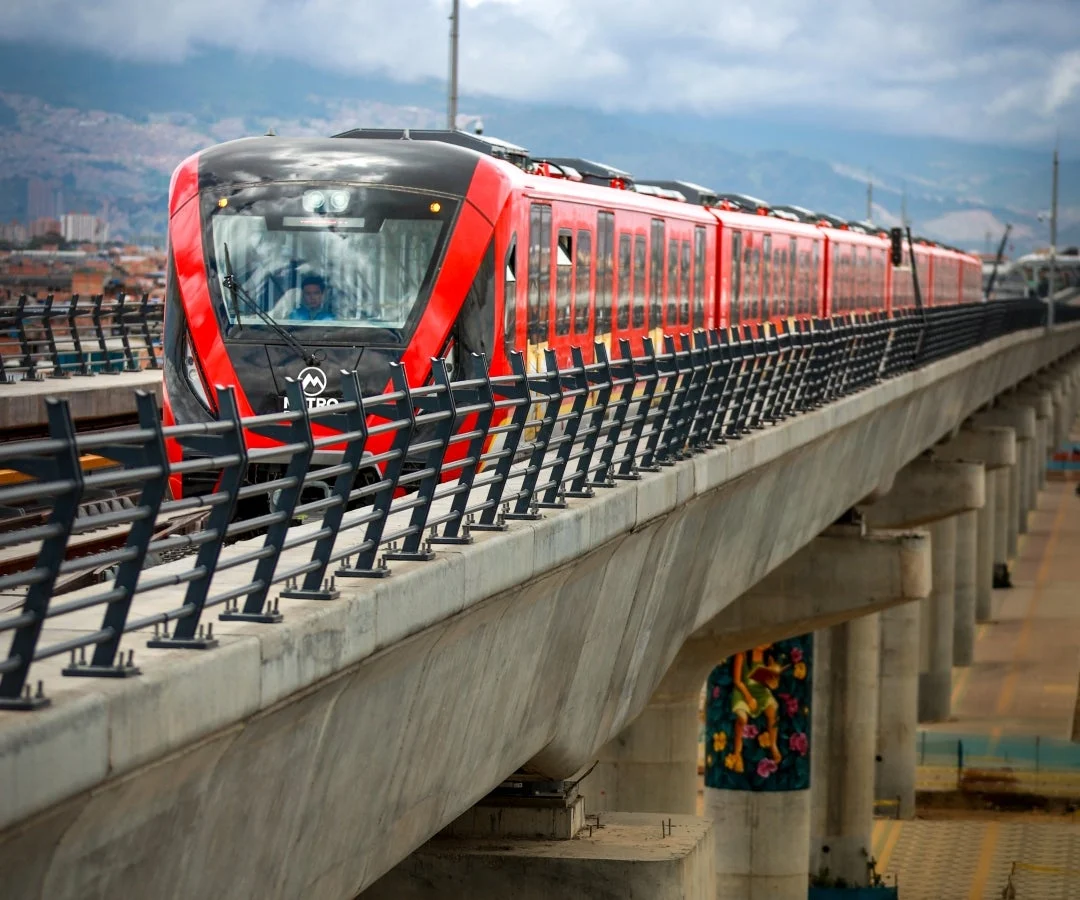
The financing puzzle for Bogotá’s flagship infrastructure project has taken a decisive step forward. The capital’s contribution to complete the monumental First Line of the Bogotá Metro (Línea 1 del Metro) has officially secured high-level backing from international commercial and multilateral banking sectors.
The Multilateral Investment Guarantee Agency (MIGA), an arm of the World Bank Group, has issued a comprehensive political risk and financial guarantee covering a $1.3 trillion Colombian pesos (approximately $400 million USD) credit facility extended to the District of Bogotá by global financial powerhouse BNP Paribas. This strategic transaction is specifically structured to mobilize private capital toward a public initiative designed to fundamentally reshape urban mobility, economic output, and employment metrics across Colombia’s capital.
The newly secured loan proceeds will directly fund the District’s financial contributions to the Empresa Metro de Bogotá (EMB), the public entity tasked with managing, executing, and supervising the development of Line 1. MIGA’s guarantee specifically covers the risk of non-honoring of financial obligations by the District government. Because the coverage extends to both principal and interest, the aggregate guaranteed amount reaches an impressive $2.8 trillion pesos (approximately $877 million USD).
This pivotal operation was officially authorized by the Colombian Ministry of Finance through Resolution 2182, enacted on September 28. The legal framework empowers the District to contract external debt directly with BNP Paribas New York Branch up to the $1.3 trillion peso threshold. The loan terms are structured with a 10-year maturity period starting from the initial disbursement, which includes a favorable three-year grace period on capital repayments.
Chronology
The integration of international financial institutions into the structural framework of the Bogotá Metro is far from a recent development; rather, it represents the culmination of nearly a decade of sustained multi-agency collaboration between the Colombian capital and the World Bank Group.
- 2016–2019 (Project Conception and Preparation): As planning for the elevated metro system shifted from abstract blueprints to concrete execution, the World Bank Group established a foundational framework to assist the District in structuring transparent, sustainable financing models.
- Prior Years (World Bank Direct Lending): Over the past ten years of project evolution, the International Bank for Reconstruction and Development (IBRD)—another key institution within the World Bank Group—extended a direct sovereign-guaranteed loan of $600 million USD to support the metro’s development phases.
- Recent Years (Green Financing): Demonstrating the diversification of funding mechanisms, the International Finance Corporation (IFC), the private-sector arm of the World Bank Group, acted as an anchor investor in Bogotá’s pioneering international green bond. This financial instrument was issued to partially finance the upcoming Line 2 of the metro system, creating a blueprint for sustainable municipal debt issuance in Latin America.
- September 28: The Colombian Ministry of Finance formally issued Resolution 2182, granting the District of Bogotá the necessary regulatory green light to execute the external credit operation with BNP Paribas New York Branch for up to $1.3 trillion pesos.
- Current Milestone: MIGA’s issuance of the multi-billion-peso guarantee officially finalizes the financial engineering required to back BNP Paribas’s lending operation, locking in private-sector confidence and paving the way for the continuous, uninterrupted execution of Line 1.
Supporting Data
The scope and projected impact of Bogotá’s First Line of the Metro are underpinned by extensive empirical data compiled by municipal authorities, urban planners, and international financial analysts. These metrics reflect a transformation extending far beyond simple transit times, touching on labor market dynamics, macroeconomic accessibility, and environmental remediation.
Labor Market and Economic Access
A significant share of the socioeconomic benefits highlighted by MIGA concentrates heavily along the Carrera Séptima and Avenida Caracas corridors. This geographical axis forms one of the most dynamic and dense labor markets in all of Bogotá, housing more than 1.6 million jobs and approximately 70,000 formal business establishments.
- Current Inequity: Under the pre-metro public transportation framework, a resident living in the socioeconomically vulnerable southwestern districts of Bogotá—such as Bosa or Kennedy—spends upwards of an hour commuting, yet can physically access fewer than 100,000 of those 1.6 million jobs within that timeframe.
- Post-Metro Reality: Once Line 1 becomes fully operational, that exact same one-hour commute will grant citizens seamless access to virtually any employment opportunity located along the entire Carrera Caracas/Avenida Caracas corridor, exponentially leveling the playing field for marginalized communities.
Direct and Indirect Employment Generation
Beyond structural changes to daily commuting patterns, the construction and subsequent operation of the metro system will serve as a massive local employment engine:
- 115,000 Jobs: According to projections by the Empresa Metro de Bogotá (EMB), the construction, administrative buildup, auxiliary services, and traffic management phases of Line 1 will generate roughly 115,000 direct and indirect jobs.
- 1,500 Permanent Positions: Once the transit system transitions from the construction phase into active daily operation, it will sustain approximately 1,500 stable, high-quality permanent positions dedicated to system maintenance, administration, and operations.
Environmental and Climate Impact
Operating as a 100% electric mass-transit backbone, the First Line of the Bogotá Metro is slated to capture a substantial volume of daily trips currently serviced by fossil-fuel-burning private automobiles and diesel-powered surface buses:
- 171,000 Tons of $textCO_2$ Reduction: The system is projected to slash greenhouse gas emissions by 171,000 tons of carbon dioxide equivalent per year.
- 12% Sector Offset: This single reduction accounts for approximately 12% of the total annual emissions generated by the entire public transportation sector in Bogotá, serving as a cornerstone for Colombia’s national climate change mitigation commitments under international accords.
Official Responses
The convergence of municipal leadership, global development finance institutions, and private banking giants has elicited strong statements from key leaders involved in structuring the transaction.
Tsutomu Yamamoto, Managing Director of MIGA:
"We are extremely pleased to partner with the Capital District of Bogotá and BNP Paribas, and to mobilize private capital for this truly transformative and high-impact project," stated Yamamoto. Highlighting the broader social dividends, he added: "The Bogotá Metro will generate and support a large number of jobs, reduce travel times, and boost commerce, while simultaneously decreasing congestion and improving the inclusion of underserved communities."
Jorge Valderrama, Territory Director at BNP Paribas:
Echoing the sentiments of multilateral leadership, Valderrama emphasized the collaborative nature of the financing package. "This is a transformational project that seeks to redefine urban mobility, economic opportunities, and environmental sustainability," Valderrama noted. "We are proud to partner with MIGA on this landmark infrastructure undertaking, which exemplifies the power of collaboration between the public and private sectors."
Implications
The successful closure of this credit operation, backed by MIGA and financed by BNP Paribas, carries profound structural implications for Bogotá, Colombia, and the broader landscape of Latin American infrastructure financing.
1. New Benchmarks for Public-Private Partnerships (PPPs) in Latin America
For decades, major municipal infrastructure projects across developing nations relied almost exclusively on sovereign debt, direct multilateral loans from development banks, or strained municipal tax revenues. By successfully structuring a commercial bank loan backed by a political risk guarantee from the World Bank Group, Bogotá has demonstrated that sub-national governments with strong fiscal frameworks can successfully tap international commercial capital markets. This transaction establishes a viable, repeatable template for other congested Latin American metropolises seeking to fund capital-intensive rail projects without breaking municipal fiscal rules.
2. De-risking Urban Megaprojects
Infrastructure development in dense urban environments inherently carries complex execution risks, ranging from regulatory delays and land acquisition hurdles to macroeconomic volatility (such as foreign exchange fluctuations). MIGA’s multi-billion-peso coverage insulating BNP Paribas against potential non-honoring of financial obligations acts as a powerful de-risking mechanism. By absorbing political and sovereign transfer risks, multilateral guarantees lower the cost of capital for emerging-market cities, making private-sector participation viable where it might otherwise be deemed excessively speculative.
3. Spatial Reordering and Social Equity in Bogotá
From a localized perspective, the operationalization of Line 1—bolstered by these financial inflows—promises to stitch together a profoundly fractured urban geography. Bogotá has long suffered from severe spatial segregation, where lower-income populations are pushed to the distant periphery (the south and southwest), while economic centers remain concentrated in the north and center. By radically shrinking travel times between peripheral residential nodes and central employment hubs, the metro system acts as a social equalizer. It transforms the city from a fragmented archipelago of isolated neighborhoods into an integrated, fluid metropolitan economy where geographic location no longer dictates access to economic dignity, professional mobility, and upward social mobility.