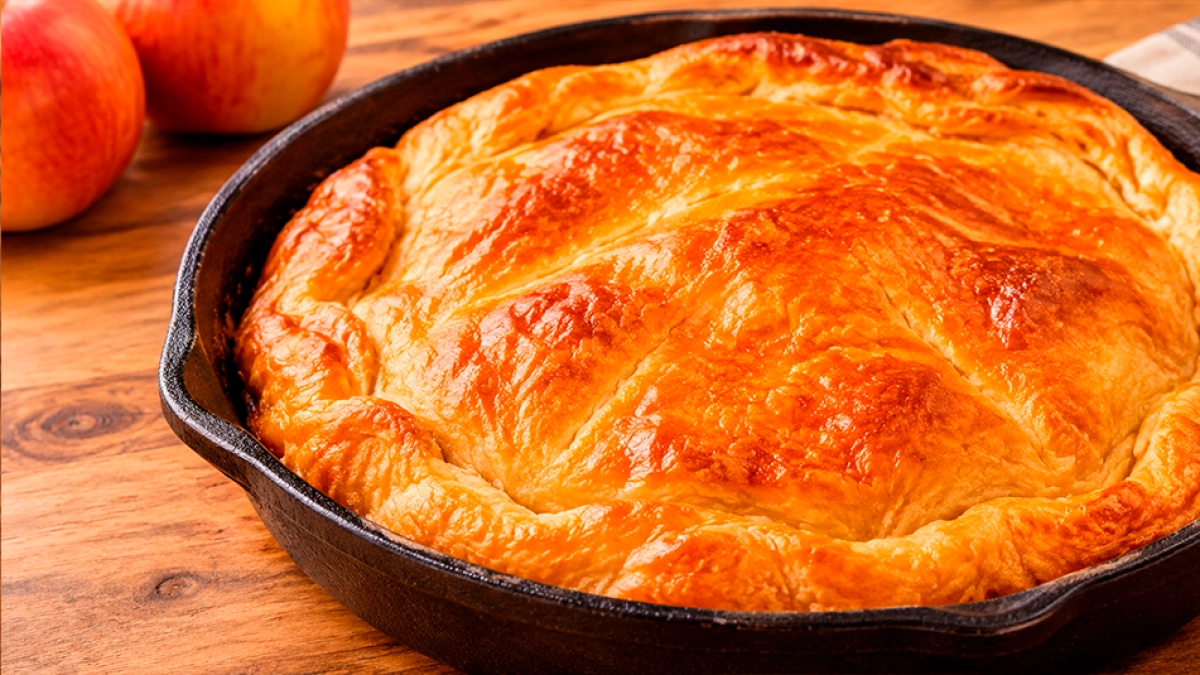
The Tarte Tatin, that storied French classic defined by its rustic elegance and its characteristic "upside-down" presentation, is often feared by amateur bakers and home cooks alike. While the ingredient list is deceptively simple—apples, butter, sugar, and pastry—the technique required to achieve that perfect, amber-hued caramel and a crisp, buttery crust is a test of patience and intuition.
Lorena Salinas, a renowned culinary expert and the creative force behind Cravings Journal, has decoded the process, emphasizing that the success of this dessert hinges on a single, non-negotiable factor: total control over the caramelization process. According to Salinas, the difference between a soggy, burnt mess and a sublime, glistening tart lies in how the heat is managed, how the fruit is handled, and the critical, high-stakes moment of the flip.
The Science of the "No-Spoon" Caramel
One of the most counter-intuitive aspects of Salinas’s methodology is the absolute prohibition of utensils during the initial stages of caramelizing the sugar. In traditional cooking, we are taught to stir, mix, and integrate. However, when working with molten sugar, agitation can lead to crystallization—a baker’s nightmare that results in a grainy, opaque sauce rather than a smooth, transparent syrup.
"The caramel is the heart of the Tatin," Salinas explains. "You must treat it with respect. By using a light-colored pan, you gain a visual advantage, allowing you to monitor the shade of the caramel as it shifts from a pale straw color to a deep, complex amber."
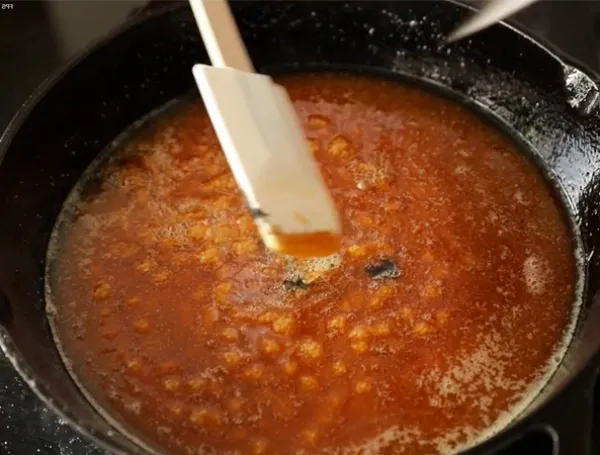
The technique involves spreading the sugar in a thin, even layer across the bottom of a heated pan. As the sugar begins to liquefy, the cook is encouraged to move the sugar only by tilting the pan by its handle. This gentle, rotational motion ensures even distribution without introducing the cold metal of a spoon, which could shock the sugar and cause it to seize. If the caramel darkens too rapidly in specific patches, the heat must be lowered immediately. This dance of heat and motion continues until the perfect golden hue is achieved, at which point the butter, a pinch of salt, and the aromatic seeds of a vanilla bean are folded in—again, using only the motion of the pan to incorporate the fats into the sugar.
Choosing Your Equipment: The Baker’s Toolkit
The choice of pan is as vital as the quality of the apples. For a successful Tarte Tatin, one needs a pan with high sides—ideally made of metal—that can transition seamlessly from the stovetop to the oven.
Salinas highlights a common logistical hurdle: the difficulty of finding a single pan that allows for perfect caramel monitoring while also being oven-safe. Her advice is pragmatic: if you lack a light-colored, oven-safe pan, you can prepare the caramel in a lighter skillet and then carefully transfer it to a seasoned iron skillet for the final assembly and baking. However, for those sourcing equipment, she suggests seeking out any high-sided metal pan with a heat-resistant handle (ensuring no plastic components) that can withstand the intense temperatures of the oven. This ensures that the residual heat from the caramel continues to permeate the apples during the bake.
The Chronology of Assembly: A Step-by-Step Guide
To replicate this masterpiece, one must follow a rigid sequence of events. The timing of each step is deliberate, designed to preserve the integrity of the apples and ensure they don’t break down into applesauce under the heat.
Phase 1: Preparing the Foundation
- The Apple Selection: Opt for apples that hold their shape. Peel and core them, cutting them into consistent quarters.
- The Caramel Base: Preheat your light-colored pan over medium-low heat. Sprinkle a thin layer of sugar, allowing it to melt before adding the rest.
- The Emulsion: Once the sugar reaches a rich, dark amber, stir in the butter, salt, and fresh vanilla seeds. The goal is a glossy, homogeneous liquid.
Phase 2: The Art of Layering
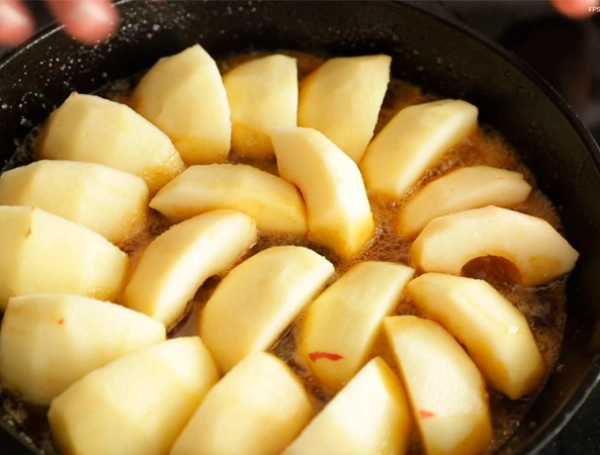
- The Arrangement: Place the apple quarters tightly into the pan. As the caramel bubbles, the fruit begins to release its own juices.
- Patience is Key: Allow the fruit to cook without interference. The goal is for the liquid to evaporate and the caramel to thicken. When the bubbles enlarge—a sign that the water content has significantly decreased—add a few extra apple quarters to compensate for shrinkage.
- The Crust: Roll out your puff pastry to a thickness of 2-3 millimeters. Using a plate as a template, cut a circle slightly larger than your pan. Drape the pastry over the apples and tuck the edges down into the sides of the pan with a spoon.
- Ventilation: Prick the pastry surface to allow steam to escape, preventing the crust from becoming soggy.
Phase 3: The High-Stakes Flip
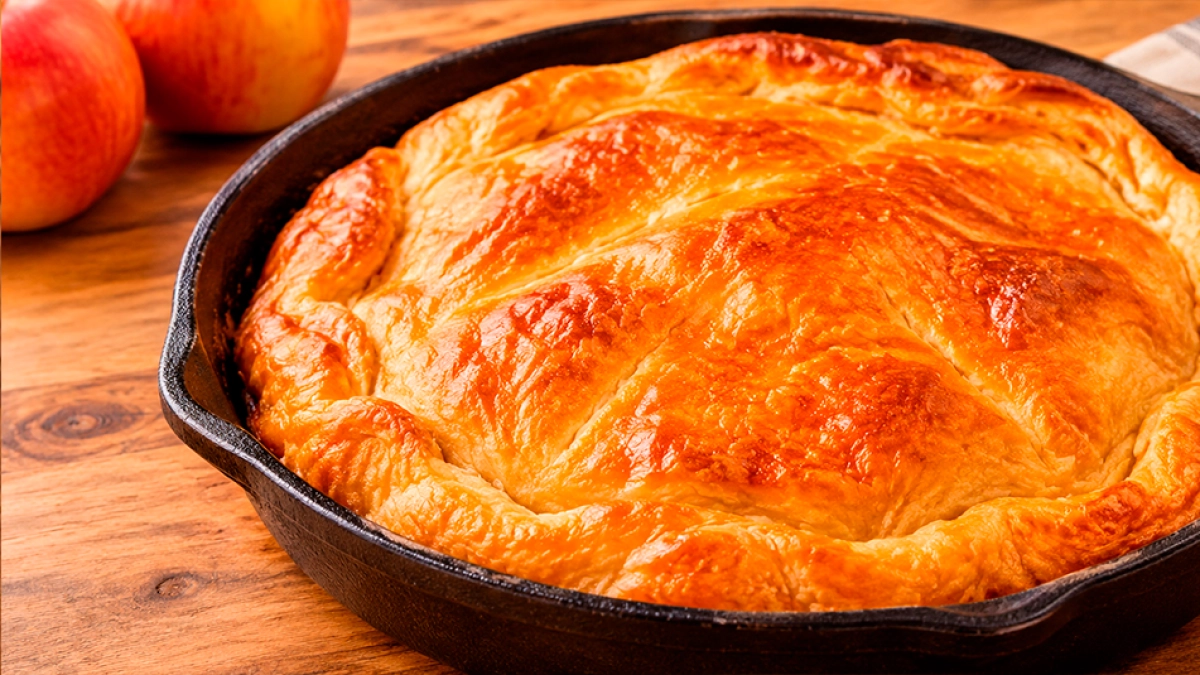
- The Bake: Transfer the pan to a preheated oven at 180°C (350°F). Bake for 30 to 35 minutes, or until the pastry is deeply golden and crisp.
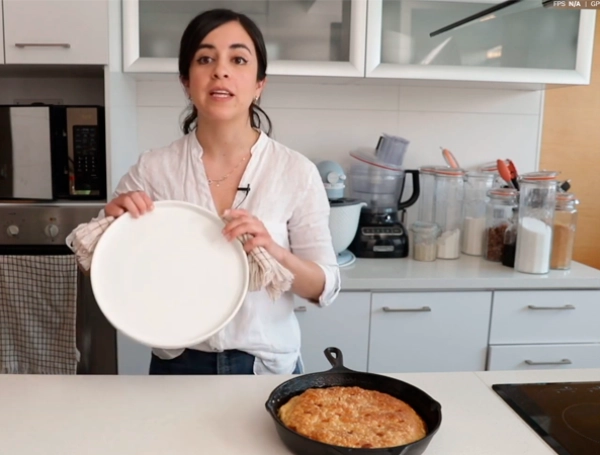
- The Final Move: This is the moment of truth. Remove the pan from the oven and, with absolute confidence and speed, invert the pan onto a slightly deep serving platter. A deep plate is crucial, as it acts as a reservoir for the molten caramel and fruit juices that would otherwise spill onto your counter.
Supporting Data and Culinary Implications
The Tarte Tatin is a lesson in thermodynamics. When the apples are cooked in the caramel, they undergo a process called osmotic dehydration, where the sugar pulls moisture out of the fruit cells. This is why the apples seem to shrink and why the caramel thickens as the process continues.
Furthermore, the choice of a deep platter for the inversion is not merely aesthetic. It is a functional necessity. The caramel, once it leaves the intense heat of the oven, remains liquid for a brief window before setting. If it is not contained, the balance of the dish is compromised. By serving the tart while still warm, the caramel retains a luxurious, sauce-like consistency that pairs perfectly with the flakiness of the puff pastry.
Professional Insights: Common Pitfalls
Industry professionals often note that the most frequent mistake made by home cooks is the "premature flip." If the pastry is not a deep, dark golden brown, the starch has not fully cooked, and the structure will not hold once inverted. Additionally, failing to tuck the pastry edges properly can result in a "loose" tart that falls apart upon contact with the plate.
Salinas emphasizes that cooking is not merely about following a list of instructions, but about reading the visual cues provided by the ingredients. The change in the size of the bubbles in the caramel, the specific golden tone of the pastry, and the aromatic transformation of the vanilla are all indicators that the baker must be attentive to.

Conclusion: A Testament to Patience
The Tarte Tatin remains a staple in French cuisine not because it is difficult to eat, but because it is an exercise in restraint. By avoiding the temptation to stir the caramel, by waiting for the fruit to reach the correct state of caramelization, and by mastering the final, decisive flip, the cook transforms humble ingredients into a sophisticated dessert. Whether served with a simple scoop of high-quality vanilla bean ice cream or a dollop of fresh, unsweetened whipped cream, the Tarte Tatin is a definitive proof that in the culinary world, the most profound results often come from the simplest, most controlled actions.