
In a landmark contribution to oncological research, a comprehensive international study has provided definitive evidence that structured physical exercise serves as a potent tool in the post-treatment recovery of colon cancer patients. The findings, derived from the long-term Challenge clinical trial, suggest that patients who commit to a sustained exercise regimen significantly increase their odds of survival, marking a pivotal shift in how oncologists approach the survivorship phase of cancer care.
The Challenge Trial: A Deep Dive into the Data
The Challenge trial, spearheaded by the Canadian Cancer Trials Group, represents one of the most rigorous investigations into the role of lifestyle interventions following standard cancer therapy. Initiated in 2009 and culminating in a comprehensive data analysis published in 2025, the study followed 889 participants across six nations, with the vast majority of the cohort hailing from Canada and Australia.
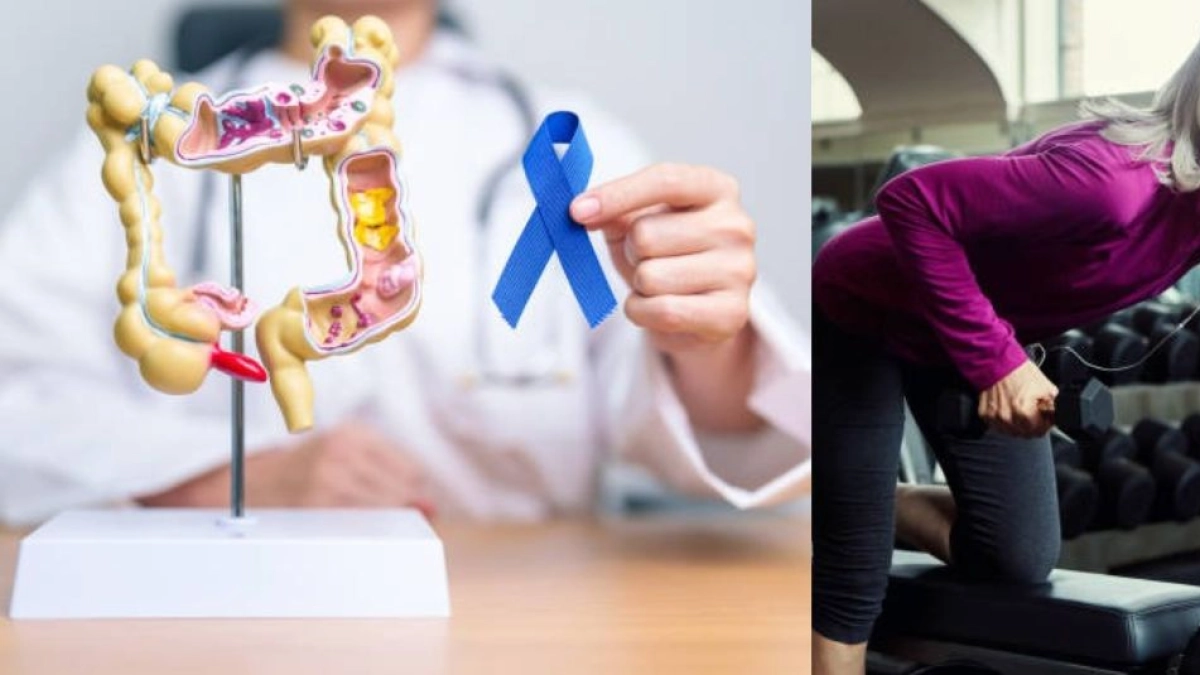
The inclusion criteria were precise: every participant had completed surgical resection and chemotherapy for stage II or III colon cancer and presented no evidence of distant metastasis at the start of the study. By focusing on this specific demographic, researchers sought to isolate the impact of physical activity on preventing recurrence and improving long-term health outcomes.
The cohort was divided into two groups: one received standard education regarding exercise and nutritional guidelines, while the second group was provided with professional, guided counseling and structured support to implement a consistent physical activity routine over a three-year period.

The Protocol: Moving Beyond Basic Advice
The study’s objective was to encourage participants to achieve a routine equivalent to walking at a brisk pace for 45 to 60 minutes, three to four times per week. However, as Tormod Skogstad Nilsen, a lead researcher in exercise oncology based in Norway, noted, the path to physical activity is rarely uniform.
"The intensity, volume, and type of activity naturally varied among participants depending on their individual physical baseline and recovery trajectory," Nilsen explained. Despite this variability, the results were striking: the intervention group successfully maintained a higher level of physical activity throughout the study, fostering habits that persisted long after the supervised counseling phase concluded.

Chronology of the Study: From Inception to Results
The journey from the trial’s inception to its final conclusions highlights the necessity of long-term observation in cancer research:
- 2009: Recruitment begins, focusing on post-surgical, non-metastatic colon cancer patients.
- 2009–2012: Active intervention phase, where participants in the experimental group receive personalized coaching and structured physical activity plans.
- 2012–2025: Long-term follow-up phase, tracking survival rates, cancer recurrence, and the emergence of secondary tumors.
- 2025: Final data synthesis confirms a statistically significant survival benefit for the active group.
- 2026: Global dissemination of findings, prompting a reassessment of clinical guidelines in oncology.
Quantitative Impact: The Seven-Percent Difference
The statistical outcomes of the Challenge trial provide a compelling argument for the inclusion of exercise in standard cancer care. Over an eight-year follow-up period, the differences between the two groups became pronounced.

In the group that received only standard information, 131 individuals experienced a recurrence, a new primary tumor, or death. In contrast, only 93 individuals in the active exercise group faced these adverse events. When translated into survival percentages, the data shows that approximately 90% of the active group remained alive after eight years, compared to 83% of the control group.
This seven-percentage-point gap is not merely a statistical curiosity; it represents a significant clinical improvement that, if scaled globally, could save thousands of lives annually.

Expert Perspectives and Clinical Implications
The medical community has received these results with significant interest. Anna Campbell, a professor of Clinical Exercise Science at Edinburgh Napier University, believes the Challenge trial provides a robust blueprint for future care.
"Patients with stage II or III colon cancer who possess a reasonable baseline of physical fitness and lack severe comorbidities are prime candidates for these types of interventions," Dr. Campbell stated. She emphasized that the goal is not to force elite athletic performance upon recovering patients, but rather to integrate moderate, sustainable movement into their daily lives.

Nilsen added a crucial layer to this perspective, emphasizing the "individualized environment" approach. "Helping patients stay active in their own setting, rather than demanding they attend clinical gyms, is the key to adherence. When we adapt the exercise to the patient’s reality, it becomes a sustainable part of their recovery rather than an additional chore."
A Global Shift in Oncology Policy
The implications of the Challenge trial are already beginning to influence policy. The medical community is moving toward a model where "exercise is medicine" is no longer a slogan but a prescriptive part of the oncology toolkit.

Notably, the United States has taken a proactive step. Starting in January 2027, specialized cancer centers—beginning with breast cancer departments—will be mandated to evaluate the physical function of patients. Where necessary, these centers will be required to provide referrals for specialized exercise programs or physical therapy. This policy shift reflects a broader recognition that the physiological toll of cancer treatment requires active, guided mitigation.
Limitations and Nuance
Despite the positive findings, researchers urge caution against overgeneralization. The Challenge study focused specifically on colon cancer, and while the biological mechanisms—such as reduced systemic inflammation, improved insulin sensitivity, and enhanced immune function—are theoretically applicable to other cancer types, they have not yet been proven to the same degree across all oncological diagnoses.

"We must be careful," researchers warned in their concluding remarks. "The results of the Challenge trial are a beacon for colon cancer recovery, but they do not automatically translate to every patient or every cancer subtype. Each patient’s medical history, surgical history, and current treatment status must dictate the approach to physical activity."
Conclusion: The Path Forward
The Challenge trial serves as a powerful reminder that the fight against cancer does not end when the surgeon puts down the scalpel or the final chemotherapy infusion is completed. The recovery process is a complex, long-term journey that benefits immensely from proactive patient involvement.

By providing clear, evidence-based data that links movement to survival, this study empowers patients to take an active role in their own prognosis. As oncology continues to evolve, the integration of structured, supervised, and personalized exercise will likely become a pillar of post-cancer care, offering patients not just a higher chance of survival, but a significantly improved quality of life.
The medical establishment now faces the challenge of implementation: how to make this level of supervised, accessible exercise counseling a standard feature of every cancer center’s recovery program. As the Challenge trial proves, the effort is well worth the potential for a longer, healthier life.