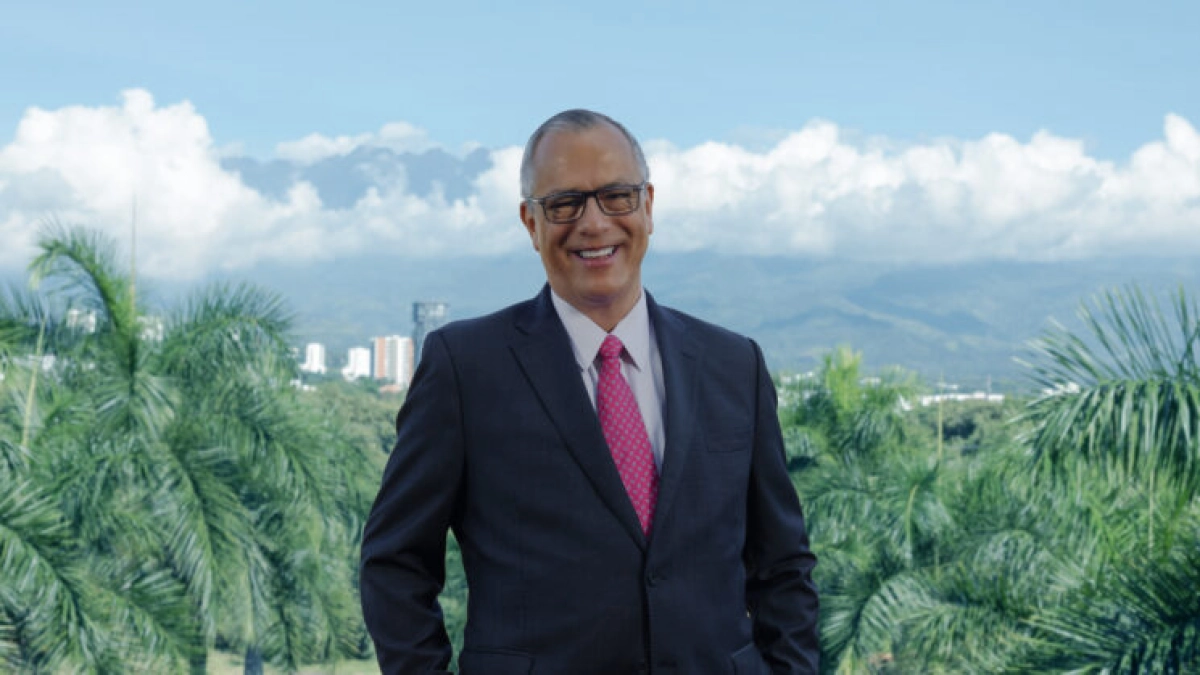
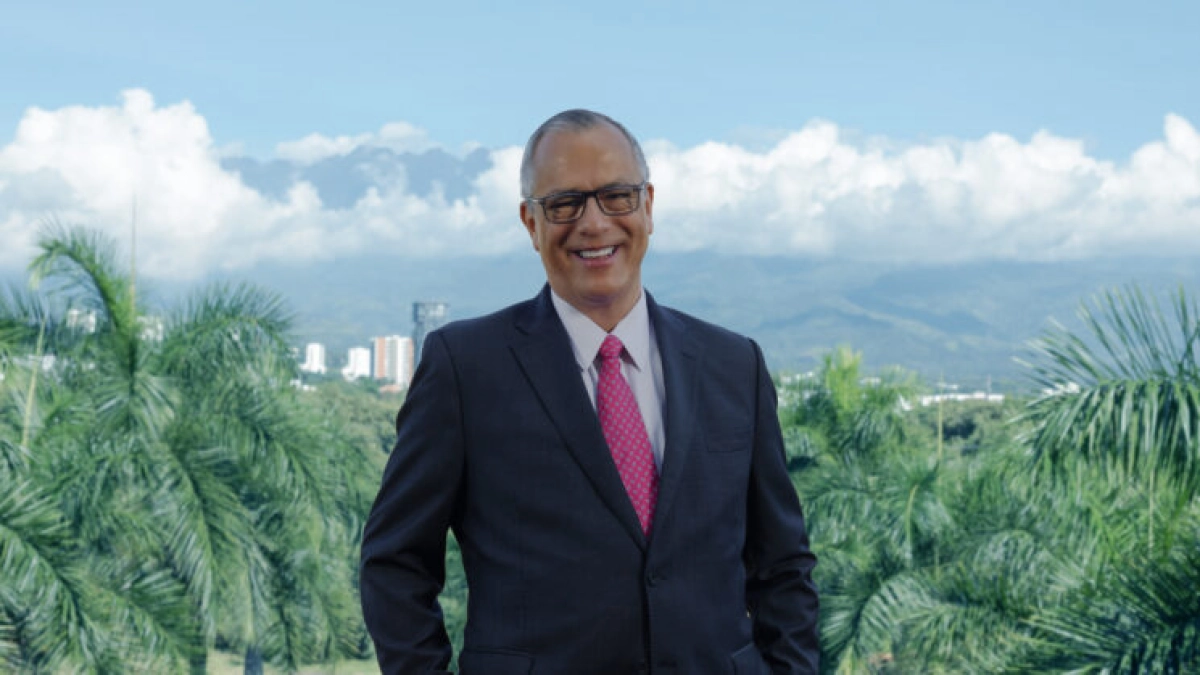
BOGOTÁ — In a move that signals a renewed bridge between elite academic institutions and national policymaking, the Presidency of the Republic has officially published the curriculum vitae of Diego Fernando Hernández Losada, clearing the path for his appointment as the country’s next Vice Minister of Higher Education.
Hernández Losada, currently serving as the rector of the Universidad Autónoma de Occidente (UAO), brings to the Ministry of Education a robust multidisciplinary background spanning over three decades. His career weaves together heavyweights of the Colombian private sector, decades of institutional governance within the nation’s premier public university, and high-level executive experience in national science and technology administration.
As the Ministry of Education faces profound structural challenges—ranging from the modernization of university funding models and the expansion of rural access to the qualitative alignment of curricula with modern economic demands—Hernández Losada’s appointment is being closely watched by academic syndicates, student bodies, and institutional leaders alike.
1. Main Facts: The Transition to National Leadership
The publication of Hernández Losada’s hoja de vida by the Presidency marks the penultimate administrative step before his formal swearing-in. The incoming vice minister is no stranger to the corridors of national power. Between 2018 and 2019, he served as the director general of Colciencias (the administrative department that preceded the Ministry of Science), and subsequently transitioned to become the nation’s first Vice Minister of Science, Technology, and Innovation, holding that portfolio until January 2021.
His return to the executive branch places a seasoned academic administrator at the second-highest post in the educational hierarchy. Hernández Losada steps into the role with a deep understanding of how state apparatuses interact with autonomous university structures. His mandate is expected to focus heavily on strengthening higher education systems, fostering institutional quality assurance, and bridging regional disparities in academic opportunity across Colombia’s diverse departments.
2. Chronological Profile: A Life in Academics, Finance, and Industry
The professional trajectory of Diego Fernando Hernández Losada is characterized by a deliberate diversification across sectors, moving seamlessly from early roles in industrial manufacturing and financial management to academic research, faculty leadership, and national governance.

Early Career and Corporate Management (1986–1996)
Before establishing himself as a fixture in higher education, Hernández Losada accumulated substantial hands-on experience in the private sector, managing industrial operations, human resources, and corporate finances.
- 1986–1991: He served as the head of plant personnel at Tejidos Palmitex, where he directed labor relations and human capital management. Concurrently, he worked as an industrial engineer for Inducol.
- 1991–1995: Shifting gears into the financial sector, Hernández Losada assumed the role of National Portfolio Director at Banco Las Villas, navigating complex economic assets and credit portfolios during a period of significant modernization in Colombia’s banking sector.
- 1995–1996: He served as the Administrative and Financial Manager at Covinoc, overseeing corporate asset recovery, financial planning, and internal administrative controls.
Entering the Academic Sphere (1996–2003)
In the mid-1990s, Hernández Losada pivoted toward his true vocational calling: higher education.
- 1996: He began his academic career as a professor at the Pontificia Universidad Javeriana and the Universidad de los Andes.
- Until January 2003: He maintained a position as an assistant professor at the Universidad de los Andes, where he combined classroom instruction with institutional research in economics and administration.
The Universidad Nacional de Colombia Decades (2004–2016)
Hernández Losada’s most defining academic home has been the Universidad Nacional de Colombia (UNAL), the nation’s premier public institution. Over more than a decade, he ascended through various leadership layers, shaping policy at multiple levels:

- August 2005 – June 2006: General Director.
- June 2006 – June 2012: Dean of the Faculty of Economic Sciences, where he directed curricular overhauls, fostered research groups, and managed budgetary allocations.
- April 2013 – June 2016: Vice-Rector of the entire university system, overseeing institution-wide academic strategies, faculty advancement, and student welfare initiatives.
Public Service: Science, Technology, and Innovation (2018–2021)
In August 2018, Hernández Losada made his first major leap into national public policy when President Iván Duque appointed him as Director General of Colciencias.
- Under his stewardship, the institution underwent its historic transformation into a full-fledged Cabinet ministry: the Ministry of Science, Technology, and Innovation (MinCiencias).
- Following the formal creation of the ministry, he served as Vice Minister of Science, Technology, and Innovation from December 2019 through January 2021, cementing national frameworks for research funding, doctoral scholarships, and innovation incentives.
Return to Rectorate and Current Leadership (2024–Present)
Following his tenure in Bogotá’s central government, Hernández Losada returned to regional academic administration. In February 2024, he assumed the position of Rector of the Universidad Autónoma de Occidente (UAO) in Cali. Under his leadership, the UAO has continued to refine its pedagogical offerings, focusing on regional development, technological adaptation, and institutional resilience.
3. Supporting Data: Academic Credentials and Rigor
The weight of Hernández Losada’s candidacy rests heavily on an extraordinarily rigorous academic pedigree that spans engineering, economics, and business administration across some of the most prestigious institutions in Colombia and the United States:

- Undergraduate Degree: Bachelor of Science in Industrial Engineering from the Universidad Nacional de Colombia.
- Doctorate (Ph.D.): Doctorate in Economic Sciences from the Universidad Nacional de Colombia.
- Master’s Degree I: Master of Business Administration (MBA) from the Universidad del Valle.
- Master’s Degree II: Master’s in Economics from the Pontificia Universidad Javeriana.
- Master’s Degree III: Master of Science (M.Sc.) from the University of Illinois at Urbana-Champaign, USA.
This quantitative and economic foundation has allowed Hernández Losada to approach educational administration not merely from a pedagogical standpoint, but through the lenses of macroeconomics, institutional efficiency, and financial sustainability—critical skills for navigating the intricate budgets of Colombia’s higher education system.
4. Official Responses and Institutional Reactions
While the Ministry of Education has yet to issue a comprehensive policy blueprint outlining the precise portfolio the incoming vice minister will manage, the publication of his CV has triggered wide-ranging discussions across academic circles.
Representatives from regional universities have expressed cautious optimism, noting that Hernández Losada’s experience running a regional private university (UAO) alongside his deep roots in the public university system (UNAL) endows him with a rare, holistic perspective. "Too often, national education policy is drafted through a centralized, Bogotá-centric lens that ignores the realities of regional campuses," noted a representative from an association of southwestern Colombian universities. "Diego Fernando understands both worlds intimately."

Meanwhile, scientific communities have welcomed the return of a figure with a proven track record in MinCiencias to the higher education echelon. Proponents argue that strengthening the synergy between universities and research ecosystems is vital for national development, particularly as global labor markets demand advanced technological literacy.
5. Implications for the Future of Colombian Higher Education
The appointment of Diego Fernando Hernández Losada as Vice Minister of Higher Education arrives at a critical juncture for Colombia’s educational landscape. Several core challenges will define his administration:
1. Funding and Financial Sustainability
Public universities across Colombia have long grappled with structural deficits, deferred maintenance, and the limitations of Article 86 of Law 30 of 1992, which regulates state university financing. Hernández Losada’s extensive background in corporate finance, combined with his tenure as UNAL’s vice-rector, places him in a strategic position to negotiate fiscal reforms and optimize budgetary distribution.

2. Quality Assurance and Accreditation
As the demand for higher education expands, maintaining and elevating institutional and programmatic accreditation standards remains paramount. Hernández Losada’s academic background suggests a heavy emphasis on rigorous evaluation metrics, peer-reviewed research output, and faculty development.
3. Regional Equity and Access
Bridging the gap between major metropolitan centers (Bogotá, Medellín, Cali) and Colombia’s peripheral departments is an ongoing national priority. His recent leadership at the Universidad Autónoma de Occidente—rooted in the Valle del Cauca region—underscores a sensitivity to regional economic needs and the imperative of tailoring educational programs to local industrial demands.
4. Integration of Technology and Innovation
Given his pivotal role in the creation of MinCiencias, Hernández Losada is expected to champion the integration of digital transformation, artificial intelligence literacy, and applied research methodologies into undergraduate and graduate curricula.

As the official administrative appointments conclude in the coming days, the academic community prepares for a transition marked by intellectual rigor, financial pragmatism, and a steadfast commitment to the modernization of Colombia’s intellectual capital.