PARIS — French judicial authorities have formally opened an investigation into attempted murder following a violent confrontation in the heart of Paris, where a Molotov cocktail was hurled directly at security forces during a nationwide day of demonstrations. The incident marks a dangerous escalation in what has become a persistent wave of social unrest gripping the country, driven by widespread public anger over the escalating cost of living.
The tumultuous events of Saturday represent the third consecutive weekend of mass mobilizations across France. While the protests initially began as organized expressions of economic grievance—focusing on inflation, stagnant wages, and the shrinking purchasing power of ordinary citizens—parts of the demonstrations have repeatedly devolved into intense urban guerrilla tactics, pitting aggressive groups of protesters against heavily armed riot police and gendarmerie units.
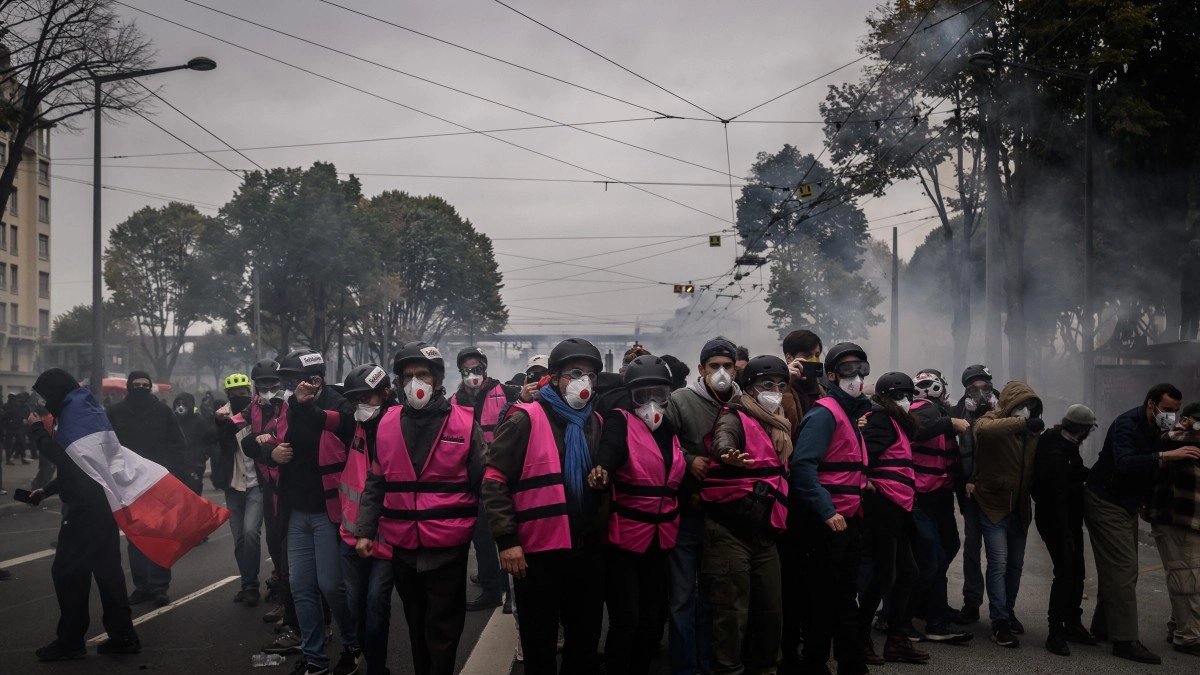
As the smoke cleared from the weekend’s clashes, the human and material toll proved extensive. Government tallies confirmed that 779 individuals were taken into custody across various French cities, while 166 members of the security forces sustained injuries ranging from smoke inhalation to severe chemical and thermal burns.
Main Facts: The Paris Attack and Judicial Response
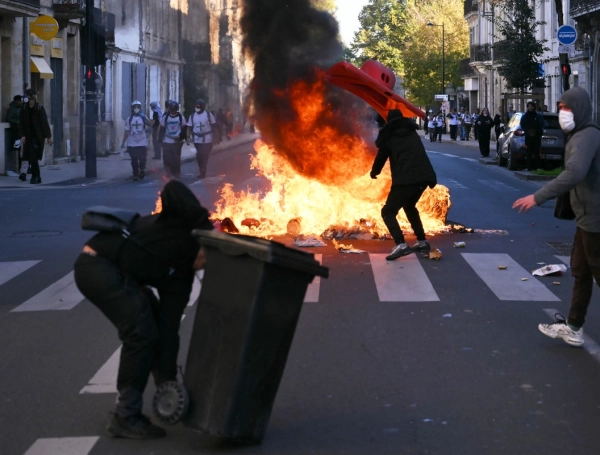
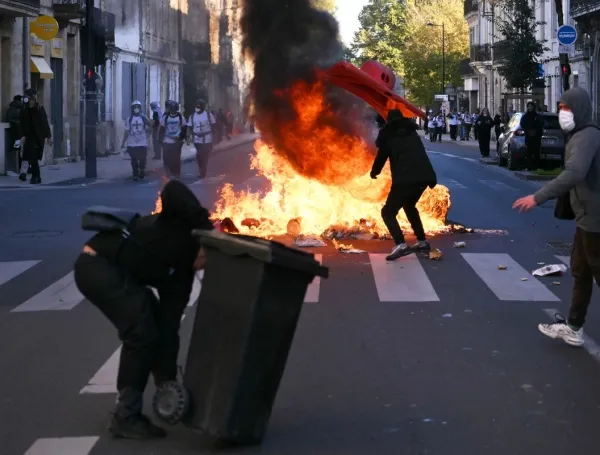
The most alarming episode of Saturday’s mobilization unfolded on the eastern edges of Paris, transforming a standard protest route into a crime scene. According to judicial sources and corroborating visual evidence captured by press agencies, a coordinated group of agitators targeted a deployment of law enforcement personnel with a barrage of improvised projectiles.

Among the weapons thrown was a petrol bomb—commonly known as a Molotov cocktail—which detonated directly at the feet of a gendarme. The resulting fireball caused immediate second-degree burns and other injuries to the officer. Visual media from the scene depicted chaotic moments as units were bombarded with explosive objects, forcing police to respond with tear gas, flash-bangs, and tactical maneuvers to secure the perimeter.
In response to the severity of the assault, the Paris Prosecutor’s Office announced the immediate opening of a judicial inquiry. The investigation is being pursued under the grave legal classification of "attempted homicide against persons holding public authority." Investigators have emphasized that the use of incendiary devices against first responders demonstrates a clear intent to cause lethal harm, elevating the legal consequences for any apprehended suspects.
As of Sunday, law enforcement agencies confirmed that no direct suspects had been taken into custody in connection with the Molotov cocktail attack. Specialized investigative squads are currently analyzing video footage, forensic residues, and photographic evidence in a race to identify and capture those responsible.
Chronology of Escalation: Three Weeks of Growing Unrest
To understand the volatile climate that culminated in Saturday’s near-tragedy, it is necessary to examine the trajectory of the current social movement, which has steadily intensified over the past month.

Phase One: Mid-October Flashpoints
The current cycle of unrest gained massive momentum on Saturday, October 17. What began as widespread trade union and grassroots convocations against inflation quickly spiraled out of control. That initial weekend saw unprecedented levels of urban violence, resulting in a staggering 2,628 arrests nationwide. The sheer scale of the confrontations overwhelmed initial security perimeters, leaving an unprecedented 1,144 members of the security forces injured. The sheer volume of casualties shocked political observers and signaled to authorities that public anger had reached a boiling point.
Phase Two: Tactical Adaptation and Persistent Tensions
One week later, on Saturday, October 24, a second wave of demonstrations swept through major French urban centers, including Lyon, Marseille, and Paris. While authorities implemented stricter security protocols and deployed enhanced intelligence networks to curb the chaos, the numbers remained remarkably high. The Ministry of Interior reported 1,435 arrests during this second weekend. Although the number of injured law enforcement officers dropped significantly compared to the previous week, it still reached a concerning 267 injured personnel, proving that the reduction in raw numbers did not equate to a dampening of hostile intent among radical factions embedded within the crowds.
Phase Three: The Critical Juncture on November 1st
The third consecutive weekend of protests—culminating on Saturday—showed a numerical decrease in overall arrests (down to 779) and police injuries (166), suggesting that fatigue and heavier policing were beginning to thin the ranks of casual protesters. However, security analysts noted a disturbing qualitative shift: while the crowd sizes may have contracted, the core elements remaining on the streets displayed a far higher degree of radicalization and willingness to employ lethal tactics, as evidenced by the petrol bomb attack in Paris.
Supporting Data and Comparative Statistics
The statistical trajectory provided by the French Ministry of Interior and judicial bodies paints a clear picture of the ebb and flow—as well as the persistent lethality—of the autumn protests:
- October 17 Protests:
- Total Detainees: 2,628
- Law Enforcement Injuries: 1,144
- October 24 Protests:
- Total Detainees: 1,435
- Law Enforcement Injuries: 267
- November 1 Protests (Latest Data):
- Total Detainees: 779
- Law Enforcement Injuries: 166
While the downward trend in total arrests might initially suggest a de-escalation of the movement, security experts caution against complacency. The concentration of violence into more targeted, high-impact assaults—such as the deployment of incendiary devices against individual officers—indicates that a hardened faction of extremists has hijacked the broader economic protest to wage direct warfare against state authorities.
Official Responses and Political Repercussions
The escalation in violence has triggered sharp reactions across the French political spectrum, placing the government under intense pressure to restore public order while addressing the underlying economic grievances of the populace.
Interior Minister Laurent Nuñez condemned the attack in unequivocal terms, labeling the deployment of the Molotov cocktail a deliberate "attempted murder." Speaking to reporters, Nuñez praised the resilience of the police and gendarmerie units who continue to hold the line amidst what he described as calculated ambushes by violent fringe groups.
The injured gendarme, speaking anonymously through television interviews, recounted the harrowing moments of the attack, describing a blinding "rain" of heavy projectiles and explosive devices raining down upon his unit from individuals he characterized as completely "determined" to inflict catastrophic harm.

Political figures outside the ruling coalition were quick to weigh in. Marine Le Pen, leader of the right-wing opposition and a prominent contender for the upcoming presidential elections next year, took to social media platform X (formerly Twitter) to demand swift and uncompromising justice. Le Pen asserted that the individuals responsible for attacking public servants with lethal weapons must be punished with the "maximum severity" permitted under French law, reflecting a broader public sentiment demanding law and order.
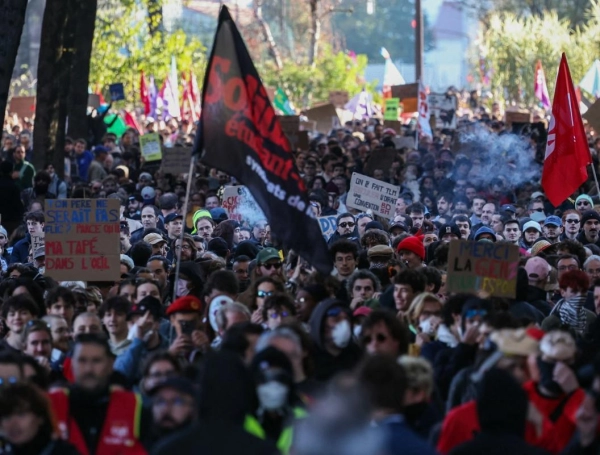
At the same time, labor unions and worker federations—such as Solidaires, whose members were visibly active in demonstrations in cities like Lyon—have attempted to distance themselves from the rioters and violent agitators. Union representatives insist that the legitimate grievances of working-class citizens struggling to pay for groceries, housing, and energy must not be overshadowed by the destructive actions of autonomous extremist groups operating on the fringes of the marches.

Implications for the Future of French Politics and Society
The events of this past weekend lay bare the deep fractures within contemporary French society. Several critical implications emerge from the ongoing crisis:
- Economic Pressures Meet Social Volatility: The root cause of the unrest—the crushing cost of living—shows no signs of abating. As inflation continues to squeeze household budgets, the propensity for mass social mobilization remains high. If the government cannot offer tangible economic relief, weekends of rage are likely to remain a recurring feature of French civic life.
- The Radicalization of Protest Culture: The shift from standard stone-throwing and property damage to the use of lethal devices like Molotov cocktails represents a dangerous crossing of a Rubicon. It forces security forces to recalibrate their rules of engagement, raising the specter of even more severe confrontations and potential casualties in future demonstrations.
- Electoral Ramifications: With presidential elections looming next year, the issue of public safety versus social justice has taken center stage in the national discourse. Hardline figures advocating for law and order are using the imagery of burning streets and injured officers to bolster their platforms, while incumbent leaders face a delicate balancing act: protecting the constitutional right to protest while maintaining public safety and state authority.
As the French Prosecutor’s Office continues its manhunt for the perpetrators of the Paris petrol bomb attack, the nation remains on edge, bracing for what may unfold in the subsequent weekends as the socioeconomic crisis persists.