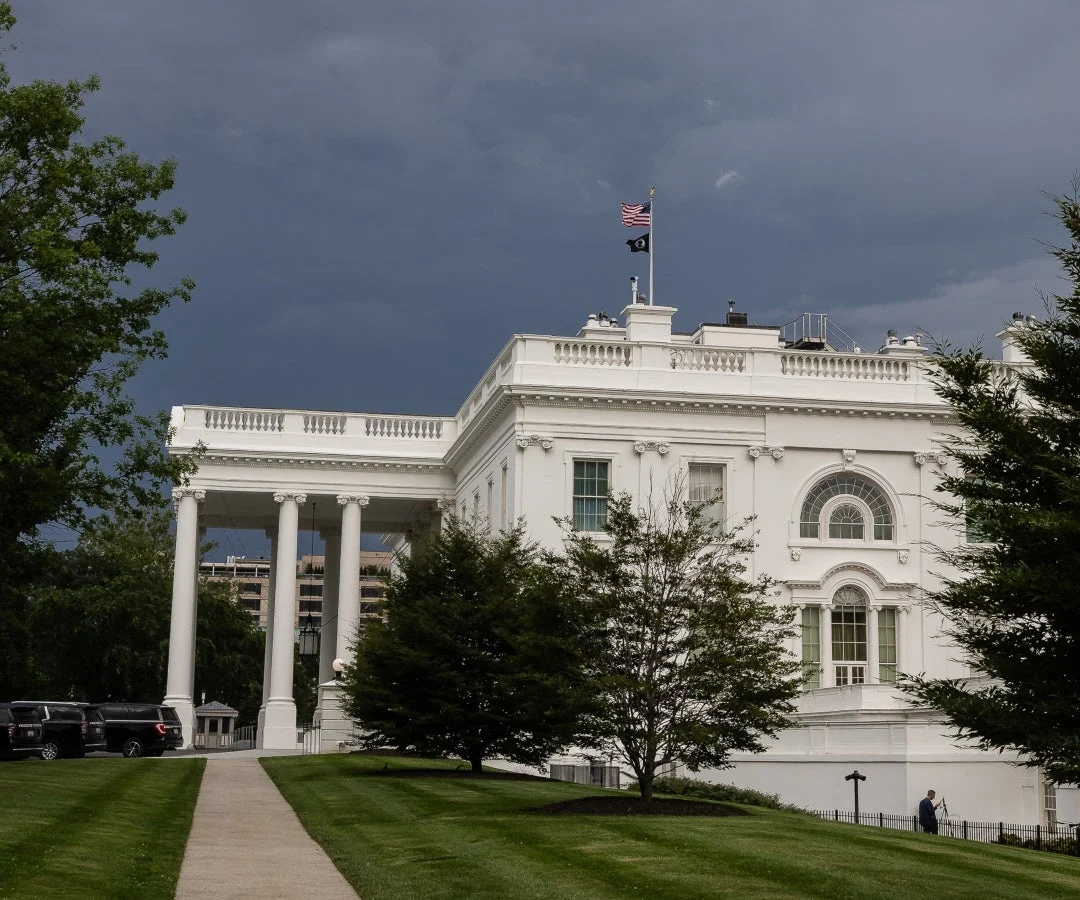
WASHINGTON — Deep within the West Wing, a contingency operation has been quietly underway for months. As the 2027 political horizon approaches, senior aides to President Donald Trump are engineering a sweeping series of executive actions designed to safeguard the administration’s core agenda should Democrats flip control of Congress in the upcoming midterm elections.
While public-facing messaging from the administration remains aggressively optimistic, internal strategy sessions reveal a profound recognition of political vulnerability. According to one senior White House official and two other individuals with direct knowledge of the plans who spoke under condition of anonymity, the administration is preparing to govern largely by decree if legislative channels slam shut.
The stakes are high. A shift in congressional power would fundamentally alter the balance of Washington politics, granting Democrats the authority to launch aggressive investigations, block stalled legislation, and stifle presidential spending priorities. Yet, rather than bracing for political paralysis, the White House is leaning heavily into the vast unilateral powers afforded to the executive branch—a playbook Trump has already tested extensively during his second term.
Main Facts
The core of the White House strategy centers on leveraging executive orders, administrative rule-making, and existing federal funding streams to enact policy without congressional sign-off. High-ranking officials—including Deputy Chief of Staff Stephen Miller, Budget Director Russell Vought, and White House Counsel Will Scharf—have been collaborating since April to map out the legal limits of presidential authority.
The primary targets for executive maneuvering include:
- Immigration: Implementing stricter rules on international student visas and temporary foreign workers, alongside heightened border enforcement mechanisms.
- Trade: Imposing targeted tariffs on critical imports, such as critical minerals and wind turbines, bypassing the need for statutory trade bills.
- Domestic Economy: Utilizing executive measures aimed at curbing housing and construction costs.
- Federal Spending: Repurposing already-allocated funds and rewriting federal grant regulations to give political appointees tighter control over how taxpayer dollars are distributed.
If Democrats secure the net four seats needed in both the House of Representatives and the Senate to overturn the current narrow Republican majorities (218–214 and 53–47, respectively), Trump’s ability to pass new laws will vanish. However, as one source familiar with the internal discussions bluntly noted when asked how comfortable the president would be governing via executive fiat under a hostile Congress: "Very comfortable."
Chronology of the Contingency Plan
The path toward a unilateral governing strategy has evolved in distinct phases over the course of the current presidential term:
- January 2025: President Trump is sworn in for his second term, immediately testing the outer limits of executive power by implementing sweeping tariffs, tightening immigration enforcement, trimming the federal workforce, and pursuing aggressive foreign policy goals—including military actions against Iran—without new legislation.
- July 2025: A rare moment of legislative unity occurs as a Republican-controlled Congress passes, and Trump signs, a massive tax-cut and spending package. This remains the primary legislative achievement of the administration’s second term.
- April 2026: Recognizing shifting political winds and tightening poll numbers, senior officials—spearheaded by Stephen Miller and Russell Vought—initiate covert planning with the White House Counsel’s Office to identify policies that can survive without congressional approval.
- Summer 2026: Federal agencies submit comprehensive legal analyses and proposals outlining unilateral actions. White House Counsel Will Scharf’s team begins stress-testing these proposals against potential judicial challenges.
- Fall 2026: President Trump maintains a relentless public schedule of rallies across the country to rally the base and protect the Republican legislative majority, even as his internal legal and policy teams finalize the 2027 executive defense blueprint. Concurrently, agency heads and political appointees are briefed on how to handle potential congressional subpoenas, document requests, and executive privilege claims.
Supporting Data and Political Landscape
The urgency of the White House’s contingency planning is underscored by current electoral metrics and independent political analysis.
- The Math: Republicans hold a paper-thin margin in the House (218 to 214) and the Senate (53 to 47). Democrats require a net gain of just four seats in each chamber to claim legislative majorities.
- Polling Realities: Current public opinion surveys favor Democratic pickups in the House of Representatives, while the battle for the Senate remains a statistical toss-up.
- Historical Precedent:
"President Trump, over the last two years, basically has ignored Congress and tried to do everything possible through executive orders and executive power," said Nathan Gonzales, editor of the non-partisan political analysis publication Inside Elections. "I think he will only continue to do that if there are Democratic majorities."
To sustain executive actions over legislative pushback, Trump has repeatedly invoked national emergencies. While Congress holds the constitutional power to vote to terminate these emergency declarations, doing so requires passing a resolution that the president would inevitably veto. Overturning a presidential veto demands a two-thirds supermajority in both chambers—a threshold virtually impossible to reach in a polarized Washington.
Furthermore, budget guru Russell Vought has focused heavily on the Office of Management and Budget (OMB). By restructuring rules governing federal grants, the administration aims to bypass traditional bureaucratic allocation processes, funneling funds directly into preferred programs using discretionary authorities embedded within previously approved budgets.
Official Responses
Publicly, the administration rejects the premise that Republicans are facing an impending electoral wave, dismissing media projections as partisan narratives designed to demoralize the conservative base.
"This Administration and common-sense Republicans will continue protecting our borders, restoring law and order, putting more money back into the pockets of hardworking Americans, and delivering victories for the American people," stated White House spokesperson Lauren Bis.
Behind closed doors, however, the administration is treating the prospect of a Democratic Congress as a near-certainty requiring robust legal fortifications. The White House Counsel’s office is actively preparing requests for formal legal opinions from the Department of Justice. These opinions are intended to establish a clear roadmap for what the president can execute unilaterally and how those directives can be defended when—not if—they face immediate challenges in federal courts.
Implications: The Inevitability of Oversight and Judicial Battles
While executive orders and emergency declarations can effectively freeze legislative opponents out of policy-making, they cannot insulate an administration from the most potent weapon a newly empowered congressional majority can wield: investigative power.
The Threat of Congressional Inquiries
Reuters has previously reported that senior House Democrats and committee staffers have already mapped out a rigorous investigative calendar. Should they take the gavel, Democrats plan to deploy hearings, subpoenas, and sweeping document requests to scrutinize whether President Trump has utilized executive authority for personal, political, or financial enrichment benefitting his family, allies, and major donors.
The White House is preparing for this onslaught with military precision:
- Document Hygiene: Agency heads and political appointees have been explicitly advised by White House lawyers to exercise extreme caution regarding what they put in writing.
- Privilege Defense: Legal teams have requested DOJ guidance to weaponize executive privilege, aiming to shield internal communications between the president and private advisors from congressional eyes.
- Witness Preparation: Seminars and briefings are being conducted across federal agencies to train personnel on how to stonewall or legally manage congressional oversight demands.
The Judicial Bottleneck
Ultimately, the battleground will shift decisively to the judiciary. If Democrats capture Congress, the legislative branch will essentially be reduced to a defensive roadblock—capable of confirming or denying judicial and executive nominees (including potential Supreme Court vacancies), but largely powerless to pass proactive laws.
As Andrew Busch, a professor of public policy at the University of Tennessee, Knoxville, notes regarding future nominations: "I anticipate that they will prove very reluctant to approve any of the president’s appointments."
With the legislative branch deadlocked and the courts serving as the ultimate arbiter, Donald Trump’s second term appears destined for a high-stakes constitutional stress test. By weaponizing the bureaucracy, tightening the grip on federal spending, and pushing executive authority to its absolute legal breaking point, the White House is signaling that a hostile Congress will not halt its march—it will merely change the battlefield.