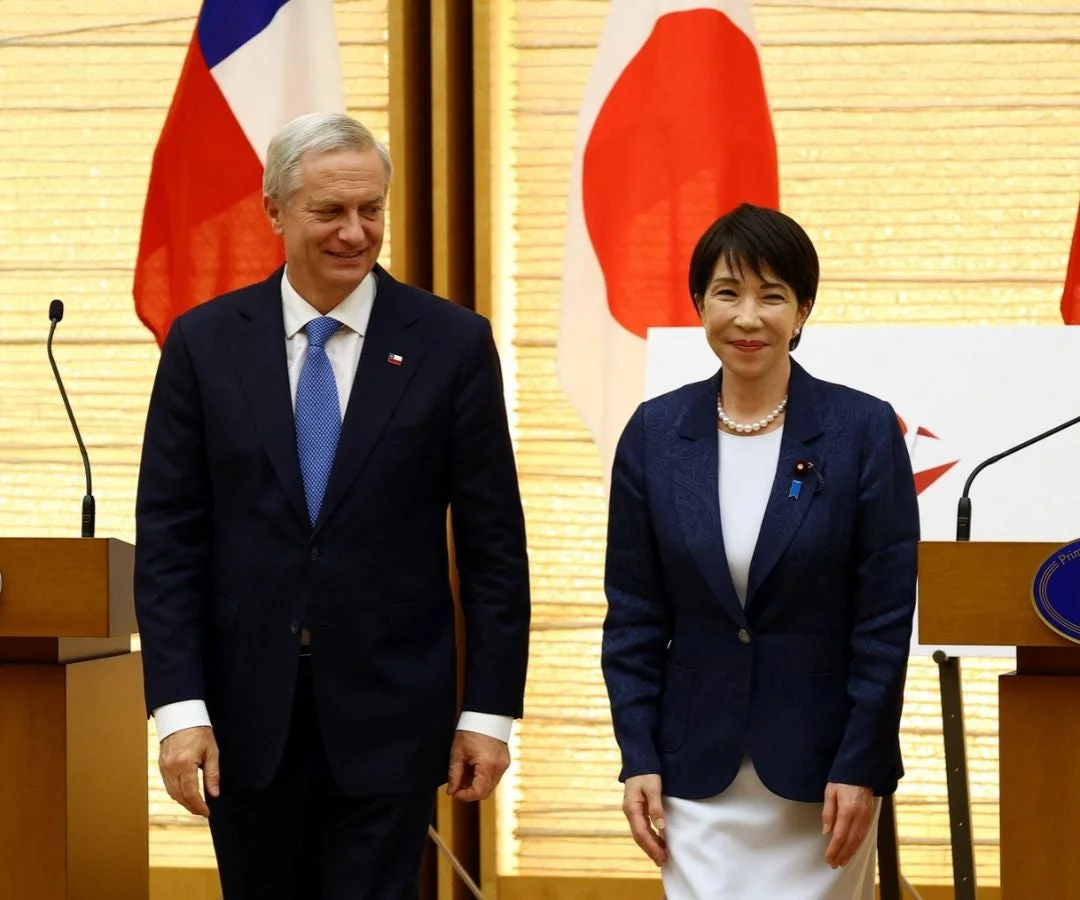
TOKYO — In a decisive move to anchor their positions in the rapidly evolving global green economy, Chile and Japan have committed to deepening their bilateral cooperation in critical minerals, technology, and sustainable development. The agreement was cemented during a high-profile official visit to Tokyo, where Chilean leadership met with Japanese counterparts to establish a robust framework addressing the vulnerabilities of international supply chains.
The partnership underscores Chile’s indispensable role as a global mining powerhouse—holding the position of the world’s leading copper producer and second-largest lithium producer—and Japan’s insatiable demand for advanced industrial inputs required for electric vehicles (EVs) and cutting-edge renewable energy storage systems.
Main Facts
The cornerstone of the newly forged diplomatic and economic understanding is a mutual pledge to guarantee resilience, consistency, and stability in global supply chains for critical raw materials.
- The Core Minerals: Chile remains the world’s undisputed titan in copper extraction and a dominant force in lithium production. Both elements are classified globally as critical minerals, serving as the literal foundations for the transition toward electro-mobility and grid-scale energy storage, including Battery Energy Storage Systems (BESS).
- High-Level Diplomacy: The agreements were formalized following a strategic summit between Chilean leadership and Japanese Prime Minister Sanae Takaichi.
- Multisectoral Cooperation: Beyond mining and critical minerals, the nations signed a comprehensive suite of bilateral documents spanning disaster prevention, astronomical research, science and technology, environmental protection, cultural exchange, and defense.
- Technological Integration: As a tangible demonstration of this partnership, the two nations highlighted an ongoing pilot project at Codelco’s historic El Teniente copper mine. The initiative utilizes cutting-edge Japanese optical communication technology—specifically the Innovative Optical and Wireless Network All-Photonics Network (IOWN APN)—to optimize underground mining operations.
- Trade and Economics: Both governments reaffirmed their staunch commitment to maintaining an open, rules-based international economic order and signed an additional memorandum of cooperation concerning Information and Communication Technologies (ICT).
Chronology of the Diplomatic Engagement
The path toward this landmark economic and technological pact has been marked by a series of deliberate diplomatic milestones, culminating in the recent summit in Tokyo.
Months Prior: Technological Groundwork
Long before the official leaders’ summit, technical teams from both nations laid the groundwork for industrial integration. In August, Codelco—the world’s largest state-owned copper producer—quietly initiated a high-stakes technological trial at its subterranean El Teniente deposit. By introducing Japan’s pioneering IOWN APN photonic network architecture, the mine began testing ultra-low latency, high-capacity communication systems capable of withstanding the immense operational and geographic challenges of deep-earth extraction. This technological bridge served as both proof of concept and a political signal that Chile and Japan were ready to move beyond traditional trade into deep industrial co-development.
Friday: The Official Summit and Joint Declarations
The official visit reached its zenith on Friday when the Chilean delegation touched down for formal state talks with Prime Minister Sanae Takaichi. The closed-door meetings focused heavily on the geopolitical fragilities exposed by recent global supply chain disruptions, post-pandemic manufacturing bottlenecks, and the geopolitical tug-of-war over energy-transition metals.
Following the bilateral discussions, the leaders stepped before the press corps to announce the finalized treaties. The Chilean head of state explicitly framed the agreement as a stabilizing force for international commerce: "We commit to strengthening cooperation in critical minerals, including copper, to provide consistency and stability to global supply chains."
Immediate Post-Summit: Signing of Memorandums
Following the press conference, ministerial delegates executed a series of formal memorandums of understanding (MoUs). These documents detailed actionable frameworks for disaster risk reduction—a shared vulnerability for two nations situated along active seismic belts—as well as joint initiatives in astronomical observation, environmental policy, and ICT modernization. The day concluded with joint statements defending free-market principles and multilateral trade architectures.
Supporting Data: The Pillars of Chilean-Japanese Commerce
To understand the weight of the agreements signed in Tokyo, one must examine the fundamental economic metrics that bind Santiago and Tokyo together.
The Mineral Superpower: Copper and Lithium
Chile’s geological endowment is unrivaled in two specific sectors crucial for the 21st-century industrial revolution:
- Copper: Chile produces roughly 24% to 27% of the global copper supply annually, amounting to over 5 million metric tons per year. Copper is the indispensable conductor for electrical grids, charging infrastructure, wiring, and motor windings.
- Lithium: As the second-largest global producer, Chile holds the world’s largest lithium reserves, primarily concentrated in the Salar de Atacama. Lithium-ion batteries remain the standard energy storage medium for EVs and portable electronics.
+-------------------------------------------------------------+
|               CHILEAN GLOBAL MINERAL RANKINGS               |
+--------------------------------------+----------------------+
| Mineral                              | Global Position      |
+--------------------------------------+----------------------+
| Copper (Production)                  | 1st Worldwide        |
| Lithium (Production)                 | 2nd Worldwide        |
| Lithium (Reserves)                   | 1st Worldwide        |
+--------------------------------------+----------------------+
Technological Synergy: The IOWN APN Project at El Teniente
The deployment of Japan’s IOWN APN technology at El Teniente is more than a commercial sale; it is a profound technological integration. Traditional communication networks struggle with the electromagnetic interference, dust, and physical rock displacement inherent in block-caving copper mines. The Japanese photonic network utilizes light-based wave transmission rather than traditional electronics, offering massive bandwidth with a fraction of the power consumption. This allows real-time automation of heavy machinery, remote-controlled drilling, and heightened safety monitoring thousands of meters underground.
Official Responses and Statements
The diplomatic rhetoric surrounding the summit reflected a high degree of mutual trust and a shared vision for multilateral economic stability.
The Chilean Perspective
Speaking directly to journalists in Tokyo, the Chilean leader emphasized the proactive nature of the partnership.
"We commit to strengthening cooperation in critical minerals, including copper, to aportar consistencia y estabilidad a las cadenas de suministro globales," the president stated, framing the South American nation not merely as an exporter of raw dirt, but as a reliable, strategic partner in global energy security.
Furthermore, official briefing documents released by the Chilean delegation stressed that the bilateral framework respects international trade laws:
"This cooperation will contribute to the resilience and stability of global supply chains, ensuring that commercial measures are coherent with relevant international agreements."
The Japanese Perspective
Prime Minister Sanae Takaichi’s administration welcomed the renewed partnership, viewing resource security as a top-tier national security priority. For resource-poor Japan, securing stable, long-term access to copper and lithium through transparent, democratic trade partners is vital for maintaining the global competitiveness of its automotive and electronics giants (such as Toyota, Honda, Sony, and Panasonic). Japanese trade officials noted that the integration of ICT, disaster management, and advanced mining tech creates a virtuous cycle of investment that benefits both economies.
Implications for Global Markets and Geopolitics
The deepening alliance between Chile and Japan carries profound implications that ripple far beyond their respective borders, touching upon international trade dynamics, the global energy transition, and great power competition.
1. Hedging Against Supply Chain Weaponization
In an era where critical minerals are increasingly weaponized through export quotas, tariffs, and geopolitical posturing, the Chile-Japan accord offers a blueprint for reliable trade corridors. By committing to rules-based, transparent markets, both nations are pushing back against protectionist trends and resource nationalism. For Japan, partnering with Chile diversifies its mineral sourcing away from over-concentrated monopolies. For Chile, aligning with a high-tech industrial giant like Japan ensures stable, high-value demand that transcends raw commodity price volatility.
2. Accelerating the Global Energy Transition
The green transition cannot happen without hardware, and hardware cannot exist without raw materials. Electric vehicle adoption curves, wind turbine installations, and utility-scale battery banks all depend on the steady flow of Chilean copper and lithium processed to exacting industrial standards. By combining Chilean raw material extraction with Japanese manufacturing prowess and technological innovation (such as the IOWN APN photonic networks), the partnership removes operational bottlenecks that could otherwise delay global decarbonization goals.
3. A Model for South-North Technological Cooperation
The collaboration at El Teniente serves as a compelling case study for how developing economies rich in natural resources can partner with advanced technological nations without falling into traditional neo-colonial resource traps. By demanding and integrating state-of-the-art Japanese communication infrastructure directly into state-owned mining operations, Chile is modernizing its domestic industrial base while boosting productivity, safety, and environmental sustainability.
4. Broadening Horizons: Beyond Minerals
While critical minerals dominated the headlines, the wide-ranging scope of the signed documents—covering astronomy, disaster prevention, and environmental science—ensures that the bilateral relationship is diversified and resilient. Astronomical cooperation, leveraging Chile’s pristine northern skies (home to some of the world’s most advanced telescopes), and disaster mitigation research capitalize on both nations’ unique geographical realities, forging a holistic partnership built for the challenges of the 21st century.
As these agreements transition from diplomatic parchment into on-the-ground industrial reality, Chile and Japan have positioned themselves at the vanguard of a changing global economy—proving that resource security and technological innovation are deeply intertwined.