Medellín, Colombia — For years, the "City of Eternal Spring" has wrestled with a paradox. Nestled within a steep Andean valley that traps industrial emissions, vehicular exhaust, and particulate matter, Medellín frequently registers some of the most alarming air quality indices in South America. The geography that gives the city its breathtaking landscape also acts as an atmospheric lid, preventing pollutants from dispersing easily.
However, a groundbreaking scientific study is pointing toward an unexpected, homegrown savior: the city’s urban canopy, and more specifically, the humble mango tree (Mangifera indica).
A collaborative investigation conducted by the University of Antioquia (UdeA) and the Colegio Mayor de Antioquia has uncovered a hidden ecosystem living on the surface of urban tree leaves. For the first time, researchers have identified specific bacterial communities capable of degrading atmospheric pollutants. This discovery opens the door to an entirely novel, nature-based approach to urban environmental health: deploying plant-microorganism partnerships to clean the air we breathe.
Main Facts: A Microscopic Workforce on Urban Leaves
At the heart of this discovery is a shift in how scientists view urban flora. Trees are traditionally valued for their ability to absorb carbon dioxide and physically intercept particulate matter on their waxy surfaces. But this new research reveals that leaves are not passive filters; they are bustling biological reactors.
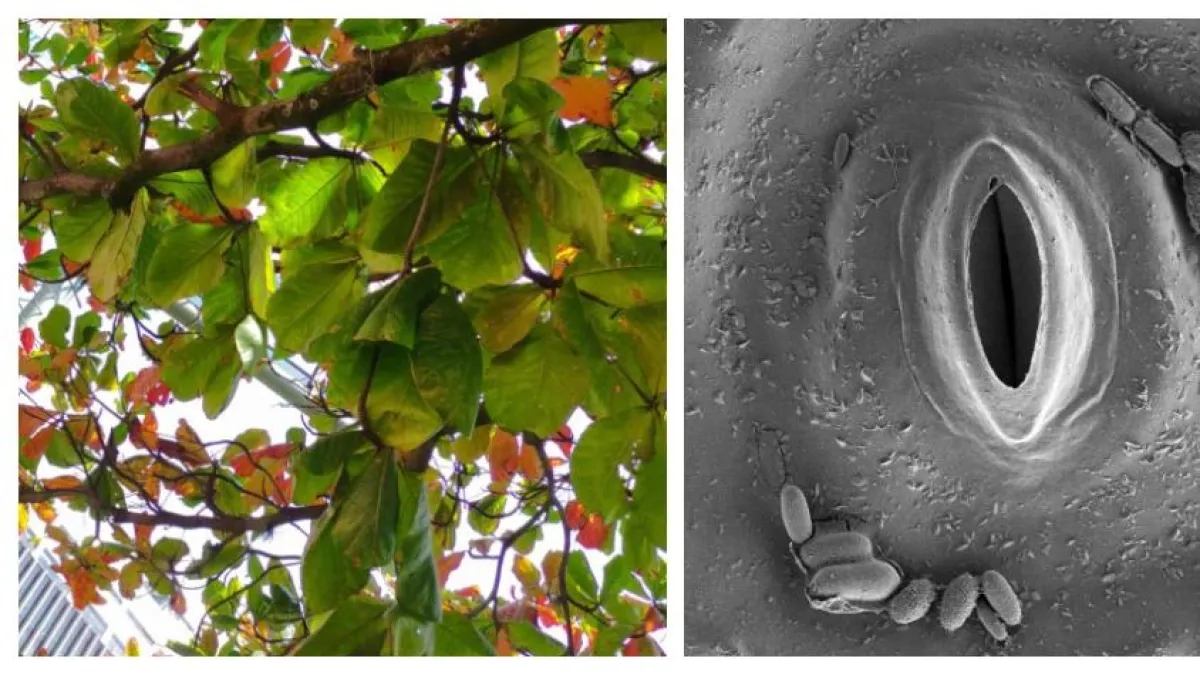
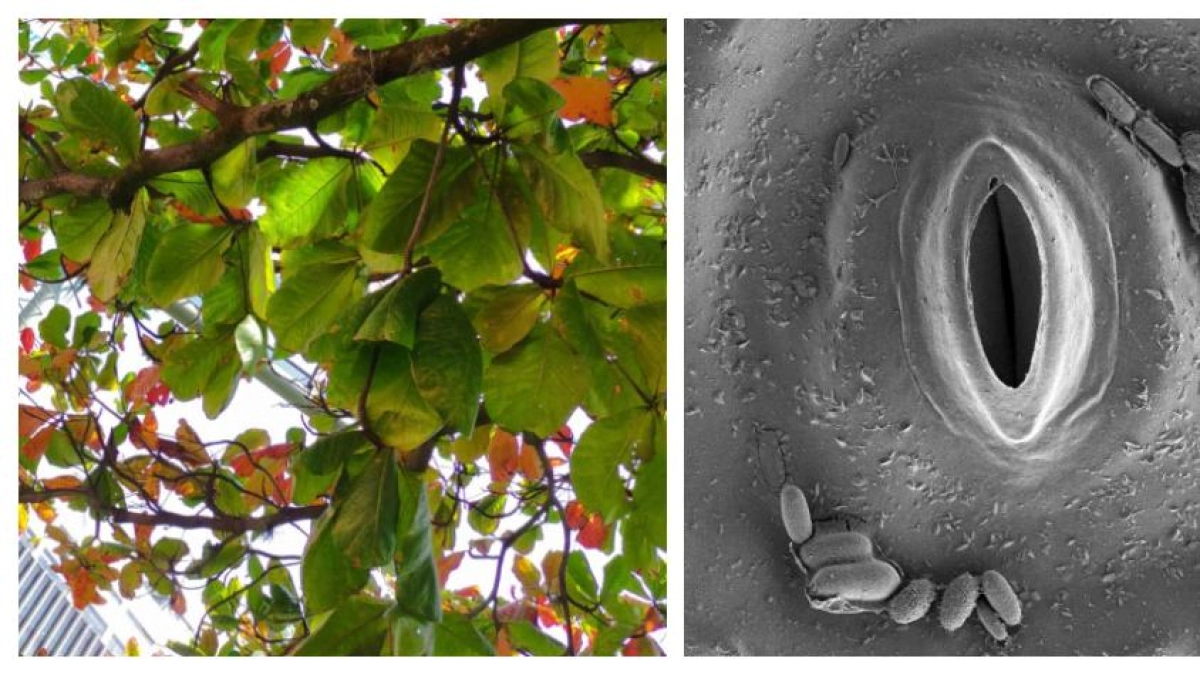
The project, formally titled "Evaluation of an Environmental Health Strategy Based on Plant-Microorganism Association for the Removal of Air Pollutants," zeroed in on the phyllosphere—the microscopic environment of the leaf surface. Researchers found that colonies of bacteria thrive right around the stomotas (the microscopic pores used for gas exchange), creating biological hotspots.
Through rigorous fieldwork and advanced DNA sequencing, the research team identified four recurring bacterial genera residing on the leaves:
Methylobacterium
Deinococcus
Hymenobacter
Sphingomonas
These microorganisms do not just hitch a ride on the foliage; laboratory analyses suggest they possess metabolic pathways capable of breaking down volatile organic compounds and other airborne pollutants. In essence, Medellín’s trees are hosting a dedicated microscopic cleanup crew right on their surfaces.
Chronology: From Fieldwork to Breakthroughs
The path to this discovery required years of meticulous interdisciplinary effort, bringing together engineering, microbiology, and environmental monitoring.
2023–2025 (Data Collection Phase): Over a two-year span, the research team collected leaf samples across five strategic, high-pollution zones in Medellín during five distinct climatic periods. This ensured that the captured data accounted for seasonal shifts in the city’s air quality.
Laboratory Analysis and Sequencing: Using surface washes and DNA sequencing techniques in state-of-the-art university laboratories, scientists isolated and mapped the genetic material of the microorganisms inhabiting the leaves.
Species Comparison: The team evaluated three distinct plant species: the mango tree (Mangifera indica), the tropical almond (Terminalia catappa), and an ornamental vine (Thunbergia grandiflora). While the vine was initially hypothesized to perform well due to its heavy usage on urban transport corridors, the mango tree consistently outperformed the others, driven by its high natural tolerance to pollution and superior capacity for retaining heavy metals.
Publication: The team’s primary findings were peer-reviewed and published in the prestigious international scientific journal PLOS One, validating the rigor of the methodology on a global stage.
Current Phase (Inoculation and Verification): Researchers are currently conducting controlled experiments involving the direct inoculation of these beneficial bacteria onto mango leaves. The goal is to verify and optimize their pollutant-degradation efficiency in real-world conditions without disrupting the local ecosystem’s delicate balance.
Supporting Data: The Anatomy of Medellín’s Air Crisis
To understand the weight of this scientific breakthrough, one must look closely at the environmental pressures facing Medellín and the broader Aburrá Valley.
+-------------------------------------------------------------------------+
|                  MEDELLÍN’S AIR QUALITY CHALLENGE                       |
+-------------------------------------------------------------------------+
|  Geographic Trap:   Steep Andean valley walls prevent wind circulation  |
|                     and natural pollutant dispersion.                   |
+-------------------------------------------------------------------------+
|  Demographic Load:  A metropolitan area housing close to 4 million      |
|                     residents with high vehicle and industrial density. |
+-------------------------------------------------------------------------+
|  Primary Threat:    Accumulation of PM2.5 (Fine Particulate Matter)     |
|                     capable of penetrating deep into human lungs.       |
+-------------------------------------------------------------------------+
|  Monitoring Net:    SIATA manages 20 real-time stations across the      |
|                     Aburrá Valley to track atmospheric conditions.      |
+-------------------------------------------------------------------------+
The city’s topography acts as a literal bowl. Combined with a densely packed metropolitan population of nearly four million people, vehicular fleets, and industrial output, pollutants like PM2.5 frequently linger over the urban grid. These microscopic particles are small enough to pass through the lungs into the bloodstream, posing severe health risks.
According to health metrics, prolonged exposure disproportionately affects vulnerable populations: children under five, older adults, and individuals with chronic respiratory or cardiac conditions. Monitoring this invisible threat is the Aburrá Valley Early Warning System (SIATA), which relies on a network of 20 high-tech monitoring stations scattered across the territory to issue timely environmental alerts.
Official Responses: Interdisciplinary Collaboration
The success of this project lies in the synergy between multiple academic institutions in Antioquia, proving that regional universities can spearhead cutting-edge solutions to localized crises.
The research was coordinated by the GDCON research group from the Faculty of Engineering at the University of Antioquia (UdeA). They joined forces with:
The Health and Sustainability Group from UdeA’s School of Microbiology.
The Environmental Monitoring Laboratory (G-Lima).
The Biosciences Research Group from the Colegio Mayor de Antioquia.
Luisa María Múnera Porras, a researcher tied to the School of Microbiology, has spent years peering through microscope lenses to understand the microscopic universe hiding on everyday foliage.
"I see a world," Múnera Porras noted in an institutional article published by the University of Antioquia, describing her view of the leaf surface. "What we know in biology as a holobionte: a host with a multitude of guests."
This perspective—shifting the focus from isolated botany to complex ecological partnerships—has fundamentally changed how local scientists approach urban planning and environmental mitigation. Rather than viewing plants merely as aesthetic green spaces, experts now view them as dynamic bio-filters.
Implications: The Future of Bioremediation in Urban Planning
The implications of the UdeA and Colegio Mayor study extend far beyond the borders of Medellín. As global climate change intensifies urban heat islands and air pollution chokes mega-cities worldwide, traditional mechanical air-filtering solutions remain prohibitively expensive and energy-intensive.
By contrast, harnessing natural bio-systems—a concept known as bioremediation—offers a sustainable, self-replicating, and cost-effective alternative.
1. Redefining Urban Forestry
Urban planners have historically selected trees based on shade provision, aesthetic value, or root system safety. This study suggests a new metric for municipal forestry: the density and capability of the tree’s phyllosphere microbiome. Species like the mango tree, already well-adapted to tropical urban environments and deeply rooted in local culture, could be strategically planted in high-traffic corridors to maximize pollution-degrading bacteria colonies.
2. Policy and Scalability
Local governments within the Aburrá Valley could integrate these findings into future environmental master plans. By intentionally cultivating and protecting these specific microbial communities—perhaps through targeted bio-fertilization or restrictions on harsh chemical leaf-washes by municipal cleaning crews—cities could artificially boost their natural air-cleaning capacity.
3. A Blueprint for Other Cities
Cities facing similar topographical challenges—such as Santiago de Chile, Mexico City, or Los Angeles—could adapt this methodology to identify their own native flora and associated microflora. The discovery proves that nature often provides the blueprint for its own healing; humanity’s role is simply to observe, understand, and assist.
As the research team moves forward with field inoculation trials, Medellín stands at the vanguard of a quiet revolution. Beneath the shade of the city’s mango trees, an invisible army of bacteria is working overtime, offering a breath of fresh air to a valley that needs it more than ever.
By Edwin Caicedo Environment and Health Journalist Updated: September 18, 2026 To human eyes, the domestic cat often appears to be the ultimate embodiment of leisure. Curled in a sunbeam or sprawled across a living…
By Edwin Caicedo Environmental and Health Journalist September 16, 2026 Main Facts The relentless threat of climate variability, driven by recurring climatic anomalies such as the El Niño phenomenon, has placed Colombia’s energy matrix under…
By Pedro A. Sánchez Redacción Últimas Noticias Published: September 26, 2026 Main Facts Colombia is bracing for severe disruptions to its climate as meteorological authorities warn of the intensification of an unprecedented climate cycle. Prominent…