Main Facts: The Reality of Colombia’s Educational Performance
The recent release of the Programme for International Student Assessment (PISA) 2025 results has sent a wave of profound concern through Colombia’s educational sector and public sphere. Evaluated alongside peers from 91 participating nations and economies, Colombian 15-year-old students displayed an overall performance that experts have characterized as a "bittersweet" pill. While the global standard for educational proficiency continues to rise, Colombia’s structural learning gaps remain wide, exposing critical vulnerabilities in how the nation prepares its youth for the complexities of the modern world.
The core of the alarm lies in a stark reality: despite a minor, localized improvement in the domain of Science, Colombia continues to lag significantly behind the average of the Organisation for Economic Co-operation and Development (OECD) across all three core competencies: Reading, Mathematics, and Science. Most troubling is the revelation that in Science—the nation’s relative strong suit in this evaluation cycle—one out of every two Colombian students fails to reach the baseline level of minimum proficiency expected for their age.
To help the public understand the nature of this crisis, the OECD has released sample questions from the official 2025 assessment. These are not arcane exercises in memorization, but practical challenges designed to measure critical thinking, problem-solving, and the real-world application of scientific principles.
Chronology: How the PISA 2025 Evaluation Unfolded
The rollout and subsequent analysis of the PISA 2025 results followed a meticulously structured international timeline, setting off alarm bells across government ministries, academic institutions, and households:
Early 2025 / Late 2024 (Preparation and Testing Phase): Thousands of 15-year-old students across Colombia were selected and tested under standardized OECD guidelines. Unlike traditional school exams, these tests were administered digitally and focused entirely on competence rather than rote curriculum retention.
September 2026 (Global Release): The OECD officially published the international database and comparative reports for PISA 2025, expanding the scope to over 90 countries and highlighting post-pandemic educational trajectories.
Mid-September 2026 (Domestic Reaction and Deep Dives): Colombian educational authorities, think tanks, and media outlets began dissecting the microdata. Analysts quickly pointed out that the decline in reading and mathematics was compounded by growing inequality gaps between privileged and vulnerable student populations.
Late September 2026 (Public Engagement): Recognizing a growing disconnect between public perception and educational metrics, major publications began utilizing real PISA science blocks—ranging from fast fashion sustainability to marine wind farms—to challenge the adult population and demonstrate the rigorous nature of what is expected of contemporary teenagers.
Supporting Data: Breaking Down the Numbers
The PISA 2025 metrics provide a sobering look at systemic educational challenges in Colombia. While raw scores often obscure the human element, the statistical breakdown offers crucial insights into the scale of the learning crisis:
The Competency Gap: Colombia’s average scores in Reading and Mathematics both experienced noticeable regressions compared to previous cycles, pulling the country further below the OECD baseline average.
The Science Paradox: Although Science showed a fractional upward tick—making it Colombia’s best-performing area relatively—the distribution of success remains deeply skewed. Half of all tested students fall into "Level 1" or below, meaning they can only identify obvious scientific facts in familiar contexts but cannot use scientific reasoning to explain complex phenomena.
Socioeconomic Disparities: Sub-analyses of the 2025 data revealed a complex phenomenon where performance drops among certain groups of favored students were paired with persistent structural deficits among vulnerable populations, complicating simplistic narratives about educational equity in urban centers like Bogotá versus rural territories.
Official Responses and Expert Reactions
The response from academic leaders, policymakers, and international observers has been swift, calling for a radical re-evaluation of national curricula.
Education ministers and independent analysts agree that the problem is no longer merely about school attendance or infrastructure—though significant deficits remain in rural areas—but rather about the quality and depth of instruction. Experts emphasize that traditional pedagogical models, which prioritize memorizing dates, formulas, and definitions, are completely misaligned with what international evaluations demand.
"PISA does not ask our children what they memorized on a Tuesday morning," noted one prominent educational researcher. "It asks them if they can look at a graphical representation of biodiversity loss, analyze a coastal wind turbine project, or deduce the chemical impacts of cotton production. When our students fail, it tells us our classrooms are teaching for yesterday’s world, not tomorrow’s."
Furthermore, teachers’ unions and pedagogical institutes have called for greater investment in teacher training, arguing that educators themselves need continuous support to transition from traditional lecturing to inquiry-based, problem-solving methodologies.
Implications for Colombia’s Future
The implications of the PISA 2025 results extend far beyond academic rankings and political debates; they directly threaten Colombia’s long-term economic competitiveness and social mobility.
1. Workforce Preparedness in a Globalized Economy
As global industries transition toward green technologies, data analytics, and advanced manufacturing, the demand for high-level critical thinking is surging. If 50% of young Colombians cannot master baseline scientific reasoning, the country risks falling behind in the knowledge economy, struggling to attract high-tech foreign investment or foster homegrown innovation.
2. The Urgency of Curricular Reform
The test results serve as an urgent mandate for the Ministry of National Education to accelerate structural reforms. Memorization-heavy testing must be phased out nationwide in favor of analytical assessments that mirror international standards. Curricula must integrate cross-cutting themes—such as environmental sustainability, digital literacy, and data interpretation—directly into daily lessons.
3. Bridging the Regional and Social Divide
Averaged national statistics often mask profound regional inequalities. While cities like Bogotá often show relatively stable or satisfactory localized outcomes, rural departments frequently suffer from severe resource scarcity, lack of laboratory infrastructure, and high teacher turnover. Addressing the PISA deficit requires targeted, aggressive equity investments in the country’s most neglected classrooms.
Test Your Knowledge: Sample PISA Science Blocks
To bridge the gap between abstract data and lived reality, consider the following real themes and conceptual frameworks used in the PISA 2025 Science competency modules. How would you apply critical thinking to these contemporary dilemmas?
Block 1: Fast Fashion and Environmental Impact
The Context: Modern society grapples with the global ecological footprints left by garment manufacturing and textile disposal.
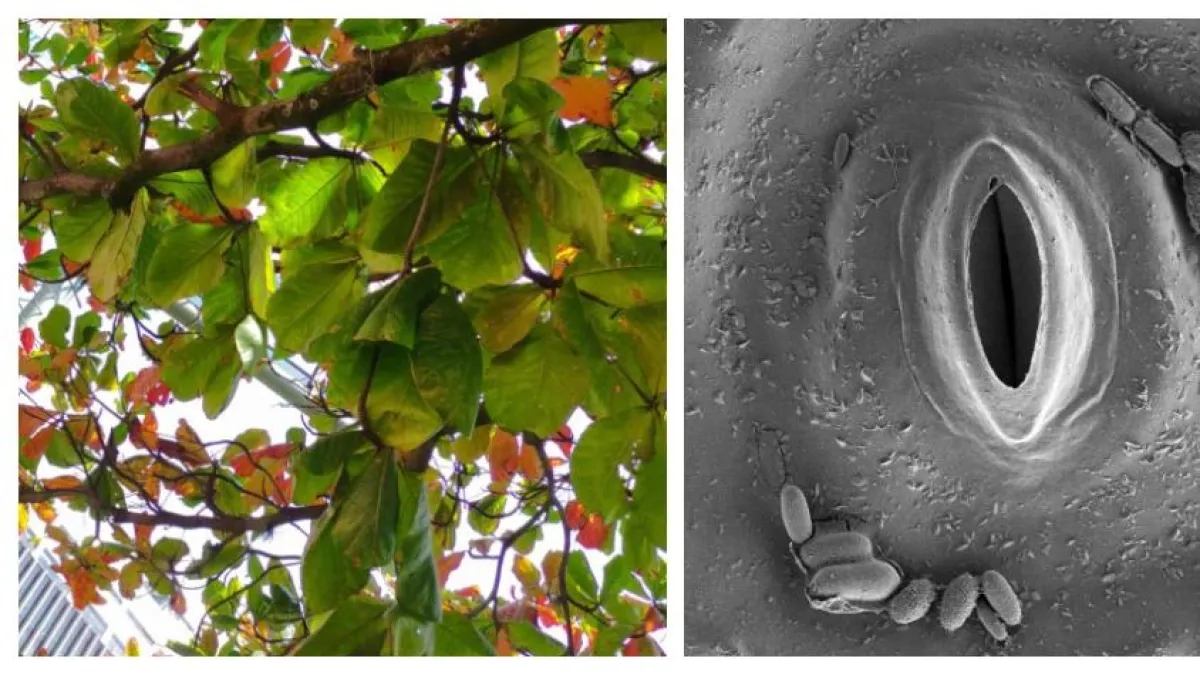
The Scientific Dilemma: Cotton fibers, derived from the outer layer of cotton plant seeds, require less intensive chemical processing than synthetic alternatives and are naturally biodegradable. However, conventional cotton agriculture demands massive amounts of water, synthetic fertilizers, and harmful pesticides.
The Challenge: Students are asked to weigh these competing environmental factors—biodegradability versus agricultural resource consumption—to evaluate sustainable production methods. Would your daily consumer choices reflect a scientific understanding of textile lifecycles?
Block 2: Biodiversity Loss
The Context: Biodiversity defines the rich variety of flora, fauna, and microorganisms inhabiting local and global ecosystems. Coral reefs, built by stony coral organisms and algae in shallow tropical waters, represent some of the densest and most diverse habitats on Earth.
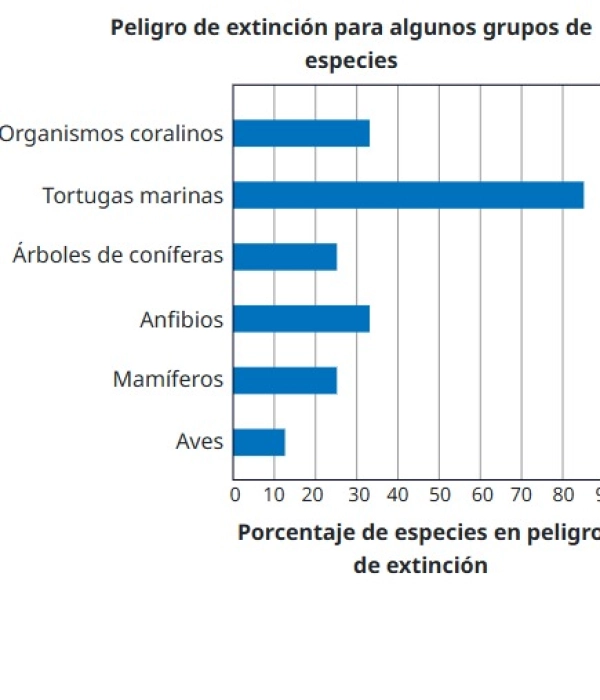
The Scientific Dilemma: Global biodiversity is under severe threat. PISA data typically presents complex infographics mapping the exact percentage of animal and plant species currently facing extinction risks in the wild.
The Challenge: Students must interpret statistical charts, extrapolate ecological trends, and deduce the cascading effects of coral reef degradation on broader marine life.
Block 3: Offshore Wind Turbine Parks
The Context: A coastal community debates the construction of an offshore wind turbine array to secure clean electricity.
The Scientific Dilemma: Kinetic energy from wind rotates turbine blades, converting mechanical energy into electrical energy that feeds directly into the terrestrial power grid. While clean energy advocates praise the reduction of carbon emissions, local critics raise concerns regarding potential disruptions to local marine and avian ecosystems.
The Challenge: Assessing energy infrastructure projects requires balancing technological benefits against environmental trade-offs using empirical evidence rather than emotional arguments.
Block 4: Lightning and Atmospheric Physics
The Context: Lightning represents a massive natural electrostatic discharge within Earth’s atmosphere, accompanied by thunder—the audible shockwave produced by the rapid thermal expansion of superheated air.
The Scientific Dilemma: Understanding atmospheric phenomena requires a firm grasp of thermodynamic principles, electromagnetic fields, and wave propagation.
The Challenge: Rather than reciting a dictionary definition, students must explain the causal chain linking electrical charge accumulation, atmospheric discharge, and acoustic perception.
Conclusion
The PISA 2025 results should not be viewed merely as an international embarrassment or a fleeting news headline, but as a diagnostic mirror for Colombia. The numbers confirm what many educators have long suspected: a profound disconnect exists between traditional schooling and the demands of analytical literacy. By confronting these sample questions—and acknowledging the deep learning deficits revealed across the country—society at large can begin to demand the structural changes necessary to equip the next generation with the tools they need to succeed.
Medellín, Colombia — For years, the "City of Eternal Spring" has wrestled with a paradox. Nestled within a steep Andean valley that traps industrial emissions, vehicular exhaust, and particulate matter, Medellín frequently registers some of…
BUENOS AIRES, ARGENTINA — Positioned as a cultural, gastronomic, and business hub in South America, the Colombian capital is making a formidable impression on the international stage. Led by the District Institute of Tourism (IDT),…
By Edwin Caicedo Environment and Health Journalist Updated: September 18, 2026 To human eyes, the domestic cat often appears to be the ultimate embodiment of leisure. Curled in a sunbeam or sprawled across a living…