By [Journalist Name/Connectas Contributor]
The seismic cultural shifts emanating from Seoul are no longer confined to music charts or streaming platforms. The recent, earth-shaking presence of BTS in Mexico City, followed by their headline performance at the 2026 FIFA World Cup, serves as the most potent manifestation yet of the "Hallyu" (Korean Wave)—a deliberate, state-backed cultural surge that is fundamentally reshaping how the world perceives South Korea, and more importantly, how it does business with it.
The Mexican Phenomenon: When Pop Culture Becomes a State Affair
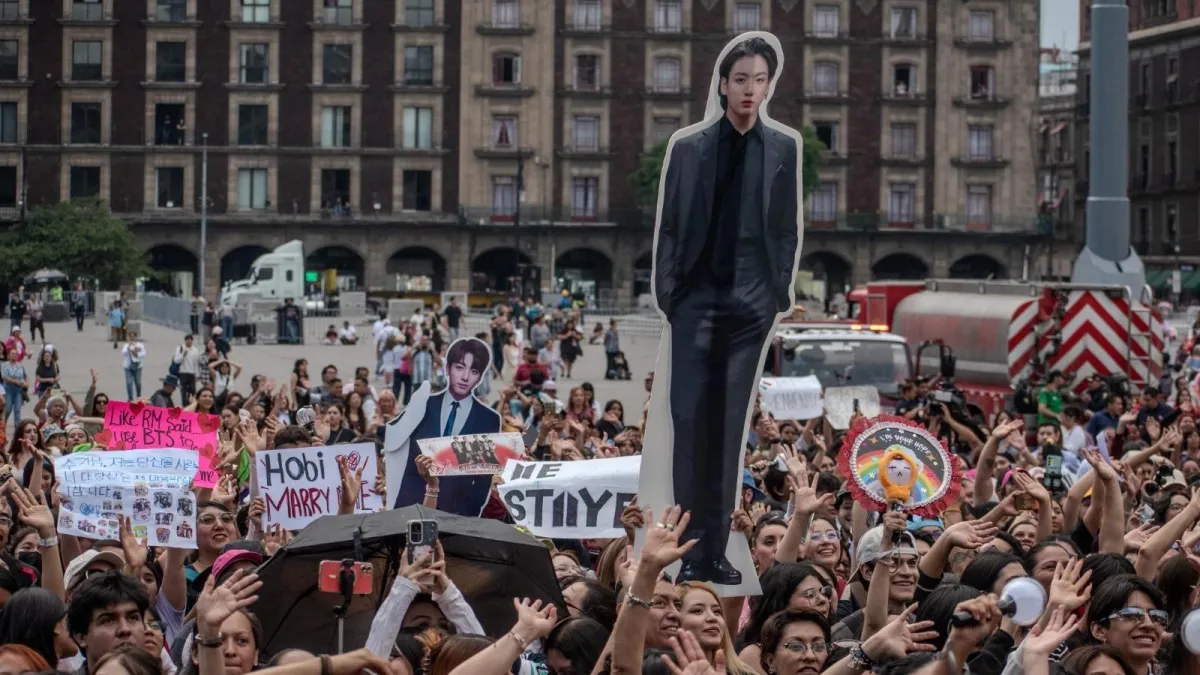
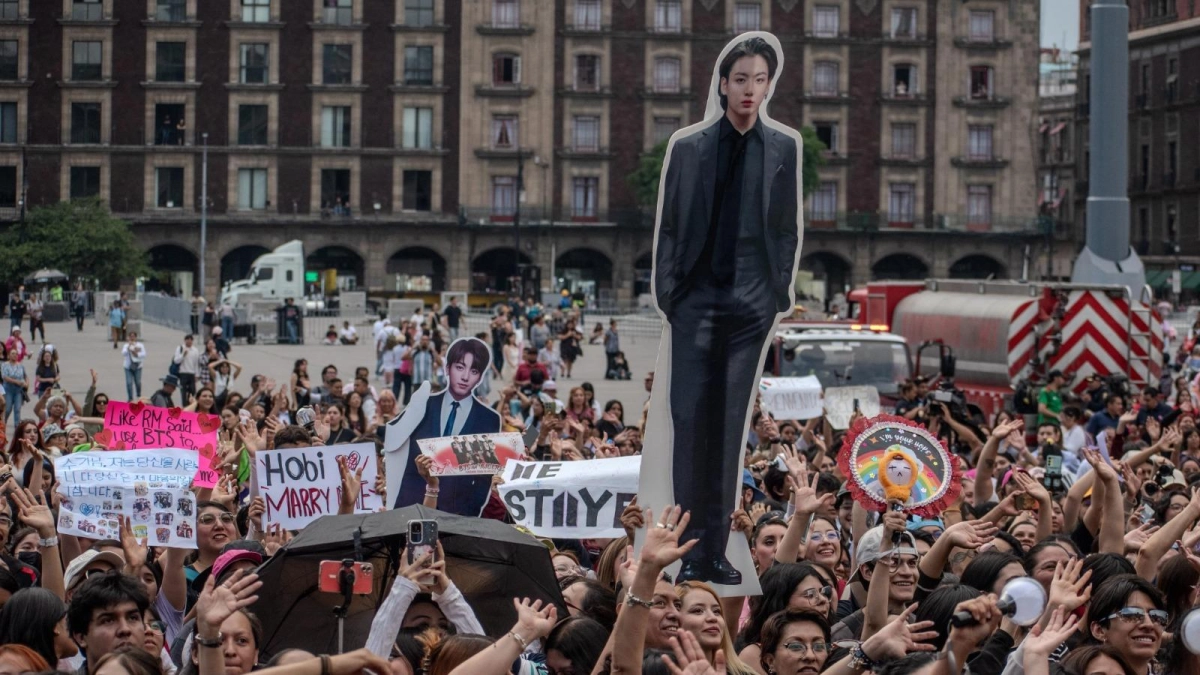
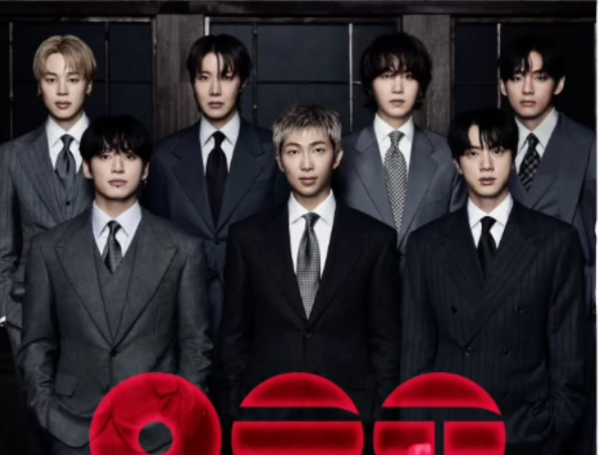
The scenes witnessed in Mexico City this past May were nothing short of historic. More than 50,000 devotees, part of the global "ARMY" (Adorable Representative M.C. for Youth), flooded the Zócalo, standing in the shadow of the National Palace to catch a glimpse of the seven members of BTS. The fervor only intensified as the week progressed; upwards of 70,000 fans gathered in the vicinity of a sold-out stadium, their collective cheers echoing the sounds of a band that has transcended the definition of musical stardom to become a geopolitical asset.
The logistics of their visit revealed the depth of this influence. When concert tickets vanished in under 40 minutes, the ensuing outcry on social media was so significant that it reached the highest levels of the Mexican government. In a move that observers remain divided on—viewing it as either a genuine gesture of empathy toward the fandom or a masterstroke of political optics—President Claudia Sheinbaum personally appealed to the South Korean government to secure additional performance dates. The result was a high-profile audience at the National Palace, where BTS met with the President, effectively cementing the band’s role as cultural ambassadors.
A Chronology of Soft Power Diplomacy
The narrative surrounding the band’s visit quickly shifted from entertainment to statecraft. The visit to President Sheinbaum was merely the catalyst for a broader diplomatic realignment. Within days of the final concert, a series of high-level meetings took place between Yeidckol Polevnsky, president of the Mexican Senate’s Asia-Pacific Foreign Relations Committee, and a high-ranking South Korean delegation led by Trade Minister Yeo Han-Koo and Ambassador Jooll Lee.
The objective was explicit: "to bolster collaboration across multiple sectors." The discussions encompassed critical industries including automotive manufacturing, electronics, energy, and advanced technology. According to a Senate communique, Mexico is already South Korea’s primary trading partner in Latin America and the tenth globally. President Sheinbaum, in a telephonic summit with her South Korean counterpart, Lee Jae Myung, emphasized the "excellent bilateral relationship and economic cooperation" between the nations. This momentum is set to accelerate in 2027, a year for which BTS has already hinted at a return to the country—a timeline that conveniently aligns with the negotiation of new free trade agreements.

The Economic Engine: From Post-War Ruin to Global Powerhouse
To understand the scale of the Hallyu phenomenon, one must look at the historical trajectory of South Korea. In his seminal work, South Korea and Latin America: Beyond Trade, researcher Richard Salazar notes that the nation—now among the world’s 12 largest economies—was a state defined by poverty in 1953, following the armistice that divided the peninsula.
The architect of this transformation was a relentless focus on education as a long-term investment, followed by a strategic pivot toward research and innovation. Today, South Korea boasts the highest global percentage of GDP dedicated to Research and Development (R&D). Benjamin Min Han, a researcher at the University of Georgia, characterizes the nation as "a unique representative of modernity." Despite the scars of Japanese colonization and subsequent military dictatorships, South Korea engineered a technological and economic leap that remains unparalleled in the 21st century.
Defining ‘Soft Power’ in the 21st Century
Since the late 1990s, Seoul has systematically cultivated its cultural industry not merely for export revenue, but as a pillar of national policy. The "Hallyu" project is a sophisticated collaboration between the government and the private sector, contributing significantly to the national GDP with an annual growth rate of up to 5 percent, according to UNCTAD data.
Nayelli López, a professor at the National Autonomous University of Mexico (UNAM) and the first academic to earn a doctorate in Korean Studies in Latin America, argues that the massive crowds seen in Mexico are the "direct result of decades of strategic investment."
"In South Korea, the private sector creates cultural products, but these are seamlessly articulated with the government’s interests to bolster the national brand," López explains. "The interaction between BTS and President Sheinbaum wasn’t just a fan meeting; it was a reflection of the powerful, calculated interests South Korea has in securing a robust free trade agreement with Mexico."
This is the quintessence of "soft power"—a diplomatic strategy based on cultural attraction rather than coercion. Much like the U.S. exported its ideology through Hollywood and the "star system" during the Cold War, or the Soviet Union utilized state-controlled artistic discourse, South Korea has mastered the art of state-sponsored cultural influence. However, as Min Han points out, the Korean model is more organic: "The government supports the industry because it understands its power, but the momentum is fueled by the fans. It is a bottom-up movement that the state has simply learned to harness."

The "Korean Dream" and the Latin American Market
The reach of this influence is quantifiable. Mexico, Peru, Argentina, Colombia, and Brazil consistently rank in the global top 10 for BTS fan engagement. As South Korea deepens its roots in Latin American markets, trade agreements are following suit. Chile, Peru, and Colombia have already signed treaties, while nations like Ecuador are currently in active negotiations.
Political leaders across the region have been quick to recognize the political capital inherent in the K-pop phenomenon. Marcelo Ebrard, Mexico’s Secretary of Economy, has frequently utilized social media to signal his affinity for the genre, while former Chilean President Gabriel Boric famously lamented on social media, toward the end of his term, that he had missed the chance to meet BTS during his tour of Asia.
Sociologist Florencia Isaura Paparone, in a recent analysis for Nueva Sociedad, describes the rise of K-pop in Latin America as "a way of inhabiting life and experimenting with others from within the Global South." Unlike Western pop idols, K-pop groups offer a narrative of grit, rigorous training, and the pursuit of dreams—a work ethic that resonates deeply with Latin American youth.
Furthermore, the popularity of "K-Dramas" has introduced a version of the "Korean Dream." As writer Macaria España observes, these series present a life of near-perfection and romance. "It’s not just about the appeal of the actors," she explains. "It’s a fantasy where the social dynamics, particularly regarding gender roles, seem less restrictive or ‘macho’ than those often depicted in traditional Latin American telenovelas."
The Paradox of the "Bubble"
Interestingly, the source of this global transformation—the South Korean youth—remains largely detached from the extent of their country’s cultural hegemony. Daniela Aguilar, an Ecuadorian journalist currently studying in Seoul, notes that Koreans often live in a bubble. "They are hyper-focused on their own immediate reality and their relationship with the United States, which they view as their primary strategic and post-war security partner," she says. "They are often surprised to learn just how massive their cultural footprint is in the Americas."
Implications and Future Outlook
As the influence of the Korean Wave continues to permeate global structures, the lines between art, commerce, and statecraft become increasingly blurred. The South Korean National Pension Service, for example, is a major shareholder in HYBE Corporation, the production house behind BTS, illustrating how the government treats its entertainment industry as a legitimate, high-value asset for national welfare.

With President Sheinbaum hinting at a 2027 return for the band, the world is watching to see if this "Soft Power" offensive will result in a definitive, long-term trade alliance. Is the South Korean government using the band as a Trojan Horse for market penetration? Or is this simply the natural evolution of a globalized world where a pop song can carry as much diplomatic weight as a state-to-state memorandum?
One thing is certain: the "Korean Wave" is no longer just a trend. It is a meticulously calibrated, highly efficient instrument of national policy. As Mexico and other Latin American nations move toward deeper integration with the Asian giant, the rhythm of BTS may well become the soundtrack of a new economic era.
*(*) Connectas is a non-profit journalistic initiative that promotes the production, exchange, training, and dissemination of information on key issues for the development of the Americas.