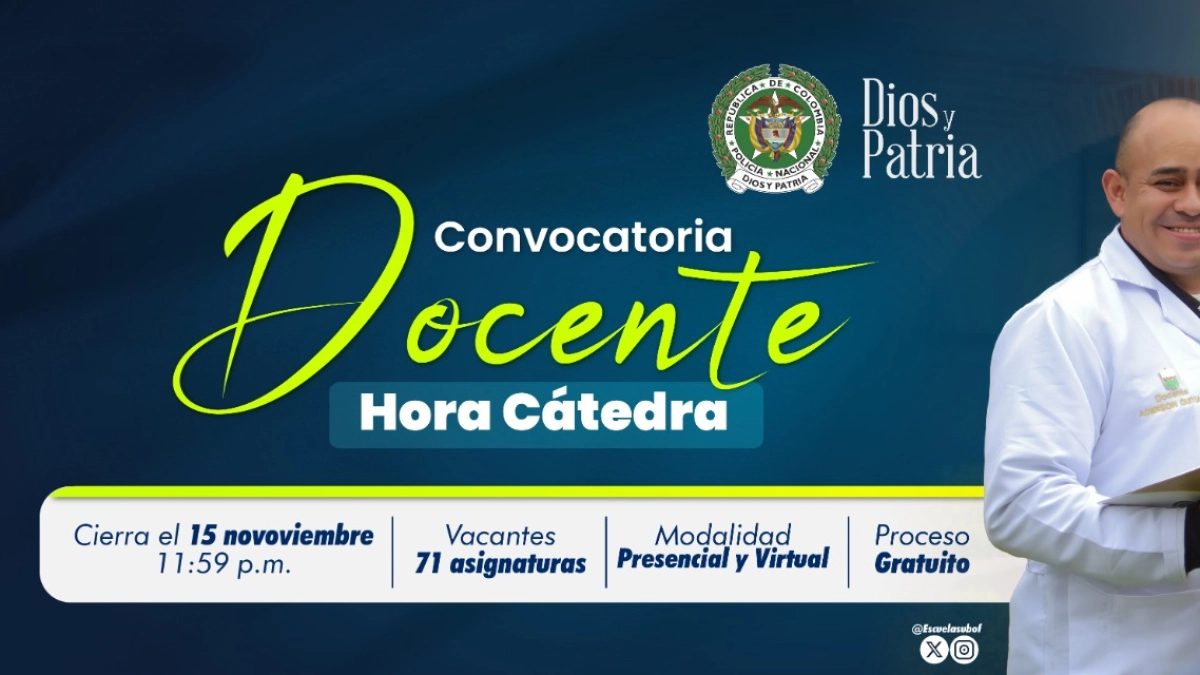
The "Gonzalo Jiménez de Quesada" School for Non-Commissioned Officers and Executive Level (ESJIM) has launched its 2027 recruitment drive, seeking to bolster its academic faculty with 71 new teaching vacancies across various disciplines.
In a significant move to strengthen its educational framework, the National Police of Colombia has officially opened its "Hora Cátedra" (part-time lecturer) recruitment process for the 2027 academic year. This initiative, spearheaded by the ESJIM school located in the municipality of Sibaté, aims to attract highly qualified professionals—both Colombian citizens and foreign nationals—to contribute to the specialized training of police personnel.
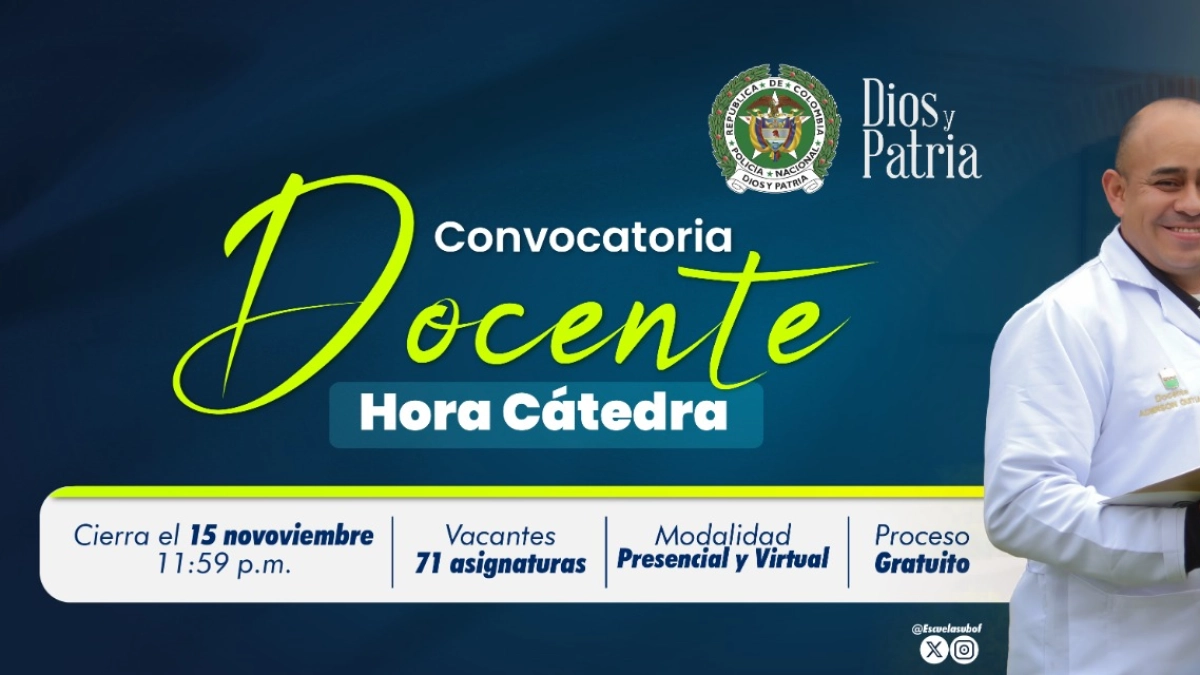
The call, which has been open since late October, represents a critical pillar in the institution’s ongoing commitment to professionalization and institutional excellence. By integrating external expertise into its curriculum, the Police seek to ensure that their academic programs remain at the cutting edge of modern policing, law, and social sciences.
1. Main Facts: Understanding the Call
The core of this recruitment drive lies in the need for 71 specific teaching positions. These roles are essential for the diverse academic programs offered by the ESJIM, which focuses on the rigorous training of future non-commissioned officers and executive-level staff.

Key Details for Applicants:
- Application Deadline: Sunday, November 15, 2026.
- Cost: The entire application and selection process is completely free of charge.
- Platform: Applications must be submitted exclusively through the official digital portal: https://convocatoria-hora-catedra-2027-esjim.netlify.app.
- Modality: The positions involve both in-person instruction and virtual learning environments, adapting to the modern needs of hybrid education.
The institution has emphasized that candidates must carefully review the profiles required for each of the 71 subjects. The selection process is competitive, and applicants are encouraged to ensure that their credentials align strictly with the institutional standards set forth by the Police academy.
2. Chronology of the Recruitment Process
The road to becoming a lecturer for the National Police is a structured, transparent process designed to vet the best possible talent.

- October 21, 2026: The official launch of the call. From this date, the institution opened the virtual gates for professionals to begin uploading their credentials and portfolios.
- November 13, 2026: The institution released an official bulletin providing further clarity on the scope of the vacancies, highlighting the four main academic lines that will be prioritized for the 2027 period.
- November 15, 2026: The final deadline. As this date approaches, the institution has urged interested parties not to wait until the final hours, as technical glitches or high traffic on the portal could impede a successful submission.
- Post-November 2026: Following the closure, the academic committee at ESJIM will begin the rigorous review phase, which includes validating academic degrees, professional experience, and the pedagogical profiles of the candidates.
3. Supporting Data and Academic Scope
The National Police of Colombia is not merely looking for generic instructors; they are seeking subject-matter experts who can provide a comprehensive education to the nation’s security forces. The vacancies are distributed across four primary academic lines, which form the backbone of the Police’s internal training programs.
The Four Academic Pillars:
While the specific subjects cover a wide range of topics, the core emphasis is placed on:
- Legal and Constitutional Sciences: Essential for officers who must navigate the complexities of human rights, criminal law, and the Colombian judicial system.
- Strategic Security and Intelligence: Courses focused on the technical aspects of crime prevention, data analysis, and intelligence gathering.
- Humanistic and Social Development: Recognizing the importance of ethics, psychology, and sociology in modern community policing.
- Technological and Administrative Skills: Training in digital literacy, logistics, and organizational management to ensure the police force operates with modern administrative efficiency.
By opening these positions to the public, the Police foster an environment of "institutional osmosis," where civilian professionals bring fresh perspectives and methodologies into the traditionally closed-off world of military and police education.
4. Official Responses and Institutional Strategy
Why is the Police turning to external "Hora Cátedra" instructors? According to the internal communications from the ESJIM administration, the strategy is twofold: quality and adaptability.

"The modernization of our educational offerings requires a dynamic faculty," noted a spokesperson for the institution. "By engaging with the broader academic community, we ensure that our students are not just learning from veteran officers, but from the leading experts in fields such as cyber-security, administrative law, and social psychology."
The institution has taken a proactive approach to ensure that the selection process is free of bias. By centralizing the application process on a digital platform, they aim to reduce bureaucratic friction and ensure that candidates from all regions of Colombia—and even international applicants—have an equal opportunity to compete for a chair at the Academy.

5. Implications: Why This Matters for the Country
The recruitment of 71 new lecturers has broader implications for Colombia’s security landscape. As the nation grapples with complex shifts in criminal activity and social demands for police reform, the quality of training provided to the next generation of officers becomes paramount.
Impact on Police Reform
Education is the cornerstone of any police reform movement. By bringing in outside perspectives, the institution is demonstrating a willingness to engage with academic rigors and critical thinking. This is vital for fostering a culture of transparency and accountability within the force.

A Career Opportunity for Professionals
For many professionals in the academic world, this is a prestigious opportunity. Being a lecturer at the "Gonzalo Jiménez de Quesada" school carries significant weight in a professional CV. It provides instructors with a unique vantage point to influence the mindset of future law enforcement leaders, bridging the gap between theoretical knowledge and the realities of public service.
Strengthening Regional Development
Although the school is located in Sibaté, the move toward virtual and hybrid instruction means that the geographical barriers to high-quality teaching are being dismantled. Experts residing in major cities like Bogotá, Medellín, or Cali can now impart knowledge to students in the heart of the Cundinamarca department without the need for constant travel.

6. Guidance for Prospective Applicants: A Checklist
For those interested in submitting their application before the November 15 deadline, the following steps are highly recommended:
- Review the Portal: Visit the official website immediately. Do not rely on third-party sources for information regarding the requirements.
- Check the Profile Matrix: Each of the 71 subjects has a specific profile. Ensure your degree and your professional experience match the exact requirements listed. Mismatches are a common cause for early disqualification.
- Prepare Documentation: Ensure all digital copies of your academic titles, work certificates, and pedagogical experience are updated and in the required format.
- Direct Inquiries: If you encounter technical issues or have specific questions about the subjects, do not hesitate to reach out to the official channels:
- Phone (Cellular): 3192062278 or 3204168769.
- Email: [email protected].
Conclusion: A Call to Excellence
The 2027 recruitment drive by the ESJIM is more than just a job opening; it is a call to service for the academic community of Colombia. As the Police force continues to evolve to meet the challenges of the 21st century, the role of education becomes increasingly central.

By inviting 71 talented professionals to join their faculty, the institution is investing in the intellectual capital of its personnel. For those who believe in the importance of public service and the power of education, this Sunday’s deadline represents a significant opportunity to help shape the future of one of the country’s most vital institutions.
Whether you are a lawyer, a social scientist, a technology expert, or an educator, your contribution could be the key to ensuring that the next generation of police officers is better trained, better informed, and better prepared to serve the Colombian public. Ensure your application is submitted on time, and take the first step toward contributing to the academic mission of the National Police.