Main Facts: A Triumphant and Defiant Homecoming in Caracas
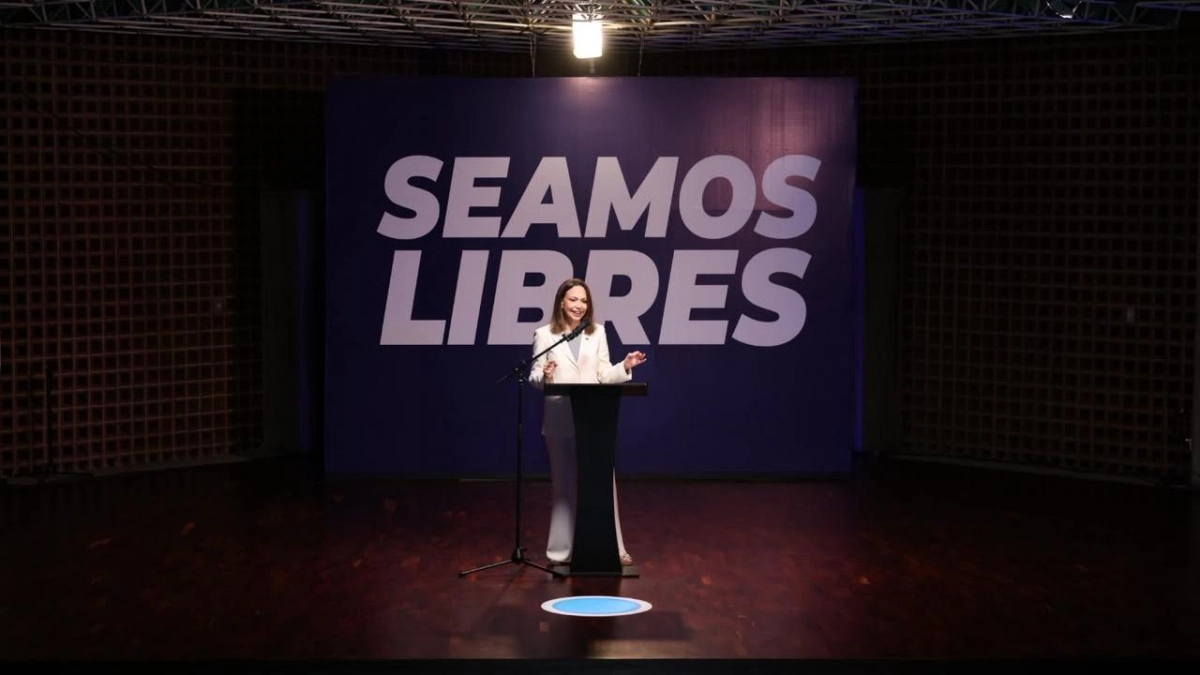
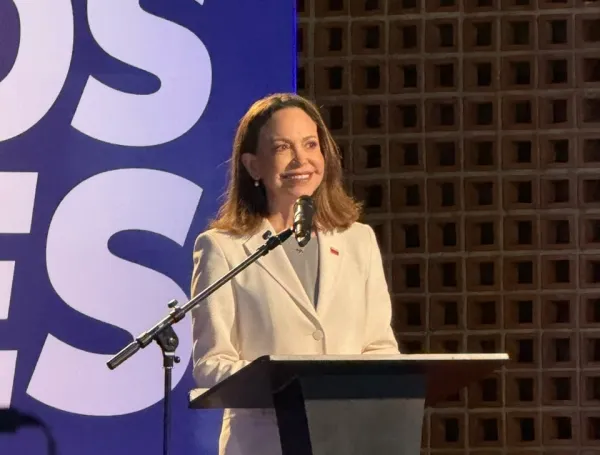
Caracas, Venezuela — In a development that has sent profound shockwaves through the Latin American geopolitical landscape, Venezuelan opposition leader and Nobel Peace Prize laureate María Corina Machado hosted a packed, high-stakes press conference at the Universidad Andrés Bello (UCAB) in Caracas. Her return to the Venezuelan capital marks a pivotal milestone following nearly a year in forced exile, which began in December 2025 when she traveled to Oslo, Norway, to accept her Nobel recognition.
Surrounded by enthusiastic supporters, students, and journalists at her alma mater, Machado’s physical presence in Caracas signals an aggressive new phase in the opposition’s campaign to dismantle the remaining vestiges of authoritarian rule.
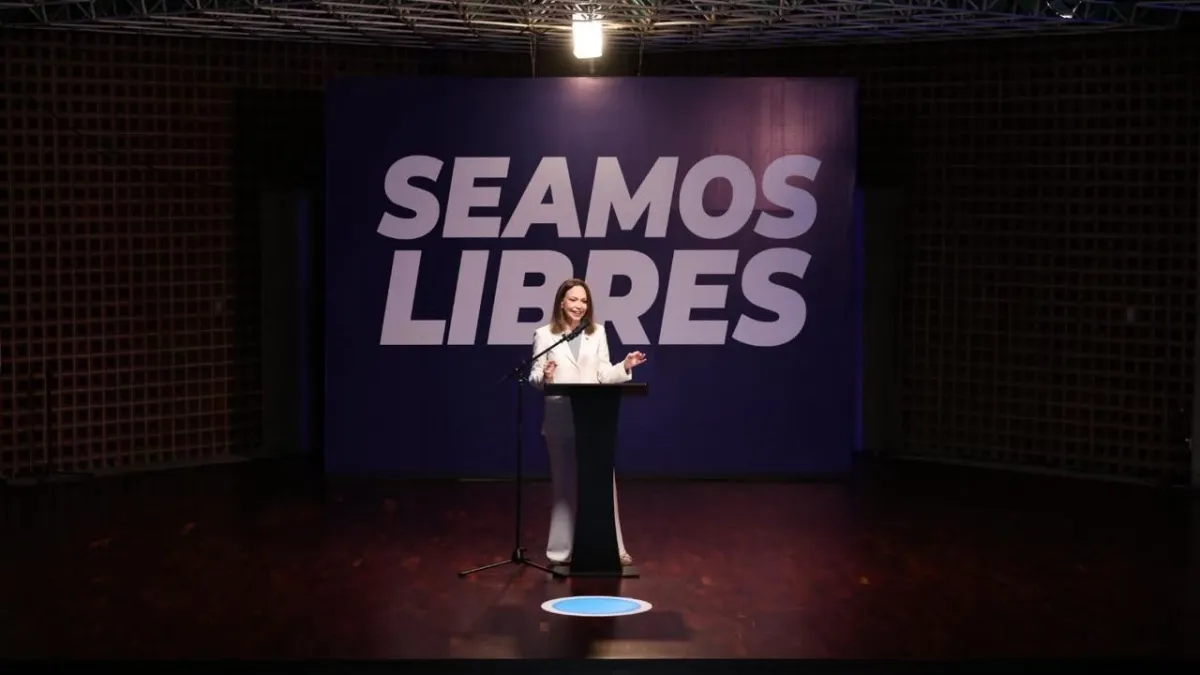
"Estoy aquí. Nuestra lucha ha sido siempre pacífica. Nuestra arma ha sido la verdad," Machado declared to the roaring crowd, reinforcing her commitment to non-violent civic mobilization.
Her return follows a dramatic series of political upheavals catalyzed by the disputed July 28, 2024, presidential elections, the subsequent detention of Nicolás Maduro, and an evolving transitional framework. During her address, Machado outlined her primary objective for returning to the country: "I have returned to mobilize society, to mobilize citizen networks, to incorporate all sectors into this new project for the country and this new Republic. I have returned to finish a task and fulfill a mandate."

Chronology: From Exile to Re-entry and the Road to Caracas
To understand the magnitude of Machado’s reappearance in Venezuela, it is essential to trace the intricate timeline of events that preceded her historic press conference at UCAB:
- July 28, 2024: Venezuela holds a presidential election marred by widespread allegations of fraud, state intimidation, and a refusal by the National Electoral Council (CNE) to transparently publish disaggregated voting tallies (the actas). Despite severe government obstruction, the opposition manages to collect and safeguard physical copies of the voting records, proving a landslide victory for democratic forces.
- December 2025: Facing mounting security threats, targeted persecution, and an environment hostile to dissent, María Corina Machado departs Venezuela for Europe. She travels to Oslo, Norway, where she is formally awarded the Nobel Peace Prize in recognition of her tireless advocacy for human rights and democracy.
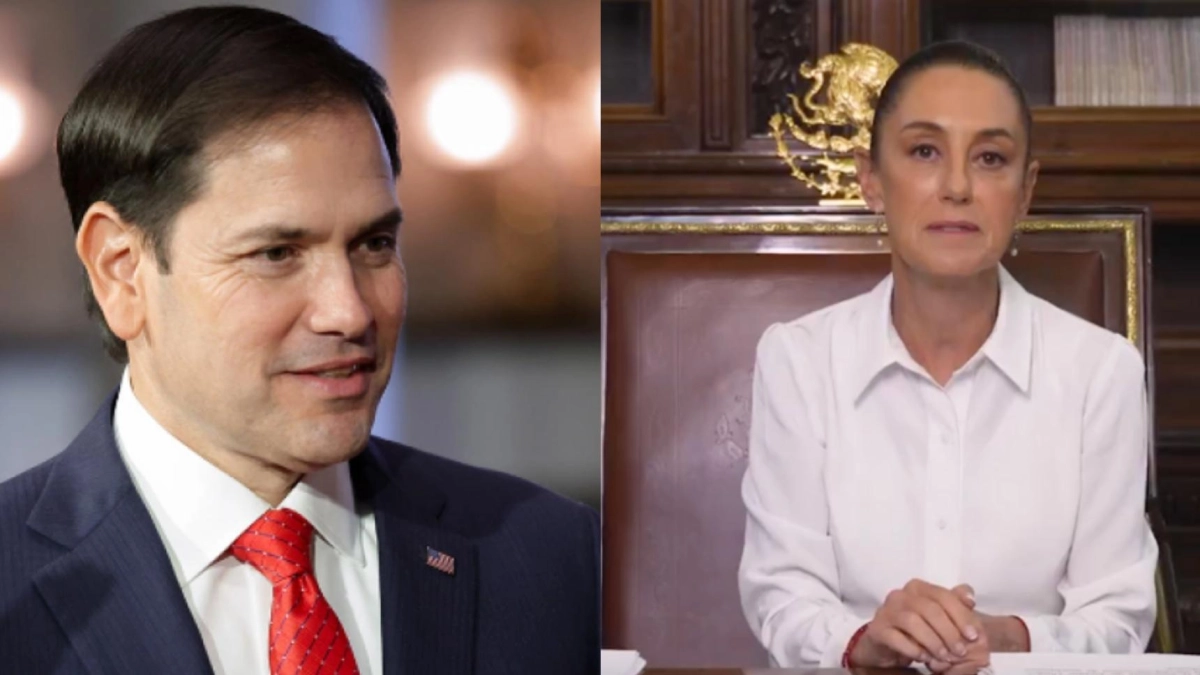
- January 3, 2026: A geopolitical turning point occurs. Following sustained international pressure and sweeping actions linked to the administration of U.S. President Donald Trump and key officials like Marco Rubio, Nicolás Maduro is captured and removed from power, creating an immediate power vacuum and sending seismic tremors through the ruling socialist apparatus.
- Early 2026 (The Odyssey Home): Over the course of several months, Machado attempts no fewer than seven separate, highly coordinated efforts to re-enter Venezuelan territory. Utilizing commercial flights, private charters, maritime routes, and overland crossings originating from locations such as Virginia, Panama, and Curaçao, her teams face relentless state sabotage, bureaucratic roadblocks, sudden mechanical failures, and outright airspace closures.
- Sunday, October 24, 2026: After months of failed attempts, Machado abruptly re-emerges publicly in Barquisimeto, capital of the central-western state of Lara. While precise operational details of her clandestine entry remain heavily guarded, experts speculate she either landed covertly in Barquisimeto or crossed via an unmonitored regional corridor.
- Wednesday, October 29, 2026: Machado arrives in Caracas and holds her landmark press conference at the Universidad Andrés Bello, formally kicking off a localized campaign of citizen assemblies, grassroots organizing, and transitional negotiations.
Supporting Data and Geopolitical Alliances
Machado’s successful repatriation and the broader stabilization of the Venezuelan democratic movement have heavily relied on a network of key international allies and strategic partnerships. During her address, the Nobel laureate explicitly thanked several foreign governments that provided critical sanctuary, diplomatic backing, and logistical support during her time away.

- Panamanian Support: Machado singled out the government of Panama, specifically expressing gratitude to President José Raúl Mulino and his administration. Panama played a vital humanitarian and logistical role, offering safe harbor to persecuted dissidents and helping safeguard crucial electoral documents. "I want to thank the government of Panama… and their chancellery, who have received us and preserved the electoral records that we will soon bring back," Machado stated.
- United States Intervention: Acknowledging the shifting posture of Washington, Machado extended direct thanks to U.S. leadership, specifically mentioning Donald Trump and Marco Rubio. She credited the actions catalyzed on January 3, 2026, as the primary catalyst that "opened the floodgates to freedom."
- The Battle for the Actas: One of the most critical logistical battles of the Venezuelan transition involves the preservation of the original polling station voting records (actas). These documents, which mathematically substantiate the opposition’s victory in the 2024 elections, remain protected abroad by friendly nations and are slated for imminent repatriation to serve as the undeniable bedrock of the new judicial and electoral architecture.
- The Cost of Repression: Machado’s rhetoric heavily emphasized the devastating human toll of the Maduro regime’s legacy. She reminded the international community of the over nine million Venezuelan refugees and migrants driven into the diaspora by systemic economic collapse, violence, and hunger, as well as the enduring suffering of political prisoners.
Official Responses and Regime Posturing
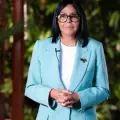
The return of María Corina Machado has forced the interim government—headed by Delcy Rodríguez—into a defensive yet calculated political posture. Just moments before Machado took the podium at UCAB, Rodríguez addressed the nation to project an image of institutional continuity, reform, and openness to democratic norms.
"There will be elections, all those mandated by our Constitution, organized by a renewed electoral authority and with the world as a witness," Rodríguez proclaimed in a televised address.
Machado, however, met these promises with acute skepticism, drawing a sharp contrast between the ruling faction’s rhetoric and its long history of systemic abuse.
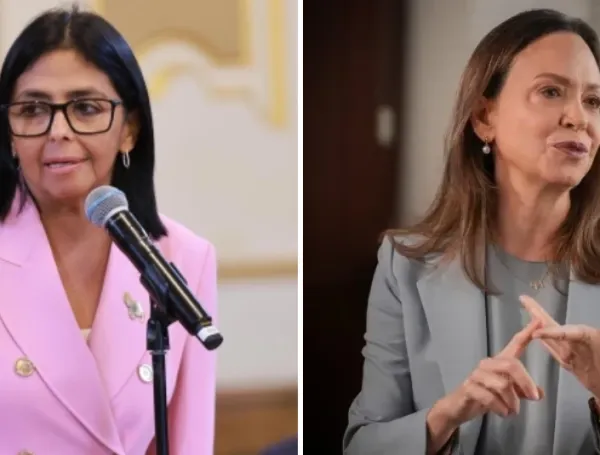
"They have turned Venezuela into a sanctuary for criminal groups and international mafias. Those who have expelled more than nine million Venezuelans and destroyed families, subjecting them to hunger, humiliation, and pain, now say they are going to build a system where justice exists," Machado fired back.
Despite her deep distrust of the interim administration, Machado acknowledged that Rodríguez’s public commitment to holding constitutional elections is a direct consequence of the political earthquake triggered by her return on October 25. "It seems to me very good that Mrs. Delcy Rodríguez said today that there are going to be elections. I think the effect of Sunday the 25th is making itself felt," she noted.
Regarding ongoing backchannel negotiations and parallel assembly talks—such as those led by figures like Jorge Rodríguez and opposition actors like Dinorah Figuera—Machado clarified that while her faction is not directly seated at that specific table, she does not wish to obstruct them. Instead, she urged all negotiating parties to focus on immediate structural imperatives: appointing an independent Supreme Tribunal of Justice (TSJ), reconstituting the National Electoral Council (CNE), and fixing a hard date for democratic, internationally monitored elections.
Implications for the Future: A "Venezuelan-Style" Transition
As Venezuela stands on the precipice of a post-authoritarian era, María Corina Machado has laid out a comprehensive framework for what she terms a "transición a la venezolana" (a Venezuelan-style transition). Eschewing elite-pact models negotiated entirely behind closed doors, Machado insists that the blueprint for the new republic must be forged directly by the citizenry.
1. Grassroots Participation and Constitutional Reform
Machado firmly rejected the notion that ordinary citizens are fatigued by or uninterested in constitutional and structural reforms. To counteract this, she announced the rollout of a nationwide project centered on localized "points of agreement" and decentralized public assemblies. These forums will allow millions of Venezuelans to actively debate and design the administrative, economic, and judicial foundations of the post-transition state.
2. Justice, Memory, and Non-Repetition
A cornerstone of Machado’s political platform moving forward is an unwavering commitment to transitional justice. Promising that "in Venezuela there will be memory, justice, and non-repetition," she assured victims of political persecution, torture, and state-sponsored violence that accountability will form a non-negotiable pillar of the new democratic order.
3. Rebuilding the Social Fabric
With millions displaced across the globe and domestic infrastructure hollowed out by years of mismanagement and international sanctions, the immediate challenges facing the incoming leadership are monumental. Machado’s strategy relies heavily on revitalizing localized citizen networks to bridge community divides, distribute humanitarian relief, and restore basic public services while the broader macroeconomic stabilization packages take effect.
4. The Geopolitical Horizon
Internationally, Machado’s physical presence inside Venezuela transforms her from an exiled symbol of resistance into an active, on-the-ground head of state-in-waiting. Her ability to operate openly in Caracas, address massive crowds, and openly challenge the interim government’s narrative demonstrates that the balance of power in Caracas has fundamentally shifted.
As the international community watches closely—with foreign ministries across the Americas and Europe evaluating the next steps for diplomatic recognition and economic re-engagement—María Corina Machado’s return signals that the long, arduous road to Venezuelan democracy has entered its most decisive, and perhaps most dangerous, final chapter.