By Laura Juliana Castellanos (Adapted for international reporting) Published by El Tiempo – Political Desk
Main Facts
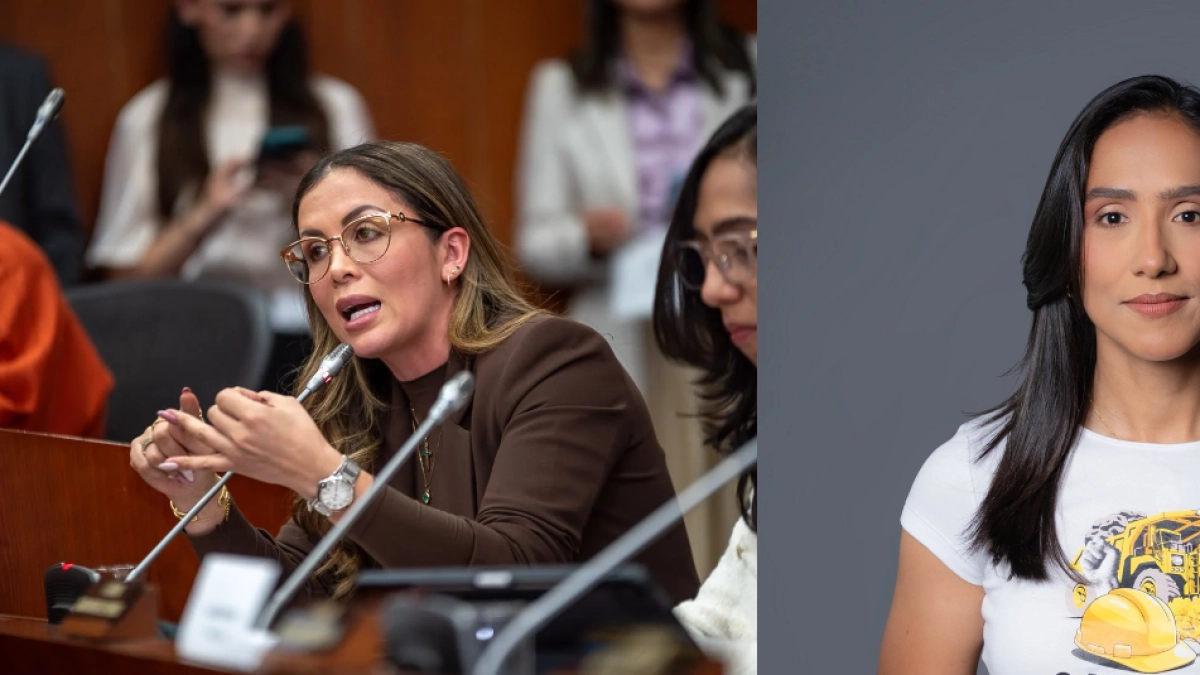
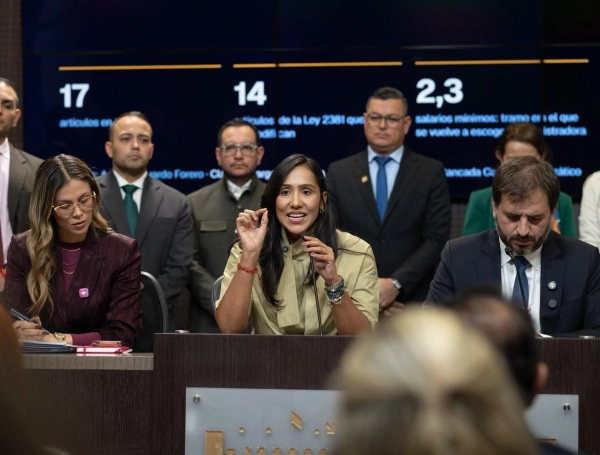
The debate surrounding the future of pensions in Colombia has entered a critical new phase. Following the legislative conclusion of the procedural fixes mandated for the current administration’s pension overhaul (Ley 2381), opposition lawmakers from the Centro Democrático party have officially introduced a comprehensive counter-reform. Spearheaded by Senators Claudia Margarita Zuleta and Zandra Bernal, the proposed legislative package targets 14 specific articles of the existing law.
The primary objectives of this counter-reform are twofold: to safeguard the financial sustainability of the national pension infrastructure and to restore the freedom of choice for citizens when deciding how to manage and save their retirement funds.
Under the current framework promoted by President Gustavo Petro’s government, all workers are mandated to contribute to the state-run administrator, Colpensiones, up to a threshold of 2.3 minimum wages. Only contributions exceeding this cap may be allocated to private individual savings funds. The Centro Democrático initiative seeks to dismantle this mandated threshold, arguing that it creates a perilous state monopoly, exacerbates national fiscal deficits, and imposes an unsustainable debt burden on future generations.
Furthermore, the counter-reform seeks to preserve traditional retirement ages—57 years for women and 62 for men—within the semi-contributory pillar, while introducing mandatory provisions for the return of account balances to workers who fail to meet the required contribution weeks under the formal market.
Chronology of Events
The collision course between the government’s pension overhaul and the opposition’s counter-reform has unfolded through a tightly scheduled legislative and judicial timeline:
Initial Approval and Constitutional Review: Following intense congressional debates, the overarching pension reform was passed into law (Ley 2381). However, procedural challenges prompted the Constitutional Court to step in, returning specific articles to the Chamber of Representatives to correct procedural omissions, specifically regarding nominal, article-by-article voting.
Late October 2026 (The Subsanación Phase): The Chamber of Representatives reviewed and voted on the questioned articles without introducing textual modifications—a move designed to finalize the law’s legal passage without forcing a cumbersome conciliation process with the Senate.
October 28–29, 2026: Sensing the imminent, unalterable realization of Ley 2381—slated to officially take effect on April 1, 2027—Senators Claudia Margarita Zuleta, Zandra Bernal, and Andrés Forero officially registered the Centro Democrático’s counter-reform project in Congress.
Current Outlook: The opposition has set an aggressive legislative timeline, aiming to secure congressional approval for their counter-reform package before the government’s law officially enters into force on April 1, 2027.
Supporting Data & Economic Analysis
The core justification driving the Centro Democrático’s counter-reform lies in deep-seated fiscal anxieties regarding Colpensiones’ long-term viability. According to data cited by the co-authors and independent economic analysts:
Fiscal Dependence: Between 40% and 49% of the disbursements currently made by Colpensiones must be directly subsidized using resources from the National General Budget (Presupuesto General de la Nación).
State Liability: Maintaining a state-monopoly model without a dual system risks pushing the nation’s pension debt upward by more than 500 trillion pesos during the current transitional phase, according to estimates originating from previous governmental projections and echoed by private economic guilds.
Demographic Shifts: The viability of the public reparto (pay-as-you-go) model faces immense pressure from a shifting demographic pyramid. Two decades ago, approximately seven active contributors supported every single pensioner. Today, that ratio has plummeted to roughly two workers per pensioner, exacerbated by high levels of labor informality.
State Outlays: The Colombian state currently allocates between 90 and 100 trillion pesos annually to cover pension-related shortfalls, a figure that fiscal experts warn will balloon if mandatory public pooling absorbs all national savings.
Official Responses and Parliamentary Perspectives
In exclusive statements to El Tiempo, co-authors Claudia Margarita Zuleta and Zandra Bernal elaborated on the philosophical and legal foundations of their initiative.
Senator Claudia Margarita Zuleta on Choice and Monopolies
"The project that we filed does not seek to repeal the entirety of the text nor completely tear down the pension reform of the Gustavo Petro administration. It seeks to modify 14 articles of Law 2381 that, in our view, are problematic because they undermine the sustainability of the system, generate inequity, and treat younger generations unfairly… We cannot create a monopoly in Colpensiones, which is already a deficit-ridden regime."
Zuleta emphasized that retaining both public and private regimes distributes contribution risks and preserves national savings, insulating the economy from heavy reliance on the national budget.
Senator Zandra Bernal on Worker Savings and Devolution
"That is one of the most important structural changes, related to the semi-contributory pillar. Law 2381… does not contemplate the return of balances as an alternative. We propose that the saver be able to receive the return of their money, including the yields generated, or opt for Colpensiones’ substitute indemnity. The money in pension savings belongs to each and every one of us; it belongs to Colombians."
Concerns Over Exceptional and Differential Regimes
Both senators voiced strong constitutional reservations regarding differential pension treatments embedded within the broader legislative framework, specifically concerning provisions tailored for indigenous and Afro-Colombian communities.
Citing the Legislative Act 01 of 2005—which explicitly restricted the creation of new exceptional pension regimes outside of the Military Forces and the public education sector—Zuleta warned that creating specialized criteria for specific population subsets risks being declared unconstitutional. Bernal reaffirmed this stance, noting that Colombia’s current fiscal climate cannot support fragmented, exceptional administrative structures.
Implications and the Road Ahead
As the April 1, 2027 implementation date for Ley 2381 draws closer, the political landscape in the Colombian Congress is bracing for intense legislative friction.
Fiscal Relief vs. Social Protection: The central tension of the debate rests on how to protect vulnerable aging populations without bankrupting the national treasury. While the government’s model aims to expand basic solidarity coverage through centralized public management, the opposition argues this shifts an unbearable weight onto public finances.
Legislative Environment: Despite political polarization, authors of the counter-reform report a surprisingly pragmatic atmosphere in congressional corridors. Recent debates over the National Budget—marked by government requests for fiscal impact adjustments and warnings from Colpensiones regarding short-term liquidity—have made lawmakers across multiple political parties increasingly cognizant of systemic financial strain.
The Ultimate Guarantee: For the architects of the counter-reform, the ultimate guarantee of a worker’s retirement security is not state centralization, but structural solvency. Without a dual system that incorporates individual savings accounts and capital yields, the opposition warns that future generations will face skyrocketing contribution rates, delayed retirement ages, or defaulted pension promises.
The coming months in the Seventh Commissions and congressional plenaries will determine whether the Centro Democrático can successfully pivot Colombia’s pension trajectory before the current legal framework becomes permanent.
Bogotá, Colombia – July 17, 2026 – Colombia’s newly formed government coalition faces its first significant test, even before President-elect Abelardo de la Espriella takes office. Daniel Briceño, the highest-voted congressman-elect for the Democratic Center…
By Laura Nathalia Quintero Breaking News Desk Published: September 20, 2026 Main Facts An unprecedented institutional standoff has erupted between the executive branch of Colombia and the nation’s transitional justice system. President Abelardo De La…
Bogotá / Jerusalem — In a development that signals a profound realignment of Colombia’s foreign policy, the Government of Israel officially confirmed that Colombia has formally withdrawn its intervention in the high-profile genocide case brought…