
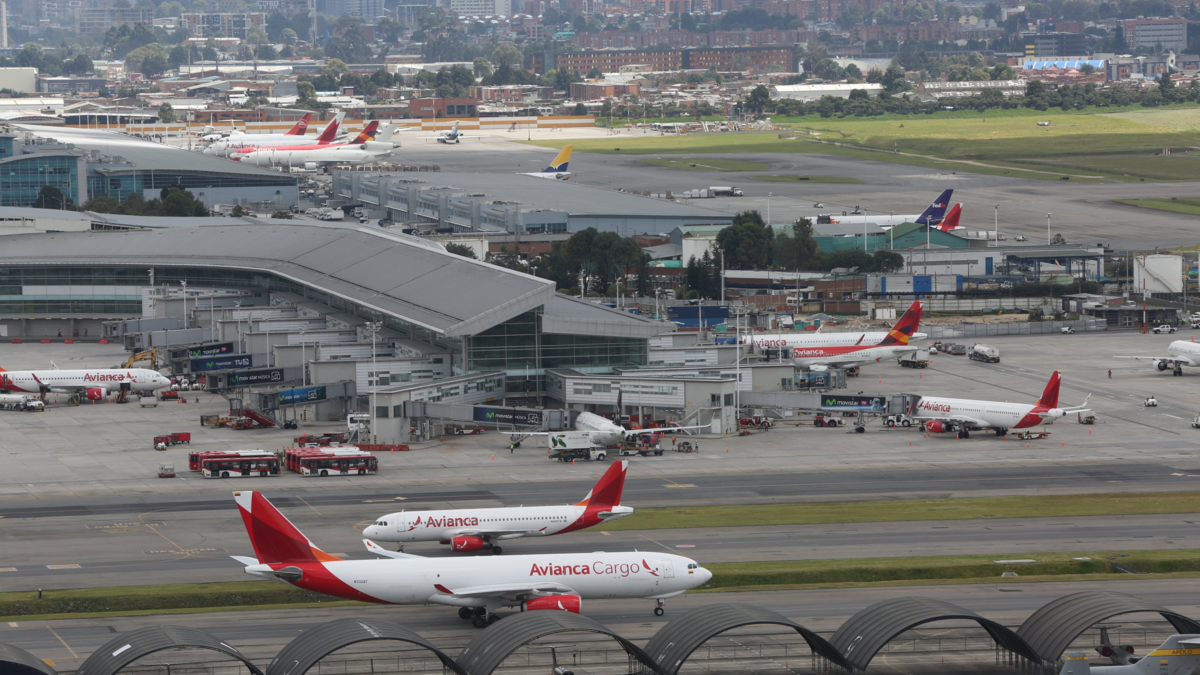
BOGOTÁ, COLOMBIA — Commercial aviation in Colombia and across Latin America and the Caribbean sustained its upward trajectory during August 2026, marking consecutive months of positive performance despite cooling demand and mounting cost pressures. According to the latest comprehensive market report released by the Latin American and Caribbean Air Transport Association (ALTA), passenger traffic across the broader region reached 40.9 million travelers, reflecting a modest year-over-year increase of 0.8 percent compared to August 2025.
While the industry continues to expand, sector analysts point to a distinct deceleration in growth velocity compared to the robust, four-percent-plus surges witnessed during the first quarter of the year. Concurrently, escalating geopolitical tensions in the Middle East have catalyzed an unprecedented spike in jet fuel prices, presenting a formidable financial hurdle for regional carriers striving to maintain profitability and competitive ticket pricing.
Main Facts: Colombia’s Domestic Might and Regional Traffic Dynamics
Colombia served as a primary anchor for regional aviation activity in August 2026. The Andean nation mobilized 5.13 million passengers, translating into a 1.3 percent expansion—or approximately 64,000 additional travelers—relative to the same month in the preceding year. This performance secured Colombia’s position as a vital engine of growth in South America, following a 2.8 percent increase recorded in July.

A closer inspection of the Colombian market reveals a stark divergence between domestic and international segments:
- Domestic Traffic: Remained virtually flat, ticking upward by a marginal 0.1 percent.
- International Traffic: Rose by a more robust 2.8 percent, though individual outbound and inbound markets experienced varied trajectories.
At the continental level, Latin America and the Caribbean accumulated 324 million passengers between January and August 2026, marking a stable 1.8 percent growth rate compared to the first eight months of 2025. Intra-regional connectivity proved to be the primary catalyst for this expansion. Domestic travel within regional markets increased by 1.9 percent, while international intrarregional travel—flights connecting nations within Latin America and the Caribbean—jumped by 3.1 percent. Conversely, international extrarregional travel, which encompasses routes linking the region to the rest of the world, contracted by 1.9 percent.
Chronology and Context: The 2026 Trajectory of Regional Air Travel
To fully understand the August 2026 figures, it is essential to contextualize them within the broader timeline of the year’s economic and geopolitical developments:

- Q1 2026 (January – March): The regional aviation sector experienced a dynamic start, posting consistent month-over-month passenger growth rates exceeding 4 percent. Demand was propelled by strong post-holiday tourism and stabilized macroeconomic conditions across key emerging markets.
- March 2026: Geopolitical escalations in the Middle East began to severely disrupt global energy markets. These conflicts triggered a sustained, upward spiral in the cost of petroleum derivatives, directly impacting aviation turbine fuel (jet fuel).
- July 2026: Growth began to moderate. Regional traffic registered a modest 0.7 percent increase, while Colombia’s traffic expanded by 2.8 percent, foreshadowing the cooling trend that would solidify in late summer.
- August 2026: Traffic figures stabilized at 40.9 million passengers regionally and 5.13 million in Colombia. The period laid bare the bifurcated nature of international corridors—where strong gains in specific Latin American pathways offset sharp contractions in North American and Andean routes.
- Mid-October 2026: ALTA released its benchmark cost data, revealing that regional jet fuel prices had skyrocketed to $4.61 per gallon, representing a staggering 108.6 percent increase over 2025 averages.
Supporting Data: Winners, Losers, and Hub Dominance
The ALTA report highlights stark contrasts in performance across different nations, routes, and operational metrics for August 2026.
National Performance Leaders and Laggards
Absolute passenger gains were heavily concentrated in a few key nations:
- Brazil: Mobilized 11.51 million passengers, securing a 2.9 percent increase that added roughly 324,000 travelers to its networks.
- Panama: Achieved a remarkable 15.9 percent growth rate, reaching 2.15 million passengers and adding 294,000 travelers, underscoring its role as the premier connecting hub of the Americas.
- Mexico: Recorded 10.38 million passengers—a 1.7 percent bump yielding 172,000 additional travelers. Mexico’s domestic segment surged by 5.2 percent, successfully offsetting a 2.6 percent decline in international travel.
Conversely, seven nations experienced notable contractions in total passenger traffic:

- Jamaica: Suffered the steepest drop in the region, plunging by 15.0 percent (equivalent to 97,000 fewer passengers).
- Other contracting markets: Bolivia (-5.3%), Argentina (-2.9%), Chile (-2.1%), El Salvador (-1.2%), Costa Rica (-1.1%), and Guatemala (-0.8%).
Shifts in International Corridors
Colombia’s international market exhibited profound shifting dynamics. Traditional corridors experienced significant pullbacks:
- Travel between Colombia and the United States dropped by 4.6 percent.
- Routes connecting Colombia to Peru fell by 6.6 percent.
- Flights between Colombia and Ecuador decreased by 4.0 percent.
These losses, however, were cushioned by explosive growth in alternative international partnerships:
- Canada led outbound growth with a 27.4 percent surge.
- Brazil traffic grew by 16.8 percent.
- Dominican Republic routes expanded by 14.8 percent.
- Mexico corridors grew by 6.7 percent.
Similarly, Mexican aviation felt the pinch of declining North American demand, highlighted by a 6.1 percent reduction in passenger volumes on routes connecting Mexico to the United States.

The Domination of Colombian Domestic Routes
Despite modest overall domestic growth in Colombia, the nation’s internal route network commands outsized regional importance. According to ALTA, Colombia concentrated three of the top five domestic routes with the highest seat capacity in all of Latin America and the Caribbean.
- The high-frequency corridors linking Bogotá to Medellín, Bogotá to Cali, and Bogotá to Cartagena formed the backbone of regional capacity.
- Most notably, the air corridor between Bogotá and Medellín was crowned as the single domestic route with the highest seat capacity in the entire region.
Official Responses and Industry Insights: The Fuel Crisis
Industry stakeholders and analysts have zeroed in on the exponential rise of operational expenditures, driven primarily by fuel volatility. ALTA’s technical reports emphasize that while aviation fuel prices remained relatively benign and predictable throughout 2025, the compounding effects of the ongoing conflict in the Middle East have fundamentally altered the cost structure for carriers operating in Latin America and the Caribbean.
By the week ending October 16, 2026, the regional average price for jet fuel reached $4.61 per gallon. This represents a dramatic 108.6 percent surge compared to the baseline averages recorded just one year prior.

Industry representatives have voiced growing concern over this development. While passenger demand has proven resilient enough to sustain positive year-over-year traffic growth, the staggering burden of fuel expenses threatens to squeeze profit margins. Because fuel typically accounts for between 25% and 30% of an airline’s total operating expenses, an escalation of this magnitude forces carriers into difficult strategic decisions—ranging from the absorption of higher costs to the potential adjustment of fare structures, which could ultimately cool discretionary leisure travel in the upcoming high seasons.
Implications for the Future of Regional Aviation
The data from August 2026 paints a complex portrait of an industry striving for stabilization while navigating external headwinds. Several key implications emerge from the latest ALTA findings:
- Vulnerability to Global Shocks: The direct correlation between Middle Eastern geopolitical friction and regional ticket pricing underscores the structural vulnerability of Latin American carriers to international energy markets. High jet fuel costs could force smaller regional airlines to consolidate or scale back unprofitable secondary routes.
- Shifting Tourism Geographies: The contraction of traditional travel corridors—such as those linking Colombia and Mexico to the United States—coupled with the explosive rise of intra-regional exchanges (e.g., Brazil, Canada, and the Dominican Republic), signals a diversification of travel patterns. Passengers are increasingly exploring alternative destinations within the hemisphere.
- Infrastructure Resilience: Colombia’s capacity dominance in domestic corridors—particularly the Bogotá-Medellín trunk route—demonstrates the robust baseline demand for business and domestic mobility within the Andean region. However, this high volume places additional pressure on airport infrastructure, air traffic control, and slot management at primary hubs like El Dorado International Airport.
As the industry enters the final quarter of 2026, stakeholders will be closely monitoring how airlines balance consumer demand against inflationary pressures, ensuring that regional connectivity remains accessible and economically viable.