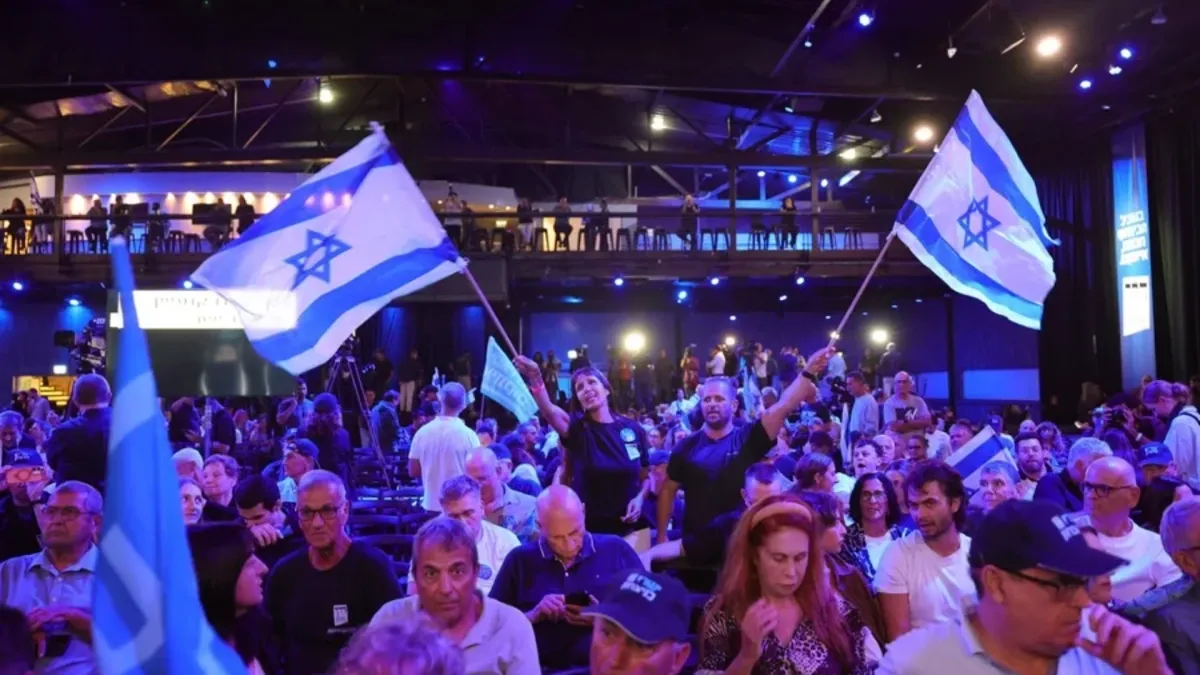
JERUSALEM — Israel’s legislative elections have plunged the nation into a profound political stalemate. Despite witnessing the highest voter turnout since 1999—surging to nearly 78 percent—partial results from the October 2026 ballot depict a deeply polarized and fractured electorate. Neither the conservative bloc led by longtime Prime Minister Benjamin Netanyahu nor the centrist opposition coalition spearheaded by former military chief Gadi Eisenkot has managed to secure the 61 seats required for an outright majority in the 120-member Knesset.
With approximately 85 percent of the ballots counted, the political landscape is paralyzed, leaving the unprecedented 17 seats captured by Arab-majority parties as the ultimate wild card. As Israel navigates a complex matrix of international isolation, ongoing conflict with Iran, and the devastating fallout from the military campaigns in Gaza, the nation stares down the barrel of weeks of grueling backroom negotiations or, potentially, an unprecedented sixth election cycle.
Main Facts: A Divided Parliament and the Arab Kingmakers
The preliminary tally reveals a razor-thin margin separating the two primary Jewish-led political camps, while underscoring a seismic shift in minority political engagement:
Netanyahu’s Bloc: The coalition anchored by Benjamin Netanyahu’s right-wing Likud party has secured 54 seats, falling seven mandates short of the 61-seat threshold needed to form a stable government.
Eisenkot’s Coalition: Gadi Eisenkot’s centrist and reformist alliance trails closely behind with 49 seats.
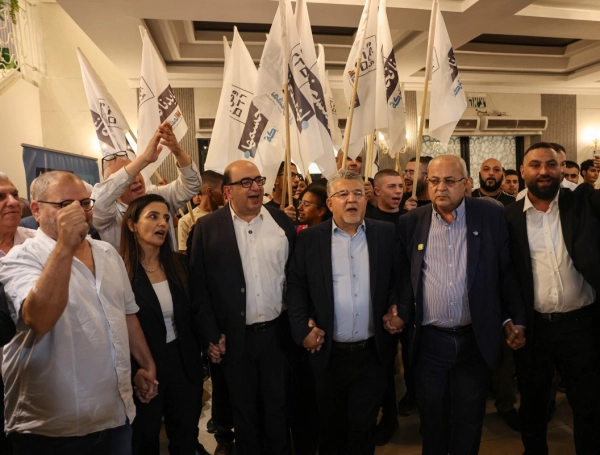
The Arab Bloc: Arab-majority parties achieved a historic milestone, claiming 17 seats on the back of an extraordinary surge in participation.
The Kingmaker Dilemma: To break the deadlock, Eisenkot’s opposition bloc would need to bridge a historical divide and form a coalition or governing arrangement with the Arab parties—a prospect complicated by deep-seated societal prejudices and intense political fallout.
Yussef Jabareen, leader of the left-wing United List, seized upon the moment to call for a genuine Judeo-Arab political alliance aimed at finally unseating Netanyahu, who has accumulated 19 discontinuous years in power, making him the longest-serving prime minister in Israeli history.
However, this mathematical possibility faces immense social hurdles. In a nation where the Arab minority—representing roughly 20 percent of the population—frequent systemic discrimination, the idea of partnering with Arab lawmakers remains anathema to significant segments of the Jewish majority.
Chronology of the Electoral Crisis
The road to the October 27, 2026 elections was paved by compounding geopolitical pressures, domestic fatigue, and mounting international condemnation.
Pre-Election Tensions (Mid-2026): Prime Minister Netanyahu called for snap elections amid mounting public pressure, compounding economic strains, and a deteriorating security environment characterized by regional friction with Iran and a protracted, grinding campaign in Gaza.
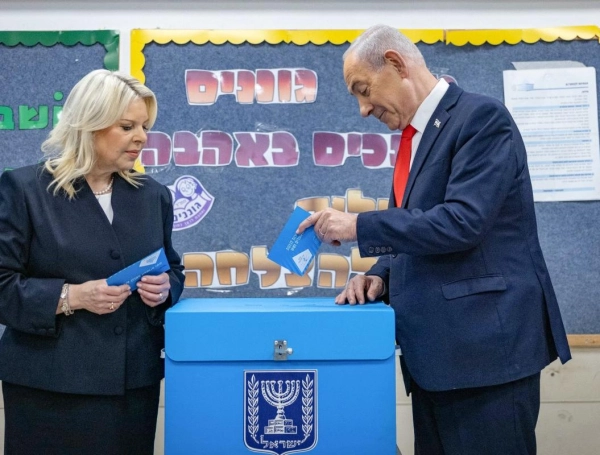
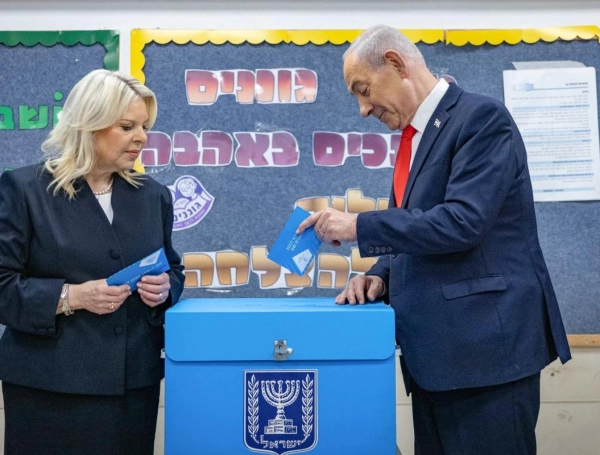
Polling Day (October 27, 2026): Israelis flocked to the polls in droves. Election officials reported a massive surge in turnout, hitting nearly 78 percent—a level of civic participation unseen since the turn of the century. Both Netanyahu and Eisenkot cast their ballots early, urging their bases to maximize support.
Initial Returns (Late October 27 – October 28): As votes trickled in through the night, it became apparent that neither major faction could claim victory. Netanyahu’s bloc stalled at 54 seats, while Eisenkot’s coalition reached 49, immediately igniting projections of a hung parliament.
The Accusations Begin (Morning of October 28): As the strength of the Arab voting bloc became undeniable, Likud launched explosive allegations, accusing Arab factions of systematic electoral fraud, voter intimidation, and technological manipulation.
Current Status (October 28–29): President Isaac Herzog stepped in to urge restraint and compromise, pleading with party leaders to exhaust all options to form a coalition and spare the country another cycle of elections. Final certified results are expected by late Thursday or Friday morning.
Supporting Data and Societal Divide
The 2026 election will be remembered for breaking historical engagement records, yet it has only amplified the socio-political fractures running through Israeli society.
According to Gideon Rahat, a political scientist at the Hebrew University of Jerusalem, the surge in Arab voter turnout was "truly spectacular" and fundamentally transformed the electoral map. However, Rahat noted that the trauma and fallout of the October 7 conflicts have generated profound distrust and anxiety among the Jewish majority toward the Arab minority, complicating any organic political coalition.
Public sentiment on the streets of Tel Aviv reflects this stark polarization:
Sarah Confino, a retiree from Tel Aviv: Expressed deep disappointment with the inconclusive results, stating, "I wanted Gadi Eisenkot to secure a resounding victory to turn the page on the current administration."
Ben Tzyon Vayolid, a local metalworker: Voiced staunch support for the incumbent, remarking, "Netanyahu did everything possible to secure our victory, and we continue to win. I hope his bloc pulls through."
Meanwhile, Ilana Shpaizman, a professor of political science at Bar-Ilan University, highlighted the impossible arithmetic facing the incumbent: "Netanyahu has no way whatsoever to form a government with his current traditional allies. Eisenkot’s bloc will either have to form an unprecedented government with the Arab parties or attempt to establish a minority administration." Both options have historically been rejected by mainstream Zionist opposition parties.
Official Responses and Political Rhetoric
The political fallout turned vitriolic shortly after the initial counts were released.
Likud’s Allegations of Fraud
In a blistering official statement issued on Wednesday, Netanyahu’s Likud party accused Arab political factions of effectively "stealing" the election through illicit means.
"The elections in the State of Israel were stolen by Arab parties that support terrorism and the annihilation of the Jewish State through grave criminal acts of corruption, threats, violence, lies, and the use of prohibited computer programs to incite voters to the polls," the Likud statement claimed.
The accusations have been fiercely condemned by Arab leaders and progressive Israeli figures, who view the rhetoric as an attempt to delegitimize the democratic participation of one-fifth of Israel’s citizenry.
The Voices for Change
Yair Golan, leader of Israel’s primary left-wing party and a key figure within Eisenkot’s coalition, took a radically different stance, championing the democratic mandate of the Arab electorate. Writing on the social media platform X, Golan stated:
"We have a responsibility. And we have the opportunity to form a government of change in partnership with the Arab citizens of Israel."
Amid the political mudslinging, Israeli President Isaac Herzog issued a formal plea to all political factions, urging them to exercise statesmanship and "do everything possible" to assemble a functioning coalition, warning against the economic and social costs of pushing the country into fresh elections.
Implications: Regional Isolation and the Shadow of War
Beyond the domestic calculus, these inconclusive elections carry profound implications for Israel’s foreign policy and its standing on the world stage. The vote took place against a backdrop of mounting international isolation, driven by the ongoing multi-front conflicts involving Iran and the humanitarian catastrophe in the Gaza Strip.
For the residents of Gaza and the broader region, the paralysis in Jerusalem signals uncertainty and fear. Huda Al Huli, a displaced Palestinian currently sheltering in Gaza, voiced the grim anxiety shared by many in the enclave:
"Our fear is that these elections could result in the rise of an even worse leader, bringing in individuals who are more violent and bloodthirsty."
While Gadi Eisenkot shares many of Netanyahu’s foundational views on national security—having supported the initial military retaliation following the October 7 attacks—he has campaigned on restoring a degree of domestic inclusivity, reining in extremist West Bank settlers, and rebuilding fractured diplomatic alliances with Western allies.
As Israel braces for days of intense, high-stakes horse-trading, the country remains at a historic crossroads. Whether the political elite can bridge an uncommonly wide chasm—or whether the nation is doomed to repeat the cycle at the ballot box—remains to be seen. Final certified results are anticipated by the end of the week, officially launching what promises to be one of the most volatile coalition-building processes in modern Israeli history.
Washington D.C. — In a dramatic escalation of tensions that threatens to redefine the boundaries of executive power and press freedom in the United States, the administration of President Donald Trump has barred prominent news…
The Hague, Netherlands – July 24, 2026 – In an unprecedented move that sends shockwaves through the international legal community, the States Parties to the International Criminal Court (ICC) have voted overwhelmingly to remove Chief…
By Global News Desk Published: September 20, 2026 Main Facts In a landmark legal decision that deals a severe blow to the operational liability defenses of ridesharing giants, an independent arbitration panel has ordered Uber…