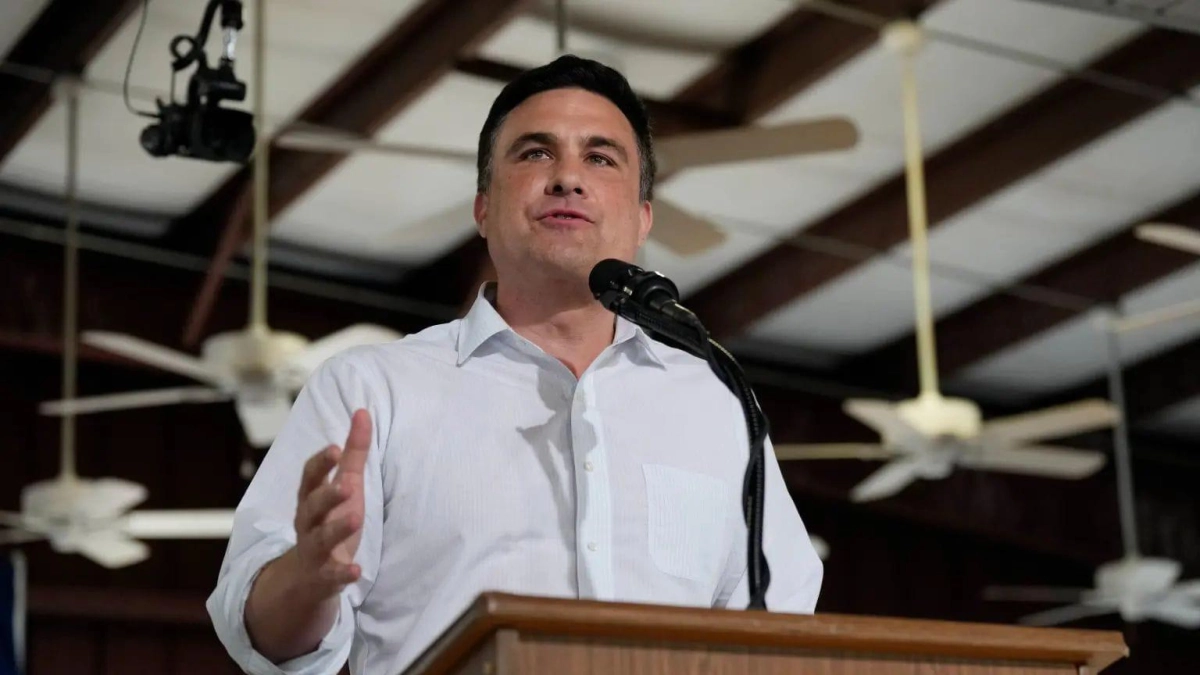
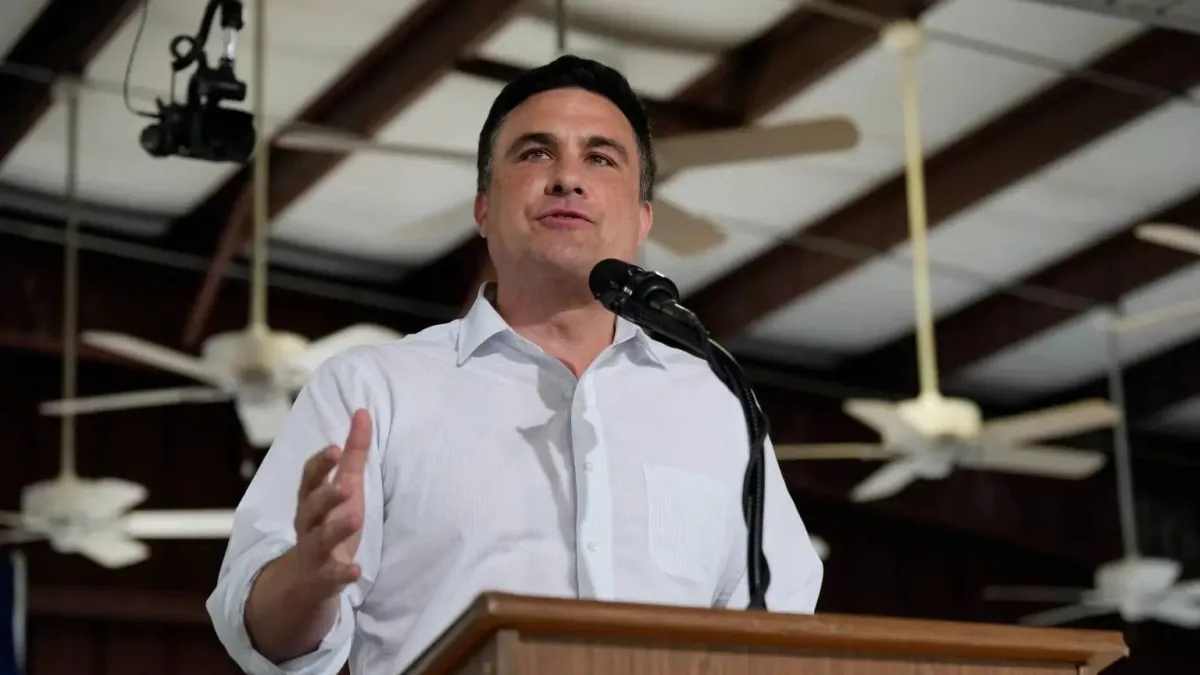
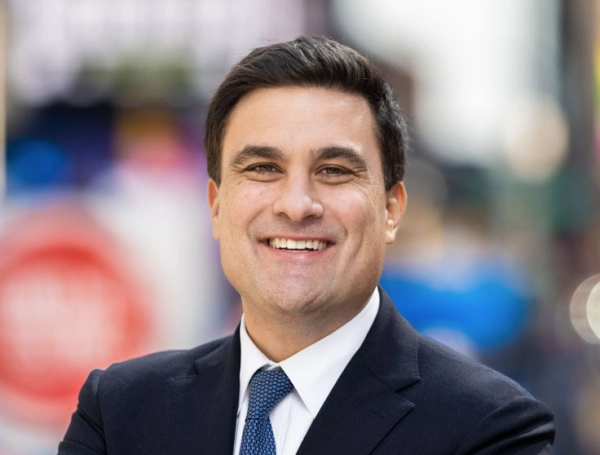
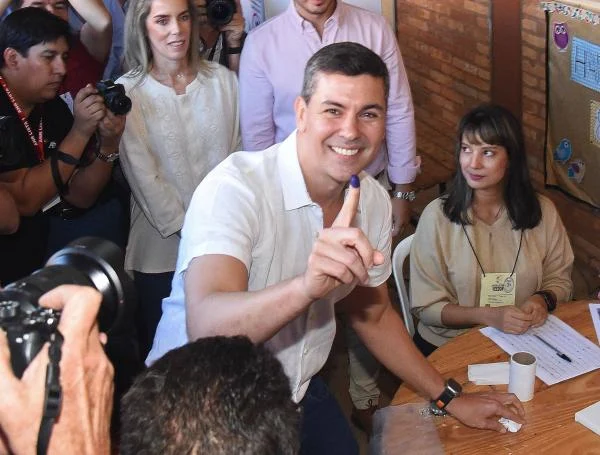
WASHINGTON / BOGOTA — In what marks a significant potential turning point for bilateral relations between Washington and Bogota, Colombian President Abelardo de la Espriella formally celebrated the advancement of businessman Nate Morris’s nomination to serve as the United States Ambassador to Colombia. The high-profile diplomatic appointment cleared a major legislative hurdle when the U.S. Senate Committee on Foreign Relations voted in favor of the nomination, setting the stage for a high-stakes final showdown on the Senate floor before the close of the congressional term.
For Colombia, the confirmation would end a prolonged four-year vacancy of a Senate-confirmed U.S. ambassadorial chief of mission in Bogota—a period during which the embassy has been managed by temporary chargés d’affaires, most notably Francisco Palmieri. For the administration of President de la Espriella, who assumed office following a tense political era marked by friction with the previous leftist government of Gustavo Petro, Morris’s potential arrival signifies a renewed, highly aligned era of strategic cooperation, economic expansion, and aggressive security collaboration with the United States.
However, despite the optimism emanating from Bogota, Morris’s path to the official residence in northern Bogota remains fraught with procedural hurdles, internal party politics, and a ticking clock as the U.S. legislative calendar winds down.
Main Facts
The core developments surrounding the nomination of Nate Morris involve a mix of executive optimism, committee-level approval, and a complex web of congressional friction:
The Committee Approval: On November 18, the U.S. Senate Committee on Foreign Relations voted 13–8 to approve Morris’s nomination, advancing the businessman to the full Senate.
The Executive Reaction: Colombian President Abelardo de la Espriella publicly lauded the committee’s vote on X (formerly Twitter), emphasizing that it paves the way for a permanent U.S. ambassador after a four-year absence.
The Strategic Agenda: President de la Espriella reiterated his administration’s commitment to strengthening bilateral ties centered on trade, foreign investment, national security, defense of democracy, and a zero-tolerance approach to narcotics trafficking.
The Political Obstacle: Morris faces a serious potential bottleneck in the full Senate due to resistance from senior Republican Senator Mitch McConnell. The friction stems from past political rivalries in Kentucky, where Morris previously mounted a primary campaign for McConnell’s Senate seat before dropping out to back another candidate and subsequently receiving President Donald Trump’s diplomatic endorsement.
The Temporal Deadline: If the full Senate fails to confirm Morris before the current Congress concludes in January, the nomination will automatically expire, forcing the White House to restart the grueling appointment process under a newly seated Congress that will feature an overwhelming Democratic majority.
Chronology of the Nomination Process
The trajectory of Nate Morris’s rise from a Kentucky-based tech entrepreneur to the threshold of one of Washington’s most sensitive and crucial Latin American diplomatic posts has been defined by rapid political shifts and intense administrative maneuvering:
1. The Preceding Vacuum (June 2022 – January 2026)
Following the departure of Ambassador Philip Goldberg in June 2022, the U.S. Embassy in Bogota operated entirely under a succession of chargés d’affaires. A previous attempt by President Donald Trump’s administration to fill the post stalled when the nomination of Daniel Newlin, submitted in March 2025, failed to gain traction and was officially returned to the White House on January 3, 2026.
2. The Kentucky Primary and Trump Endorsement (Early 2026)
Nate Morris, founder of the waste-management technology company Rubicon and head of Morris Industries, initially entered the political fray by launching a primary campaign for the U.S. Senate seat held by veteran Republican leader Mitch McConnell. During a combative campaign cycle, Morris took sharp aim at the incumbent establishment. However, as the political landscape shifted, Morris exited the race in May 2026, throwing his support behind Andy Barr. Shortly thereafter, President Trump tapped Morris for the coveted diplomatic posting in Colombia, formally submitting his nomination to the Senate on June 1, 2026.
3. The Confirmation Hearings (August 5, 2026)
Morris appeared before the Senate Committee on Foreign Relations for his confirmation hearing. During the roughly one-hour session, he outlined his primary objectives for Bogota: combatting transnational drug trafficking, curbing irregular migration, expanding bilateral economic opportunities, and safeguarding the welfare of U.S. citizens residing in or traveling through Colombia.
4. Committee Clearance (November 18, 2026)
Following months of administrative review and behind-the-scenes negotiations, the Senate Committee on Foreign Relations formally approved Morris’s nomination by a vote of 13 to 8, moving the debate to the full Senate floor just ahead of the end-of-year legislative rush.
5. Presidential Celebration and Impasse (Late November 2026)
President de la Espriella publicly celebrated the committee’s vote on November 25, 2026. Simultaneously, political analysts in Washington revealed that Senator Mitch McConnell was holding up Morris’s inclusion in an end-of-year block confirmation package, throwing the final timeline into uncertainty.
Supporting Data and Background on the Nominee
Nathaniel "Nate" Morris represents a non-traditional profile for an ambassadorial appointment. Unlike career Foreign Service officers who ascend through decades of diplomatic postings, Morris comes squarely from the private sector and domestic political circles.
Business Background: As the founder of Rubicon—a pioneering software platform specializing in sustainable waste and recycling solutions—Morris built a reputation as an innovative technologist and executive. His business credentials align closely with the Trump administration’s emphasis on private-sector-led economic growth and market-driven diplomacy.
Political Alignment: A staunch Republican from Kentucky, Morris’s ties to President Trump were solidified following his abbreviated Senate primary campaign. His nomination reflects a broader trend of appointing loyal political allies to critical international posts to ensure direct alignment with executive foreign policy goals.
Previous Failed Nomination: The transition from Daniel Newlin’s failed nomination bid to Morris highlights the executive branch’s urgency in stabilizing diplomatic channels with Bogota under the newly inaugurated de la Espriella administration.
Official Responses and Political Implications
The progression of Morris’s nomination has elicited robust reactions from leaders across the political spectrum in both countries, highlighting the deep geopolitical stakes involved.
President Abelardo de la Espriella’s Stance
In his public statements, President de la Espriella framed the advancement of the nomination as an essential catalyst for a renewed golden age in U.S.-Colombian relations. Posting on social media, the Colombian leader declared:
"I celebrate the approval of the nomination of @NateMorris as ambassador of the United States to Colombia by the U.S. Senate Committee on Foreign Relations. This important step paves the way for the return of a titular ambassador to our country after a four-year absence. I reaffirm my government’s will to continue strengthening historic ties of friendship and cooperation with the United States…"
De la Espriella underscored that both nations share an unshakeable commitment to defending democracy, dismantling narcotics networks, and generating mutual economic prosperity. His concluding remarks—signed with his traditional nationalist and conservative flourishes—signaled a distinct ideological pivot away from past diplomatic friction toward an unreserved embrace of Washington’s strategic priorities.
Washington’s Internal Friction: The McConnell Factor
Despite the enthusiastic reception in Bogota, political friction in Washington threatens to derail the process. Reports from U.S. media outlets, including Semafor, indicate that Senator Mitch McConnell has withheld his consent to include Morris in an expedited, end-of-year block confirmation package for executive nominees.
The hesitation is widely believed to stem from residual political animosity originating from Morris’s primary campaign against McConnell in Kentucky, during which Morris publicly criticized the veteran senator’s legislative legacy. Because U.S. Senate confirmation procedures often rely on unanimous consent for grouped votes, a single objection from a powerful figure like McConnell can dismantle a block vote, forcing leadership to schedule a time-consuming individual floor vote.
David Popp, a spokesperson for McConnell, maintained a measured stance, stating that the senator would "evaluate the package of nominees when it is presented before the conference." Meanwhile, congressional insiders speaking to American journalists have expressed cautious optimism that the impasse will ultimately be resolved, allowing Morris to be confirmed as part of a compromised legislative package.
Broader Implications for U.S.-Colombia Relations
The confirmation—or potential failure—of Nate Morris carries profound implications for hemispheric security, economic integration, and regional geopolitics:
Restoration of High-Level Diplomatic Channels: For over four years, U.S. policy execution in Colombia has relied on interim leadership. A confirmed ambassador with direct, personal lines of communication to the White House will streamline decision-making and project stability.
Security and Counter-Narcotics Alignment: Under President de la Espriella, Colombia has signaled an eagerness to recalibrate joint anti-narcotics strategies. Morris’s stated focus on cracking down on drug trafficking directly supports Washington’s security mandates in the Andean region.
Economic Diplomacy: Morris’s private-sector background as an entrepreneur is expected to inject a renewed focus on bilateral trade, investment opportunities, and technological cooperation between American corporations and Colombian markets.
The Legislative Clock and Future Risk: If internal Republican opposition or a clogged legislative calendar prevents a vote before January, the political landscape shifts dramatically. A new, incoming U.S. Congress featuring a commanding Democratic majority would likely view a Trump-appointed political loyalist through a much more skeptical lens, potentially freezing future diplomatic appointments and leaving the U.S. Embassy in Bogota without a Senate-confirmed leader indefinitely.
As the U.S. Senate enters the final weeks of its legislative session, all eyes remain fixed on Capitol Hill to determine whether Nate Morris will successfully navigate the political crosscurrents and take up his post as Washington’s top envoy in Colombia.
WASHINGTON / SANTA CLARA — In what is rapidly unfolding as one of the most explosive corporate and geopolitical scandals of the decade, Jensen Huang has stepped down as Chief Executive Officer and member of…
By Breaking News & International Desk Published: November 6, 2026 | Updated: November 6, 2026 Main Facts In a historic and sweeping political earthquake, the Senate of Paraguay voted unanimously on Friday, November 6, 2026,…
By International Desk Updated: November 10, 2026 Weeks after a devastating aviation disaster shook the state of Florida, federal investigators have announced a critical breakthrough in piecing together the final, terrifying moments of a doomed…